Hydraulics & Pneumatics Pro

Practical, no-nonsense training in fluid power — hydraulics and pneumatics — for technicians, engineers, and maintenance pros who need...
Maafushi, MV
•Created byProfile picturehmdd3e
2 joined
Profile picture
@hmdd3eProfile picture3d

The hydraulic leak that isn't the fitting

Most "mystery leaks" on a hydraulic skid aren't a failed fitting. They're a combination of three things that look like a leak:


  1. Weep from thermal expansion. Oil expands as it heats. If the tank is overfilled at cold start, it pushes past the breather and looks like a seal failure. Check the oil level at operating temperature, not at 6am.


  1. Rod scoring from contaminated oil. A tiny nick on a cylinder rod will throw a mist that people call a leak. Wipe the rod dry, cycle it ten times, then look again. If you see a wet line following a scratch, that's your leak. Change the rod seal and the filter, not just the seal.


  1. Loose return-line clamps. Low-pressure return hoses weep at the clamp, not at the crimp. You can smell it before you see it. Torque the clamp, don't replace the hose.


A field check I use on every call: wipe, cycle, inspect, then decide. Most "we need a new cylinder" jobs are a $12 clamp or a dirty filter.


If you work on hydraulics or pneumatics, that's the kind of stuff the field guide is built around. Practical, not textbook.

Profile picture
@hmdd3eProfile pictureAug 20

The #1 mistake diploma engineering students make when learning fluid power

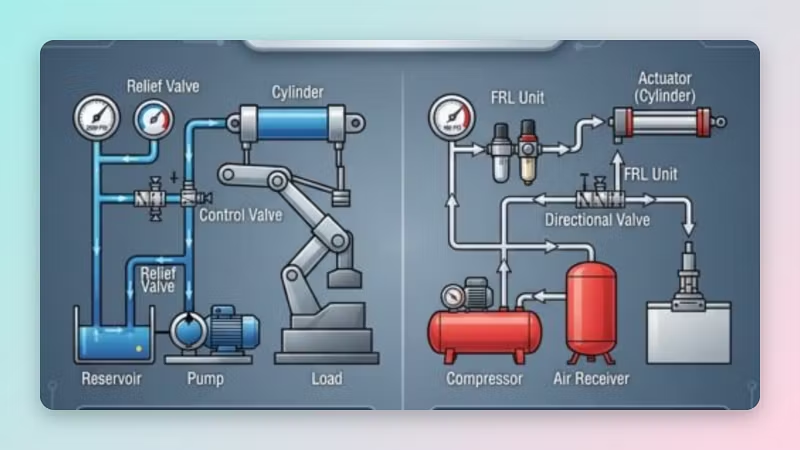
Most students try to memorize hydraulic and pneumatic circuit diagrams instead of understanding the underlying physics — Pascal's Law, flow rate, and pressure drop. That's why circuit troubleshooting feels impossible on exams and in the workshop.


Here's the fix: before you touch a schematic, be able to answer three questions for any component —

  1. What force/pressure is going in?

  2. What is it converting (pressure → mechanical force, or vice versa)?

  3. What happens downstream if this component fails?


If you can answer those for a pump, a DCV, and a cylinder, reading a full circuit becomes pattern recognition instead of memorization.


We just launched Fluid Power Fundamentals: Hydraulics & Pneumatics for Diploma Engineers — a structured, diploma-level course covering exactly this, from core principles through circuit design, troubleshooting, and a certificate exam. Built for engineering students who need a solid vocational-qualification foundation, fast.