

Welcome to House DJ Academy: Start Here
If you are just getting into house music DJing, start here: a complete guide to choosing your first DJ decks.
You do not need the most expensive setup on day one. You need a pair of decks (or a controller) that lets you mix two tracks, hear both in your headphones, and practise beatmatching without fighting the hardware.
What actually matters on first decks
Two channels you can mix independently, plus a crossfader you can actually use.
Pitch control (or sync as a training wheel, not a crutch) so you can match tempos.
A headphone cue so you can preview the next track before it hits the room.
Jog wheels or platters you can feel. Muscle memory is half of mixing.
USB or laptop connection that is boringly reliable. Fussy drivers kill practice time.
Controller vs CDJs vs vinyl
A two-deck DJ controller plus a laptop is the fastest path for most beginners. Rekordbox, Serato, or Engine all work. Pick one ecosystem and stay there while you learn.
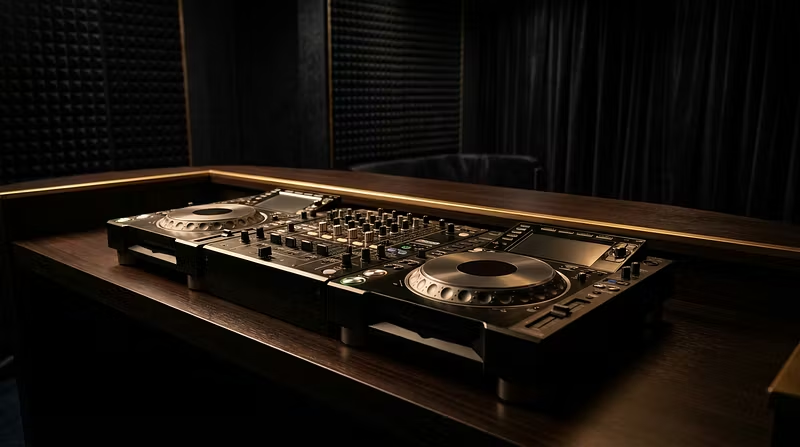
Standalone units (CDJ-style or all-in-one) are closer to club setups and skip the laptop on stage. They cost more. Worth it if you already know you want to play venues.
Vinyl is a beautiful skill. It is not the cheapest or easiest first step if your goal is house club nights.
Budget, without the hype
Entry: a solid two-deck controller. Enough to learn phrasing, EQ, and beatmatching.
Mid: better platters, more channels, or a standalone unit you can take to a bar without a laptop panic.
Skip RGB light shows and extra FX banks until your mixes are clean.
Before you buy
Try the layout in a shop or on a friend’s setup if you can. Your hands should find the EQ and cue without looking.
Check what the rooms you want to play actually run. Practising on something close to club gear pays off.
Budget for decent closed-back headphones and a simple monitor or decent speakers. Bad monitoring makes you think you cannot mix.
Practise 20 minutes a day on whatever you choose. Learn to match kicks, then phrase an 8-bar intro into a drop. Hardware is just the instrument.
Ready to go from bedroom beginner to confident club DJ? Check out the full 113-lesson curriculum inside The DJ Blueprint: https://whop.com/checkout/ch_XFwY5GyRQP8g4ZD/