InnerVirtuex

Master the art of modern Stoicism. Timeless wisdom, motivational content, and practical teachings to build unshakable mental strength and pe...
Bhopal, IN
Created byProfile pictureAtharva
6 joined
Profile picture
AtharvaProfile picture@atharvav0709·Apr 23

THE PAUSE (RECLAIMING POWER)

Philosophy:

Between stimulus and response lies your only true freedom.

Most people lose control not because emotions are strong

but because their reactions are immediate.

Deeper Insight:

The brain is wired for survival, not wisdom.

Instant reactions come from impulse, not intention.

The pause interrupts this primitive loop.

Practice:

Insert a deliberate 3–5 second pause before responding to anything emotionally charged.

Advanced Technique:

During the pause:

Breathe slowly

Relax your jaw and shoulders

Soften your gaze

You are signaling safety to your nervous system.

Challenge:

No immediate emotional reactions for an entire day.

Reflection:

How many problems were avoided simply by waiting?
file_lCqCDQljbocm9
Profile picture
AtharvaProfile picture@atharvav0709·Apr 22

Henry David Thoreau (1817–1862) was an American philosopher, writer, and naturalist best known for his ideas on simple living, self-reliance, and harmony with nature. His book Walden reflects his time living alone in the woods, where he explored independence, mindfulness, and the value of a life free from unnecessary materialism. He also wrote Civil Disobedience, advocating for individual conscience over unjust laws. Thoreau believed that true freedom comes from living deliberately, staying close to nature, and thinking for oneself rather than blindly following society.

Profile picture
AtharvaProfile picture@atharvav0709·Apr 22

Henry David Thoreau (1817–1862) was an American philosopher, writer, and naturalist best known for his ideas on simple living, self-reliance, and harmony with nature. His book Walden reflects his time living alone in the woods, where he explored independence, mindfulness, and the value of a life free from unnecessary materialism. He also wrote Civil Disobedience, advocating for individual conscience over unjust laws. Thoreau believed that true freedom comes from living deliberately, staying close to nature, and thinking for oneself rather than blindly following society.

Profile picture
AtharvaProfile picture@atharvav0709·Apr 22

AWARENESS (THE OBSERVER WITHIN)

Philosophy:

Epictetus taught that most people live unconsciously reacting, judging, and suffering without ever questioning their own thoughts.

Awareness is the first separation between you and your mind.

You are not your thoughts.

You are the one observing them.

Deeper Insight:

Every emotional reaction begins as a thought often automatic, conditioned, and irrational.

If you cannot see it… you cannot change it.

Practice:

Throughout the day, step into the role of an observer.

Watch your internal dialogue like it belongs to someone else.

Advanced Technique:

Label thoughts precisely:

“This is anxiety about the future.”

“This is ego reacting to criticism.”

This creates psychological distance.

Challenge:

Catch at least 5 unconscious reactions today.

Reflection:

Which thoughts felt automatic?

Which emotions appeared without permission?

file_OHZH5hbBregFy
Profile picture
AtharvaProfile picture@atharvav0709·Apr 21

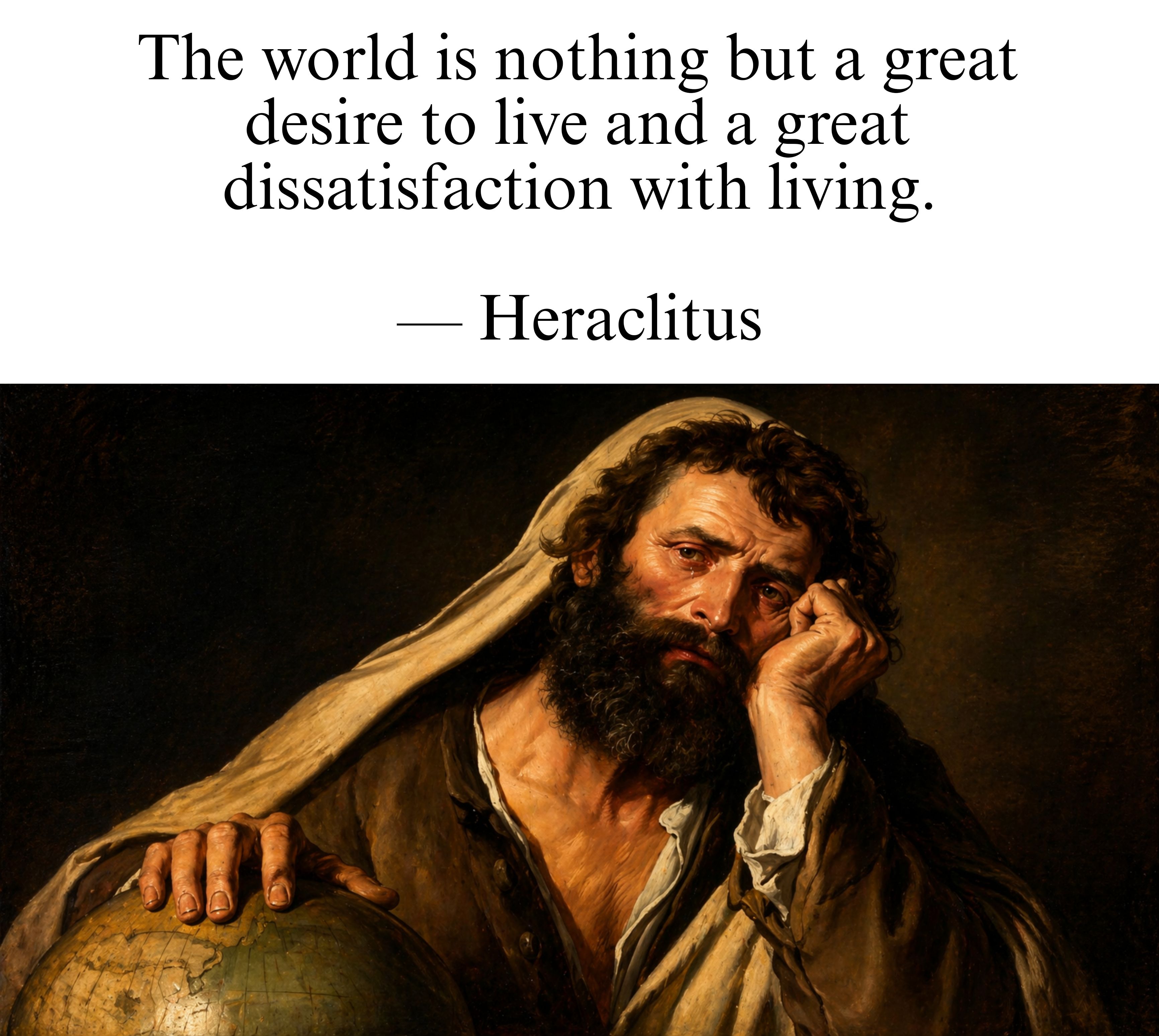
Heraclitus (c. 535–475 BC) was an ancient Greek philosopher known for his idea that change is the fundamental nature of reality. He famously taught that “you cannot step into the same river twice,” meaning everything is constantly flowing and nothing remains the same. He believed that opposites like life and death, day and night are deeply connected and necessary for balance. His philosophy emphasizes accepting change, understanding the hidden order behind chaos (the Logos), and realizing that stability is an illusion.

His core message: everything flows, and wisdom lies in embracing that constant change.

file_F6Ppjzbre24z7
Profile picture
AtharvaProfile picture@atharvav0709·Apr 21

THE STOIC METHOD FOR EMOTIONAL CONTROL

Inspired by Epictetus

Most people try to control the world.

The wise learn to control their reactions.

At the center of Stoic philosophy lies a simple distinction:

What is in your control and what is not.

Your thoughts, judgments, and responses?

→ Yours.

Other people’s opinions, outcomes, and events?

→ Not yours.

Master this… and your mind becomes unshakable.

---

THE PRACTICE (Daily Mental Discipline)

  1. Pause Before Reaction

When something triggers you don’t react instantly.

Create a gap.

  1. Name the Emotion

Say it internally: “This is anger.” “This is frustration.”

Naming weakens its grip.

  1. Shift Perspective

Ask: “Is this within my control?”

If not release it. If yes act with reason.

  1. Respond, Don’t React

Choose your response like a strategist, not a victim.

---

TODAY’S STOIC CHALLENGE

For the next 24 hours:

• Do not react emotionally to anything immediately

• Take 3 seconds before every response

• Observe your thoughts as if you are watching someone else

• Let go of what you cannot control instantly

At the end of the day, reflect:

→ What triggered me today?

→ Did I control my response or did it control me?

---

Remember this:

You don’t rise by controlling the world.

You rise by mastering your inner one.

Control your mind…

or it will control you.

file_8VsTUwXQTK3VW
Profile picture
AtharvaProfile picture@atharvav0709·Apr 19

Daily Stoic — April 19: The Power of the Pause

"Between stimulus and response there is a space. In that space is our freedom and our power to choose our response."


Today's practice: Before reacting to anything that triggers frustration — an email, a comment, traffic — take one deliberate breath. That single pause is where your power lives.


The Stoics called this the ruling reason (hegemonikon). You are not your first impulse. You are what you choose to do with it.


🔹 Today's challenge: Count how many times you catch yourself before reacting. Even once is a win.

Profile picture
AtharvaProfile picture@atharvav0709·Apr 19
Pinned post

Welcome to InnerVirtuex

You're here because something in you refuses to stay comfortable.


This is your space for Stoic wisdom, practical mental frameworks, and content designed to cut through the noise of modern life.


What you'll find here:

  • Daily reflections rooted in Stoic philosophy

  • Practical frameworks for handling stress, burnout, and overwhelm

  • Mindset shifts that compound over time


How to get started:

  1. Drop into the Stoic Circle chat and introduce yourself

  2. Check back daily for new posts in the Daily Wisdom feed

  3. Share what resonates — this community grows when you engage


"The impediment to action advances action. What stands in the way becomes the way." — Marcus Aurelius


Let's build something unshakable.

Profile picture
AtharvaProfile picture@atharvav0709·Apr 19

The 3 Stoic habits that got me through burnout

I hit a wall two years ago. 60-hour weeks, zero energy for anything outside work, and a creeping feeling that none of it mattered.


Stoicism pulled me out. Not the motivational poster version — the real, practical philosophy that Marcus Aurelius used to run an empire while fighting a plague.


Here are the 3 habits that changed everything:


1. The Morning Premeditatio

Before you check your phone, spend 2 minutes mentally rehearsing the worst that could happen today. A client yells at you. A deal falls through. Traffic makes you late.


This isn't pessimism — it's armour. When you've already faced it mentally, the real thing loses its sting. Seneca called it "premeditatio malorum." I call it the cheat code for not being reactive.


2. The Dichotomy Journal

Every evening, split your day into two columns: things you controlled and things you didn't. Most of your stress lives in column two.


Once you see the pattern, you stop wasting energy on emails you can't unsend and bosses you can't change. You redirect everything into column one.


3. Voluntary Discomfort

Cold shower. Skip a meal. Sleep on the floor once a month.


Sounds extreme, but Stoics did this deliberately. The point isn't suffering — it's proving to yourself that comfort isn't a requirement for functioning. When burnout tells you "I can't keep going," your body already knows that's a lie.


These three habits took me from running on fumes to feeling genuinely in control of my day again.


I'm building InnerVirtuex to go deeper on this — daily Stoic frameworks, community discussion, and content designed for professionals who are done being burned out.


It's free to join. If any of this resonated, come through.