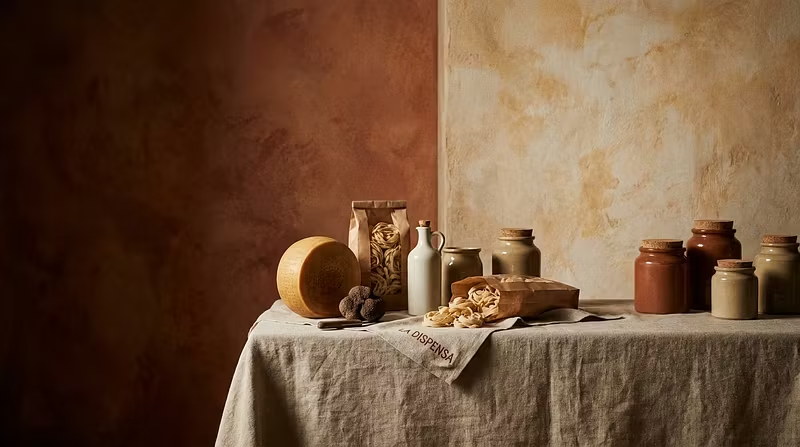


The Italian ingredients most people are buying wrong (and how to fix it)
Most people buying "Italian" ingredients are getting ripped off — and they don't even know it.
Here's a quick breakdown of the three most common mistakes:
1. Olive oil labeled "Italian" but pressed elsewhere
If the bottle says "packed in Italy" rather than "produced in Italy," the olives almost certainly came from Spain, Greece, or Tunisia. Italian olive oil must say "100% Italian olives" with a harvest date to be trustworthy. Anything else is marketing.
2. "Parmigiano-Reggiano" vs. Parmesan
The real thing has the name stamped in dots across the rind. It's only made in Emilia-Romagna, aged a minimum of 12 months, and has a DOP stamp. The stuff in green tubes shares none of these qualities — and neither does most "Parmesan" on supermarket shelves.
3. Truffle products with no real truffle
The vast majority of truffle oils, sauces, and condiments contain zero actual truffle. They use synthetic 2,4-dithiapentane — a lab compound that mimics one of truffle's 200+ aromatic compounds. Check the ingredients list. If you see "truffle aroma" or "truffle flavoring," you're buying a chemistry experiment.
The difference between the real thing and a convincing fake is enormous — in flavor, in the experience of cooking, and in supporting people actually doing the hard work of producing these ingredients properly.
We built La Dispensa to help serious home cooks find the real thing — monthly ingredient spotlights, sourcing guides, and a community of people who give a damn.