NeuroFocus

Tilt is invisible — until you see it. NeuroFocus Vertex is a dry-EEG insert for your gaming headset that reads your focus in real time and p...
Sunnyvale, US
Created byProfile pictureNeuroFocus
6 joined
Profile picture
NeuroFocusProfile picture@neurofocus·Jul 11

Quick answers before you ask:


Does it need gel or paste? No — dry electrode, built into the earpad, same as any headset.


Does it record or stream my brain data? No. Read-only sensing, on-device, never sold. Full details in our Neural Data Promise.


Is this a medical device? No — it's a performance/training tool, not a diagnostic one.


When does it ship? Q4 2026, first production run. Preorder is $49.99 now.


Drop any other questions below and we'll answer them here.

Profile picture
NeuroFocusProfile picture@neurofocus·Jul 11

No fake demos here. Every focus number you see from us is a real brain, in real time — not simulated footage dressed up as data.


We anchor the score in a peer-reviewed EEG engagement index (Pope et al., 1995), read off a single dry electrode in the earpad. It's the same signal principle as a lab EEG, just without the gel cap.


Today it's one channel. Production scales to eight.

Profile picture
NeuroFocusProfile picture@neurofocus·Jul 11

Focus is a stat. Not a mood, not a vibe — a measurable, trainable variable, like aim or APM.


Everything we're building starts from that one line. More on why in the comments if you want the full manifesto.

Profile picture
NeuroFocusProfile picture@neurofocus·Jul 11

Tilt has a signature. We found it.


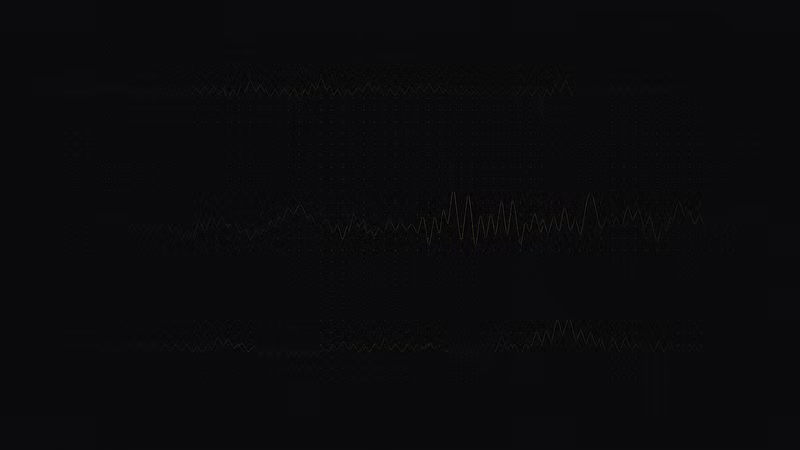
We ran 50 ranked matches wired up with EEG. The result: focus doesn't fade, it crashes — in sharp spikes, usually right after a team fight or in the 4 seconds after respawn.


The number that mattered most: stay above a 72 focus index and we won most of those games. Drop below 55 mid-match and we lost 87% of them.


That's the gap NeuroFocus closes — a live focus score on your headset, so you see the crash coming instead of feeling it too late.


Preorder is open — $49.99. Drop a question below if you want to know how the sensor actually works.

Profile picture
NeuroFocusProfile picture@neurofocus·Jun 28

I measured my focus during 50 ranked matches. Here's what the EEG data actually showed.

Most competitive gamers know the feeling — you're in a close match, everything slows down, and then suddenly you make a mistake that makes no sense. You weren't tired. You weren't distracted. What happened?


I've been obsessing over this question for the past year. I fitted an EEG sensor rig to my gaming headset and started recording brainwave data during competitive play. After 50 ranked matches across FPS and MOBA, here's what I actually found:


Focus doesn't drop gradually. It drops in spikes.


There are specific in-game triggers that cause sudden, sharp drops in the cognitive focus index — and they're not what you'd expect. It's not late-game fatigue. It's the moment after a team fight resolves. It's the 4-second window between respawning and re-entering the action. These are micro-windows where your brain disengages, and if the next moment is high-stakes, you're reacting at 60% instead of 100%.


The top 10% of focus-score sessions had one thing in common.


Sessions where I maintained a focus index above 72 (out of 100) for the majority of the match correlated with my highest-performing games. The sessions where I dropped below 55 mid-game? I lost 87% of those.


This isn't about being "in the zone." It's about catching the drop before it costs you.


That's what NeuroFocus does — real-time EEG-based focus tracking built into your existing headset. If you're serious about your game, the data will change how you train.


Drop a comment if you want to see actual session recordings or have questions about the hardware.