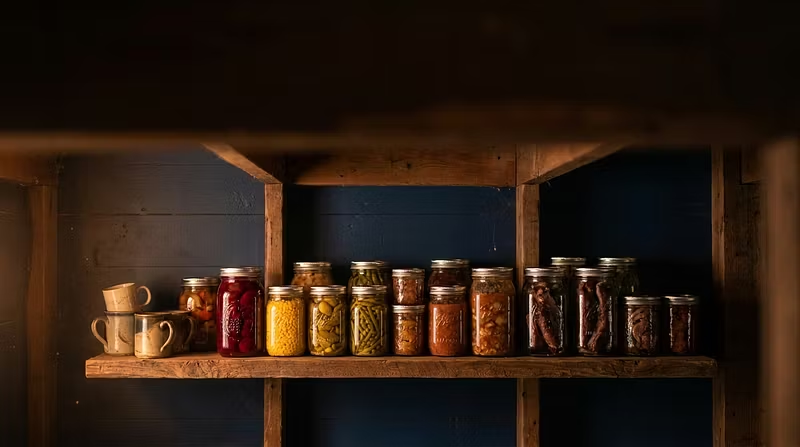


The one canning mistake that sends more beginners to the ER than anything else
I've spent a lot of time around home canners, and there's one mistake that comes up over and over: people water-bath can low-acid foods (meat, most vegetables, beans) because it feels less intimidating than pressure canning.
Here's the problem — Clostridium botulinum spores survive boiling water (212°F). They do NOT survive the sustained higher temps (240°F+) you get inside a pressure canner. That's not a 'nice to have,' it's the entire reason pressure canning exists as a category separate from water-bath canning.
A few things that actually matter once you've accepted you need a pressure canner:
Altitude changes your pressure, not just your time. Above 1,000 ft, you need to increase PSI. A lot of beginners nail the processing time and still end up with an unsafe jar because they ignored elevation.
Headspace is not a suggestion. Too little and food can't seal properly during processing; too much and you risk siphoning and seal failure. Follow the exact headspace for the specific food, not a general rule of thumb.
A 'ping' sound isn't confirmation of a safe seal — it's confirmation of A seal. Always do the finger-press test on the lid after 24 hours. If it flexes at all, it didn't seal, and that jar goes in the fridge tonight, not the pantry.
Cloudy liquid isn't always spoilage — starches from potatoes/beans can cause it. But if you also get an off smell, foam, or the lid is bulging, don't taste it to check. Toss it.
If you're getting into home canning to build a real pantry (not just impress people on Instagram), spend more time on the safety fundamentals than the recipes. The recipes are the easy part.
— Sarah, Pantry Vault