

The vocabulary problem is not memory — it is selection
Most exam candidates I work with do not lack words. They lack the right words at the right time.
A student in Leeds can sit at a desk with 200 highlighted vocabulary items and still freeze when the speaking prompt says "describe your neighbourhood." The word "convenient" is in the notebook somewhere. So is "crowded." Neither one shows up when the timer starts.
The error is not lazy studying. It is studying the wrong shape of language.
Here is what actually works for speaking test vocabulary:
1. Start with the prompt, not the word list. Ask which themes keep returning in your exam — work, home, food, travel, study. Those are your shelves. Everything else goes in a box in the attic.
2. Group words by what they do in speech, not by subject. "Deadline" is not just a work word. It is a word that names the last acceptable time. Its contrast is "target date." Knowing that distinction is what makes it usable in a real answer.
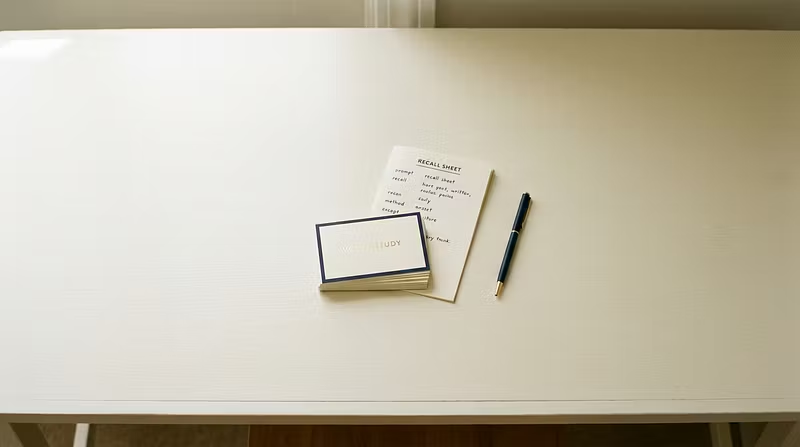
3. Use a 3-second recall test. If the word does not surface in 3 seconds from a cue, it is not ready for a speaking prompt. It is still recognition, not retrieval. Those are different muscles.
4. Sort with traffic lights after every session. Green = ready. Amber = shaky, needs another route into memory. Red = parked, stop dragging it through fake reviews.
5. In the final week, subtract. Do not add new words. Remove the ones that only work after a long pause. The set gets leaner. The speaking gets stronger.
A focused set of 40 well-rehearsed words will outperform 200 highlighted items every time. The exam does not reward the longest list. It rewards the word that arrives before the answer runs out of road.