

Why Water Beats Road for Time-Critical Freight in NYC (A Hudson Corridor Breakdown)
The Problem With Ground Transport in NYC
A courier van going from Poughkeepsie to Manhattan during a weekday rush hits the Taconic, the Saw Mill, or the Thruway — and then the FDR or West Side Highway parking lot. On a bad day, that's 2.5-3 hours for a ~75 mile trip. Add an accident or construction closure and you can double it.
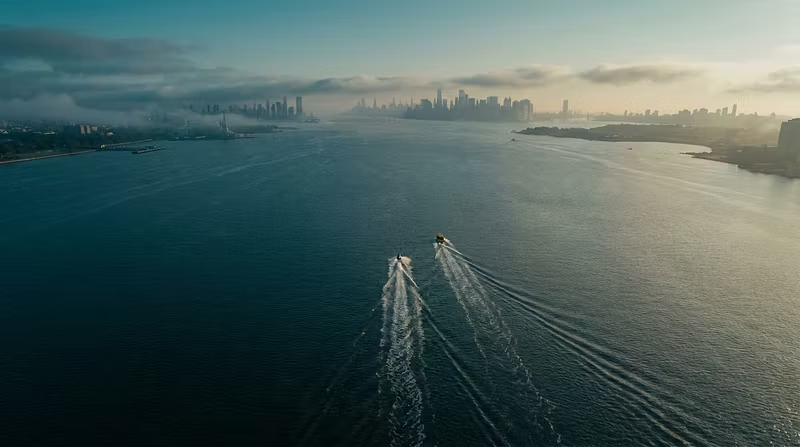
Meanwhile, the Hudson River runs parallel to that entire corridor, completely uncongested, moving at a steady 25-35 knots depending on vessel class.
The Math
Route | Distance | Typical Time | Failure Points |
|---|---|---|---|
I-87/Taconic (road) | ~75 mi | 2.5-3 hrs | Traffic, accidents, tolls, weather-related road closures |
Hudson River (water) | ~65 nautical mi | 70-100 min | Tide windows, marine weather — both forecastable days in advance |
Water transport isn't just competitive — for time-critical freight, it's often faster and more predictable, because marine conditions are forecastable well in advance, unlike traffic incidents which are not.
Where This Matters Most
Medical shipments — lab specimens, cold-chain pharma runs where a 90-minute delay has real consequences.
Legal & HIPAA-sensitive documents — chain-of-custody matters, and a direct water route with fewer handoffs means fewer custody transfer points.
Catering & perishables — time-of-arrival is the whole product.
USPS overflow & e-commerce final-mile — when ground networks are saturated, water is untapped capacity sitting right next to the busiest corridor in the country.
Why Now: NYC's Blue Highways Program
NYC launched its Blue Highways initiative in December 2025 specifically to formalize the use of waterways for freight and passenger movement — recognizing that the harbor and river system is underutilized infrastructure that already exists, requires no new roads, and takes trucks off congested corridors.
Relay Transit and Courier operates the dispatch layer on top of this: independent boat, jet ski, and small-vessel owners get matched to time-critical jobs in real time, Uber/Lyft-style, on the Hudson pilot corridor today, with more waterways coming.
If you're shipping anything time-sensitive between the Hudson Valley and Manhattan, you're likely already paying a traffic tax you don't need to pay. Worth a look.