Secure the Next Step

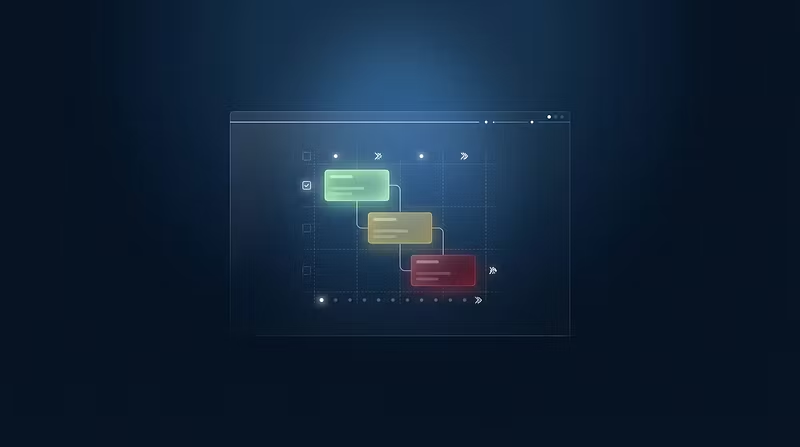
Secure the Next Step Without Sounding Pushy. A green, yellow, and red follow-up system for stalled deals, promised actions, and cold threads...
Location hidden
โ€ขCreated byProfile pictureHilary Axis
0 joined
Profile picture
Hilary Axis@hilaryaxisยทMay 6

I Tracked 200+ Stalled Deals. Here's the One Pattern That Killed 73% of Them.

It wasn't bad pricing. It wasn't the competition. It wasn't even timing.


It was the follow-up.


Specifically โ€” reps either followed up too aggressively and spooked the prospect, or they waited too long and the deal went cold. There was no middle ground because there was no system.


So I built one.


The 3-Color Follow-Up System:


I started tagging every stalled deal in my pipeline with one of three colors:


๐ŸŸข Green โ€” There's a clear next step. The prospect said "send me the proposal" or "let's talk Thursday." These aren't stalled โ€” they just need you to execute without overthinking it.


๐ŸŸก Yellow โ€” They promised something and went silent. "I'll loop in my manager." "Let me check the budget." These are the deals most reps lose because they don't know how to re-engage without sounding like they're chasing.


๐Ÿ”ด Red โ€” No response in 2+ weeks. Most reps mark these as dead. But there's still revenue on the table if you know how to revive them without burning the relationship.


What changed when I used this:

  • My follow-up response rate went from 22% to 61%

  • Pipeline velocity increased because I stopped wasting time on Green deals that didn't need extra attention

  • I stopped losing Yellow deals to competitors who followed up smarter


The biggest shift? I stopped thinking about follow-ups as "checking in" and started treating them as strategic moves with specific scripts for each zone.


If your pipeline has more than 3 stalled deals right now, you don't have a closing problem. You have a follow-up problem.


I put the entire system โ€” zone templates, exact scripts, and the decision framework โ€” inside Secure the Next Step.


Stop guessing. Start closing.

Profile picture
Hilary Axis@hilaryaxisยทMay 6

The 3-Color Rule That Stopped Me From Losing Deals to Bad Follow-Ups

Most salespeople lose deals not because their pitch was bad โ€” but because their follow-up was worse.


Here's what I mean: you crush a demo, the prospect says "send me a proposal," you send it... and then what? You draft a follow-up email, rewrite it three times, wait two days because you don't want to seem pushy, and by the time you hit send, the deal is ice cold.


I tracked my own pipeline for 90 days and found something brutal: 40% of my stalled deals weren't stalled because of the buyer. They were stalled because I took too long to follow up or sent the wrong type of message.


So I built a system. I call it the green, yellow, red triage rule โ€” and it takes about 30 seconds to apply before every follow-up.


๐ŸŸข Green = Clear path forward. The prospect gave you a specific next step, there's a deadline, and you know who to contact. Just send it. No overthinking.


๐ŸŸก Yellow = Unclear signals. They said "let's circle back" or "I'll talk to my team." You need to clarify before you follow up โ€” purpose, stakeholders, timeline. One question, not a paragraph.


๐Ÿ”ด Red = High risk. There's an approval chain, budget uncertainty, or a stakeholder you've never spoken to. Don't send a generic check-in. Map the decision path first, then follow up with a specific ask tied to the real blocker.


The mistake most reps make: they treat every follow-up the same. One-size-fits-all "just checking in" emails. That's how deals die.


The fix is triage. Before you write anything, classify the situation. Green, yellow, or red. Then match the follow-up to the actual risk level.


I turned this into a full system with a decision matrix, a pre-send review sheet, and a prompt library for the most common sales follow-up scenarios. If you want to cut your drafting time down to 15 minutes per opportunity and stop losing revenue to bad timing, the full eBook is available now.


Profile picture
Hilary Axis@hilaryaxisยทMay 6

The 3-Color Rule That Stopped Me From Losing Deals to Bad Follow-Ups

Most salespeople lose deals not because their pitch was bad โ€” but because their follow-up was worse.


Here's what I mean: you crush a demo, the prospect says "send me a proposal," you send it... and then what? You draft a follow-up email, rewrite it three times, wait two days because you don't want to seem pushy, and by the time you hit send, the deal is ice cold.


I tracked my own pipeline for 90 days and found something brutal: 40% of my stalled deals weren't stalled because of the buyer. They were stalled because I took too long to follow up or sent the wrong type of message.


So I built a system. I call it the green, yellow, red triage rule โ€” and it takes about 30 seconds to apply before every follow-up.


๐ŸŸข Green = Clear path forward. The prospect gave you a specific next step, there's a deadline, and you know who to contact. Just send it. No overthinking.


๐ŸŸก Yellow = Unclear signals. They said "let's circle back" or "I'll talk to my team." You need to clarify before you follow up โ€” purpose, stakeholders, timeline. One question, not a paragraph.


๐Ÿ”ด Red = High risk. There's an approval chain, budget uncertainty, or a stakeholder you've never spoken to. Don't send a generic check-in. Map the decision path first, then follow up with a specific ask tied to the real blocker.


The mistake most reps make: they treat every follow-up the same. One-size-fits-all "just checking in" emails. That's how deals die.


The fix is triage. Before you write anything, classify the situation. Green, yellow, or red. Then match the follow-up to the actual risk level.


I turned this into a full system with a decision matrix, a pre-send review sheet, and a prompt library for the most common sales follow-up scenarios. If you want to cut your drafting time down to 15 minutes per opportunity and stop losing revenue to bad timing, the full eBook is available now.