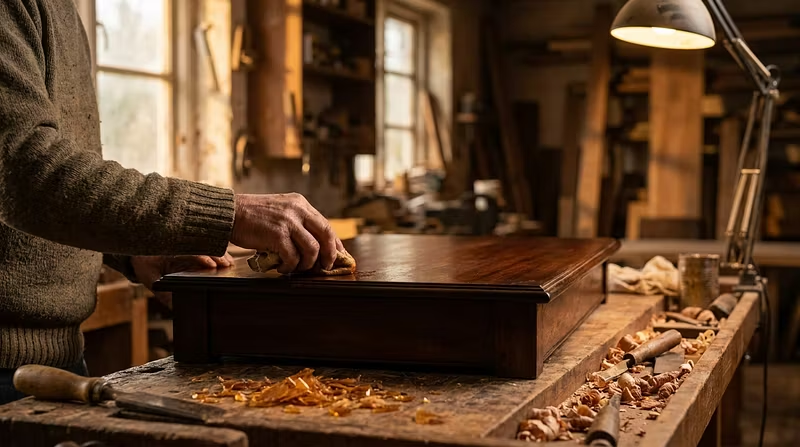


Why French polishing is one of the last real trade secrets left
Most wood finishes today are sprayed, wiped, or rolled on in minutes. French polishing is the opposite — and that's exactly why it's still valuable.
It's a shellac-based hand technique that's been used on fine furniture, pianos, and violins for over 200 years. No spray gun, no modern lacquer. Just a rubber (a wadded cloth pad), dissolved shellac flakes, a drop of oil, and thousands of tiny circular strokes that slowly build up dozens of microscopically thin coats until you get a finish with real depth — not just gloss, but a "look into it" mirror shine that synthetic finishes can't fake.
Here's the part most people don't realize: it's forgiving in a way spray finishes aren't. Scratch a sprayed lacquer table and you're stripping the whole top. Scratch a French polished one and a skilled polisher can spot-repair it in under an hour, blending seamlessly into the surrounding finish. That's why every serious antique restorer, auction house, and high-end furniture maker still keeps this skill in-house or on speed dial.
The catch: almost nobody teaches it properly anymore. It's traditionally been passed down master-to-apprentice in workshops that are disappearing. That's the gap we built Shellac & Shine Academy to close — structured, step-by-step training in the actual technique (mixing your cut, grain filling, bodying up, spiriting off) instead of vague YouTube demos.
If you restore furniture, do joinery, or just want a genuinely rare hands-on trade skill, it's worth learning properly. Happy to answer any technique questions in the comments.