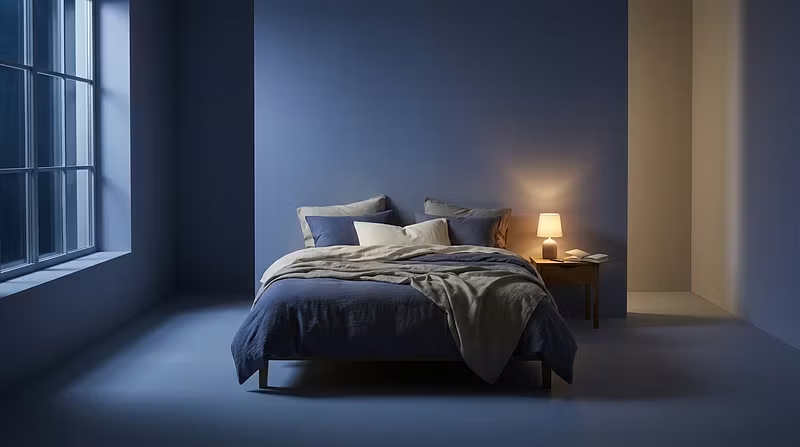

Imagine closing your eyes and actually falling asleep within minutes… no stress, no overthinking—just quiet, steady rest. This is where that begins.
Sleep Faster
2 joined
T
timorichterSF @timo26r·May 2
@timo26r·May 2T
timorichterSF@timo26r·May 2
@timo26r·May 2A simple sleep-tracking tool for adults who want to fall asleep faster even after a late work night or stressful day. It helps you spot what actually calms your system down without forcing extreme bedtime rules or a perfect routine.
T
timorichterSF@timo26r·May 2
@timo26r·May 2The one bedtime habit most adults get wrong (and the 2-minute fix)
Most adults have a bedtime. Very few have a wind-down time.
Here's the difference: bedtime is when you get into bed. Wind-down time is when you stop doing things that keep your brain alert — scrolling, working, watching something intense, eating a full meal.
The gap between those two moments matters more than the actual bedtime itself.
I tracked my own sleep for 90 days. The single biggest predictor of how fast I fell asleep wasn't what time I went to bed, or whether I avoided caffeine, or even how tired I was. It was the gap between my wind-down start and lights-out.
When that gap was less than 15 minutes, I took 35-45 minutes to fall asleep on average. When it was 30 minutes or more, I was out in under 15 minutes. Consistently.
The fix isn't complicated:
Pick a wind-down time that's 30 minutes before your lights-out target
Set a single alarm on your phone for that time
When it goes off: phone down, screens off, do something low-key (read, stretch, journal, just sit)
Notice how much faster you fall asleep within 3-4 days
That's it. No sleep supplements, no blue light glasses, no "put your phone in another room" advice that nobody follows.
The real insight came from tracking it — not guessing. When you can see the pattern on paper, the fix becomes obvious.
If you want the exact tracker I used to spot this (and a dozen other patterns), it's available here. But even without it — try the 30-minute wind-down gap tonight. You'll feel the difference.