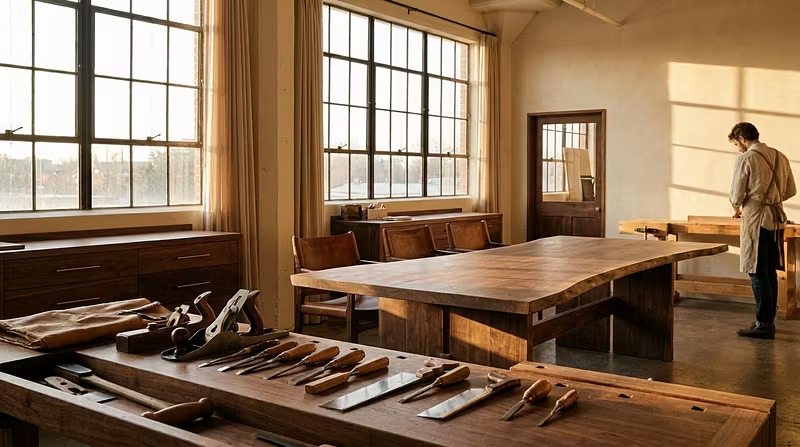


How I went from £650 to £2,400 for the same size dining table (no change in joinery)
Three years ago I priced a walnut dining table at £2,400 and the client didn't blink. Eighteen months before that, I was pricing the same size table in oak at £650 and still getting "that's a bit steep" comments.
Nothing about my joinery changed in between. Here's what did:
1. I stopped competing on the wood and started competing on the story.
Anyone can rip a board and glue a top. What people actually pay for is the story of the tree, the specific joinery method (through-tenon vs. drawbored mortise and tenon), and the fact that this exact piece will outlive them. Say that part out loud in your listings. Most makers bury it in a spec sheet nobody reads.
2. I raised prices before I felt "ready."
The single biggest lever in this trade isn't better tools or faster technique — it's the willingness to charge what the piece is actually worth. Every maker I know undercharges for the first 2-3 years because they're benchmarking against flat-pack furniture instead of against interior designers and architects, who are the buyers who actually value handmade work.
3. I started selling to the trade, not just retail.
One relationship with a single interior designer who specs your work into three client homes a year is worth more than a dozen one-off Etsy sales. Trade accounts don't haggle the way retail does either — they've already priced in quality.
4. Finishing is where furniture goes from "nice" to "heirloom."
Hardwax oil vs. film finish isn't just a technical choice, it's a value signal. A hand-rubbed oil finish that shows the grain and ages well tells a buyer this thing was made to be lived with, not just sold.
None of this is groundbreaking. It's just rarely said plainly because most woodworking content is about technique, not about the business of turning that technique into a living. Happy to go deeper on any of these — pricing strategy, trade relationships, or finishing choices — if it's useful to anyone here.