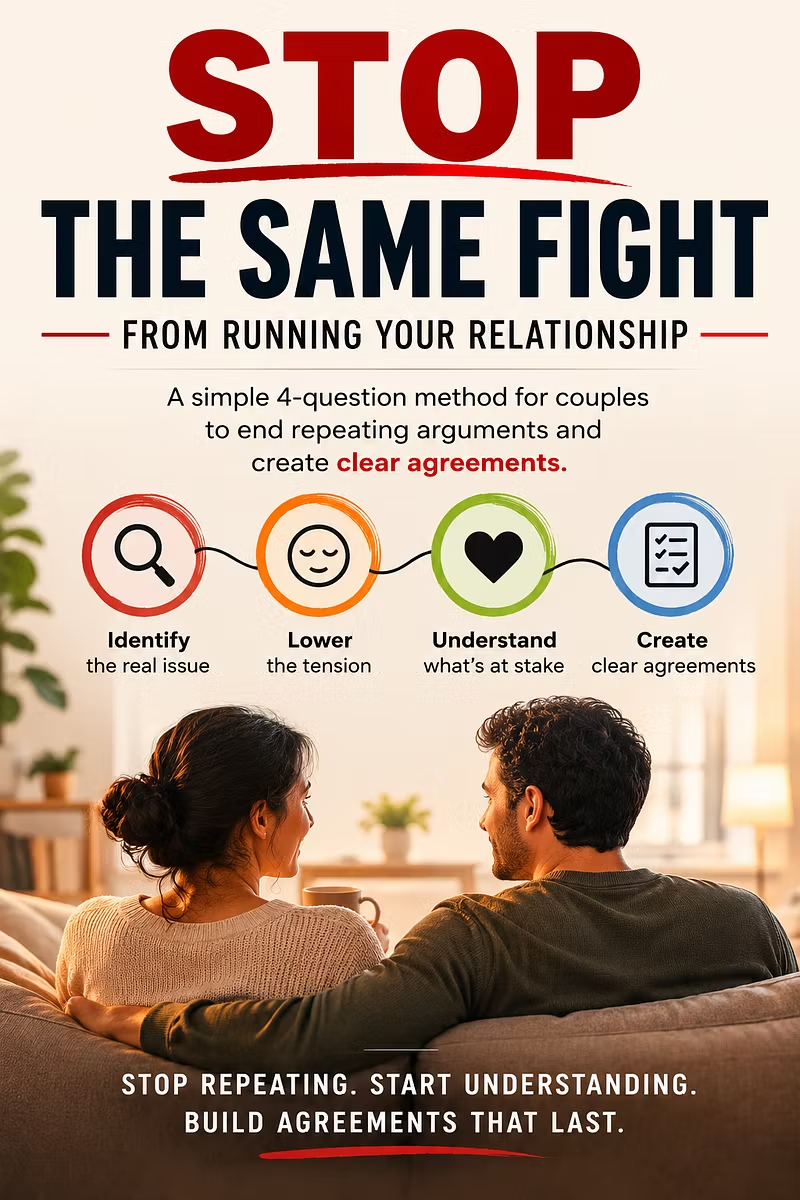
Stop the Same Fight

Stop the Same Fight is a simple four-question method for couples who keep getting stuck in the same arguments. Learn how to identify the rea...
Location hidden
Created byProfile pictureBeyond the Final
3 joined
Profile picture
Beyond the FinalProfile picture@goalglobe·2d

Stop the Same Fight is a practical seven-chapter guide for couples who want to turn recurring arguments into clear agreements, without shouting, shutting down, or carrying the tension into tomorrow.

You’ll learn how to identify what the argument is really about, lower the tension before the conversation gets worse, understand what each person is protecting, create one clear agreement, and repair it when things don’t go as planned.

Inside, you’ll get:

  • A complete seven-chapter relationship guide

  • The Agreement Audit Worksheet

  • The Traffic Light Pause Guide

  • Reusable conversation tools

  • A practical system for preventing the same argument from returning

This isn’t about winning the argument or finding the perfect words. It’s about making better decisions together and building agreements you can both actually follow.

Get instant lifetime access with one payment. No subscription.

Profile picture
Beyond the FinalProfile picture@goalglobe·Jun 14

The reason you keep having the same argument isn't what you think

Most couples think they fight about money, or chores, or schedules.


They don't.


They fight about the same decision that never got made — and because nobody named it, it comes back wearing a different costume every time. Monday it's about the dishes. Thursday it's about the in-laws. Saturday it's about who planned what.


Same argument. Different wrapper.


Here's what's actually happening underneath every repeat argument:


There's a fork — two options, one decision — and neither person has said it out loud.


"Should we split chores by task or by day?" is a decision.

"You never help around here" is not. That's a complaint about a decision that was never made.


The moment you rewrite the complaint as a decision, the fight loses its power. You stop looping through emotions and start solving a concrete problem.


A quick test you can run tonight


Think about the last argument that felt like déjà vu. Now ask yourself:


What's the actual decision hiding underneath this?


Write it as one sentence: "We need to decide ______."


If you can fill in that blank honestly, you've already done something most couples never do — you've spotted the real fork.


That's Chapter 1 of the process inside Couples Reaching Clear Agreements Without Shouting. Seven chapters. Four core questions. One system that ends with a written agreement, not a promise.


The full eBook is available now — $47, instant lifetime access, no subscription.

Profile picture
Beyond the FinalProfile picture@goalglobe·Jun 14

Why the Same 3 Arguments Keep Ruining Your Relationship (And the Fix Nobody Talks About)

Most couples think their fights are about the dishes, or who forgot to text back, or whose turn it is to deal with the in-laws.


They're not.


After studying how recurring conflict actually works in relationships, here's what I've found: the argument you're having today is almost never about today. It's about a pattern neither of you has named yet.


The Real Problem


Every couple has 3-5 recurring arguments. Same topics. Same triggers. Same emotional spiral. You fight about money — not because of one bill, but because you've never agreed on what "being responsible with money" actually means to each of you.


You fight about chores — not because someone didn't vacuum, but because the invisible workload has never been made visible and divided fairly.


You fight about time — not because someone came home late, but because you've never clearly defined what "quality time" looks like for both of you.


The fight isn't the problem. The missing agreement is.


What Actually Works


Couples who break the cycle do three things:


1. They name the pattern, not just the incident.

Instead of "you never help with dinner," it becomes "we keep disagreeing about how we split weeknight responsibilities." Naming the pattern takes it from personal attack to shared problem.


2. They document what was actually agreed.

Not in their heads. On paper. "I cook Monday-Thursday, you cook Friday-Sunday, and we order in once a week." Specific. Measurable. Reviewable.


3. They check whether the agreement held — before the next blowup.

A 10-minute weekly check-in where you review what worked, what didn't, and what needs adjusting. That's it. No therapy couch required.


The Shift


The couples who go from "we keep fighting about the same stuff" to "we actually handle disagreements now" aren't doing anything magical. They just stopped relying on memory and goodwill, and started using a simple system:


  • Identify the recurring topic

  • Capture both viewpoints honestly

  • Write a clear agreement

  • Follow up on whether it stuck


That's the entire framework. The hard part isn't understanding it — it's doing it consistently.


If this resonates, I built a tracker that walks you through exactly this process. It's not therapy. It's not a course. It's a practical system for couples who want better communication and real follow-through.