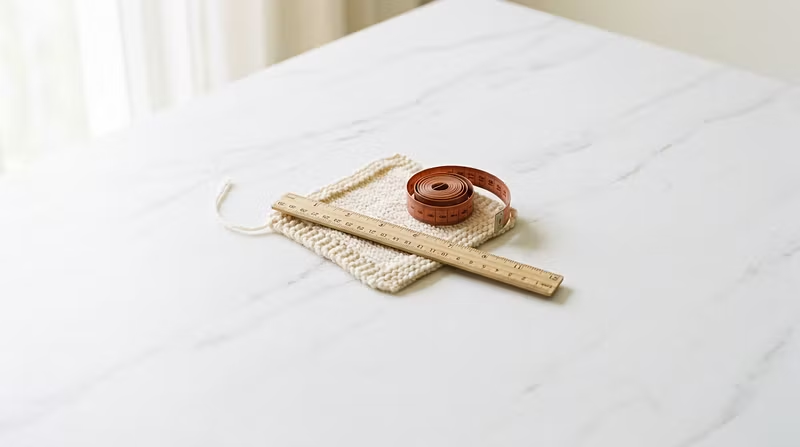


Why Your Sweater Sizes Don't Match — The Gauge Math Most Designers Skip
You knit the swatch. You measured it. You plugged in the numbers. And yet your XL is too tight and your XS is swimming.
The problem isn't your knitting. It's your grading math.
Most knitwear designers learn gauge basics — stitches per inch, rows per inch, done. But converting a single base size into a full, accurately graded size range (XS through 5XL) requires a system that most self-taught designers never build.
Here are the 3 most common places the math breaks down:
---
1. Measuring Before Blocking
If you're measuring your gauge swatch before washing and blocking it the same way you'll treat the finished garment, your numbers are wrong before you even start. Superwash wools can grow 10–15% after blocking. That's the difference between a size M and a size L.
The fix: Always wet-block your swatch. Measure only after it's bone dry.
2. Inconsistent Ease Across Sizes
Adding 3″ of ease to a size S and 3″ to a size 3XL produces very different proportional fits. Many designers apply ease in stitches instead of inches, which causes the error to compound at larger sizes.
The fix: Define ease in inches. Convert to stitches after. Keep it consistent unless you're intentionally adjusting for fit.
3. No Backward Validation
You calculated 108 stitches for the XL bust. But did you ever divide 108 by your SPI to confirm it actually equals the finished bust measurement you intended? Most designers don't. This single step catches 80% of grading errors.
The fix: Always reverse-calculate. Stitches ÷ SPI should match your target dimension within ¼″.
---
The Real Solution
What you need isn't more math intuition — it's a system. A repeatable process with built-in validation that catches errors before they reach a test knitter.
That's exactly what I teach inside Swatch Math Studio. The course, templates, and SOPs give you a complete grading workflow that works for any gauge, any yarn, any silhouette.
If you're publishing patterns with more than 2 sizes, you need this.