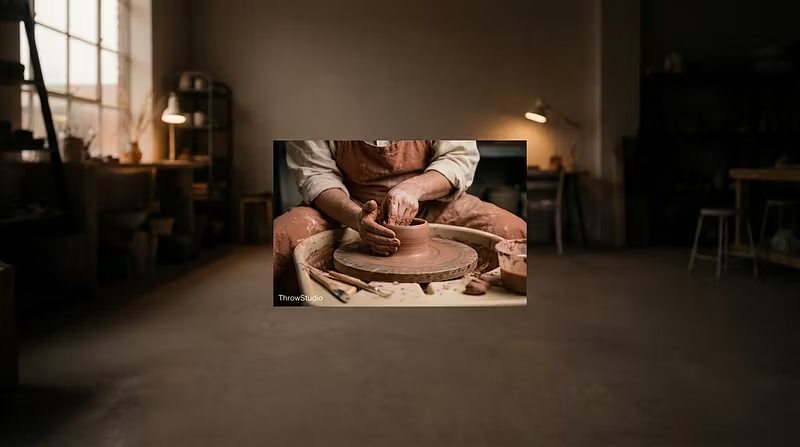
ThrowStudio

Master the art of pottery. Step-by-step tutorials for beginners to advanced — wheel throwing, hand-building, glazing, and firing. Learn at y...
7 joined
Profile picture
kristineProfile picture@kristine2540·Jul 30

The #1 mistake beginner potters make (and it's not centering)

Most people assume centering is where beginners fail. It's not — it's wedging.


If you skip proper wedging, you're throwing with clay that has uneven moisture and trapped air pockets. That's what causes the wobble everyone blames on "bad centering," and it's also a leading cause of pieces cracking or exploding in the kiln later.


Two wedging methods worth learning:

  • Spiral wedging — best for larger amounts of clay, builds a consistent spiral pattern that evens out density

  • Ram's head wedging — better for smaller pieces, easier motion to learn


Once your clay is properly wedged, centering gets dramatically easier because you're no longer fighting inconsistent clay on top of learning hand position.


We just built out a full progression at ThrowStudio — free fundamentals (clay prep, wheel setup, your first cylinder) through advanced work (closed forms, glaze chemistry, kiln troubleshooting). If you're stuck at the wheel, it's probably not your hands. It's your prep.

Profile picture
kristineProfile picture@kristine2540·Jun 27

The one thing I wish someone told me before I touched a pottery wheel

I'm a pottery teacher, and I've watched hundreds of beginners sit down at a wheel for the first time.


Every single one makes the same mistake: they try to force the clay.


Pottery is not about muscle. It's about water, pressure, and patience. The moment you push too hard, the clay fights back — and beginners interpret that as "I'm bad at this." They're not bad at it. They just haven't learned to listen to the material yet.


Here's what actually works for total beginners:


Start with less clay than you think. A 500g ball is enough to learn centering. Most beginners throw 1kg and wonder why they can't control it.


Use more water than feels comfortable. Friction is the enemy. Your hands should glide, not grip.


Slow the wheel down. Beginners always spin too fast. Control comes from slow, deliberate movement — not speed.


Don't try to make anything for your first three sessions. Just center and collapse. Over and over. It feels pointless, but it's where the skill comes from.


The craft has a learning curve, but it's not steep. It just requires showing up consistently and trusting the process.


That's what ThrowStudio is built around — step-by-step, no-fluff tutorials for people who've never touched clay before.


If you've been curious about pottery, now is a good time to start.