

The real reason twin parents burn out on night shifts (it's not the wake-ups)
Most people think twin night shifts are hard because of the volume — twice the feedings, twice the diapers, twice the crying.
That's part of it. But it's not why parents actually break down.
The real killer is coordination failure.
Here's what it looks like: Baby A wakes up at 1:15 AM. You hear it. Your partner hears it. You both lie there for 30 seconds wondering whose turn it is. Eventually one of you gets up — probably whoever has the lower threshold for guilt.
Meanwhile Baby B is still asleep. But by the time you finish the first feed and settle back in, Baby B wakes up. Now you're both awake. Both annoyed. Both exhausted. And neither of you remembers who fed whom last.
3 missed handoffs turn one ordinary night into a full-body scramble.
The fix isn't sleeping more. It's not trading off whole nights (unsustainable with twins). It's not "communicating better" at 2 AM — you can barely form sentences.
The fix is a dead-simple system:
One owner per stretch. Not "we'll figure it out." One name on each block of time. The other person is off duty. Period.
Clear wake-up rules. Define exactly when the off-duty parent gets woken up. Two crying babies at once? Yes. One baby with a normal feed? No. Remove the judgment call.
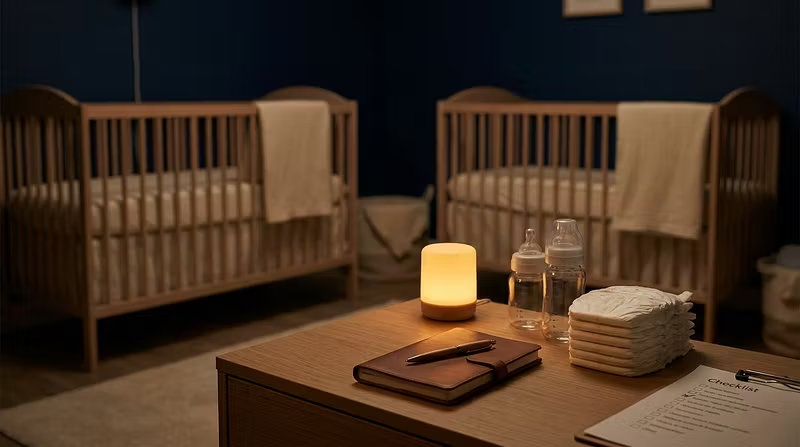
Fixed supply spots. Bottles, diapers, wipes, burp cloths — same place every night. No fumbling in the dark. Restock before the shift starts, not during.
Write it down. A notebook by the crib. Feed times, diaper changes, anything unusual. Because at 4 AM your brain will tell you "I'll remember this." You won't.
We put all of this into a free guide called the Night Shift Ledger. Under an hour to read. Apply it the same night.
If you're in the twin trenches right now — it gets better. And it gets better faster when you stop relying on willpower and start relying on a system.