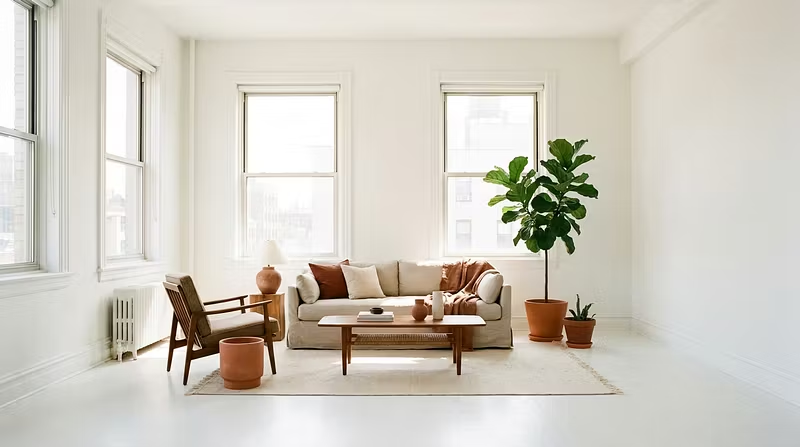


Why luxury showrooms and 400 sq ft apartments follow the exact same design rule
I've spent years studying why a high-end boutique feels expensive even when it's nearly empty, and why some 2,000 sq ft apartments feel cramped no matter how much furniture you add.
The answer is the same in both cases: negative space is the product.
Luxury retail brands don't fill a showroom to show off inventory — they fill it to show off restraint. Every item earns its spot. The eye has room to breathe between pieces, so each one reads as valuable instead of cluttered.
Small apartments work the same way. The instinct is to fill every corner because the space is "limited" — but that's backwards. The smaller the room, the more each object needs to justify itself. A studio with 8 well-chosen pieces feels bigger and richer than one with 20 mediocre ones.
Three things I check first in any space, home or showroom:
Sightlines — what do you see first when you walk in? That's the piece that has to be right.
Repetition of material — luxury spaces repeat 2-3 materials max (e.g. brass + oak + linen). Mixing 6+ materials is what makes budget spaces feel busy.
Vertical breathing room — empty wall space above furniture reads as expensive. Floor-to-ceiling clutter reads as cheap, regardless of the price of the items.
If you're staging a showroom or just trying to make your apartment feel less chaotic, start by removing, not adding. It's the fastest, cheapest way to make any space feel designed instead of decorated.
— Valsé Studio