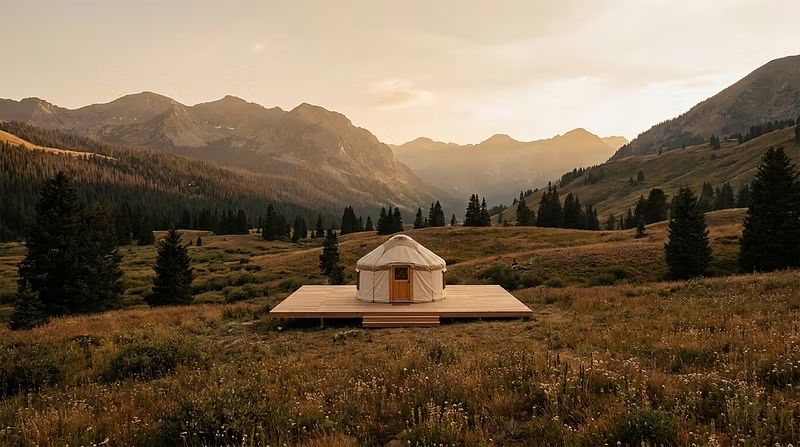


The 5 Foundation Mistakes That Destroy Yurt Platforms (And How to Avoid Them)
After coaching dozens of yurt builders through their platform foundations, I see the same critical errors repeated. Here are the five that cause the most structural damage — and what to do instead.
1. Ignoring Soil Drainage Before You Pour
Most builders pick their site based on the view and start building. Six months later, water pools under the platform and rot begins. Before you place a single pier, do a percolation test: dig a 12" hole, fill it with water, and time how long it takes to drain. If it takes more than 4 hours, you need to regrade or install a French drain system before any foundation work begins.
2. Undersizing Joists for Snow Load
A yurt platform isn't a standard deck. The circular live load distribution from the lattice wall (khana) concentrates force differently than a rectangular structure. In snow country, you need to calculate for both the uniform snow load AND the drift load against the yurt wall. Standard 2x8 joists at 16" OC that work for a porch will fail under a 24' yurt with 40 psf snow load. Run the numbers — most yurt platforms need 2x10 or 2x12 joists at 12" OC depending on span.
3. Forgetting the Ledger-to-Rim Connection
The ledger board is the backbone of your platform's perimeter. If you're running a continuous rim joist around a circular or polygonal platform, the connection between your ledger and rim must handle both vertical shear and lateral pull. Use structural screws (GRK RSS or Simpson SDS) — not lag bolts — and add blocking every 24" at transition points. A weak ledger connection is invisible until the platform shifts under wind load.
4. Running Anchor Cables Without Proper Tension Specs
Anchor cables prevent uplift in high winds — critical for yurts since they're essentially giant sails. The mistake is installing cables "tight enough" by feel. You need a tension gauge. For a standard 24' yurt, each cable should be tensioned to 200-300 lbs depending on your local wind speed design criteria. Under-tensioned cables allow micro-movement that fatigues hardware. Over-tensioned cables can crack pier blocks or pull out ground anchors.
5. Skipping the Vapor Barrier
Ground moisture migrates upward constantly. Without a 6-mil poly vapor barrier between the ground and your platform underside, you're inviting mold and accelerated wood decay. This is a $50 fix that adds years to your platform's life. Overlap seams by 12", tape them, and extend the barrier 6" beyond the platform perimeter.
Want the complete system? My 30-Day Yurt Platform Foundations Cohort walks you through every calculation, every connection detail, and every inspection checkpoint — from site assessment to build-day prep. Enrollment is open now.