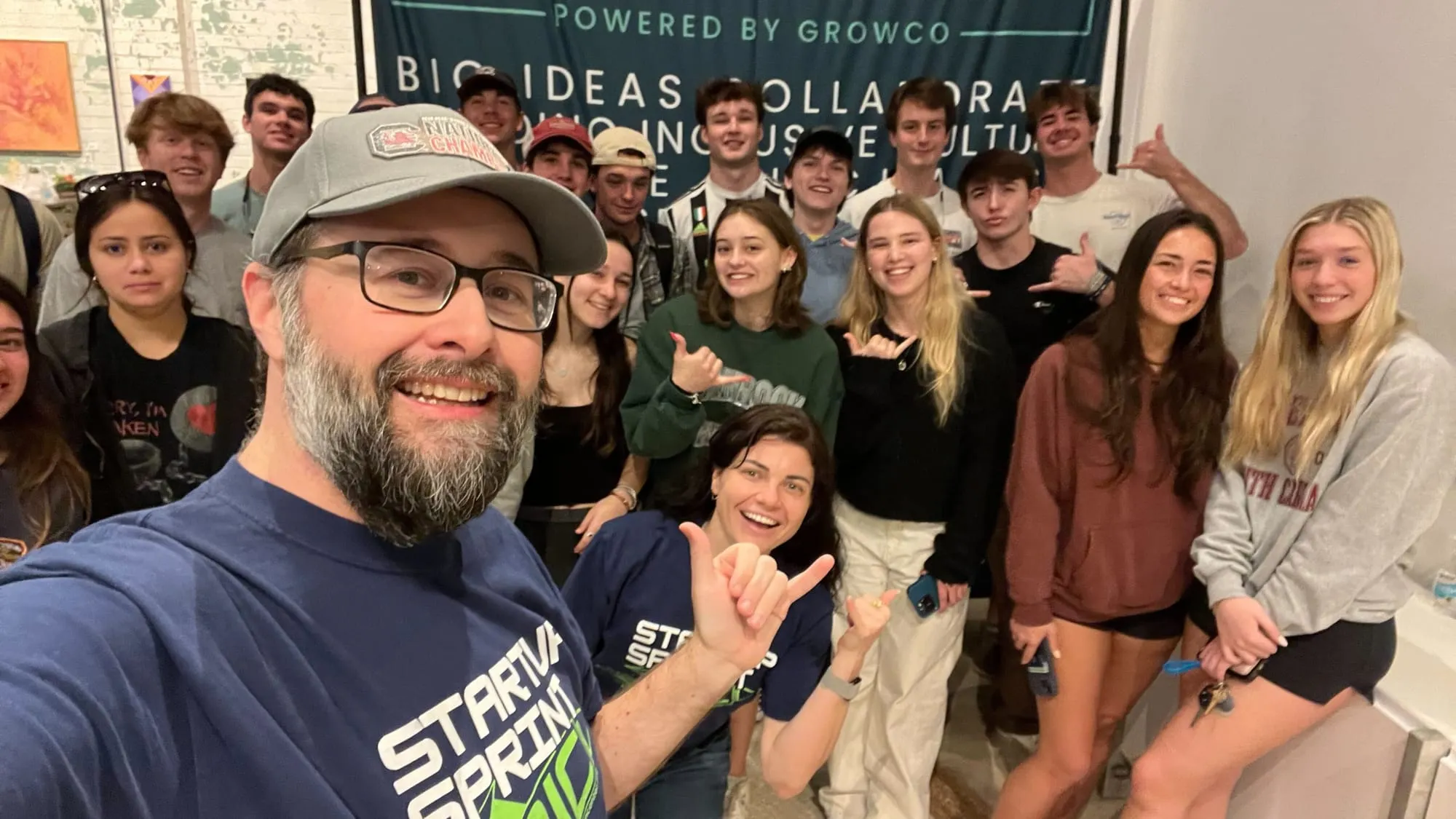
A University of South Carolina consulting class used Whop to build a podcast reflecting on real client work, and turned it into a USASBE award-winning project.
Key takeaways
- Publishing student reflections as a public podcast turns private coursework into real, accountable work with lasting value.
- Judges rewarded the project because it worked in practice and other educators could realistically replicate it.
- Giving student work a live platform, and successors to continue it, sustains learning long after the semester ends.
A student casually commented that his professor Geoffrey Graybeal had a voice for podcasting. By the end of the semester, he and his students had produced a real podcast, on a real platform, for real clients. And they'd even won an award for it.
This is the story of how a student podcast hosted on Whop placed at the USASBE (United States Association for Small Business and Entrepreneurship) 3E Awards.
Meet Dr. Geoffrey Graybeal and his students
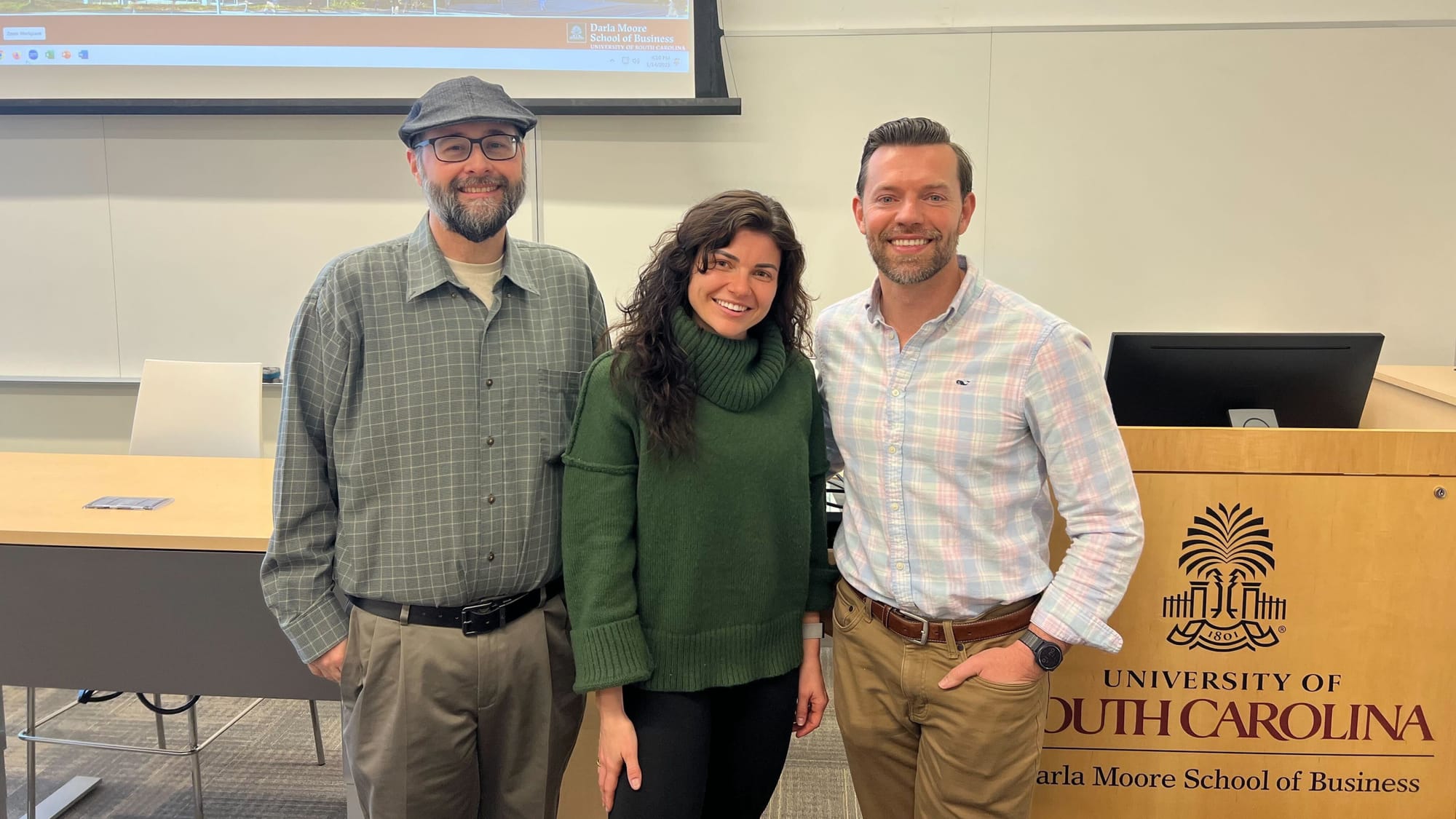
The University of South Carolina’s School of Business has an impressive curriculum, helping students learn through real-world applications with experienced mentors.
Dr. Geoffrey Graybeal is one of those mentors. He’s Executive Director of the Faber Entrepreneurship Center and a professor at the Darla Moore School of Business, teaching multiple classes in entrepreneurship.
One of those classes, Management 479, is built around consulting with real clients through semester-long projects: the kind of hands-on learning that defines his teaching philosophy, the REAL method: Relevant, Engaged, Adaptive Learning.
This semester, he kept it real with his students by getting them set up on Whop to produce a podcast. Not a mock assignment, a real show.
And it made sense. His students had already learned how to build products on Whop just down the hall.
Whop enters the classroom
Caroline Crowder, Director of University Partnerships at Whop, was once an adjunct professor at USC. And in her class, students were building products on Whop.
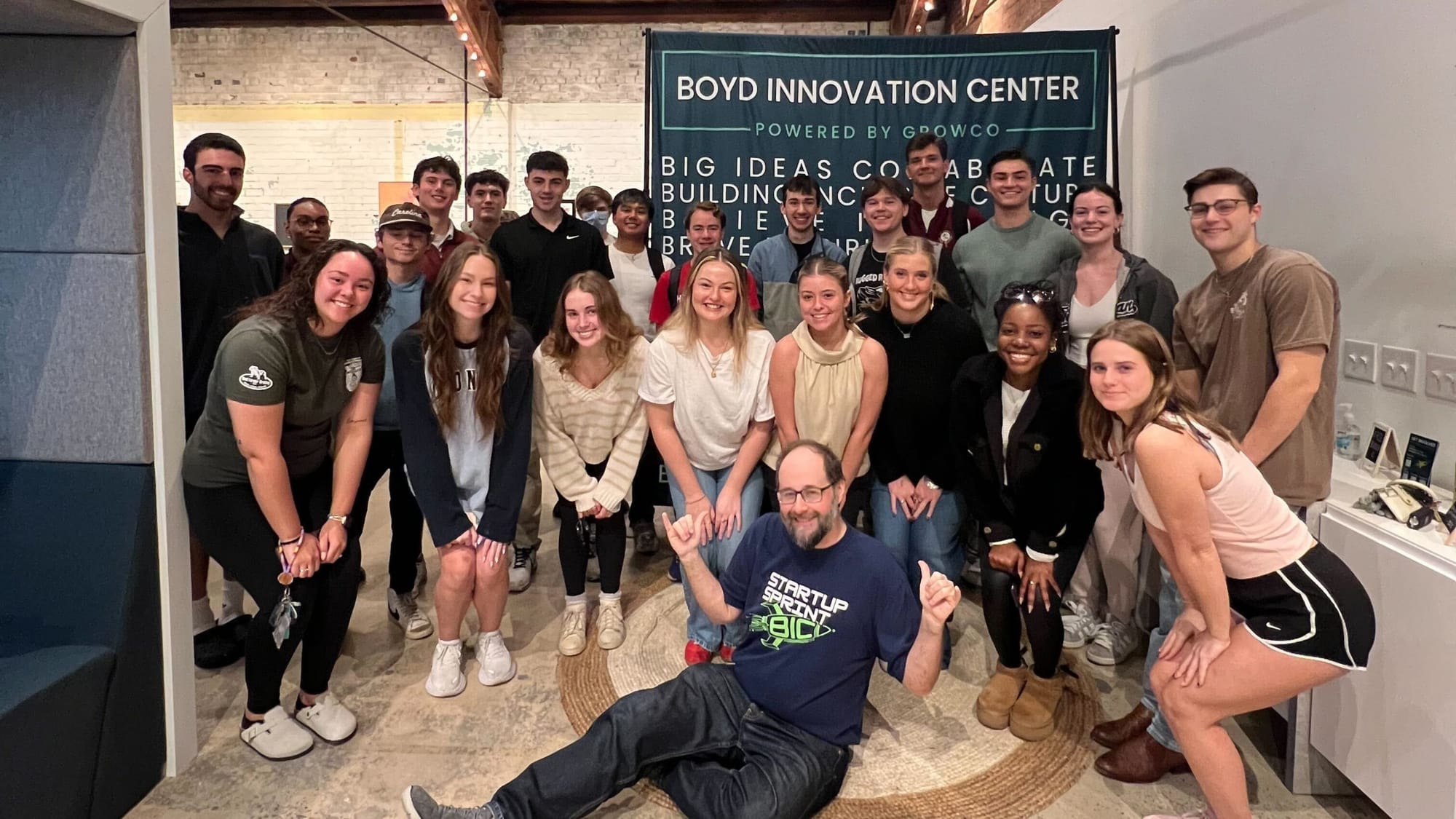
Some of those same students walked down the hall into Dr. Geoff’s class, and kept talking about Whop during his class. “At least half of the students that were in my class were in Caroline’s class,” he says.
It was one of those students who told Geoff he had a voice for podcasting.
“And I said, okay, bet. We’re going to make a podcast. Our class is going to make a podcast.”
Part of the Business School's strategy for the year was to pull the wool back on the way they taught, and be more public-facing. What better way to do it than a podcast?
And it just so happened Whop had everything necessary to host, run, and distribute a podcast: file uploads for episodes, announcement channels to engage audiences outside of drops, and built-in tools for sharing promotional content.
It also gave students a way to experiment with pricing and earning online revenue, even if monetization wasn’t fully used.
But this wasn’t just a podcast. It still had to meet the demands of a senior-level consulting class.
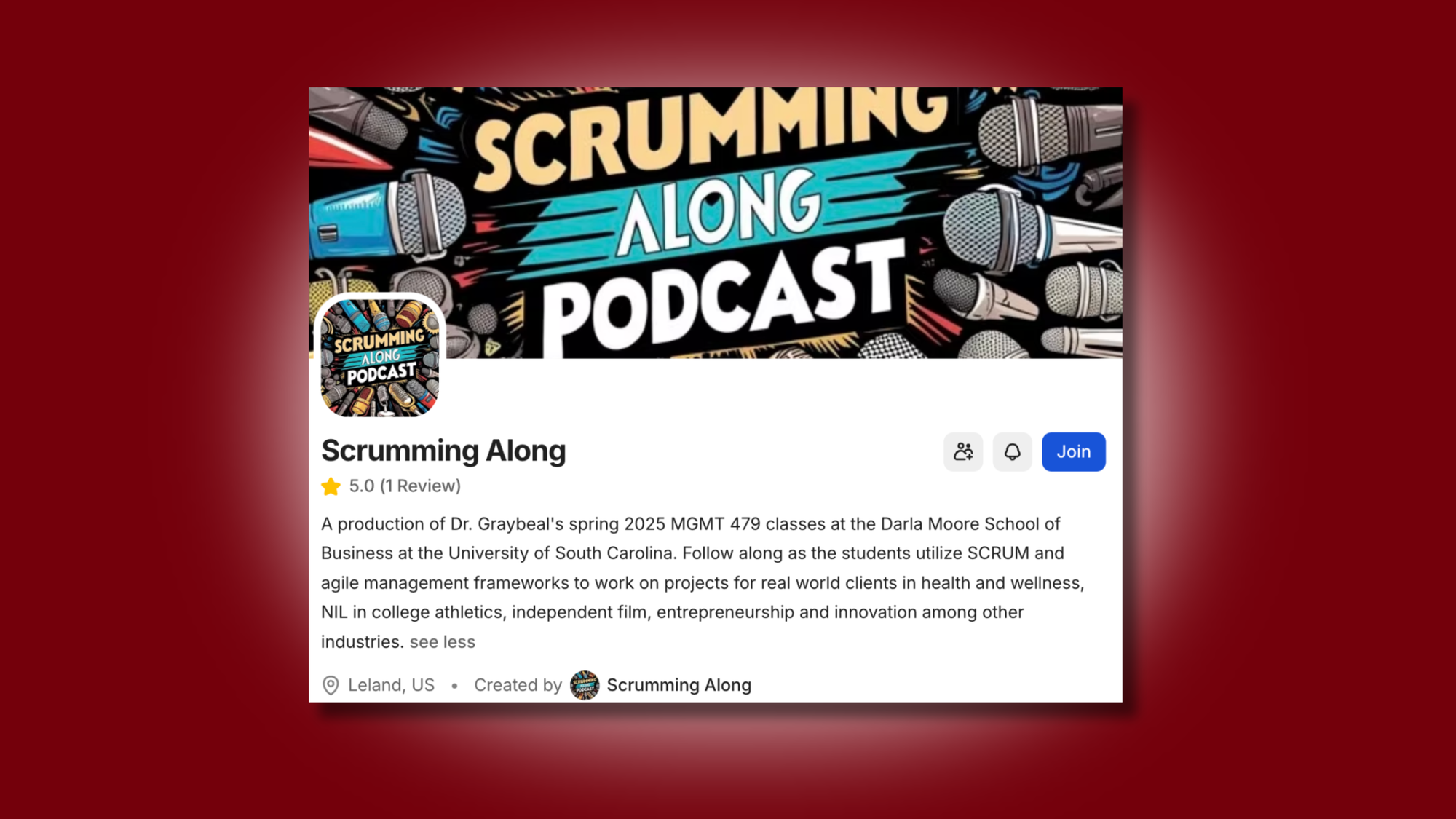
How the Scrumming Along podcast was created
In total, 64 students worked with 13 to 14 real-world clients, managing semester-long projects through short work cycles, regular check-ins, and constant iteration (drawing back to Scrum and Agile methodologies).
Because of that, the podcast name came naturally. Geoff became the “Scrum Master,” and the podcast was named Scrumming Along.
The first few weeks were spent learning frameworks, meeting clients, and defining the scope of each consulting project. The clients weren’t hypothetical, they included a rebranding wellness studio, an NIL startup working with USC Athletics, a nonprofit supporting victims of gender-based violence, and Beaufort Digital Corridor.
Each team was responsible for delivering real outcomes for their client, whether that meant research, strategy, branding, or project execution. The podcast wasn’t the project itself, but part of the reflection rubric.
Replacing reflective writing with live discussion
Traditionally, this part of the course ends with a written task, where students break down what they did, what worked, and what didn’t. This time, that reflection became something public.
- Each team produced a 30 to 45-minute podcast episode, documenting their client, their process, and what they learned. Then they published it on Whop.
- Students owned everything. There were no assigned roles or predefined workflows. Teams handled content, recording, branding, and distribution themselves, figuring out what worked as they went.
- Some teams recorded studio interviews with their clients. Others ran remote sessions, covered live events like Beaufort Techstars Startup Weekend, or experimented with more immersive formats, from sound bath sessions to on-location shoots at a local cinema.
Monetization was part of the platform, but not the main focus. It became more of a way for students to think through pricing and value, introducing another layer of decision-making.
What USASBE does (and why the award matters)
USASBE, or the United States Association of Small Business and Entrepreneurship, is a national organization that brings together entrepreneurship educators, researchers, and practitioners from across America.
Each year, the organization hosts a major conference where faculty present new teaching methods, case studies, and classroom experiments.
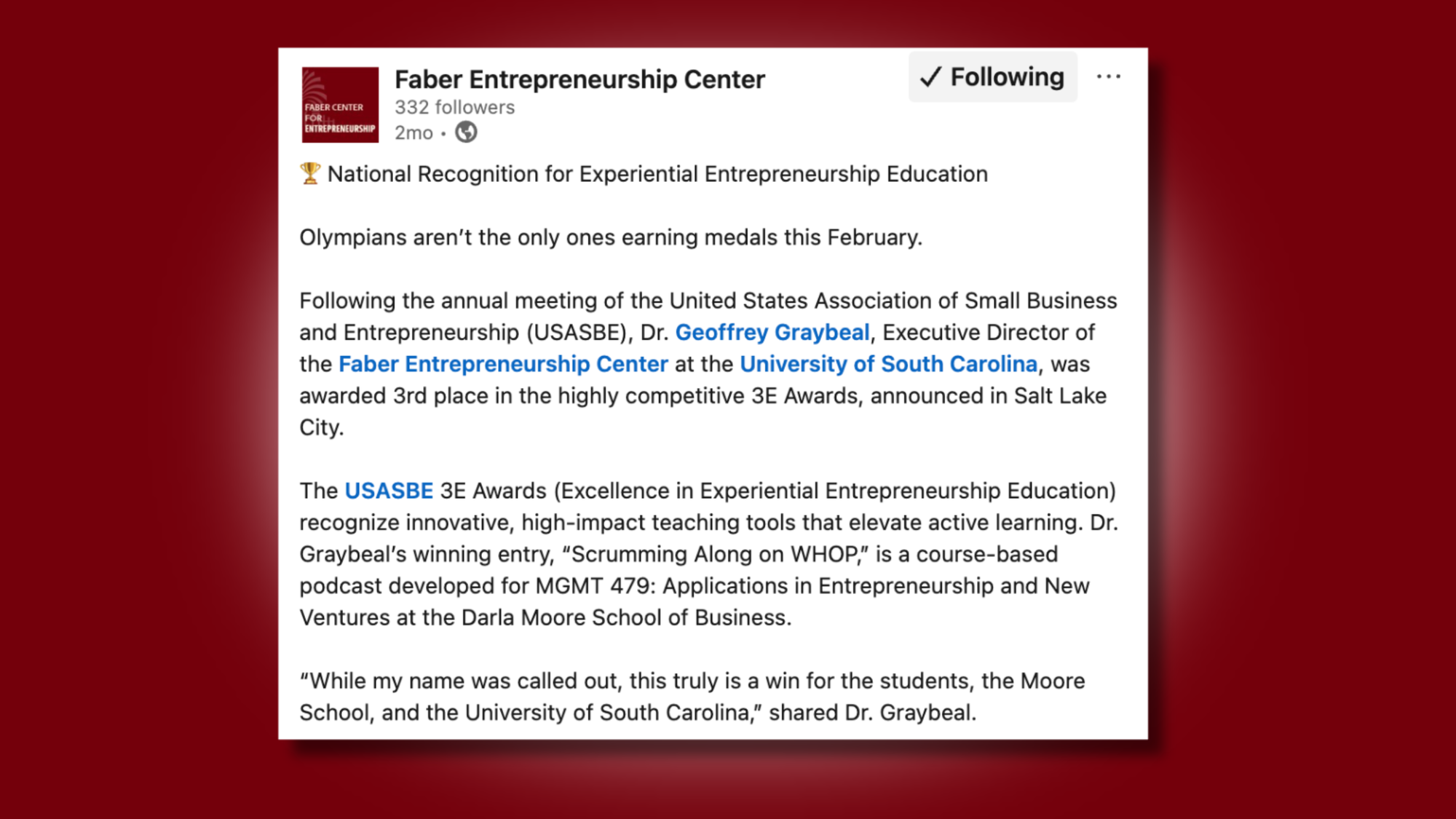
The 3E Awards recognise Excellence in Experiential Entrepreneurship Education. Submissions go through peer review months before the conference, and only those that meet the bar for quality and rigour make it into the running. From there, presentations are delivered live, with attendees evaluating them in real time.
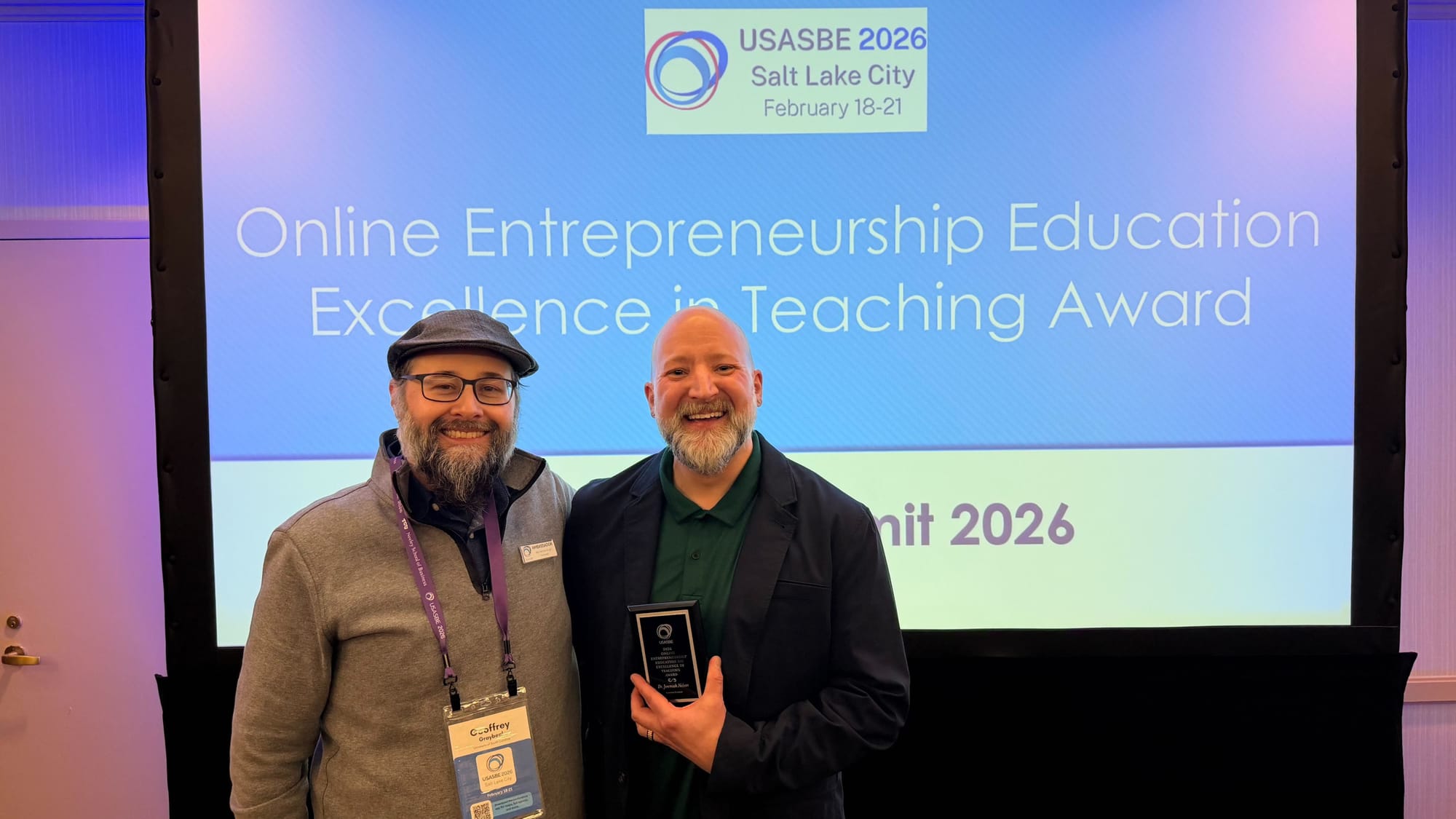
“You attend the session, and there’s a QR code form to fill out. You had to attest that you were physically in the room, and that you watched the presentation,” Geoff explained. “This was so competitors couldn't have someone create an AI bot or send it out on social media for votes.”
Judging for the award wasn’t based on novelty alone, evaluators had to consider whether the projects presented actually worked in practice, and whether other educators could realistically adopt it.
Scrumming Along stood out. One judge's response said it all:
"You could build an entire course around this.”
– USASBE judge
It's worth noting that Geoff is deeply involved with USASBE, serving as co-leader of the Online Entrepreneurship Education special interest group: though he had no involvement in the judging this year.
And the format itself has academic backing: podcast pedagogy has been gaining traction in recent years, with educators increasingly using student-created podcasts as a legitimate learning and reflection tool.
Scrumming Along sustained after semester ends
The podcast created by Geoff’s consulting class didn’t stop with them. Instead, it was picked up by the ‘Favor Fellows’, a group of student entrepreneurs working within the Faber Entrepreneurship Center at the University of South Carolina.
It’s now led by Elisha Wilson, a Favor Fellow working on her own venture, FinWiz.
New episodes are in production, and the course itself is feeding back into the experiment.
In Geoff’s introductory class (Management 373), students are now using Scrumming Along as a case study. They’re revisiting the project and exploring how it could evolve, how it should be distributed, and whether it should expand beyond Whop to platforms like Spotify.
TL;DR: What started as a one-semester assignment has turned into something ongoing. Not just a podcast, but a collaborative project that gets to be tested, iterated on, and reshaped by new students.
That’s the difference between a university assignment, and something that continues in the real world.
Whop Higher Education: Helping universities build real-world initiatives for students
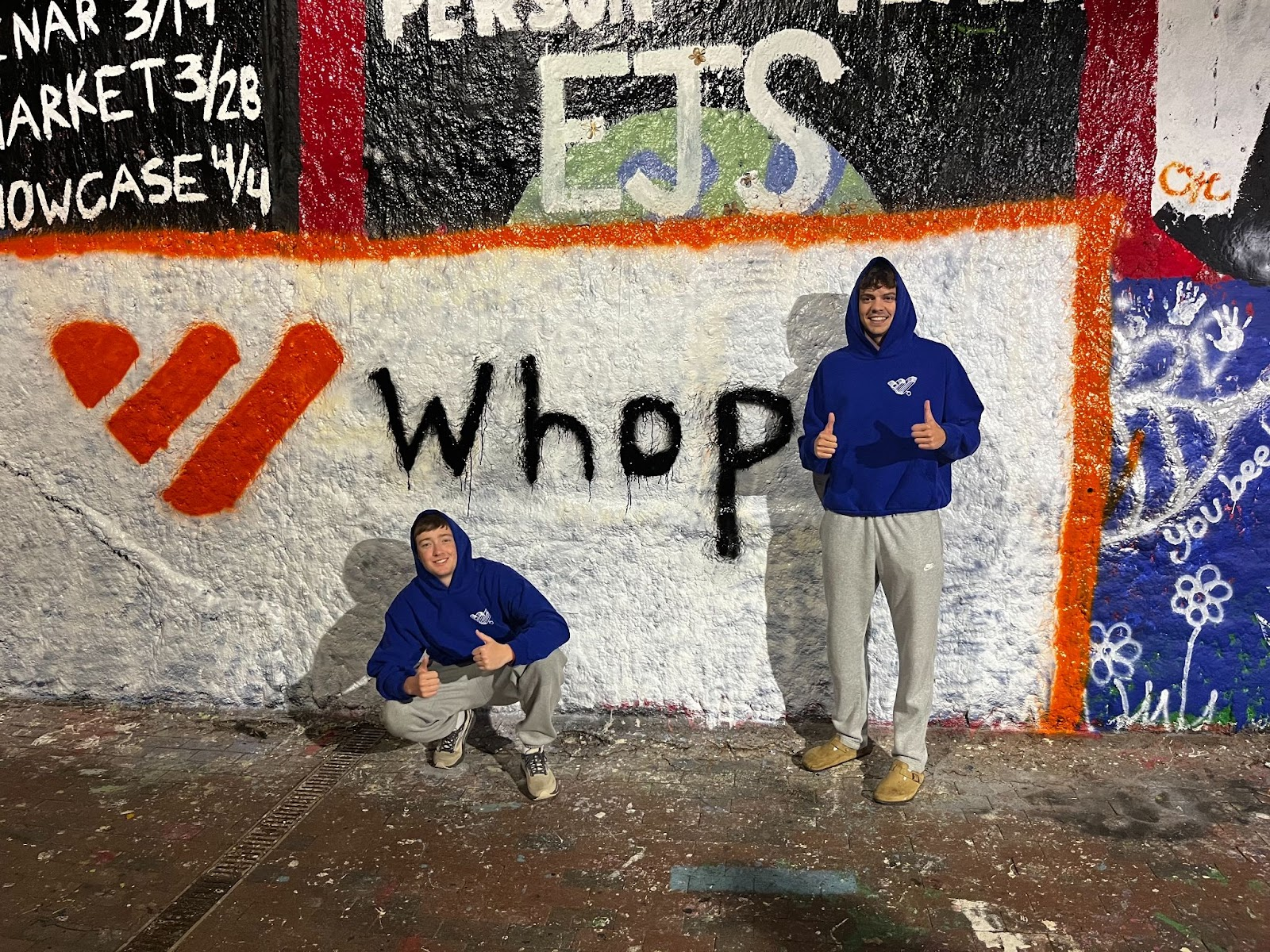
USC isn't the only university using Whop to give students real-world experience before they graduate.
More than 100 universities are already part of Whop's Higher Education program, and the goal is simple: instead of keeping student work inside the classroom, give it somewhere to live. Somewhere it can be shared, tested, and even monetized.
Students can build and sell directly on Whop, from communities and courses to software, consulting, or content, without needing to set up separate tools or infrastructure. Professors don't need any technical experience to get started, and students can have a product live in under ten minutes.
Nearly 4,000 student businesses have launched so far, with a goal of reaching 100,000 students by the end of 2026. The Higher Education team has collectively spoken at 249 universities, and Caroline, who once taught Whop to students as an adjunct professor at USC, now leads that effort full-time as Director of University Partnerships & Operations.
Students at schools like USC, Princeton, Columbia, and NC State are already building and collecting revenue from real customers while they're still studying.
REAL learning with real practice
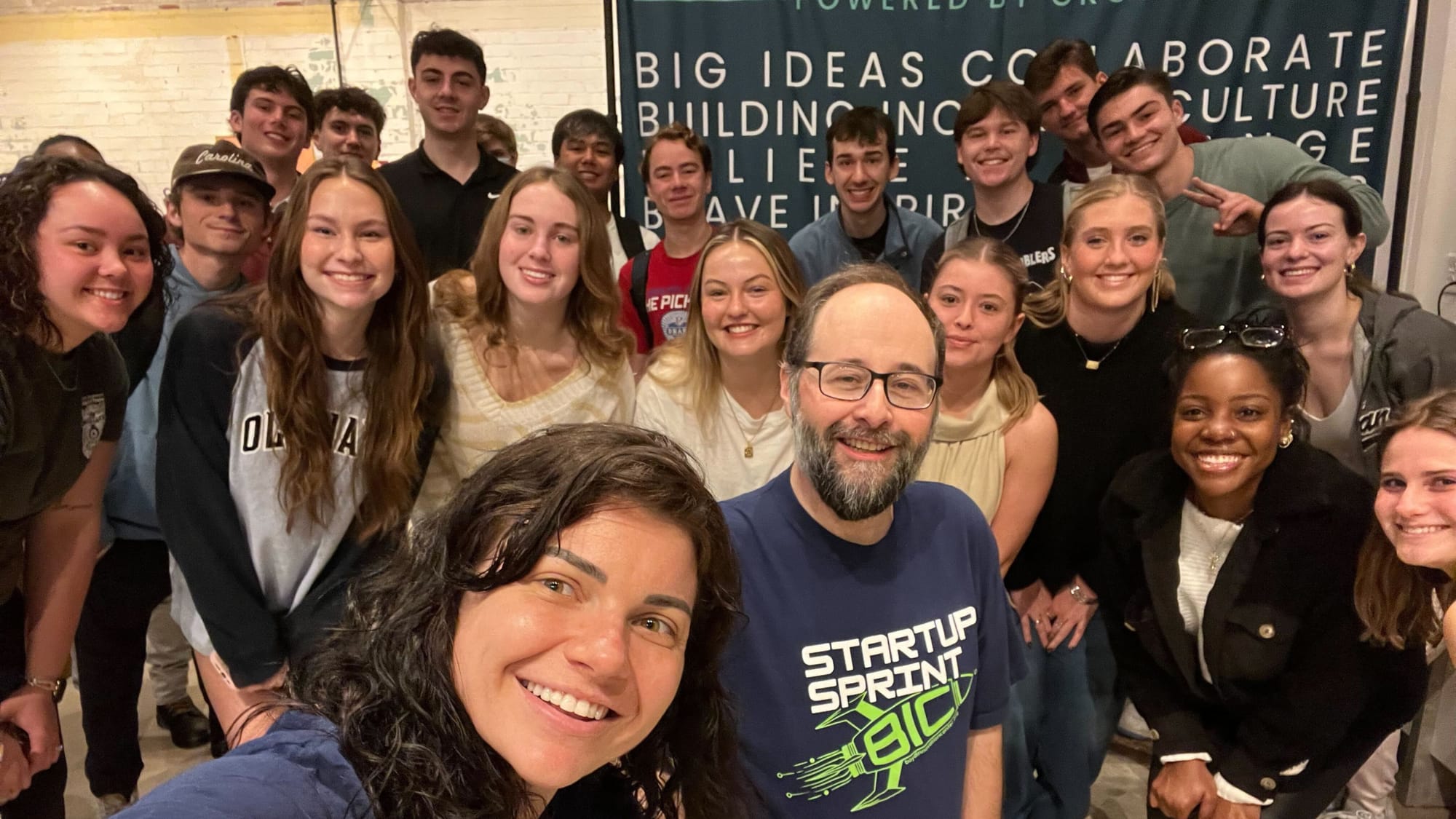
Learning is changing, even inside university classrooms. The more real-world application students can get before graduating, the higher their chance of success in landing an aligned role after graduating.
The work Geoff’s class undertook was relevant, tied to real clients and real outcomes. It was engaged, requiring students to collaborate, communicate, and show up every week. And it was adaptive, shaped in real time by feedback, constraints, and what actually worked.
The award wasn’t the point (though it was a flex). But most importantly, it confirmed something important: this way of teaching works.
Looking to implement something similar for your students? Contact us to get a custom Whop set up for your university, or schedule an onboarding call with our team.