Afterpay can increase conversions and average order value. Learn how Afterpay (Cash App Afterpay) works, what it costs, and whether offering BNPL makes sense for your store.
Key takeaways
- Afterpay is worth offering only if increased sales and higher order values outweigh the 4-6% merchant fees.
- Merchants receive full payment upfront while Afterpay absorbs all credit and repayment risk.
- Afterpay works best for businesses with $50-$500 average orders, healthy margins, and younger customer bases.
Afterpay can absolutely be worth offering as a merchant, but only if the extra sales and higher order values outweigh the fees you’ll pay to use it.
For some businesses, Afterpay becomes a conversion machine, capturing customers that otherwise would not hit 'buy'.
For others, merchant fees eat straight into already-thin margins.
Keep reading and find how Afterpay works for merchants, how much Afterpay charges merchants, what those fees actually look like, and whether adding BNPL makes financial sense for your store.
Note: Afterpay still exists as a global BNPL brand, but in the U.S. it is now branded as Cash App Afterpay.
What is Afterpay (Cash App Afterpay), and how does it work for merchants?
Afterpay is a Buy Now, Pay Later tool that lets customers split their purchase into four interest-free payments - but as a seller, you still get paid upfront.
That’s the main win for merchants - your customers get flexibility, while you get the full sale (minus fees), and Afterpay takes on the repayment risk.
Here’s how it works on the merchant side:
A customer checks out using Afterpay
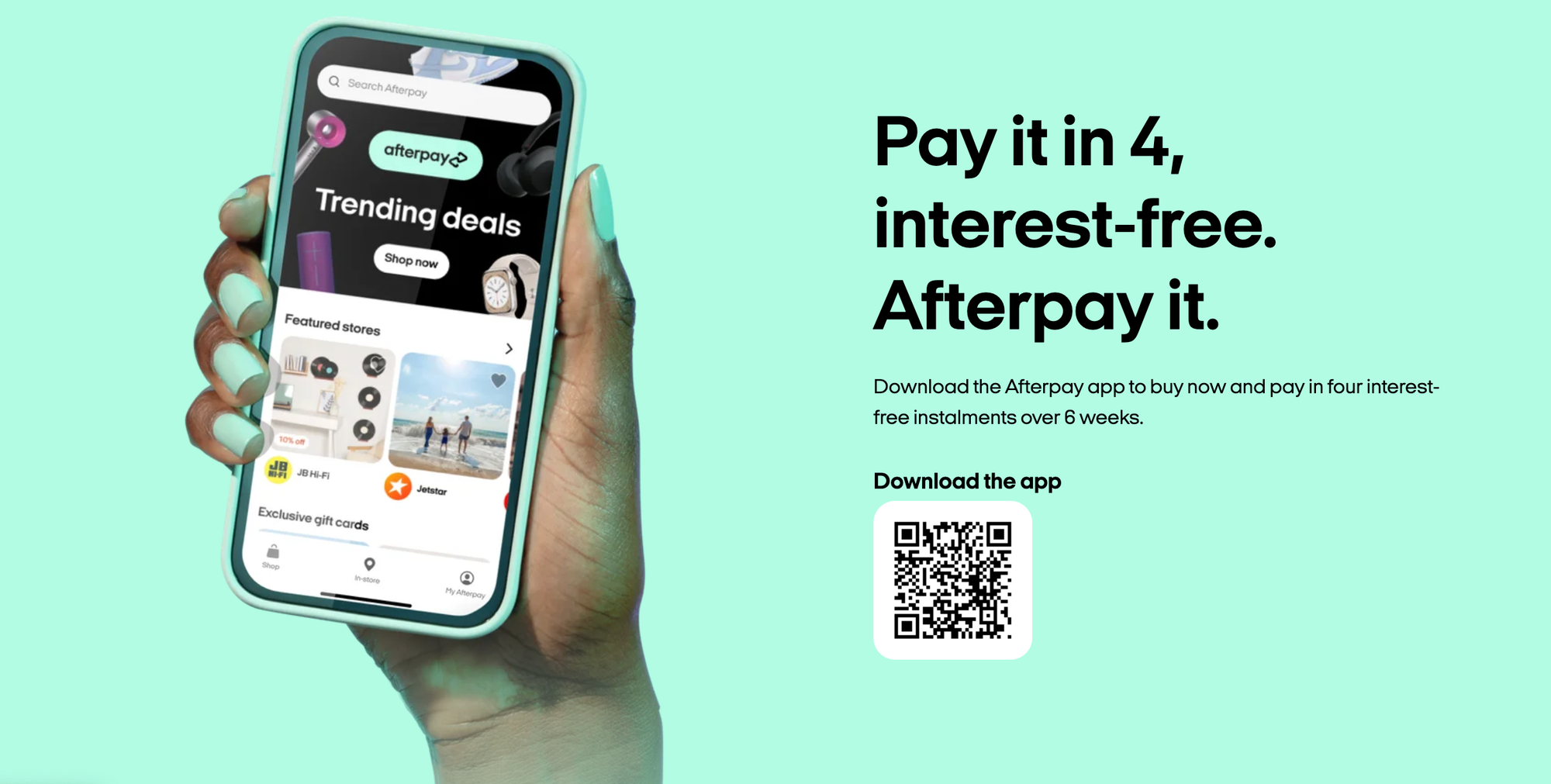
Most shoppers use Afterpay’s Pay-in-4 plan, where they pay an initial installment at checkout and the remaining amount over six weeks.
Afterpay also offers a few other repayment options depending on the customer, the product, and the total price:
Monthly installments (3–24 months)
Used for higher-ticket purchases. Customers pay in longer-term installments, making it similar to a small financing plan.
Head's up: Monthly installment APRs range from 0%–35.99% and a credit check is required.
Pay Nothing Today
In some cases - usually when a customer has demonstrated that they are low-risk by making a lot of on-time repayments - Afterpay may not require the first installment at checkout and instead start the schedule two weeks later.
Variable installment structures
Certain merchants or regulated categories may offer slightly different payment timelines based on their agreement with Afterpay.
You get paid upfront, not in installments
Once a customer checks out with Afterpay, you receive the full transaction amount within your standard settlement window (usually 1-5 business days), minus Afterpay’s merchant fees.
So while your customer pays over time, your revenue isn’t spread out like the customer’s schedule - you get the entire payout right away.
This is one of the biggest wins for merchants: the ability to offer flexible payments without taking on delayed cash flow or repayment uncertainty.
Afterpay absorbs the credit and repayment risk
As a merchant, you're probably wondering if there is any risk to you. What if the customer doesn't pay? What if installments are late?
As already mentioned, you get paid in full - the customer pays back Afterpay, not you.
Afterpay decides whether to approve a customer, runs real-time risk checks, takes the installment payments, and deals with late or missed repayments. If a shopper fails to pay, Afterpay takes the loss.
Your funds don’t get clawed back, and you’re not involved in collections, charge cycles, or customer chasing. The financial risk sits entirely on their side of the transaction.
A note about refunds:
The only exception is refunds. If a customer returns an item or you issue a refund, you’ll refund Afterpay because they already deposited the full amount into your account.
Outside of refunds, your funds aren’t clawed back for customer non-payment.
Integration is simple, and works online and in-store
For most merchants, enabling Afterpay online is as straightforward as installing a plugin, toggling a payment option, or activating it through your ecommerce gateway.
Cash App Afterpay supports all major US ecommerce platforms - Shopify, WooCommerce, BigCommerce, Squarespace, and most third-party payment gateways - plus a range of POS systems for physical retail.
Once you’re live, Afterpay automatically displays messaging on product pages and checkout screens, showing customers exactly what their installments would look like.
Afterpay also works in-store. Customers can pay using the virtual Afterpay Card, which they add to Apple Wallet or Google Wallet. At checkout, they just tap to pay, and the purchase is converted into installments on their Afterpay account.
For merchants, it processes like a normal card payment.
Afterpay fees explained: how much does Afterpay charge merchants?
Afterpay isn’t free for merchants.
Merchants pay a transaction fee every time a customer uses Afterpay - and these fees are higher than standard credit-card processing costs.
If you're based in the US, here are the Afterpay fees you can expect:
Typical Afterpay merchant fees
- A percentage fee: usually between 4%–6% of the transaction value
- A fixed fee: typically around $0.30 per order
Exact pricing depends on your agreement, your industry, your volume, and whether you operate online, in-store, or both.
How much does Afterpay take?
Let's take a look at those fees in action. If a customer buys a $150 item using Afterpay, here’s what that could look like:
- Order total: $150
- Afterpay fee (e.g., 5% + 30¢): $7.80
- Merchant receives: $142.20
You still get paid upfront, you just lose a larger cut than with Visa, Mastercard, or Amex.
Why Afterpay fees are higher than typical payment processors
Afterpay does more than process payments, which is why - as a merchant - you pay higher fees. As a payment service, Afterpay is:
- Financing the customer
- Absorbing credit and repayment risk
- Handling collections and missed installments
- Driving additional demand to your store via their discovery platform
- Providing checkout messaging and conversion-boosting UX
That extra functionality is effectively baked into the fee, and definitely something to keep in mind if you're questioning the fee structure.
Do merchants pay fees on refunds?
Yes. Afterpay is pretty clear about this: transaction fees are not refunded when you issue a return or cancellation.
Still, some merchants may negotiate different terms, but the standard rule is: fees stay with Afterpay.
The benefits of offering Afterpay to your customers
Aside from being able to easily offer a finance option to your customers without taking on the risk yourself, Afterpay can also increase your average order value, bring you new customers, and improve conversion rates.
Here are the key reasons that merchants choose to offer Afterpay at checkout:
Afterpay makes it easier for customers to hit 'buy'
One of the biggest reasons shoppers abandon carts is that the total feels too overwhelming in the moment. Customers may get all the way to checkout, see the grand total with shipping included, and close out the screen.
Afterpay softens that impact.
- Mia Ray, founder of Glam-Aholic Lifestyle
Research on BNPL behavior by Journal of Retailing shows that flexible payment options significantly increase shoppers’ comfort with mid- and high-priced items, especially in categories like fashion, electronics, skincare, and home décor.
Customers tend to spend more when installments are available
While the customer still pays the full price, the ability to spread out a purchase over time makes them more comfortable with bigger spends.
In fact, multiple BNPL studies show that customers are more likely to choose higher-tier products, add-on items, and bundle purchases when they know they won’t have to pay right away.
Why? It's simple.
Instead of thinking, “Can I afford to spend $180 today?” customers think "Can I afford to spend $45 today?"
Afterpay introduces your brand to an entirely new audience
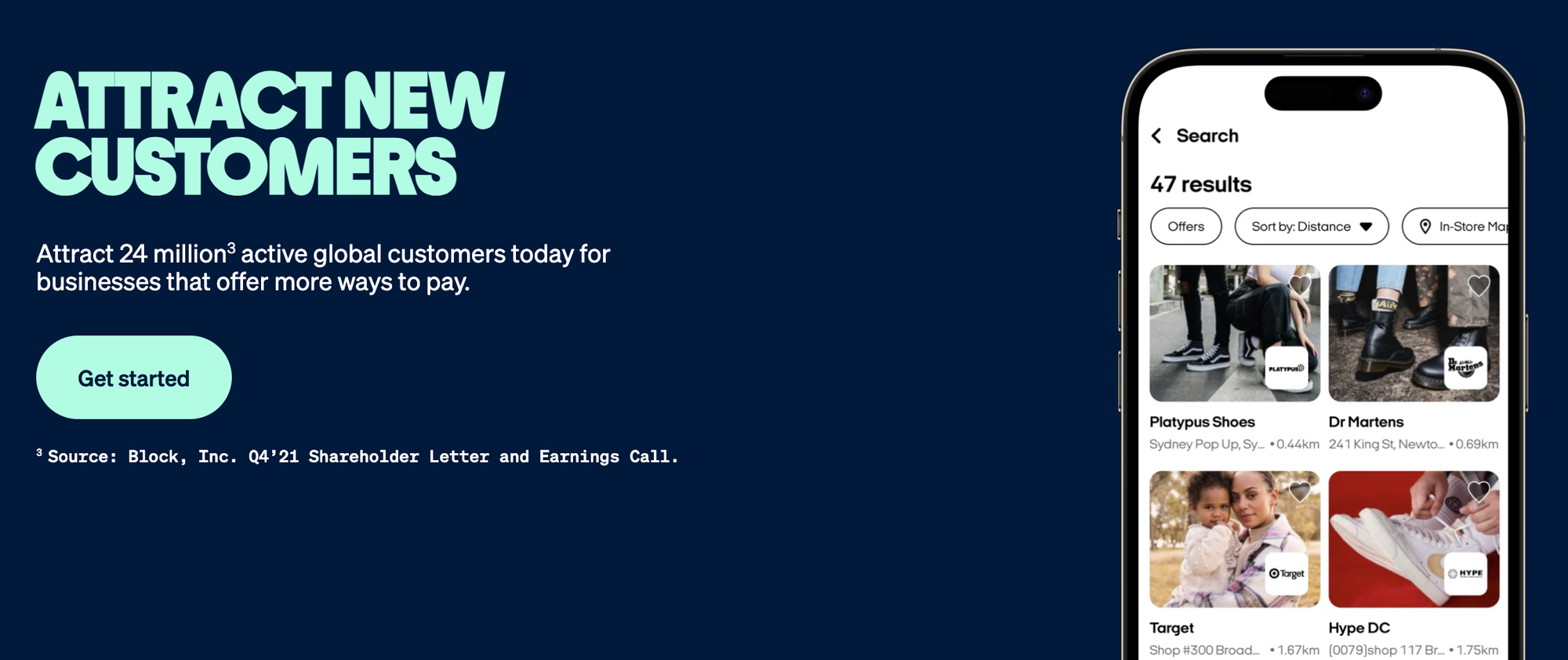
With Afterpay, your business gets in front of more eyes. Millions of shoppers browse Afterpay’s app and marketplace specifically looking for stores that offer installment options.
Being listed there gives merchants exposure to a high-purchase-intent audience, because these customers are already looking to spend money.
When Afterpay might not be the right fit
Afterpay can unlock more sales, bigger baskets, and new customers, but it’s not a perfect match for every business model.
Here's what merchants should know:
Afterpay’s fees are higher than traditional processing
Credit card processing might cost you around 2.9% + a small fixed fee.
Afterpay’s merchant fees are typically higher - usually between 4% and 6% of the transaction value, plus a flat charge.
That’s quite a meaningful difference, especially if you sell low-margin products or rely on volume-based pricing.
BNPL isn’t always ideal for low-ticket purchases
Afterpay is great for mid-sized baskets and high-ticket items, as these are the kind of purchases customers want to break into installments.
But if most of your orders are under $20-$30, you might not see the benefits of Afterpay. The fee could cut too deeply into your margins, and customers might not see much value in splitting a low-cost order.
In-store adoption depends on your POS setup
Although the Afterpay Card works with most modern POS systems, older terminals or custom-built setups may require updates or extra configuration.
Merchants with legacy systems sometimes need extra steps to support contactless BNPL transactions.
This isn’t a deal-breaker, but it’s worth checking your existing hardware before promising installments at the counter.
How to decide if Afterpay is right for your business
Still wondering whether offering Afterpay is the right choice for your business? Here are a few questions to ask yourself before you make a decision.
1. Check your margins
Can you absorb a 4-6% fee and still make a healthy profit? Remember to take into account that your order volume should increase, as should your average order value.
2. Look at your average order value (AOV)
Afterpay works best for mid-priced items ($50-$500). If your AOV is low, then your customers likely won't want to use Afterpay. But, if it is above $50, offering Afterpay as a BNPL option can lead customers to spend more.
3. Consider your customer base
Gen Z and Millennials heavily favor installments, with recent surveys showing that over 60% of Gen Z and around half of Millennials have used a Buy Now, Pay Later service in the past year.
And a separate US consumer study found that more than 70% of BNPL users choose installments specifically to manage cash flow rather than pay a lump sum upfront, meaning BNPL attracts budget-conscious shoppers and first-time buyers.
At the same time, premium or luxury brands should consider whether installment-driven behavior aligns with positioning - are you targeting buyers who want to spread their spend, or do you want to attract customers for who money is no object?
4. Evaluate your return rates
How many returns does your business typically process? High returns means more admin and more Afterpay refunds to process.
5. Review your sales cycle
What does your abandoned cart rate look like? If you see that customers hesitate or abandon carts, BNPL can reduce this, making it easier to buy with less money needed up front.
But if your products already sell fast without hesitation, the impact of offering Afterpay may be smaller.
Afterpay vs Klarna vs Sezzle
Afterpay is not the only BNPL option - some of the other most popular BNPL providers include Klarna and Sezzle.
Here’s a quick side-by-side breakdown of the three most popular installment providers in the US.
| Factor | Afterpay | Klarna | Sezzle |
|---|---|---|---|
| Core product | Pay-in-4; some monthly financing | Pay-in-4, pay-in-30, longer-term financing | Pay-in-4; optional credit-building |
| Typical merchant fees | Around 4–6% + $0.30 | Varies; often similar to Afterpay | Around 6% + $0.30 |
| Payout timeline | Upfront within 24–48 hours | Upfront; timing depends on setup | Upfront; similar timing |
| Credit risk | Absorbed by Afterpay | Absorbed by Klarna | Absorbed by Sezzle |
| Customer base | Strong Gen Z and Millennial adoption | Broader demographic spread | Skews younger and budget-focused |
| In-store support | Virtual card via Apple/Google Wallet | Virtual card available | Virtual card available |
| Setup | Simple plug-and-play | Wide support; more configuration | Easy setup; smaller ecosystem |
Offer Afterpay and more with Whop
It's clear to see that Afterpay can boost conversions, lift average order values, and give your buyers the flexibility they expect.
With Whop Payments, you can apply for Afterpay, Sezzle, Splitit, Zip Pay, and Klarna, activate them at checkout, and manage everything in one place - right alongside cards, wallets, crypto, and any other payment methods you use.
As Hunter Dickinson, Head of Partnerships at Whop, puts it:
“Through thousands of conversations, we’ve learned our customers really only care about two things: getting paid and paying out. Our mission is to be the best in the world at solving those problems.”
Whop handles routing, payouts, fraud tools, and reporting seamlessly behind the scenes, so you can stay focused on growing your business.
Your customers get a fast, modern checkout experience with every payment option they expect, including their favorite BNPL tools.
Basically, it’s the easiest way to make checkout a win-win for everyone.
Afterpay FAQs
How does Afterpay work for merchants?
Afterpay lets customers pay in installments while merchants get paid upfront. Afterpay manages approvals, repayment schedules, and missed payments, so you don’t take on credit risk. You receive the full order amount (minus fees) within your normal settlement window.
How much does Afterpay charge merchants?
Most merchants pay around 4-6% of the transaction amount plus a small fixed fee. Your exact rate depends on your industry, sales volume, and your agreement with Afterpay.
Is offering Afterpay worth it for my business?
For many businesses, offering Afterpay increases conversions, reduces abandoned carts, and lifts average order values, especially for products between $50 and $500. The fees are higher, so the best way to know if it’s worth it is to run a short test period and compare AOV, conversion rate, and net margin.
Do merchants get paid upfront when customers use Afterpay?
Yes. You receive the full order amount upfront, even though the customer repays Afterpay in installments over time. Afterpay takes on the repayment risk. The only exception is refunds - if you refund an order, you return the funds to Afterpay.
Can I offer Afterpay and other BNPL options through Whop Payments?
Yes. With Whop Payments, you can apply for and activate Afterpay, Sezzle, Splitit, Zip Pay, and Klarna.