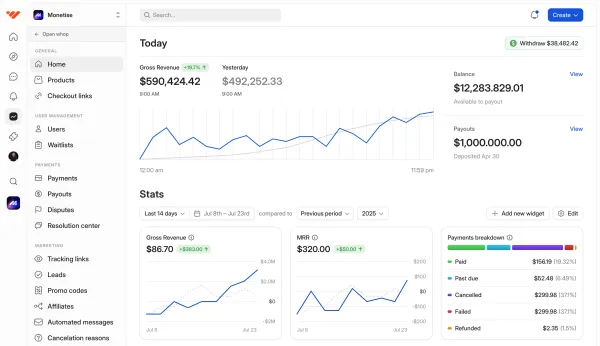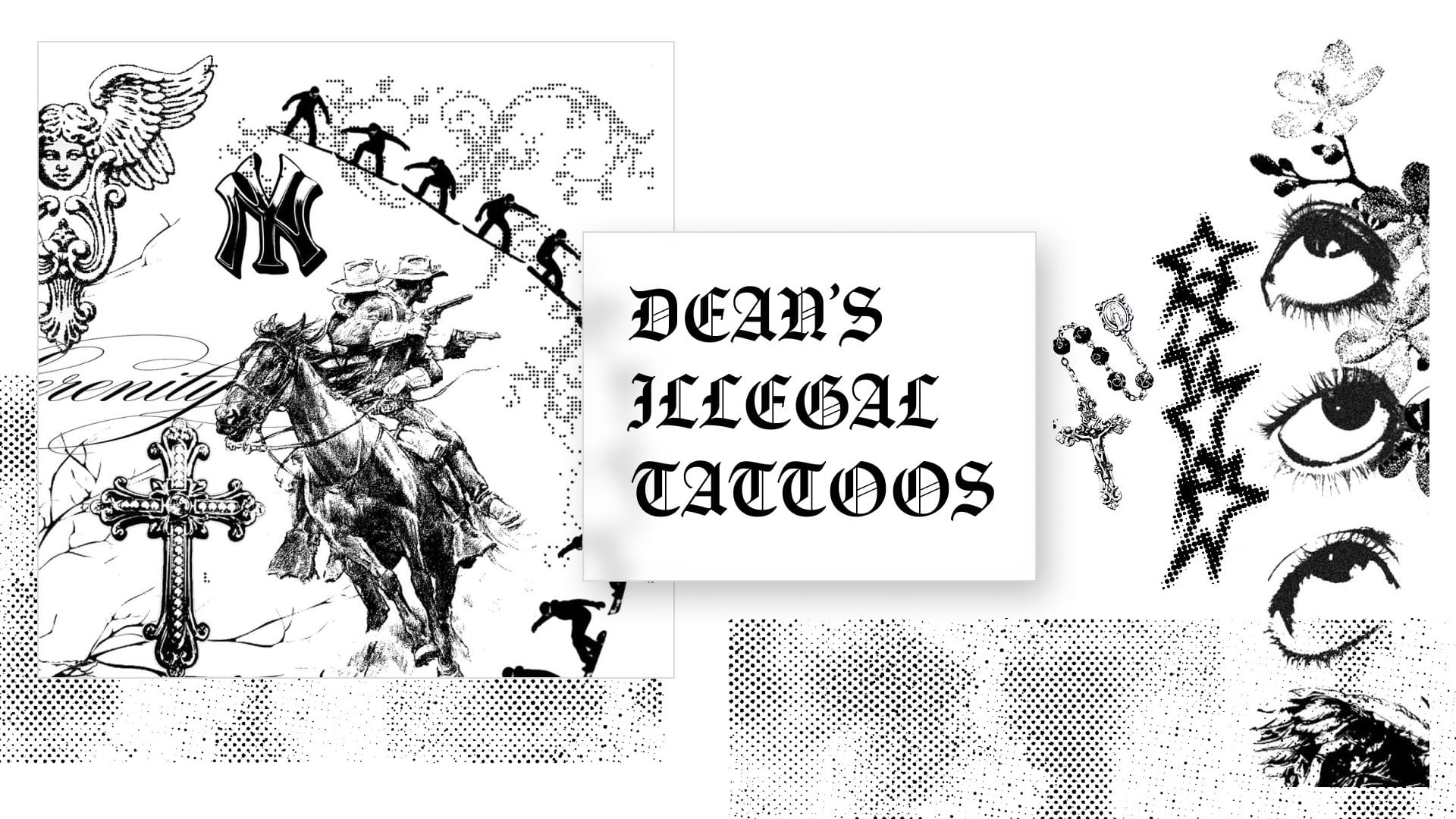
Dean Hopkins is an Austin-based tattoo artist who uses Whop to sell subscription licensing to his stencil designs, creating a secondary passive and complimentary income stream.
Key takeaways
- Tattoo artists can transform location-bound skills into borderless recurring revenue by selling subscription access to digital stencil libraries.
- Subscription models outperform one-off digital sales by creating predictable passive income that grows alongside an artist's body of work.
- Automating access control and payments frees creatives from manual admin so they can focus entirely on their craft.
Austin is loud. Live music spills out onto sidewalks where lines are already out the door for BBQ.
And of course, there are the tattoo shops.
The ones with flash sheets taped to the walls and artists booked months out.
Needles buzzing louder than your own thoughts; the smell of alcohol leaving a slight sting in the air.
But for Texas tattooist Dean Hopkins (aka ‘Dean’s Illegal Tattoos’), demand didn’t stop at the city's limits.
His work kept traveling through Instagram, reposts and screenshots saved by people who’ve never set foot in Texas.
That visibility is flattering, but hard for tattoo artists to capitalize on. What do you do when people love your work, but can’t physically sit in your chair?
For most artists the answer is to wait until you can do a guest spot in their city. For Dean, it was selling subscription access to his stencil library, turning his skill set into passive, recurring income.
From wall sheets to downloadable files
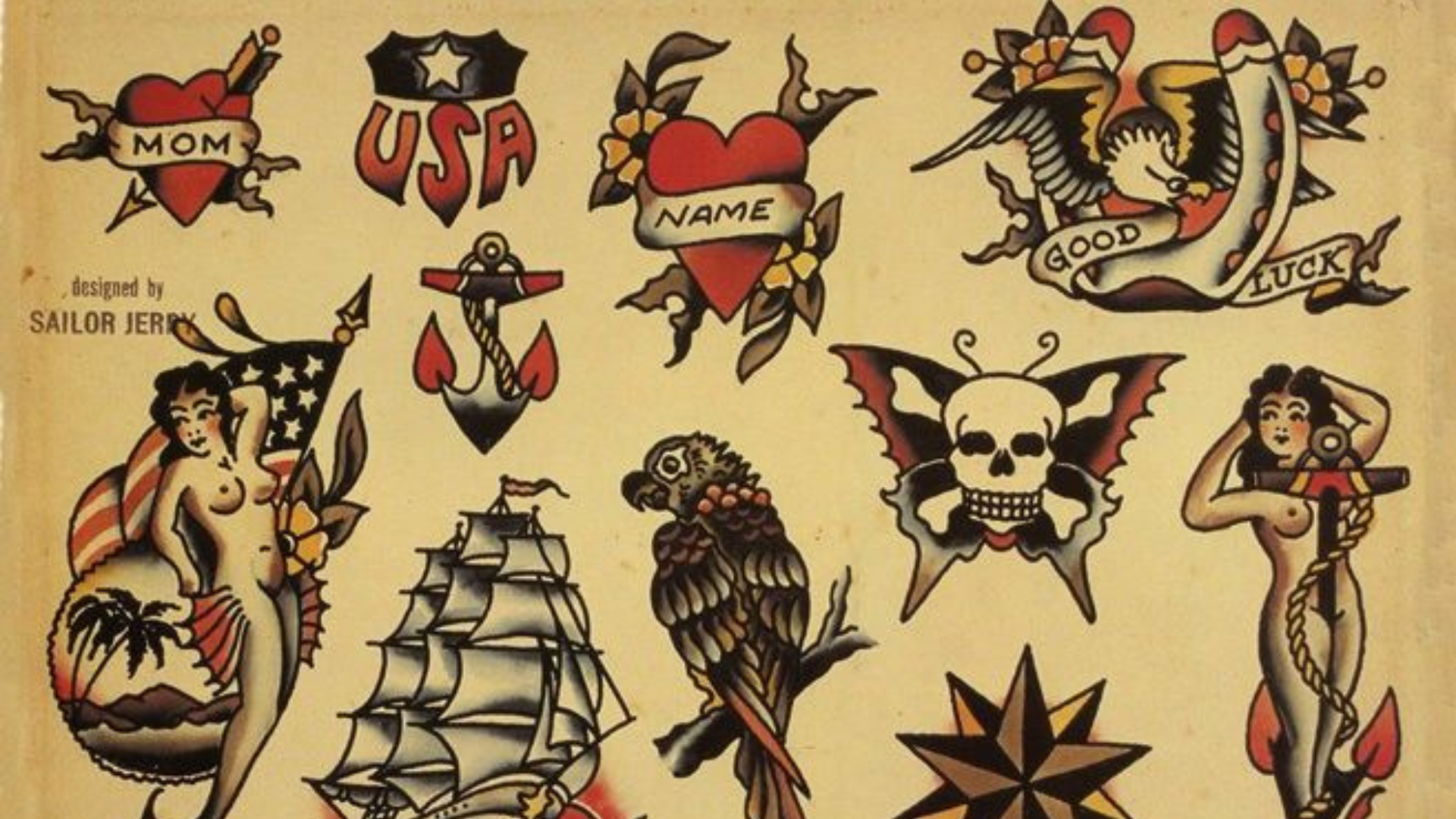
Decades ago, artists like Sailor Jerry taught protégés their designs, giving them permission to tattoo those pieces on their own clients.
His iconic flash spread across ports and bases worldwide, worn proudly on the bodies of sailors, soldiers, and travelers.
Later, artists like Ed Hardy took it further, licensing his tattoo designs onto clothing and merchandise, turning body art into a global fashion brand.
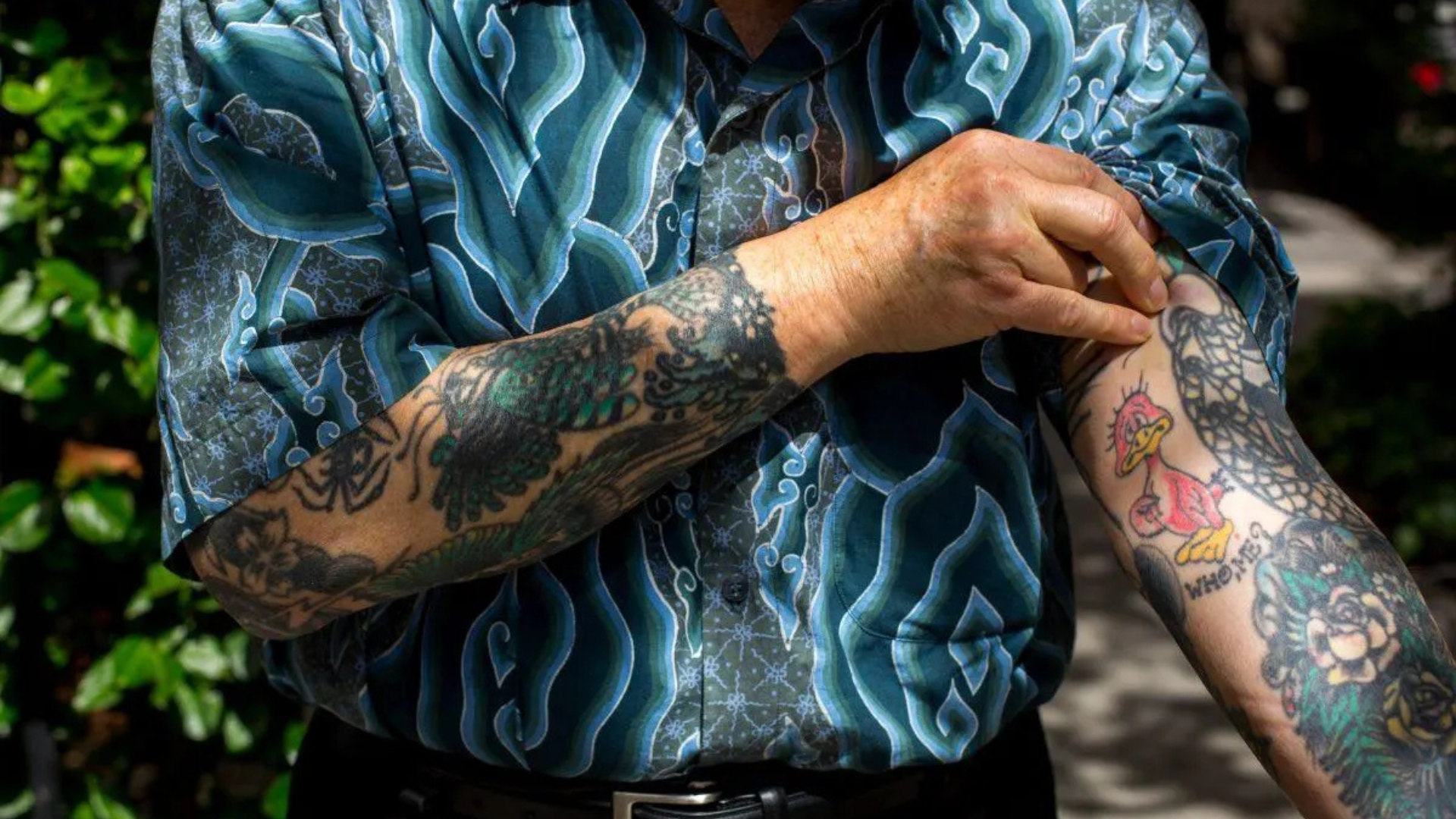
Even today, stencil designs and acetate sheets from old school artists still circulate. Styles get replicated. Motifs evolve. The work lives on beyond the original artist.
Plus, Instagram can turn local tattoo artists into international names overnight.
Suddenly, fans in Berlin, São Paulo, and Tokyo wanted Dean’s work on their bodies, without waiting for a flight to Austin.
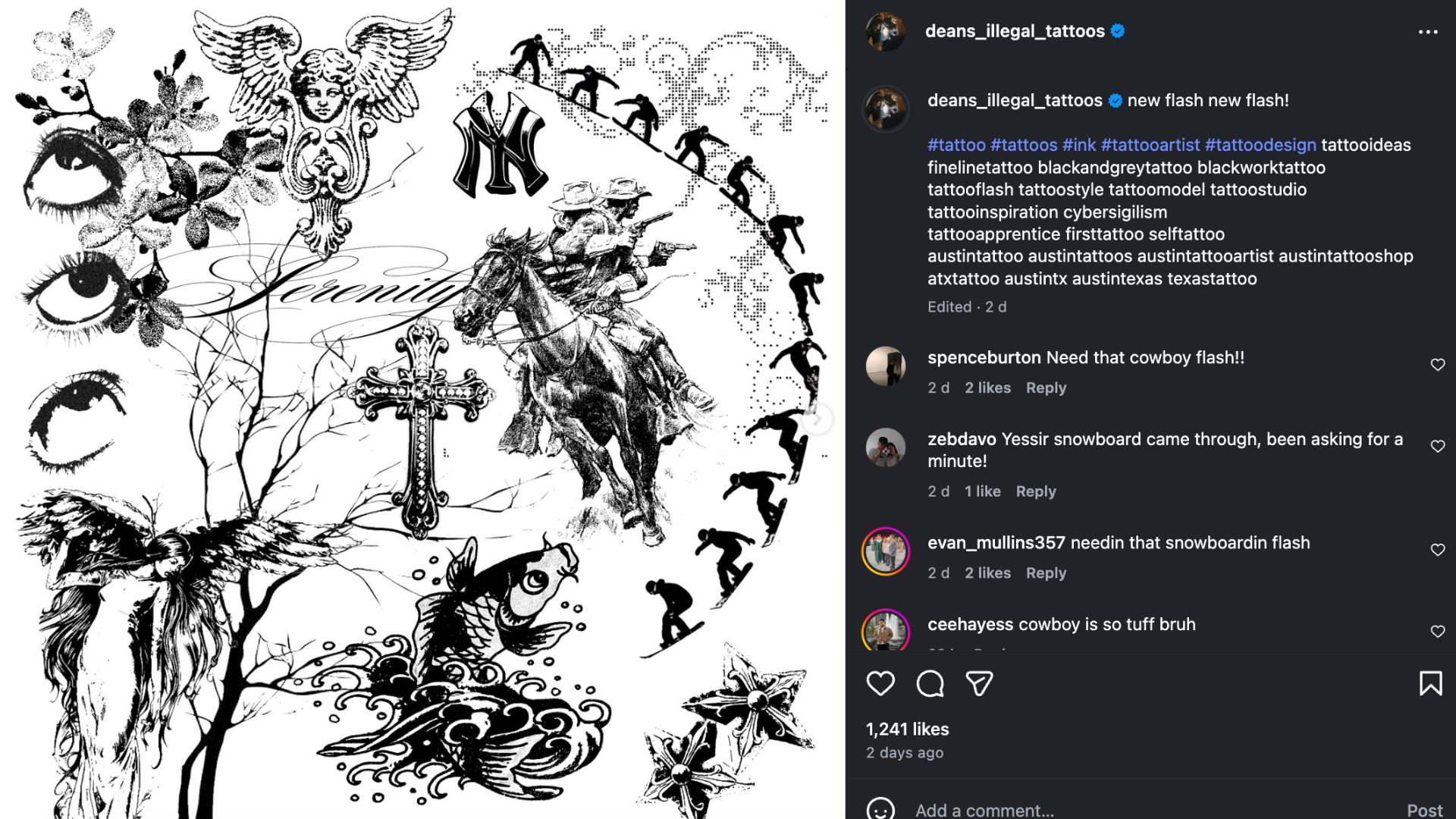
That’s where digital stencil licensing came in.
I’ve gotten DMs from people all across the world showing me the tattoos they got from my collection.
Turning a land-locked trade digital
Tattooing is traditionally a one-to-one business: you make money when you’re tattooing, and you don't when you're not.
Artists don’t earn for the time they spend drawing designs, marketing, or doing admin.
"When I started full time tattooing I knew that you’re trading time for money, so scaling isn’t as easy as other industries," Dean explains.
Post-COVID, the tattoo industry exploded, and it’s steadily growing at a CAGR of 10.9% in the States alone.
That growth brought more demand, sure. But also increased the level of competition (by a lot).
To keep up, artists raised prices, started taking bookings further out, and looked for ways to earn alongside manual work.
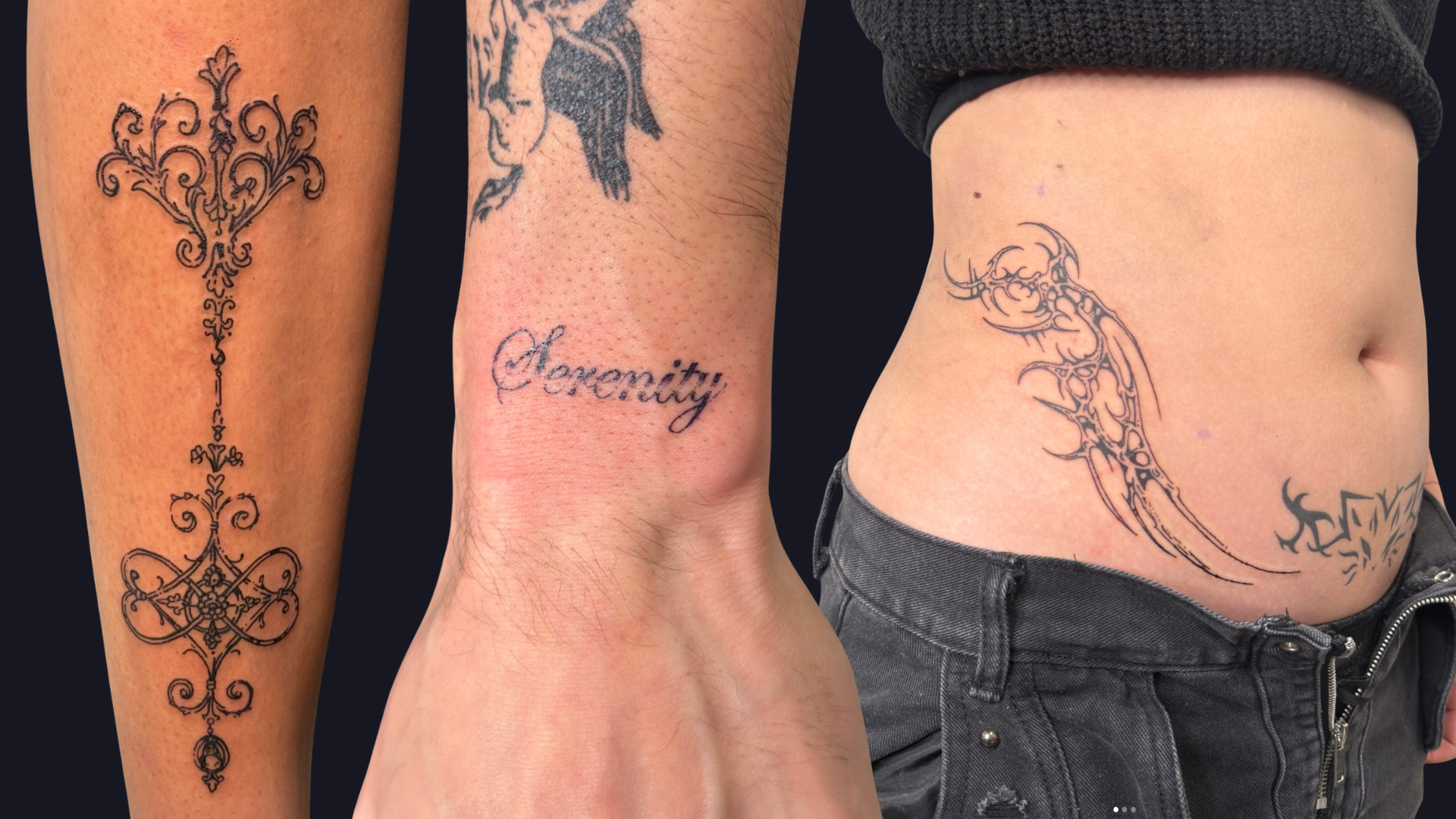
For Dean, selling stencil designs created:
- A way for international followers to get his art tattooed locally
- A way for other artists to legally use his designs
- A recurring and passive income stream
But here’s where it gets interesting: Instead of selling one-off tattoo tickets like most artists, where followers pay anywhere from $20+ for one design file, Dean turned his designs into a monthly subscription.
"A lot of people want multiple stencils", Dean tells me. "So I decided to use a monthly subscription model. I can also charge more as they are getting access to everything instead of paying a little for each stencil."
He didn’t want to manage access through DMs and email. He wanted less admin and more profit.
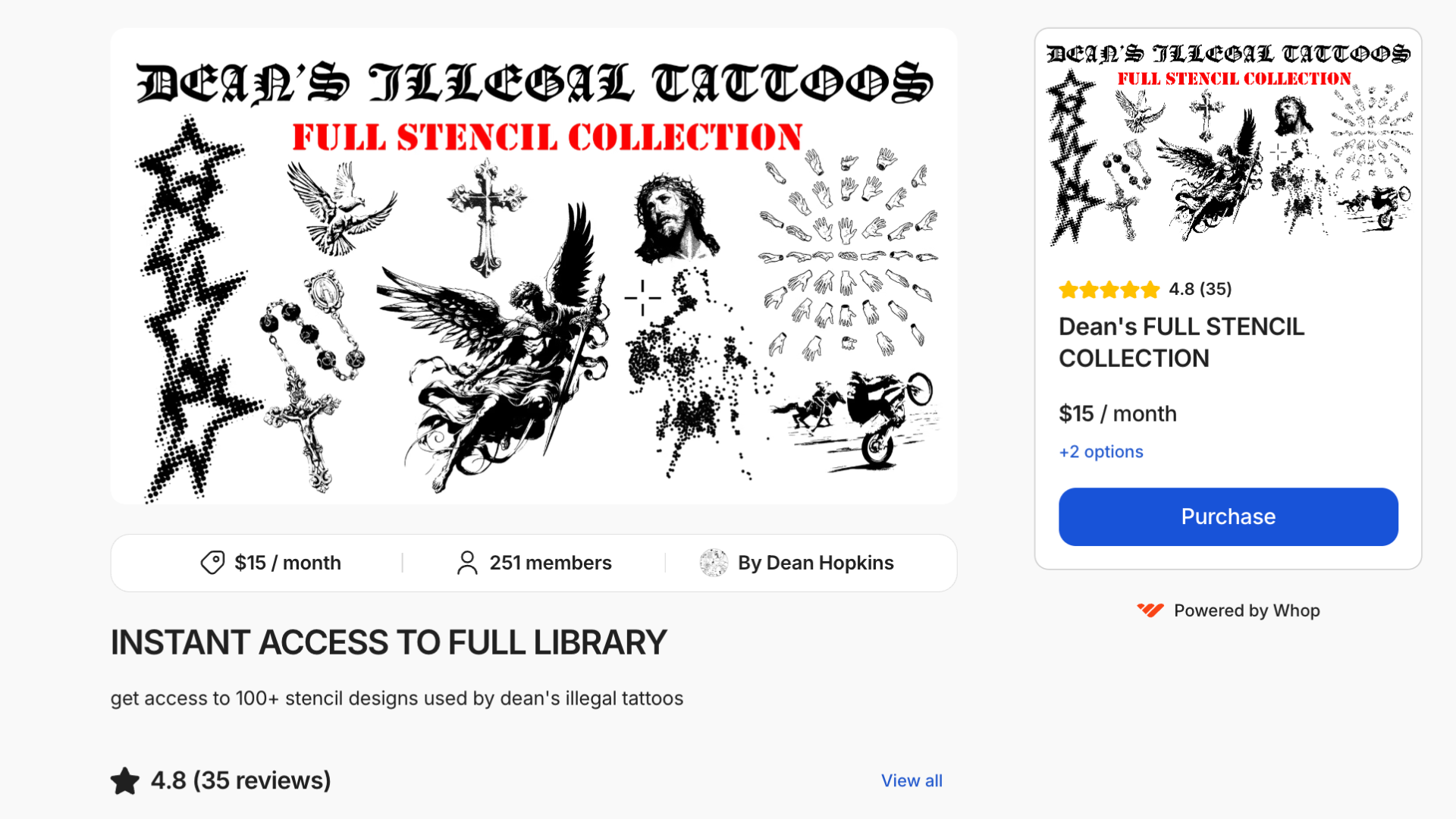
So, he signed up to Whop, and started selling gated access to a growing library of stencils.
Members get access to all of them (for $15 a month or $40 a year), while Whop handles the rest.
Why subscription access rather than one off sales?
Artists have always had inner circles: regulars, other tattooers they trust. People who get early access to flash designs before they ever hit the wall.
Dean took that same system and gave it structure.
Instead of selling designs one at a time, the subscription creates continuity. People aren’t just buying a stencil, they’re supporting an artist’s body of work over time.
For subscribers (fans and other artists alike), it’s access. For Dean, it’s predictability.
He doesn’t have to chase one-off stencil sales or answer the same emails repeatedly. The library just exists, is regularly added to, and people join when they want.
"It's extremely passive", says Dean. "I just upload the stencils that I used and whenever I drop new designs, have the link in my bio and people buy it. I never even really advertised it besides when people ask for a stencil."
Why Dean chose Whop to sell his stencils
Selling tattoo designs to an international audience usually means dealing with messy DMs, back-and-forth with clients in different countries, and casual payments through Venmo, Cash App, or PayPal.
Artists have been doing it for years, and sure, it works. One sale at a time.
But every purchase still needs attention, every file still gets sent manually, and once the design’s delivered? The customer relationship usually ends there.
Instead of repeating the same exchange over and over, Dean turned his stencil access into something ongoing, where people join once and stay connected to his body of work as it grows.
I found out about Whop a few years ago when I created a paid group for sports betting. I liked the ease of integration as well as subscription model the platform provides.
Built for global buyers
Dean’s audience isn’t just in Texas, or even the US.
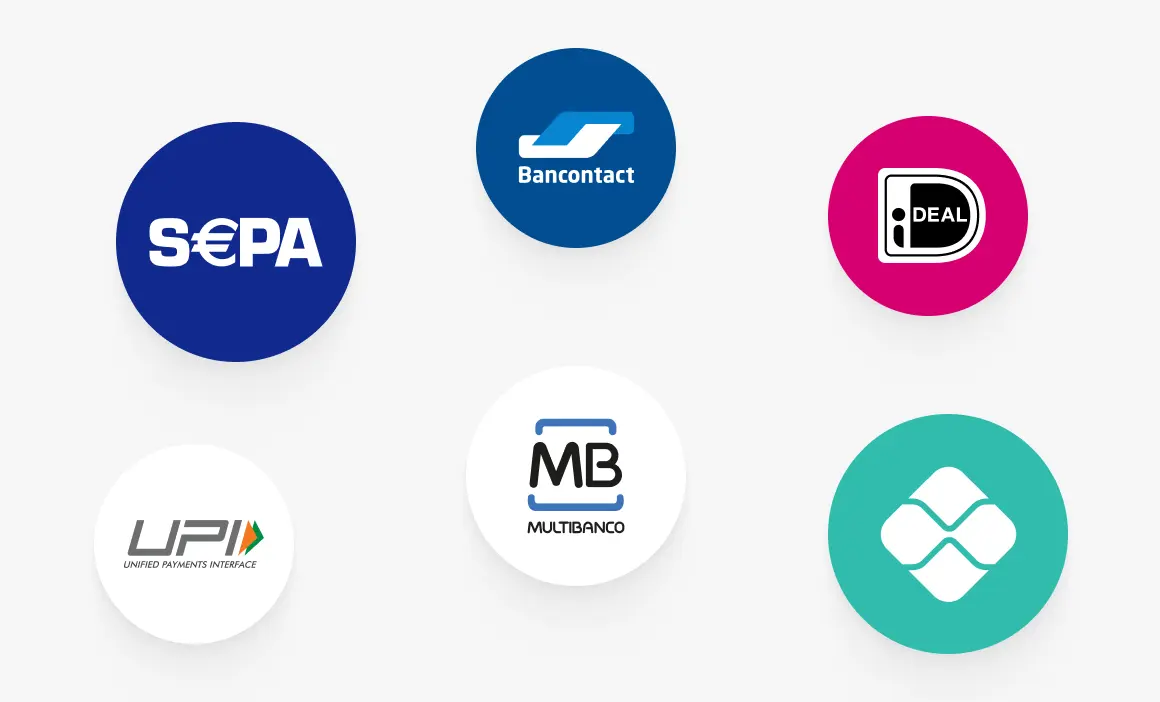
Whop supports customers from all over the world, using the payment methods they already trust.
Cards, buy-now-pay-later, digital wallets, and even crypto are all available, removing checkout friction for international fans and followers.
Access control without babysitting
One of the biggest issues with selling digital tattoo designs is control – once a file leaves your inbox, it’s gone.
With Whop, access is gated by payment. People can’t view or download anything until they’re active members.
Those members know they’re paying the artist directly, and Dean knows who has access to his work.
And if he has a problem with someone acting out of line? He knows Whop can take care of it.
Multiple tiers, same library
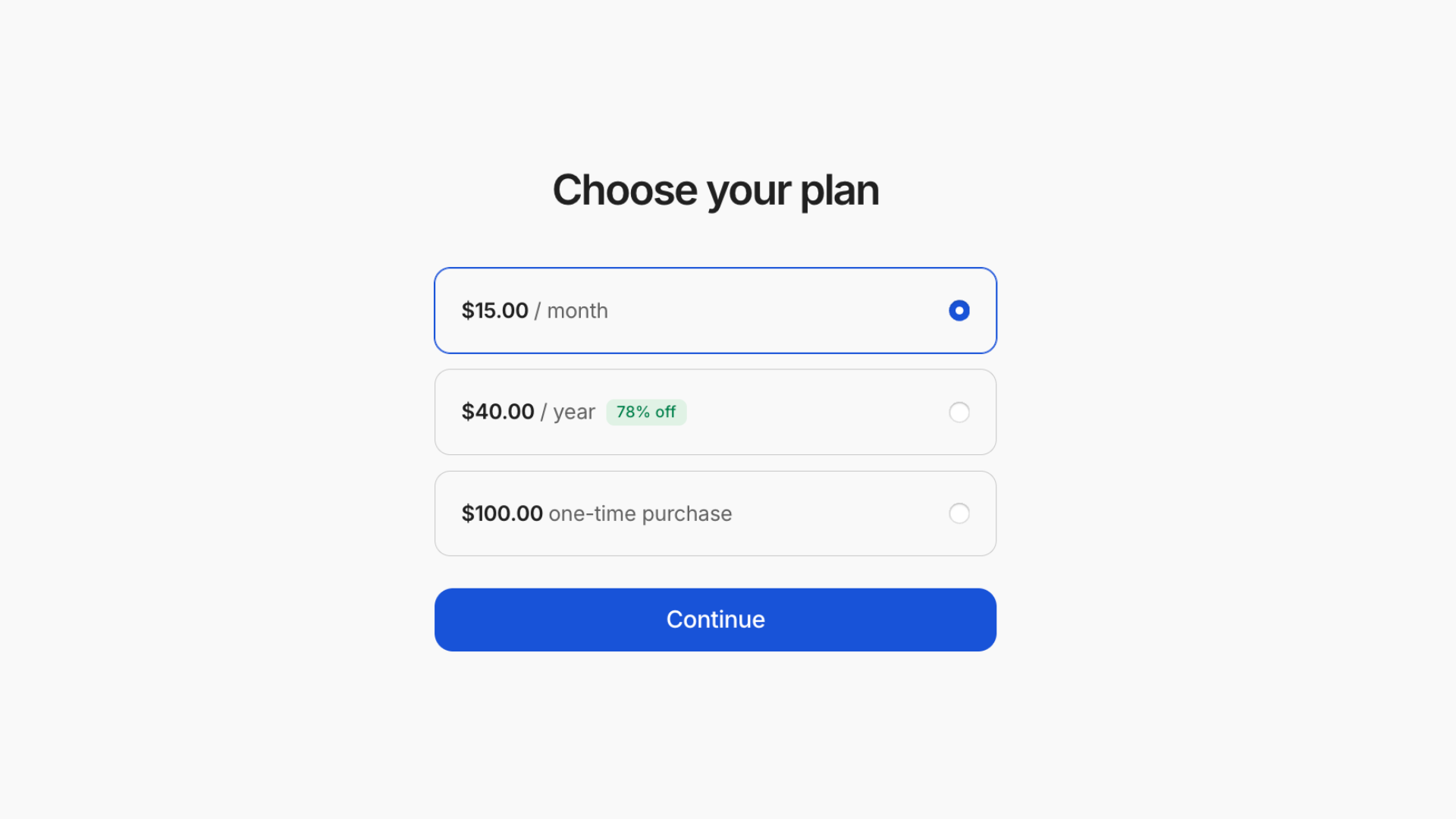
Whop lets Dean offer multiple access options ($15 a month, $40 a year, or lifetime access), all pointing to the same stencil library.
That flexibility matters when your audience includes both casual fans and working tattooers.
Simple storefront
Whop gives Dean a clean storefront where he can host files, manage access, and present the library without building a website from scratch.
Designs live inside the Files app, and payments and memberships stay connected.
Plus, Dean’s subscription benefits from being listed on the Discover page, where people can find his stencils without knowing him beforehand.
Automated admin
The biggest reason Whop works for Dean is that it doesn’t change his workload.
He still draws when he wants and uploads when he wants.
Whop just handles everything around that (payments, access, subscriptions, and support), so the money rolls in whether Dean is tattooing, drawing, or offline.
Can I sell my stencils through a subscription, too?
There's no reason other tattooists can't apply Dean's business model.
It suits any artist who already has a recognizable style and an audience that actively wants to use their work.
That might be other tattooists, longtime followers, or fans who’ve moved away and can no longer support you in person.
"I get a lot of clients asking me to come to Europe and a lot will buy my stencils and show me the tattoo they got done."
This model isn't aimed at people looking to buy a single, custom piece. And it’s not a replacement for booking tattoos in-person. It sits alongside that work.
For artists early in their careers, selling designs one-off might still make more sense. But once demand outpaces availability, subscription-based access becomes more valuable.
"I feel a lot of artists don’t have time to do other income streams or just don’t know how to monetize their knowledge. The ones who do have passive income streams really have to put themselves out there to make good money."
Creative? Use Whop to build upon your recurring income
Dean didn’t use Whop to change what he makes, he just added another way for people to access it.
Whop gives all creatives (not just tattooists) a way to turn ongoing demand into subscriptions, memberships, or lifetime access, without building custom systems or managing everything manually.
- Illustrators and graphic designers can sell access to brush packs, icon libraries, or design assets they already use in client work.
- Photographers can offer members access to preset packs, texture libraries, or a growing archive of unused or unreleased shots.
- Musicians and producers can gate sample packs, stems, loop libraries, or project files (updating them when new work is made, not on a fixed schedule).
Payments run automatically, access stays gated, and files live in one place.
Got a body of work your followers want access to? Turn that demand into recurring income with Whop.