You can start a consulting business by identifying your niche, doing market research, setting legal and operational systems, building your online brand, starting marketing campaigns, defining a pricing system, and start delivering results.
Key takeaways
- Successful consultants must specialize in a specific niche and create a clear value proposition to attract ideal clients.
- Validate your niche through market research and client outreach before investing time in business setup.
- Start lean with budget-friendly tools, then scale through productized services, retainers, or digital products.
Everyone can start a consulting business in 2026 by following a couple of simple steps: find your niche, do market research, handle legal setup, start with smart tools and minimal overhead, build your brand, market your services, set a pricing system, and scale by delivering results.
The consulting industry hit $318.9 billion this year — and it’s still growing. With demand for consultants surging across all kinds of industries, there’s never been a better time to turn your knowledge into a profitable business.
You don't need a huge budget or a team — just your expertise, strong positioning, and the right tools.
How to start your own consulting business in 8 steps
Ready to start your own consulting business? This section outlines how to get started as a solo consultant and run your own business.
Let's get into it.
1. Identify your niche and value proposition
Perhaps the most important step of launching your consulting business: choosing a niche. There’s no such thing as ‘everything consultant’ — you need to identify your area of expertise.
As Rob Malec of Businessworks Consulting Inc. puts it:
As a consultant, if you don’t specialize, then it’s hard to get great at one thing. It’s hard to attract your ideal customer because your message is as diffused as your offer. What I find is the path for new consultants, distill down then when you think you are done, distill down further and get down to your core offering.
To find the right consulting niche, take a look at your strengths, credentials, and interests Find that sweet spot of something you enjoy, are good at, and is profitable.
Consulting niches to consider
- HR consulting
- Financial consulting
- PR consulting
- Marketing consulting
- IT consulting
- Social media consulting
- Brand consulting
- Health & wellness consulting
- Sales consulting
- Business startup consulting
- DEI consulting
- Legal consulting
- Sustainability consulting
- Online dating consulting
- Management consulting
- Career consulting
- Environmental consulting
- Healthcare consulting
- AI consulting
- College consulting
- Operations consulting
Once you’ve identified your niche, you’re going to want to create your value proposition. Think about who you’re helping, what you’re helping with, and how you do it.
In the end, you should be able to clearly say
“I help [TARGET AUDIENCE] achieve [DESIRED OUTCOME] through [UNIQUE METHOD/SOLUTION] so they can [CORE BENEFIT].”
2. Research the market and potential clients

Next, it's time for market research and client validation.
Do not skip this step — you may think you have chosen a great niche, but if there's no demand for that consulting service (or if it's oversaturated), then you will waste time setting up a business that has no profitability.
Start with LinkedIn outreach, surveys, and 1:1 interviews. This is a great low-cost way to approach market research.
Let's say you've chosen to offer environmental consulting. Here's how you could reach out to potential clients on LinkedIn:
Hi [First name],
I’ve been following your work at [Company name], and I noticed you’re in a space where sustainability is becoming more critical—both from a regulatory and reputational standpoint.
I help teams like yours uncover practical ways to reduce environmental impact without disrupting operations, from emissions audits to ESG strategy support. If that’s something on your radar, I’d love to offer a quick perspective (no pressure, of course).
Would you be open to a short call next week?
As you continue your validation, you should look out for pain points and gaps in current solutions — these will help you stand out from the rest.
Using forums, Reddit, and industry blogs — like Whop’s — will help you a lot in this step.
If you do realize that your chosen niche doesn't have enough traction right now, then go back to step one.
3. Set up the business legally and operationally

One of the most important aspects of starting any business is setting up the legal and operational sides of it.
First, you'll need to choose your business structure. As a new consultant, you have three main options:
- Sole proprietor
This is the simplest and the most popular option for new consultants. As a sole proprietor, you and your business are the same entity. - LLC (limited liability company)
Consider this option once you start scaling your business. It provides personal asset protection. - Corporation
This is for bigger operations with investors and partners. It also provides the strongest protection.
If you’re going to use a different name than your legal name in your business, you will need to need to register a DBA (Doing Business As). Another thing you should check is if you need licensing and insurance, which varies by niche and region.
After completing the legal setup, you’re going to move on to the operational setup, which includes a professional email address (requires a domain), a platform (like Whop), a dedicated business bank account, and invoicing/accounting tools (like Wave or Quickbooks).
4. Start lean with smart tools and minimal overhead
When you first start your consulting business there’s no need to fully stack on premium software and tools that can quickly add up.
Instead, you should look out for budget friendly tools that can help you run your business with no less quality.
Platforms like Google Workspace, Notion, Zoom, and Calendly are great for organizing and scheduling your work. You can use tools like Trello or ClickUp for your project management.
Whop is the best all-in-one tool that you can use. With a whop you can take calendar bookings (no need for Calendly), make live calls (no need for Zoom), send digital files, and process payments. Whop really is an all-in-one platform, with new features being added daily.
5. Build your online brand
Niche chosen, research completed, legalities covered and systems set up — it's time to start building your brand.
Build your brand so that people can understand what you do and remember your business. When someone is in need of the service that you offer, you want to be the first consultant to come to mind.
The first thing you should do is optimize your LinkedIn profile and start making connections.

Then, create a central platform for your operations — like a website or a whop — with a clean landing page detailing your services, testimonials, and contact information.
Go hard on the content marketing. Over 72% of the US population use social media — so put your brand where the potential clients are. Post on platforms like X, Instagram and TikTok to gain traction and a following.
Make sure you adapt your content to the platform. For non-professional visual content platforms, make short videos with a great hook that speaks directly to the pain point of the viewer.
Matthew Hussey is a dating consultant and coach. By sharing his advice in short-form video, he is building his brand on visual-first social platforms.
For more professional networks — like LinkedIn — write concise, value-driven posts that showcase your expertise, share real results, and invite thoughtful engagement.
Also reach out to niche sites and offer to publish guest posts, and participate in webinars and podcasts.
The more online spaces that you can get your personal brand in front of, the better.
6. Start marketing your consulting business
Creating your personal brand is one side of marketing your consulting business. The other part includes marketing the actual services you sell. While building your brand is a passive way to get known, marketing your business is a more active way to push your services, This can include:
- Asking for referrals from past employers/colleagues
- Posting your wins and insights on social media
- Joining niche communities
- Getting on the Whop marketplace.
Getting good at cold outreach is another important skill you have to work on. As a beginner, you should personalize every pitch and focus on how you’ll solve your client’s problem.
Michael Zipursky, author of Act Now: How Successful Consultants Thrive During Chaos and Uncertainty, says:
By creating and publishing content, you provide your potential clients with value and a ‘sample’ of your expertise. If your content is helpful, then you’ll increase the chance they get to know you, like you and trust you.
7. Price up your services

This step goes hand-in-hand with marketing, because in order to promote your services, you have to price them.
One of the most common consulting pricing strategies is the Olympic standard: bronze, silver, and gold tiers. Bronze is the cheapest package with least perks, silver is mid-tier, and gold is for your premium clients.
The common method of project-based pricing is to charge two to three times your old hourly salary. So if you're a solo consultant and used to earn $45 an hour as an in-house marketer, then you should charge $90-$135 per hour as a marketing consultant. You can then move on to value-based pricing once you have case studies.
In every proposal you make include the scope, timeline, deliverables, pricing and the ROI estimation of the project.
8. Deliver results, retain clients, and scale
Once you’re all set up and ready to work, you’ll need to set some rules for yourself.
Have clear expectations, overdeliver on value, use templates and repeatable systems, ask for testimonials and referrals, and always stay up to date on current trends, AI tools, and client challenges.
Having these principles will help you stand out from the rest and retain clients.
Eventually you will want to scale your business. While being a solo consultant, offering productized services, retainers, group coaching, online courses or digital products, and even coaching communities will allow you to scale.
Consulting business models: which one fits you?
As a consultant you are paid to share your expertise — helping others solve problems, reach goals, or unlock growth. You will work with either other businesses or individual people. Individuals might hire a financial consultant to help with money management, whereas businesses may hire a marketing consultant to help drive more sales.
When it comes to how you offer your consulting services, you have a few different options. Here they are:
Solo consultant
The one man operation. This can be more difficult than other business models since you’ll be handling everything on your own — but still one of the most popular options. A great way to be your own boss.
Tom Critchlow is an independent consultant who works for media and technology companies. Tom has worked for himself for more than 10 years, working with clients like The New York Times, Gartner, Etsy, Angi and more.
Consulting firm
If you're an experienced consultant looking to build something bigger, then you could start your own consulting firm. This is a powerful way to build long-term income — but it does require a heavier workload upfront.
Instead of working solo, you build a firm around a core consulting niche, creating systems and processes and hiring other consultants to work for your business. Over time you create playbooks, bring on more clients, and scale.
This is a long-term path that demands leadership and structure, but it also offers the potential to create real equity and generational wealth. One well-known example is Deloitte: a global consulting firm offering audit, tax, digital, and advisory services. your firm may start small, but the model scales.
Productized consulting
This a relatively new consulting business model, and a great way to make money online. With productized consulting, instead of solely working one-on-one with clients, you package up your consulting services in the form of digital products.
This could be selling a once-off audit, a a downloadable strategy template, an on-demand video workshop, a subscription-based toolkit of swipe files — and everything in between.

Hybrid approach
The all-rounder. The hybrid consulting model benefits from the traditional approaches of solo and firm consulting on top of the scalability of the productized method.
With a hybrid approach you can consult within a firm, take on outside clients (if your contract allows), and sell consulting products online as a remote side hustle.
Start a consulting business with Whop
Why use Whop?
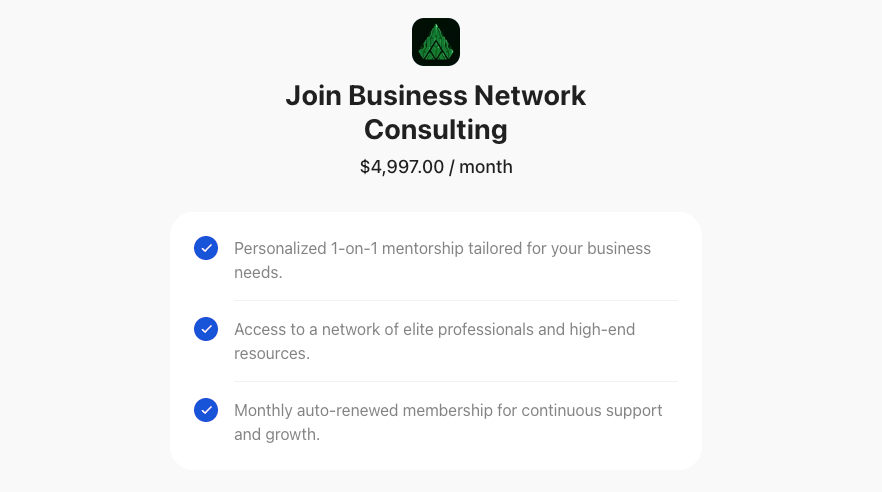
Whop is the best online platform for consulting businesses — especially if you include productized offers.
Firstly, you can customize your whop in any way you want. Turn it into a community, a simple landing page, or the hub for your entire operation. You can also accept payments, host gated content, and manage client access effortlessly.
The best part? There are no startup costs — you only pay a small fee when you make money.
After you build a whop, it will be listed in the marketplace, where over four million users visit each week.
Creating a consulting whop
When you create your consulting business on Whop, you can package your expertise into:
- monthly retainer memberships
- pre-built templates or swipe files
- mini-courses, live consulting sessions
- a private community
By creating different ways to work with you as a consultant, you can attract a wider range of clients.
Adding apps to your consulting whop
The most popular Whop apps to add for your consulting business include:
- Forums
To post announcements in your whop. For example, the Real Business Solutions whop uses the Forums app under the name Announcements to deliver news and updates to their members. - Calendar bookings
To let your members book meetings with you - Content
To create information pages like landing page, services, workflow, etc. For example, the Growth Capital Consulting on Whop uses the Content app.
After adding and configuring your apps as needed, it's time to share your value prop on your store page to draw in clients.
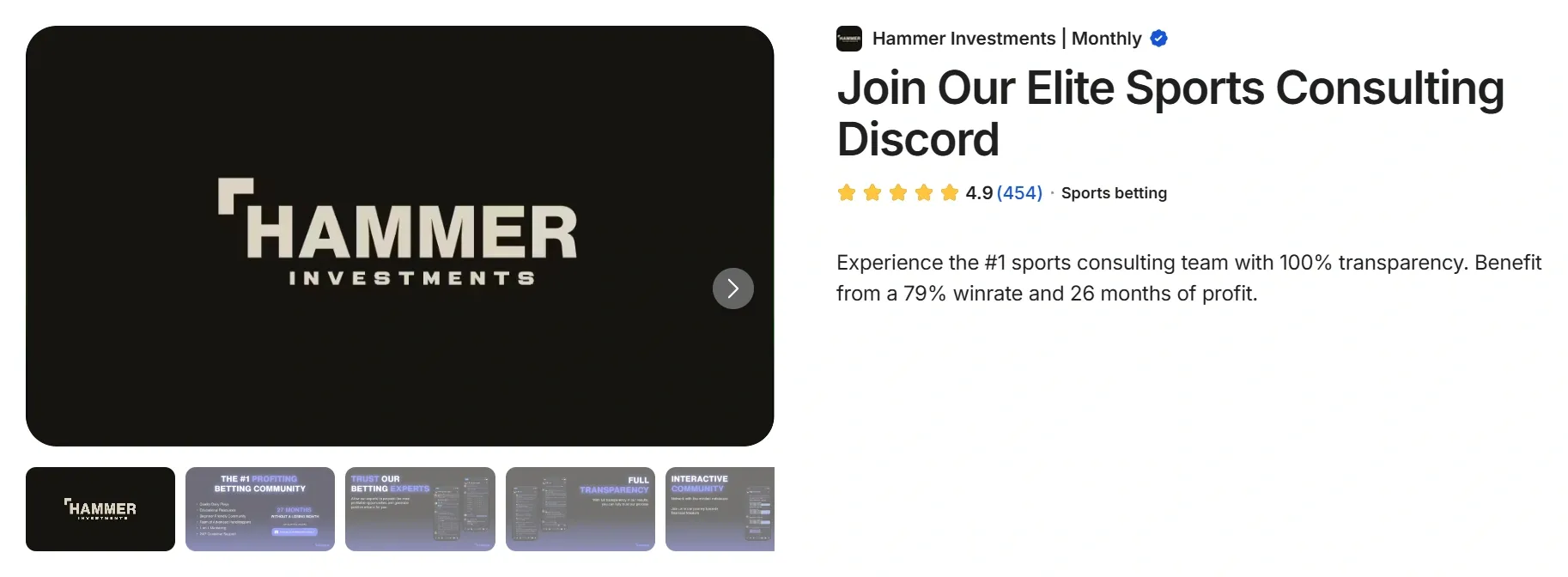
For example, the Hammer Investments whop has a great store page where they’ve detailed their products, their perks, FAQs, and more.
Launch your consulting business on Whop today
Ready to start your consulting business?
Start today with Whop and you will be ready to start selling in less than 10 minutes. This includes signing up to Whop, creating a whop, adding and configuring apps, and creating pricing options.
No code, no design skills, no long approval times.
Sign up to whop today and bring your consulting business to life.
Frequently asked questions about starting a consulting business
What is a consulting business?
A consulting business is when you get paid to share your expertise and help people or companies solve problems, reach goals, or unlock growth. Consultants can specialize in areas like marketing, finance, HR, IT, or even niche topics like sustainability or AI.
How much money do I need to start a consulting business
You can start a consulting business with little to no upfront investment. All you really need is your expertise, a professional presence online, and basic tools for communication and invoicing. Platforms like Whop let you set up your consulting hub for free and only pay fees when you earn.
What types of consulting business models can I start?
The four main consulting business models are:
- Solo consulting (independent freelancer/contractor)
- Consulting firm (build a team and scale over time)
- Productized consulting (selling packaged services like audits, templates, or workshops)
- Hybrid consulting (a mix of 1:1 services, firm work, and digital products)
How do I choose a consulting niche?
Pick a niche at the intersection of what you’re good at, what you enjoy, and what has demand. Examples include HR, financial, marketing, IT, health and wellness, sustainability, and AI consulting.
How much can I charge as a consultant?
Beginners often start by charging 2–3x their previous hourly rate as an employee. Over time, consultants move toward value-based pricing, where fees are tied to the client’s ROI. Many use tiered packages (bronze, silver, gold) to serve different budgets.
Do I need a license to start a consulting business?
Most consulting niches don’t require a license, but it depends on your field and location. Legal, healthcare, or financial consultants may need certifications. Always check your local regulations before launching.
How do I market my consulting business?
Start by building your online brand through LinkedIn, social media, and a central platform like Whop. Content marketing, referrals, cold outreach, and joining communities are all proven ways to get clients.
Why should I use Whop for consulting?
Whop is an all-in-one platform where you can:
- Host live calls and coaching sessions
- Offer digital downloads, courses, or toolkits
- Create a private community for your clients
- Accept payments and manage subscriptions
It’s free to start, and your consulting whop also gets listed in Whop’s marketplace with millions of potential buyers.