12 students from Columbia, Harvard, and Princeton just made $16k in 36 hours building and shipping products with Whop. Here's how they did it.
Key takeaways
- Charging upfront separates real demand from curiosity, so builders only build what someone has already paid for.
- Distribution can replace the product roadmap: one viral auction post turned a weekend retreat into paying client work.
- Students can graduate with revenue and customers instead of debt by shipping real products while still in school.
The average American student graduates with over $30K of debt.
So, what’s the solution? Bartend full time while studying? Or start your career before you graduate?
Last month, a group of students chose the latter, and made $16,000 in just 36 hours. A rented Airbnb, a dozen laptops, and a simple plan: build things people would actually pay for. Every dollar came through Whop while the products were still being built.
Here’s how they did it.
Two days, one Airbnb, twelve builders
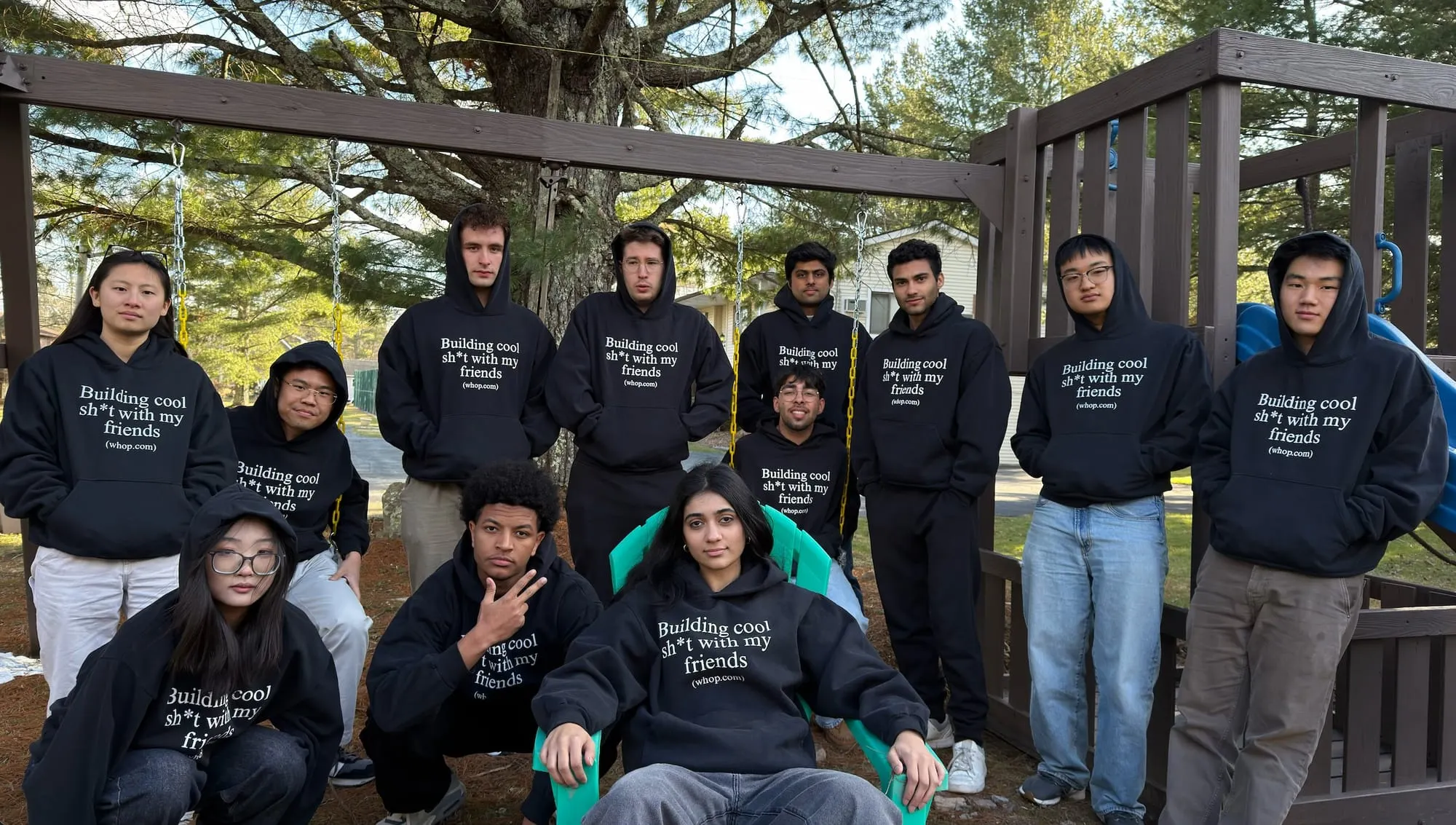
Hack Shack was an invite-only builder retreat, hosted by Columbia student Amrutha Rao, attended by twelve student builders from Columbia, Harvard, and Princeton.
It's not your typical 'hackathon event': there are no judges, prizes, or demo days. Just a group of friends building, shipping, and getting paid.
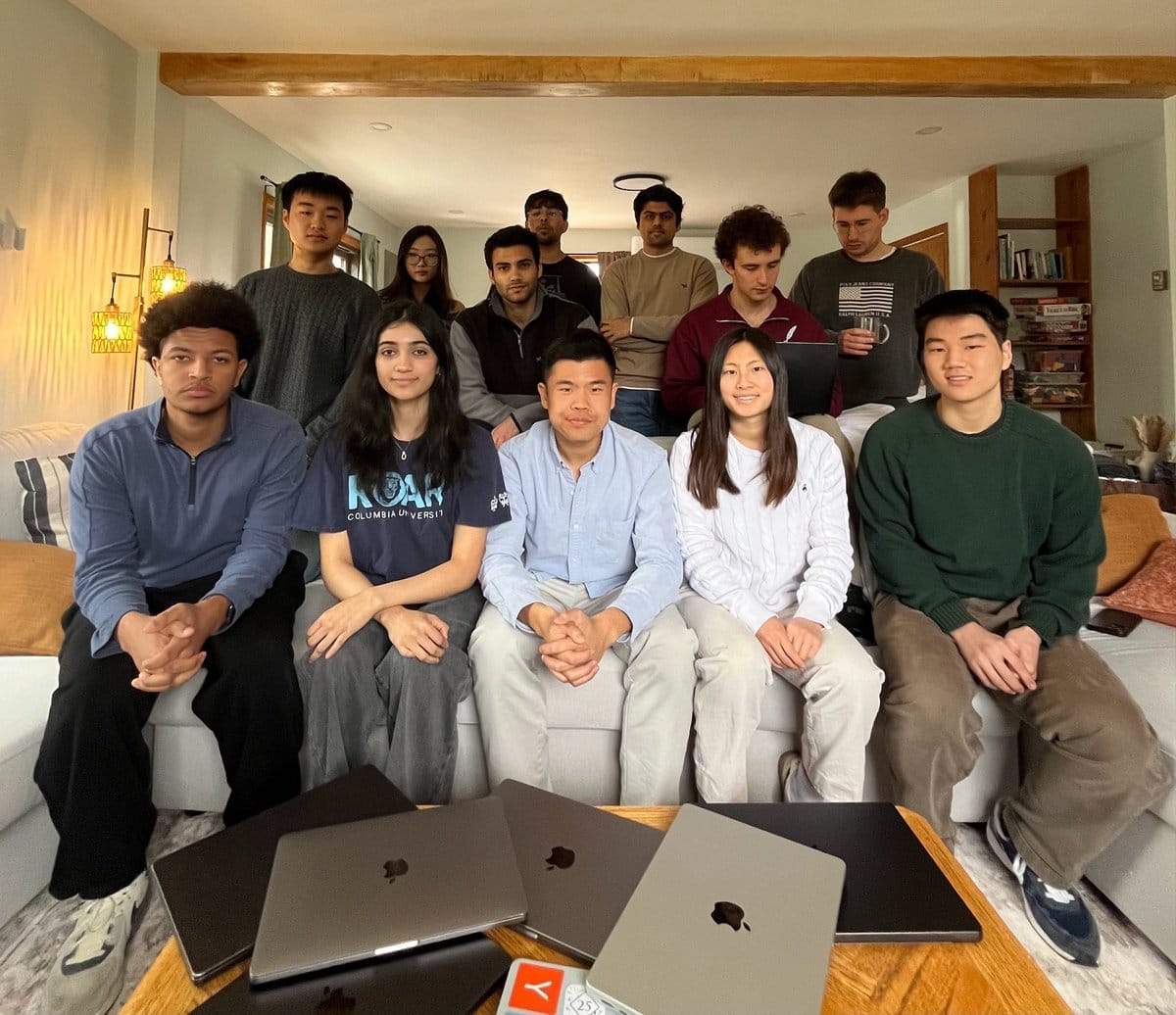
Friday evening, the group drove up together. Once everyone settled in, student Amrutha Rao gathered everyone for a brainstorm session.
Ideas started flying across the room answering the question, “What could they build in 36 hours that people would actually pay for?”
After an hour of debating and testing ideas, the group split into three teams, with each team taking a different direction.
One focused on marketplaces, another started building tools for influencers and creators, and the third team focused on outbound projects; reaching out directly to people and offering to build tools or products they needed.
The idea wasn’t to spend months building perfect products, but to challenge skills, test demand, and move quickly. And to get paid for it, too.
"Hackathons optimize for impressing judges and technicality over usability. I wanted to create a weekend centered on real results: users and revenue."
- Amrutha Rao
Amrutha’s team (comprising a Forbes 30u30 founder, an Informatics Olympiad perfect scorer, a $1.3M ARR builder, and Columbia and Harvard’s highest-signal builders) posted an auction on X.
That post blew up and changed the trajectory of the weekend.
Over 1M views overnight
“We’ll build anything you want in 36 hours. Highest bid wins,” Amrutha’s team posted on X.
Instead of pitching products to buyers, they let buyers pitch products to the team, letting the market decide what they would create.
The X post showcased the group’s experience as a team of high-signal builders and invited anyone to submit ideas and bids. If someone had a real problem and was willing to pay to have it solved, the team would build it.
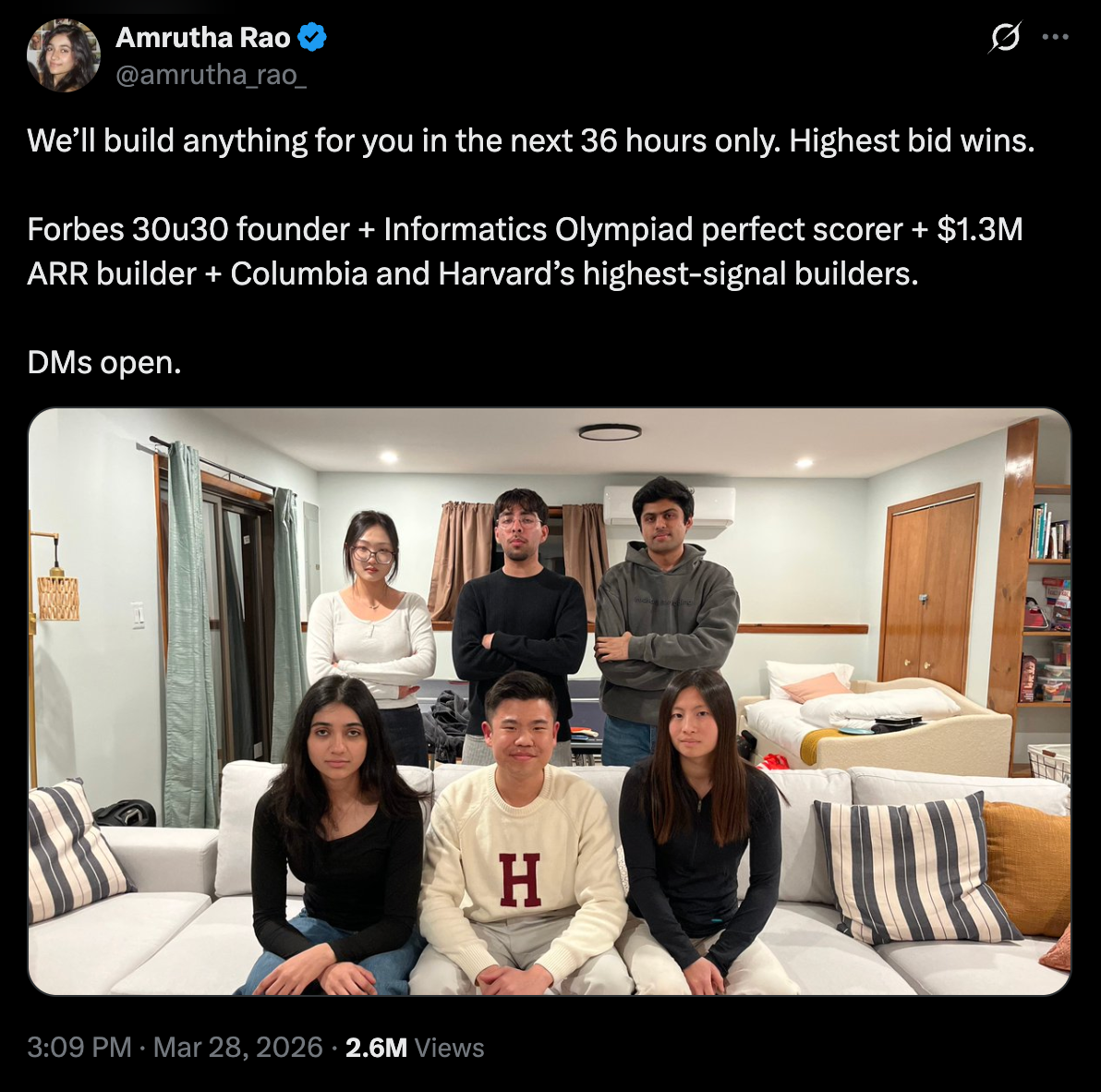
That night, they took some calls with potential clients, and went to bed.
By morning, the post had passed a million views. By end of day, two million. Their DMs were flooded.
At that point, the teams regrouped. What had started as three separate projects was gonna require a shared effort to tackle. So the teams joined forces, and began building immediately.
They shipped a multi-channel notification system, a healthtech database automation tool, an ML data pipeline, a computer vision pipeline for grading trading cards, and some smaller builds as well.
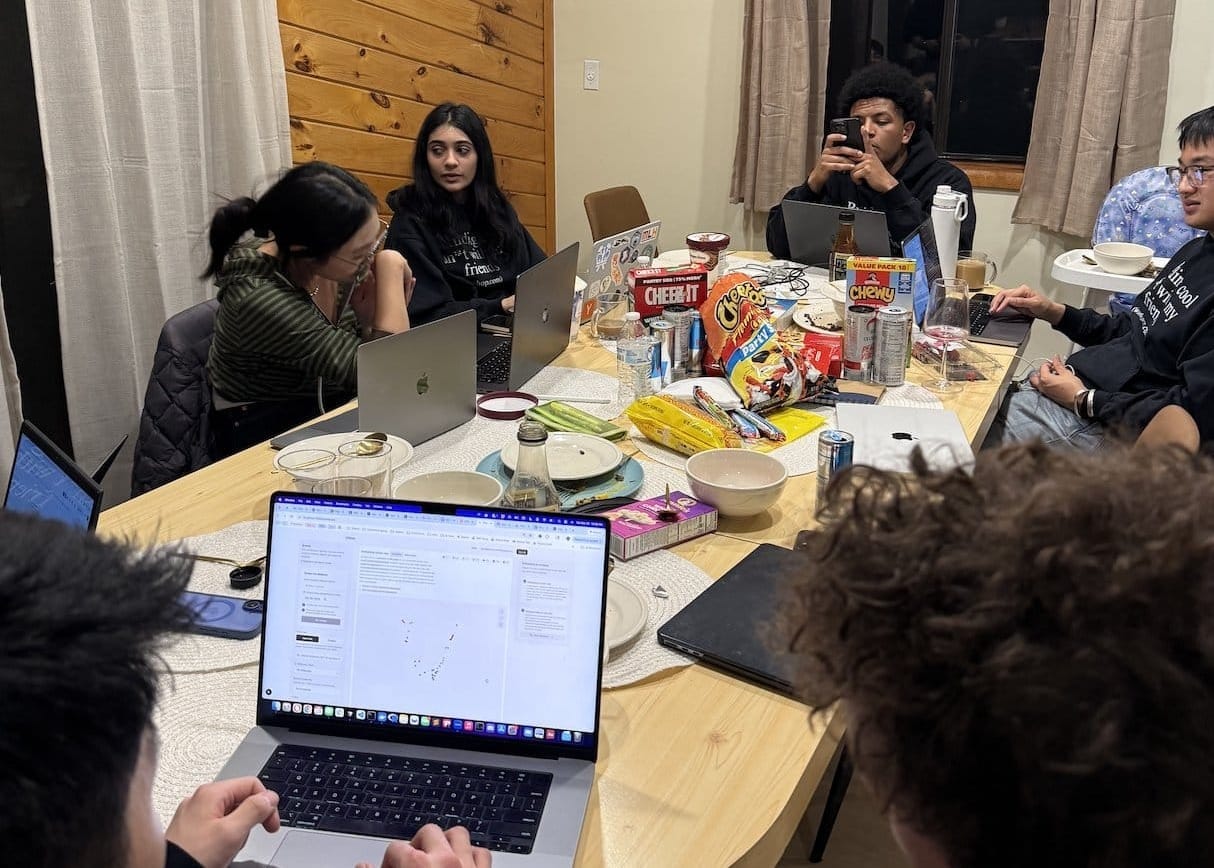
These weren’t long-term startup ideas. They were quick builds solving problems people had just described in the DMs. Amrutha says:
The goal of the weekend was to maximize money in the bank by Sunday, 9am. An auction was the best way to do that, providing immediate payment and clear signal on which projects would generate the most revenue.
Some deals landed, some fell through, but the momentum stayed high. And then they got an offer they couldn’t refuse.
Building an iOS game for $12.5K
Then a DM came in about an iOS game.
The whole group gathered around one call while the conversation unfolded. What started as a quick inquiry quickly turned into negotiation spanning scope, timeline, and price.
Within minutes, the deal was closed, for $12,500 upfront.
The game didn’t exist yet, but the buyer was ready to pay if the team could ship within the weekend.
It was time to build. A few members continued working on smaller builds while the majority focussed on shipping the game, working through the night.
By the next morning? They’d done it. It was time to clean, pack up, and leave – with $16,000 made in just two days.
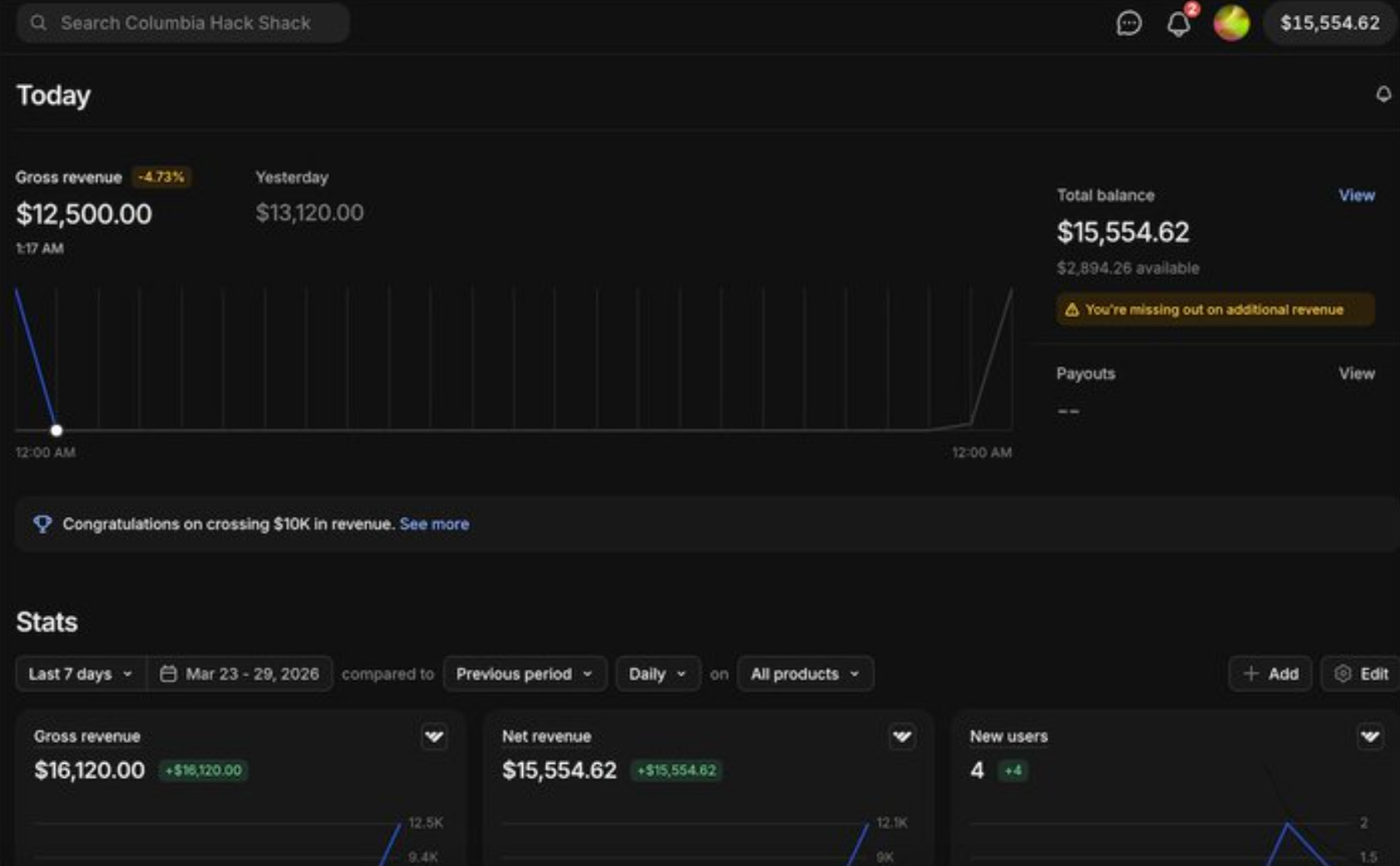
Using Whop, Amrutha and her team were able to make money online and accept client payments upfront. They weren’t slowed down by having to apply for payment processors and external tools; Whop handled payments so they could stay focused on the build.
$16k earned in 36 hours
These guys earned half of the average student’s graduating debt in 36 hours. Imagine what they could do with a few weekends?
When you’re relying on internships, summer jobs, and welfare payments, student debt feels insurmountable. And when you don’t get a graduate job after leaving, that feeling only amplifies.
Unfortunately, that’s a reality many graduates face, despite having hard skills and qualifications to back them.
That’s why Whop Higher Education is focused on helping students get ahead while they’re still studying, empowering universities to teach and train students on how to build a business.
3 lessons from the builders who were there
The thing about building cool sh*t with your friends is that it’s fun, full-speed, and not for the feeble.
The success of the Hack Shack weekend highlights 3 core lessons on building with momentum.
Speed > perfection
The teams didn’t spend weeks polishing their ideas before showing them to anyone. They put concepts in front of real people immediately and built around the responses that came back.
The auction post was the first test. If someone was willing to bid, there was demand. From there, projects were built in direct response to what people asked for. Notification systems, automation tools, data pipelines. Not theoretical products: tools someone had already said they would use.
The goal wasn’t perfect products, but how speedily they could ship them.
Charging upfront separates genuine demand from noise
One of the biggest advantages of the weekend was simple: people paid before anything existed.
The $12.5K iOS game deal closed before the product was built. That immediately filters the signal.
People who are curious will message, sure. But people who actually need something will pay for it.
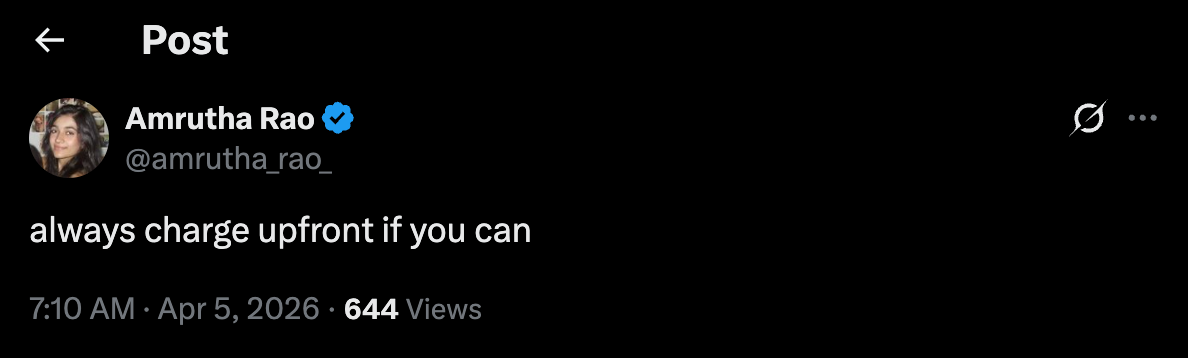
By sending prospects straight to a Whop checkout and collecting payments upfront, the team knew exactly which requests were worth building.
Distribution is key
The post didn't come after the work, it replaced the work. Without it, the students would have spent the weekend building their original ideas. Instead, the post reached millions of people and turned the retreat into a live marketplace for products.
Requests came in from founders, operators, and creators who already had problems to solve. Distribution didn’t come after the product, it created the work.
From 1 weekend to 100 universities
The builders didn’t spend weeks writing business plans. They didn’t apply for incubators or wait for funding. They tested demand in public, collected payment upfront, and built products people had already asked for.
That's the model Whop Higher Education is built around. Not pitch competitions and theoretical frameworks: real tools that let students test demand, collect payment, and ship while they're still in school.
"Every student builds a whop. Every student learns to build that business in class or through entrepreneurial center support. Every student graduates with a sustainable income."
- John Hill
More than 100 universities are already participating, and nearly 4,000 student businesses have launched so far: with a goal of reaching 100,000 students by the end of 2026.
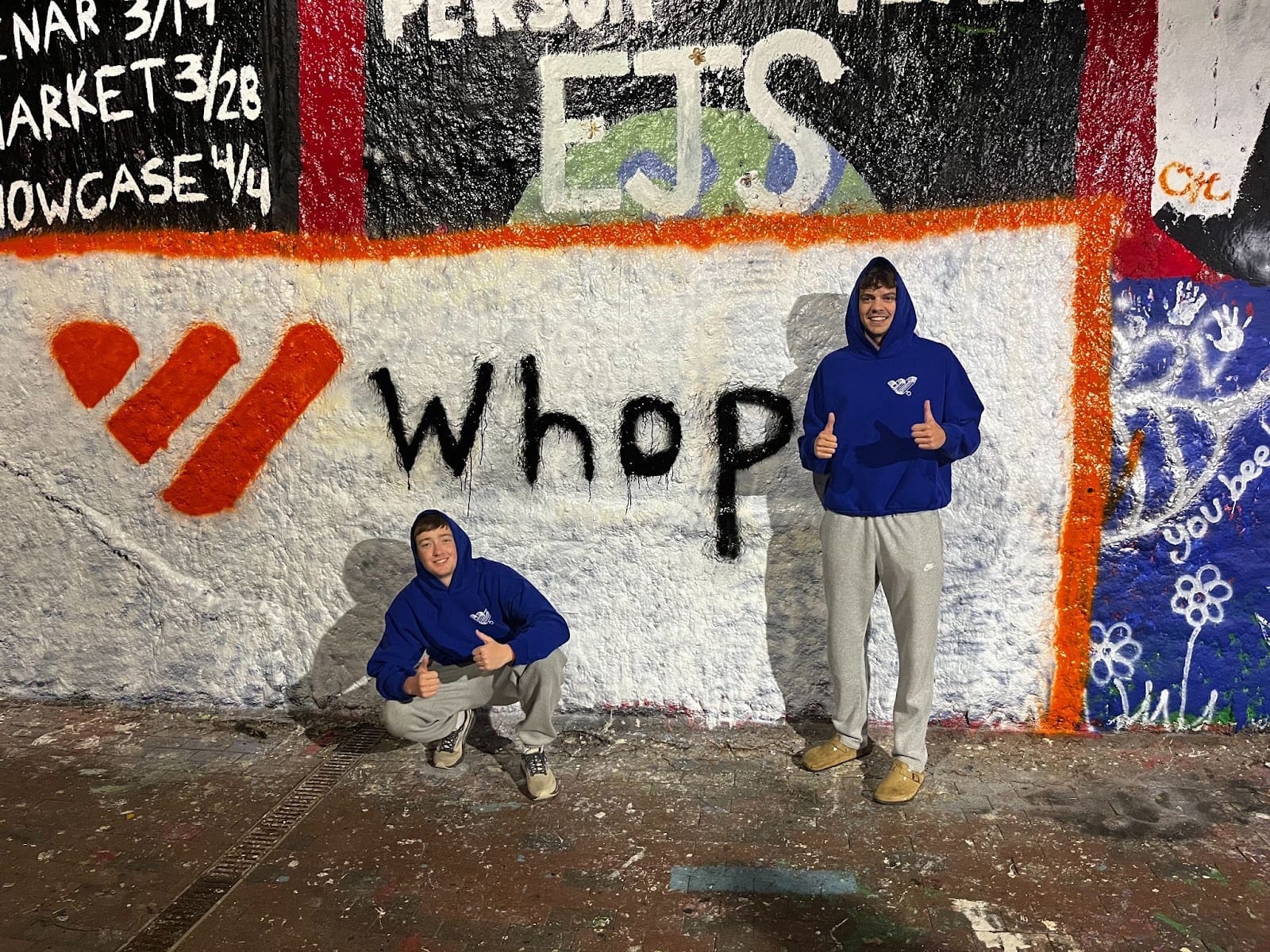
Students at schools like MSU, USC, Princeton, and Columbia are building businesses on Whop and collecting payments from real customers while they’re still in school. And that’s key to not being left behind after graduation.
We truly believe all students can build a sustainable income on the internet, no matter what their background, specialty, or story is.
And we want to help them do it.
Become a Whop university and empower students in entrepreneurship
Through Whop, students can launch businesses directly from campus, while still studying.
Payments, tax forms, and dispute handling are already built into the platform, so students can focus on building rather than figuring out infrastructure.
At the same time, universities gain visibility into what their students are actually creating, with a dashboard to track the number of student businesses on campus, total revenue generated, and the types of companies being launched.
Instead of graduating with only a degree and a résumé, students leave with revenue, customers, and real-world experience.
Contact us to get a custom whop set up for your university, or to schedule a call with our team.