How one student entrepreneur found his community, stayed in school, and started helping others build their businesses on Whop.
Key takeaways
- Whop replaces case-study entrepreneurship education with real businesses students launch and monetize before they graduate.
- Student founders don't have to choose between a degree and building; campus communities let them do both.
- Business-building becomes the new campus social network, connecting students through what they create, not who they already know.
Griffin Kubicki had already built two businesses before he ever set foot on a college campus.
By the time he enrolled at the University of New Hampshire, the 19-year-old had generated more than $250,000 in client revenue through paid ads and conversion funnels: working as a media buyer, head of operations, and founder of his own agency, Kube Marketing. He wasn't arriving at UNH to figure out what he wanted to do with his life. He already knew what he wanted.
So why bother with a marketing degree at all?
He wanted the paper that says ‘I’m officially qualified’, but more than that, he wanted to meet other young founders. People like him who understood the particular hunger of building something, before most of their peers had held a ‘real job’.
He figured college was where he'd find his people.
The loneliness of the solo founder
UNH is a school with a lot to offer, and for many students, its tight-knit Greek community is exactly what they're looking for. But Griffin was wired differently. "I want people who want to wake up early in the morning and go get s*** done," he says.
While opportunities kept coming – invitations to founder events, clients, deals – he'd return to his dorm, excited to share his news, to find his roommate gone. Everyone was out socialising, but it wasn't the kind of connection Griffin was seeking.
He didn't judge it; it just wasn't his type of crowd. "I can't change somebody," he realized, "and I can't change myself to try to fit into something I don't want to do."
So he stayed in. He worked hard. Griffin became a regular at UNH's entrepreneurship center, treating it like a second home (the award-winning ECenter is open to students of all colleges and majors).
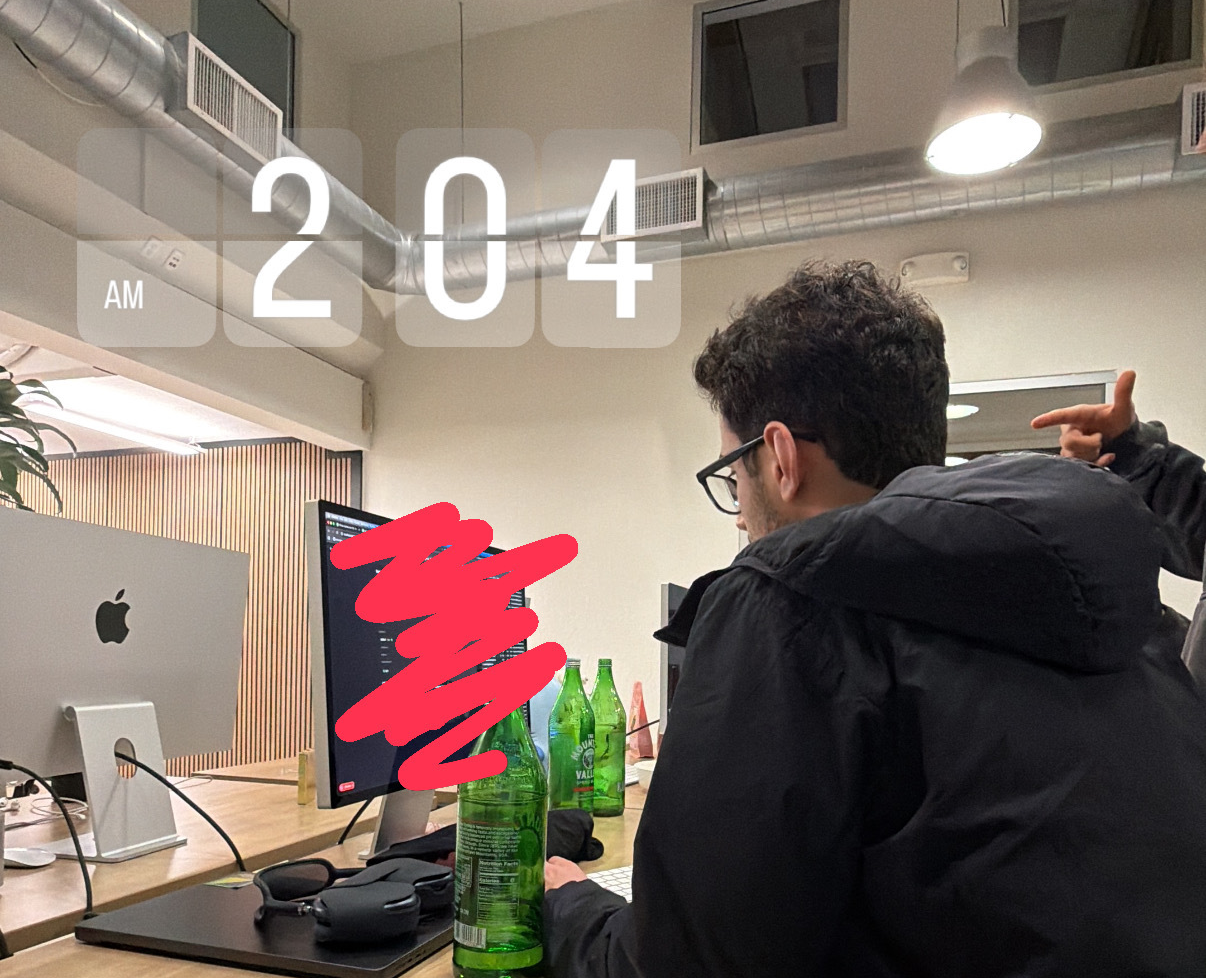
While his peers slept off the night before, his businesses were already moving, but his social circle was not.
I was just so lost. You almost feel like you're missing out if you don't find your people.
Then, he found Whop.
Whop: where entrepreneurs find each other
After spending so much time at the entrepreneurship center, the staff knew all about Griffin and his drive. So, when an administrator saw a LinkedIn post from Whop's John Hill reading: "Tag a university student entrepreneurship leader. I'll choose one to visit our offices in NYC", she knew just who to tell. She'd watched Griffin practically live at the center.
Griffin applied and tried not to think too much about it. But just two days later, an email landed in his inbox.
"Are you game? "
He read it twice. Then probably a third time. And of course, he confirmed that he was, in fact, game.
The timing could not be more apt. The weekend before, Griffin had been flown out to Miami to meet other young founders who make money online, and it was exactly the kind of trip that should have felt like validation.
Instead, he'd spent it being told to quit college as it was a waste of time. He'd come home half-convinced that they had a point.
I was pretty set after that, like, okay, I'm going to drop out. Dude, I'm going to go buy a Porsche.
Then, he walked into Whop HQ and changed his mind.
The students he met there weren't telling him to quit anything. They were enrolled, building, and setting goals. "Holy crap," he remembers thinking. "There are college students doing business who have goals like mine, and it's a real thing."
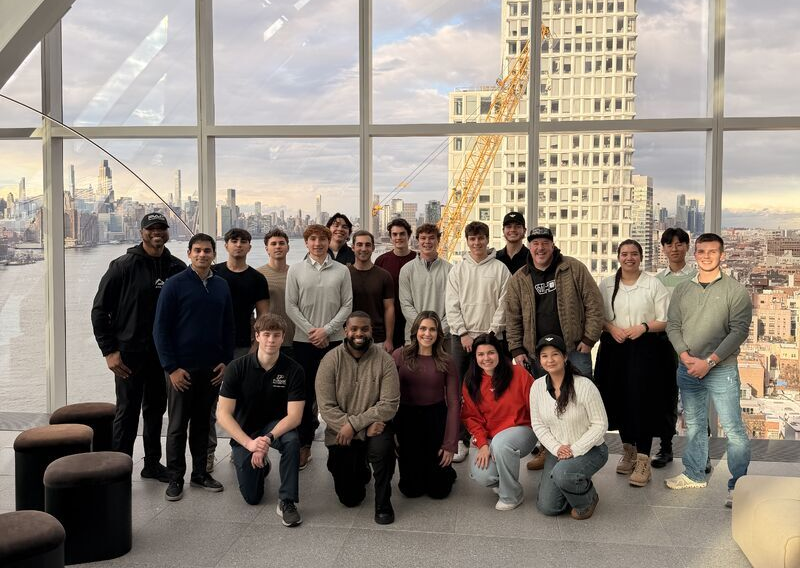
What he found at Whop HQ reframed his entire experience. He wasn't the odd one out: he'd just been in the wrong room.
It gave me clarity of like, okay, like I have goals, I'm going to go get those goals. And if people want to slow me down on the way, I'm going to cut them off.
Griffin flew home with a new sense of direction. He was staying in school, keeping his businesses running, and for the first time since arriving at UNH, he wasn't looking for his community anymore. He already knew where to find it.
The ecosystem takes shape
In the weeks after his visit to Whop HQ, Griffin was contracted to create whops for both Harvard and Yale, two of the most storied universities in the country, now with their own entrepreneurial communities. Then he turned closer to home, becoming the administrator of the UNH whop and helping fellow students build their own.
Think about this for a minute: in 1873, the most ambitious students at Harvard were founding newspapers from their dorm rooms. In 2004, a sophomore in Kirkland House was building a social network from his. Today, students like Griffin are building businesses from theirs: and Whop is the infrastructure making it possible.
One of the first people he brought into the UNH ecosystem was Colby Chase, a digital marketer who films car content and teaches other creators how to go viral.
Griffin then hired a freshman to work alongside him, someone he still works with today. The community he'd spent his first year searching for, he was now creating for others.
"If people want to go start their businesses, they can go on the whop at the University of New Hampshire and I'm the admin of it," he says. "There's an ecosystem built, slowly but surely, it's getting populated."
For Caroline Crowder, Whop's Director of University Partnerships and Operations, Griffin's story is exactly what the initiative was built for.
"Entrepreneurship has always been a lonely road. Most founders build in silos, with no one around them who gets it. Watching students like Griffin build community on campus and work alongside university leadership to inspire their peers to launch companies is proof that a degree and entrepreneurship don't have to be mutually exclusive."
The next generation is building from their dorm rooms
Griffin is not the first student to arrive at college with a business already running, and he won't be the last. According to a 2025 Quizlet survey of 2,000 US college students, more than half of Gen Z students maintain a job or business alongside their studies.
This tells us that the ambition has never been the problem. What's been missing is somewhere to put it: a curriculum that meets students where they are, with infrastructure that doesn't require a co-founder with connections or a family friend with capital. And of course, a community that gets it.
That's the gap Whop is closing.
Traditional entrepreneurship education has long relied on case studies, business plans, and theoretical frameworks. Students learn about existing companies that have already been built, whereas Whop is asking students to build their own.
The premise behind the college initiative is articulated simply by John Hill:
"Every student builds a whop. Every student learns to build that business in class or through entrepreneurial center support. Every student graduates with a sustainable income."
The program has already reached more than 100 universities, with almost 4,000 student businesses launched. The goal for 2026 is 1,000 universities and 100,000 students.
What that looks like in practice varies by campus, but the common thread is speed, real revenue, and students building businesses now rather than writing plans for ones they might build someday.
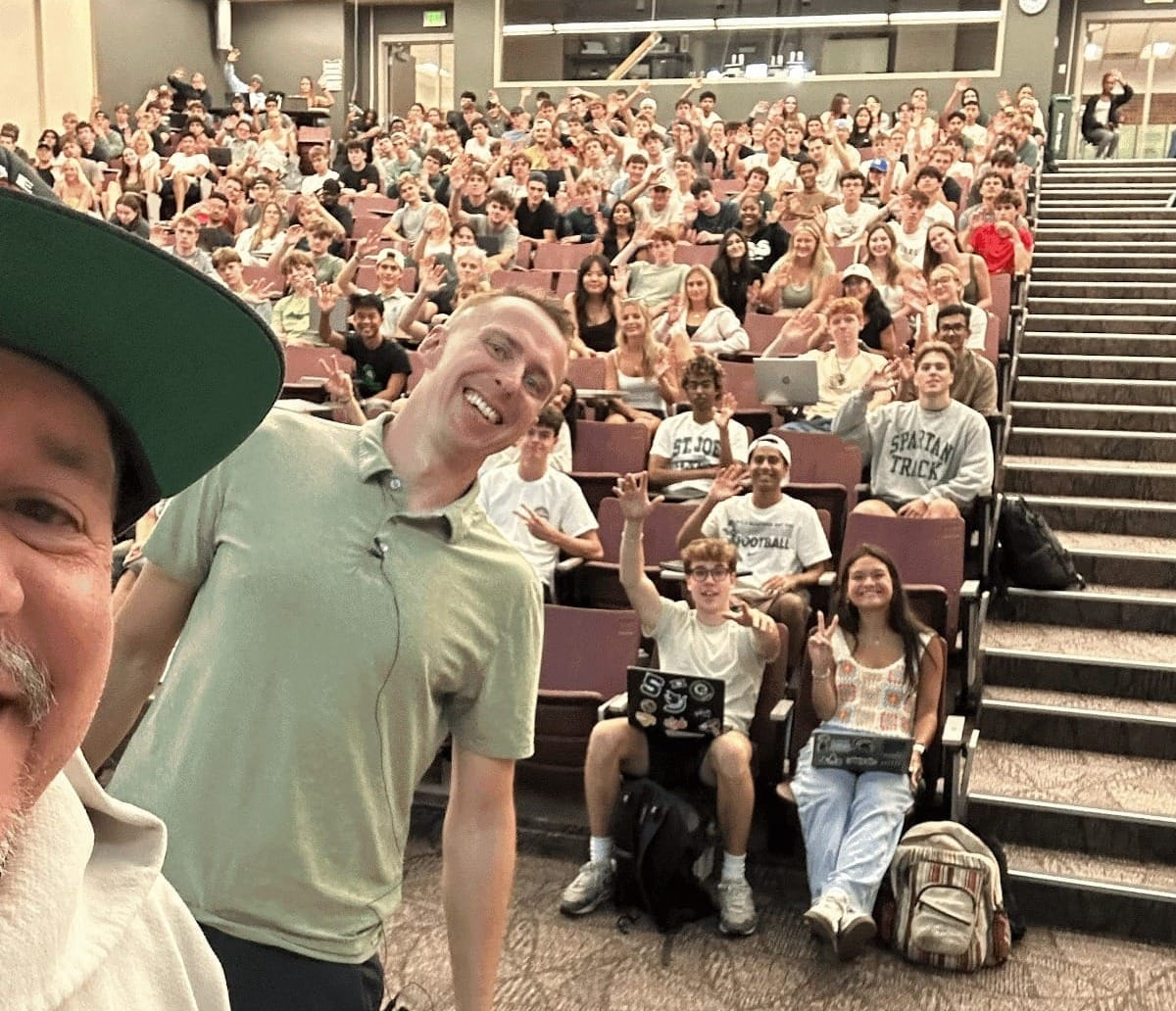
At Michigan State University, Professor Ken Szymusiak redesigned his entrepreneurship curriculum around a five-week sprint. As a result, more than 350 students have built real businesses through the program, with Szymusiak finding that the compressed timeline removes the paralysis that comes with open-ended projects.
Case studies, he argues, can only take a student so far. At some point, you have to be in the arena.
"What has become very clear over the past two years is that my students now have the ability to build at superhuman speed. What used to take weeks now takes hours. This has profoundly changed how entrepreneurship education is taught: it has to be about experimenting, not case studies of the past." - Ken Szymusiak
At the University of South Carolina, the initiative took the form of an innovation tournament. Before building their own whops, students researched the top-performing businesses already on the platform to understand what worked, what didn't, and why.
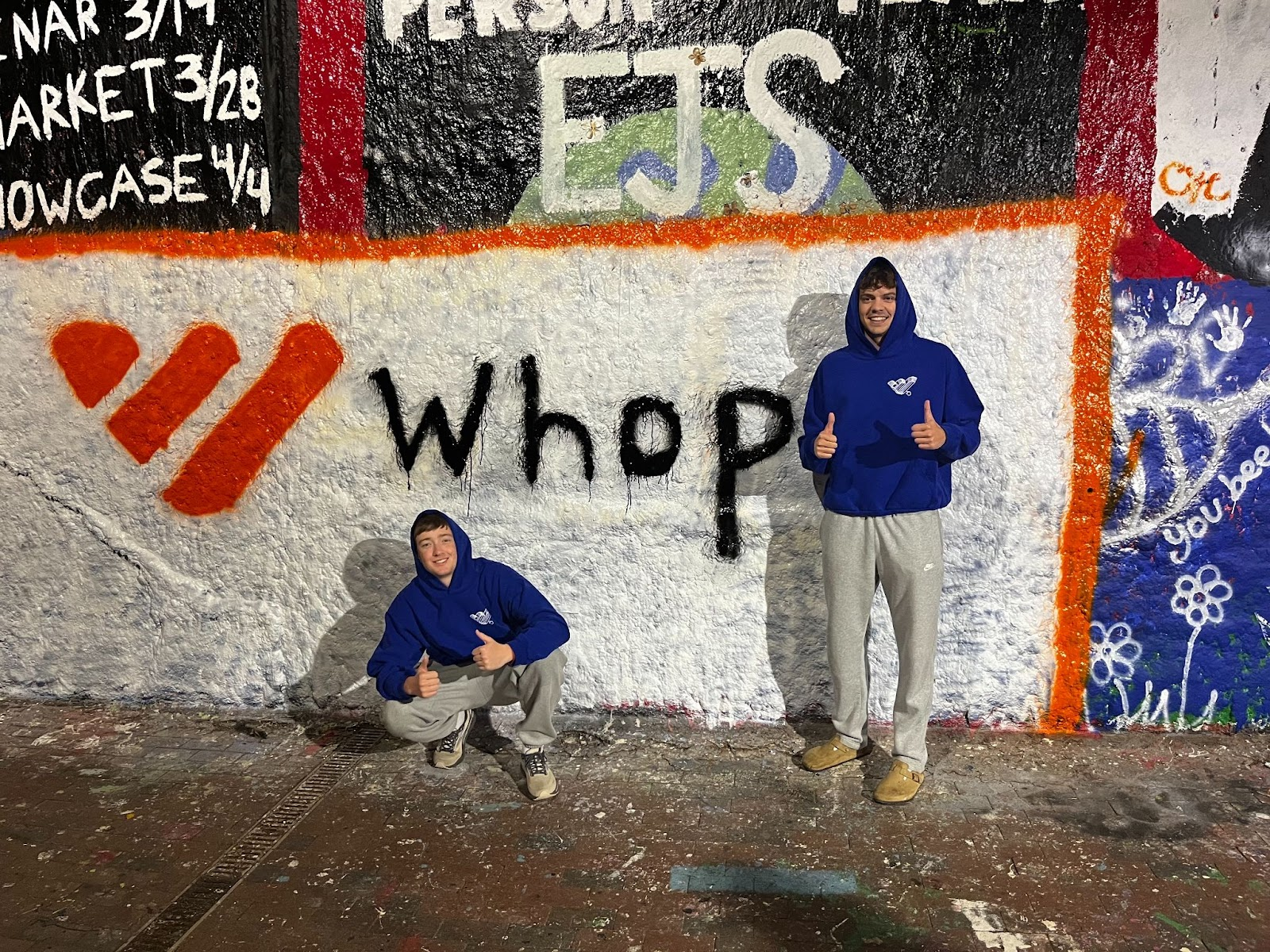
The Whop HigherEd program also exists across NC State, Georgia Tech, and the University of Buffalo, among others. Each campus looks different, but the outcome is the same: students graduating not just with a degree, but with something they built themselves.
Business is the new social network
When Facebook launched from a Harvard dorm room in 2004, it connected people who already knew each other. Whop is doing something different: connecting people through what they create. Today, the platform is home to more than 204,000 businesses around the world.
Each university in the program has its own community, powered by Whop, built in partnership with faculty, staff, and entrepreneurship centers, and brought to life by student leaders on the ground.
Students in New Hampshire are building alongside students in South Carolina, Michigan, and California. A freshman at UNH is learning from a sophomore at Yale. An entrepreneur in one city is finding customers in another. For students like Griffin, the business isn't separate from the community. It is the community.
Your students are already building the future. Meet them there.