Community-based marketing is how modern brands grow, by turning audiences into believers. See how CBM works, why it’s replacing ads, and how Whop helps you build a community that sells with you.
Key takeaways
- Community-based marketing turns audiences into self-sustaining growth engines where members actively promote your brand organically.
- Start conversations instead of broadcasting content—dialogue and participation build loyalty that outlasts any ad campaign.
- Reward community contributions with recognition and perks to keep members engaged and transform them into brand advocates.
Community-based marketing (CBM) means marketing through your audience, not at them. Instead of chasing strangers with ads, you create a space where people connect, contribute, and talk about what you do because they genuinely believe in it.
It’s not about trying to reach a bigger audience, but building stronger relationships with the audience you already have.
And when your audience becomes a community, they do the marketing for you.
"The people inside of the communities are the ones that are cheerleading for you the most".
— Jasen Hunt, professional CAD instructor and online creator
What is community-based marketing?
Community-based marketing is all about shared values, belonging, and genuine connection with your audience. It’s not exactly a new idea, but the way it works online today is completely different.
Traditional marketing used to follow a simple path: get attention, make a sale, move on. That’s the marketing funnel, and it’s built on transactions, not relationships.
Take a look at Nike's early strategy — huge ad campaigns with celebrity endorsements.
Customers saw the ad, bought the shoes, and that was the end of the relationship until the next campaign. It worked, but it was expensive and one-directional.
Then came the flywheel, which focused on delighting customers so they’d come back and refer others.
Apple turned the funnel into a flywheel. Once you buy one product, you’re pulled into the ecosystem — AirPods sync with your iPhone, your iPhone backs up to iCloud, your MacBook connects seamlessly.
Now, things have evolved again. We’re in the community-led era, where growth happens through shared experiences and participation, not just persuasion.
In a community-led model, people don’t just buy from you, they belong with you. They help shape your brand, give feedback, share wins, and even create content that fuels your next wave of growth. Watch how Malcom advertises Whop in his content without explicitly advertising Whop.
CBM is powerful because it creates loyalty that lasts long after the first purchase. A strong community keeps people connected through product changes, rebrands, or new launches.
And it’s compounding — one active member can pull in ten more without you spending a cent on ads.
Over time, that turns your community into a self-sustaining growth engine that’s cheaper, more authentic, and infinitely more scalable than traditional marketing.
How to do community-based marketing (step-by-step)
Start with a purpose: who’s this for, and what do they need?
Every great community starts with a “why.” Ask yourself: who is this for, and what do they need from being here?
The best communities solve a problem or fulfill a desire beyond the product.
A trading community, for example, gives people a place to learn, share wins, and make sense of markets together. A coaching or fitness group gives accountability, not just advice. The clearer your purpose, the easier it is for people to decide whether your space is for them.
If you skip this step, your community becomes just another group chat that dies off after a few days. But if you nail it, you’ll build something people want to keep coming back to.
Pick your community platform
Your platform sets the tone for your community. You can host on Discord, Slack, Facebook Groups, or Reddit — but each comes with limits. Some have strict rules, others are full of ads, and most have limited monetization opportunities.
That’s where Whop stands out. Whop gives you full ownership of your space — no ads, no algorithms, no platform deciding what your members see.
You can host everything in one place: chats, forums, courses, and even payments. That means less time managing tools and more time connecting with your audience.
Share conversation, not content
Community-based marketing isn’t about broadcasting updates or sharing about your latest product launch. It's about starting a dialogue.
Stop talking at your audience and start talking with them. A great post is an open question. Ask what your members are struggling with, what they’ve learned lately, or how they approach something differently. Use a platform that lets you invite participation instead of pushing messages.
Here’s what that looks like in practice:
- Glossier grew from a beauty blog comment section. Instead of shouting product launches, they listened to what readers wanted and built products with them. The community literally shaped the brand’s roadmap.
- Duolingo doesn’t just post updates; they spark playful competition. Their leaderboards, streak challenges, and community memes turn learning into a shared experience rather than a one-way relationship.
- Notion didn’t rely on ads — instead, they amplified user voices. People started sharing their own templates, and Notion leaned in by spotlighting those creators. That single decision built a thriving ecosystem that markets itself.
- MrBeast (yes, the YouTuber) turns his audience into collaborators. Every challenge, poll, or giveaway makes his community part of the content.
This kind of participation turns a static audience into an active network. And that’s exactly what Whop is built for.
It’s not just a place to post updates (although you can do that with the forums app if you want) it’s a platform for real connection. You can create chats, run discussions, host livestreamed feedback spaces, and let your community grow around your business.
Reward contribution
Recognition is what keeps communities alive. When people feel seen, they stick around — and when their contributions matter, they give even more back.
"Use Whop's affiliate links and give loyal members a higher rate custom affiliate link so that they can make more money and market your community as well."
- Luca, Whop
Reward members who help move the group forward: the ones answering questions, sharing insights, giving feedback, or creating resources for others.
Sometimes all it takes is a public shout-out or a simple “thank you” in front of the group.
Other times, you can go bigger: unlock exclusive channels, give early access to new features, or share affiliate perks that let them earn from their engagement.
Track and iterate
Communities aren’t static. What works in month one might flop in month six. The key is learning how to listen to your community through data and dialogue.
Start by tracking what really matters: engagement, retention, referrals, and growth. These four signals tell you everything about how healthy your space is.
Ask yourself:
- Are new members joining and jumping into conversations quickly, or do they lurk for weeks?
- Are returning members showing up regularly because they want to — not because you pinged them?
- Are your best members inviting others, talking about your group online, or turning into advocates?
If you’re seeing yeses across those questions, your community is thriving. If not, that’s your cue to experiment.
Try running themed discussions, live Q&As, or interactive events to re-engage members. Drop new content formats. Poll your community to ask what they want next.
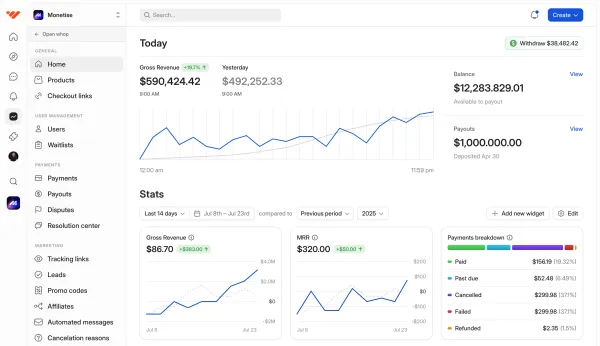
Whop helps you stay ahead. Every community you create comes with built-in analytics — member growth trends, engagement rates, churn data, and referral metrics — all in one dashboard. You can see exactly what’s resonating and what’s fading, then double down on what works.
Real community-based marketing examples
Community-based marketing is already powering some of the most recognizable brands in the world.
Gymshark
Gymshark started as a small fitness apparel brand and exploded into a global powerhouse, not because of massive ad budgets, but because of community. Instead of just selling clothes, they built an identity around self-improvement and belonging.
They partnered with micro-influencers and athletes who lived the lifestyle, then gave their communities space to connect through fitness challenges, pop-up events, and online discussion hubs. Fans began creating user-generated content (UGC), posting their progress, tagging Gymshark, and inspiring others to join in. That authentic participation turned buyers into brand advocates.
Figma
Figma grew by empowering its users to become educators. Designers created tutorials, hosted live streams, and shared templates in dedicated Slack groups and forums. Instead of keeping the spotlight, Figma put its users at the center, even launching programs to support community organizers and “Figma Friends” who ran local meetups.
This approach transformed users into evangelists. Every conversation, workshop, or resource shared made the product more valuable, not just for individuals but for the whole design ecosystem.
Whop
Whop turns niche audiences into monetized ecosystems. Instead of building a community and figuring out how to make money later, creators on Whop build around their businesses from day one.
Every chat, event, and piece of content feeds back into what they sell, whether that’s a membership, course, or coaching offer.
Choose the right platform— there's platforms like Skool and Kajabi, but Whop is the best by far."
- Online community creator, Whop
Communities scale faster, stay more engaged, and actually generate revenue while they grow.
How Whop empowers you to create, market, and grow your community
Whop is an all-in-one platform that lets you build, sell, and scale your community exactly how you want. You can sell memberships, courses, services, files, and gated access — all in one place — then assemble your community with drag-and-drop apps so you only include what you need.
Every online space you create on Whop (called a whop) is fully customizable. Using native Whop apps, you can hand-pick the features you want, from chat and video to payment processing and analytics, to build the perfect experience for your members.
Here’s how it works:
- Create your whop: Add what you’re offering, like memberships, coaching, or premium content, and set your price.
- Customize your space: Use drag-and-drop apps to design your community layout, enable video, chat, or course modules, and tailor access rules in seconds.
- Launch and grow: Share your whop link anywhere, get paid instantly, and use built-in analytics, customer management, and marketplace discovery to grow your audience.
Communities are the new marketing channel
Ads fade. Communities grow.
Traditional marketing can get you clicks, but community builds loyalty that lasts. When people feel seen, supported, and connected, they don’t just buy once; they stick around, share your message, and bring others with them.
The next wave of successful businesses won’t just talk to their audiences, they’ll build with them.
Whop makes that possible. It’s the all-in-one platform for building, selling, and scaling your community.
Start building your community on Whop.