
Looking for the best online newsletter platform? Explore our guide to the leading email tools for marketing, growth, and customer engagement.
Key takeaways
- Whop offers an all-in-one business platform where forum posts automatically become newsletter emails to your community.
- Different pricing models matter: some platforms charge per subscriber while others take revenue percentages from paid subscriptions.
- Beehiiv and Kit stand out for built-in monetization through ad networks, premium subscriptions, and digital product sales.
The best online newsletter platforms in 2026 include Whop, Mailchimp, Substack, and beehiiv.
Each platform offers different strengths, from AI-powered design tools to flat-rate pricing that scales with your audience.
This guide walks you through the top 12 newsletter platforms available today, comparing their features, pricing, and monetization options to help you choose the right one for your needs.
12 best online newsletter platforms
1. Whop
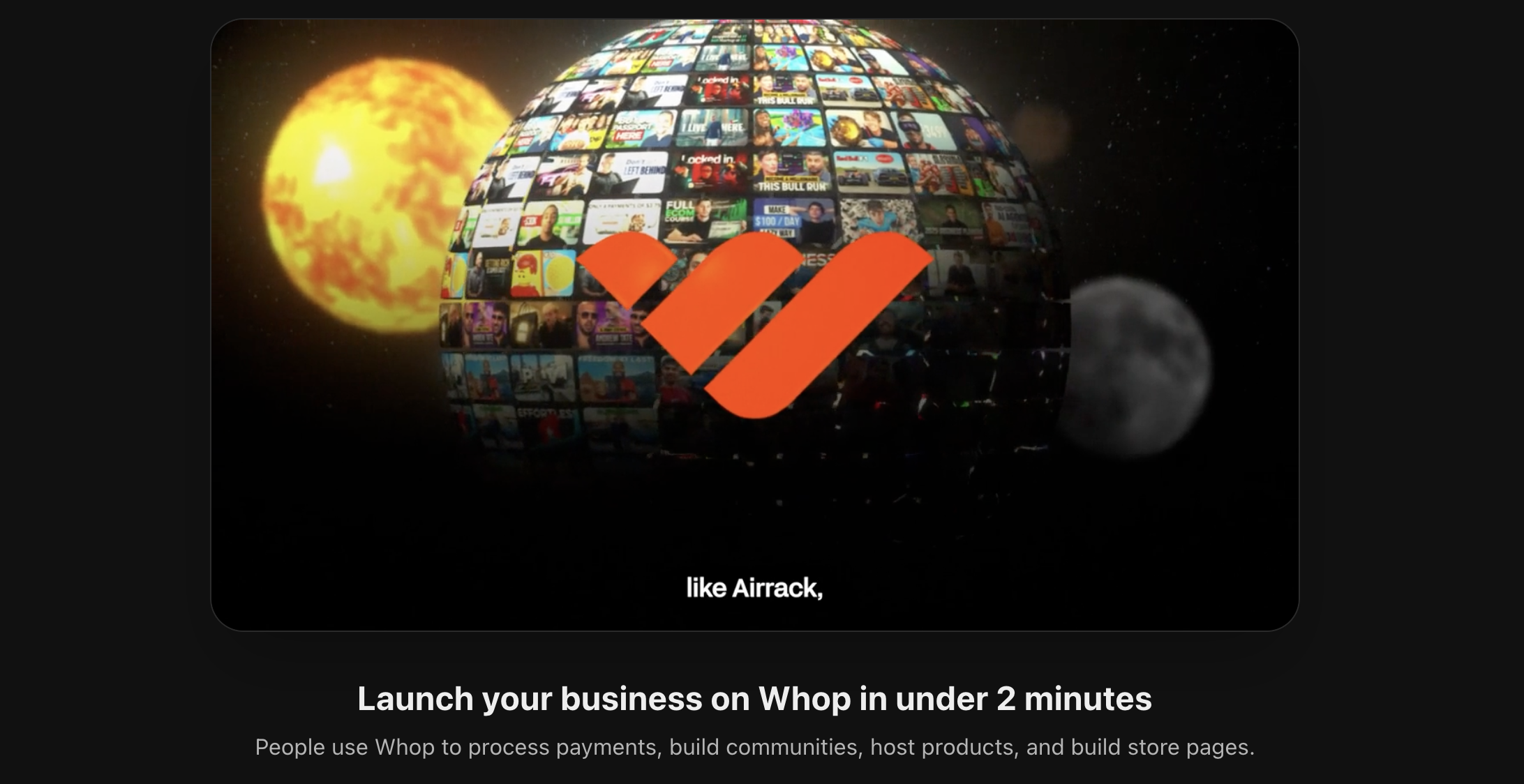
With Whop, every forum post you make doubles as a newsletter - it's automatically sent as an email to your community.
That's because Whop isn't just a newsletter tool, it's a full platform for running any online business or community. When you create a whop, you can add apps (features) to customize how you connect with your audience.
For example, if you've built a big following on TikTok and want a direct way to keep fans updated, just create a whop and add the Forums app. Every post instantly reaches your audience through both a Whop notification and an email, so nobody misses your news.
You decide how interactive it is too: keep comments on for discussion, or turn them off for simple, one-way communication like a traditional newsletter.
And as we said, Whop is more than a newsletter platform. You can sell courses, memberships, exclusive content, or anything else right alongside your newsletters.
- Pros: Whop's app-based ecosystem gives you total flexibility. You can sell courses, memberships, communities, or any offer alongside your newsletters.
- Cons: The newsletter function isn't labeled as "newsletters," which can be confusing at first. It's powered by the Forums app — once you add it, every post doubles as a newsletter email.
- Pricing: Whop is completely free to use and there's a transaction fee of just 2.7% + $0.30 on sales you make.
2. Mailmodo
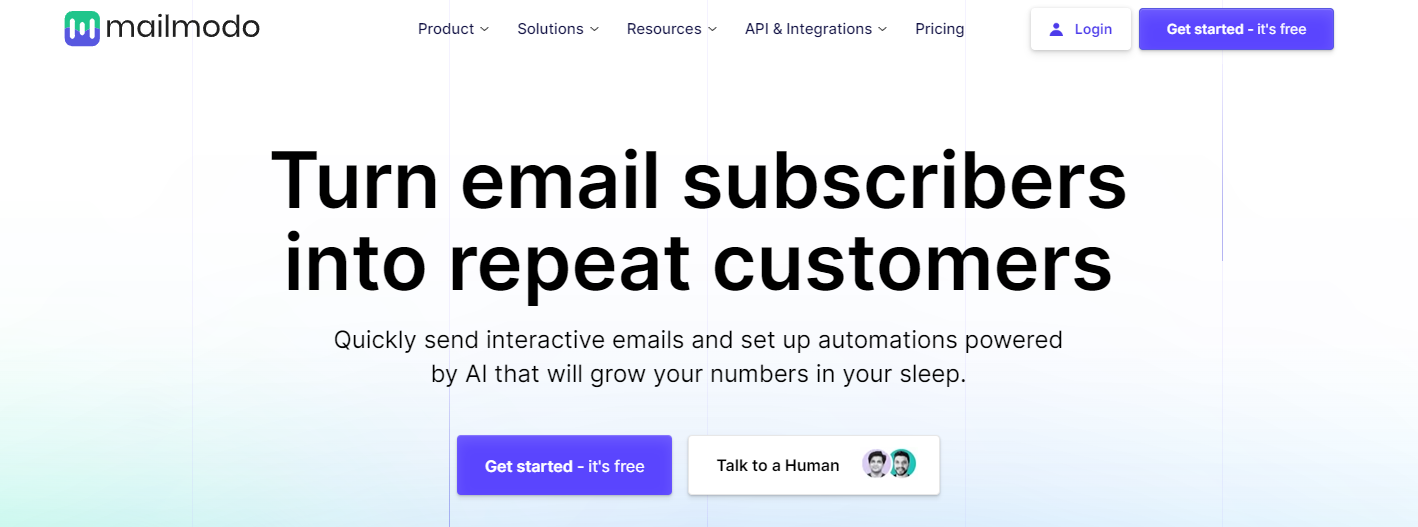
Mailmodo is one of the best online newsletter platforms, letting you grow your ecommerce business thanks to the variety of features it offers.
We're talking AI integration and templates that can really speed up your email copy, instant automation, and precise segment targeting.
Most exciting of all, Mailmodo's gamification, interactivity, and AI powered customization and analytics can boost conversion, which is a big bonus.
Why? You're already getting a best-in-class product, and the many extras turn the dial up to 11.
With AMP for email, you're essentially sending your audience a mini-website inside of your newsletter. Odds are, they're going to love it.
- Pros: Drag and drop builder for AMP and HTML, full stack campaign manager, AI-powered automations.
- Cons: Can get expensive if you have a large contact list thanks to flexible pricing. This means you won't pay too much for a small mailing list but you may not get all the benefits of scale with a large one.
- Pricing: Flexible pricing gives you a rate depending on how many contacts you have. The Lite and Pro plans start at $39 and $79 respectively for up to 2500 subscribers, while Max costs $159 up to the 10k contact mark.
3. Smartrmail
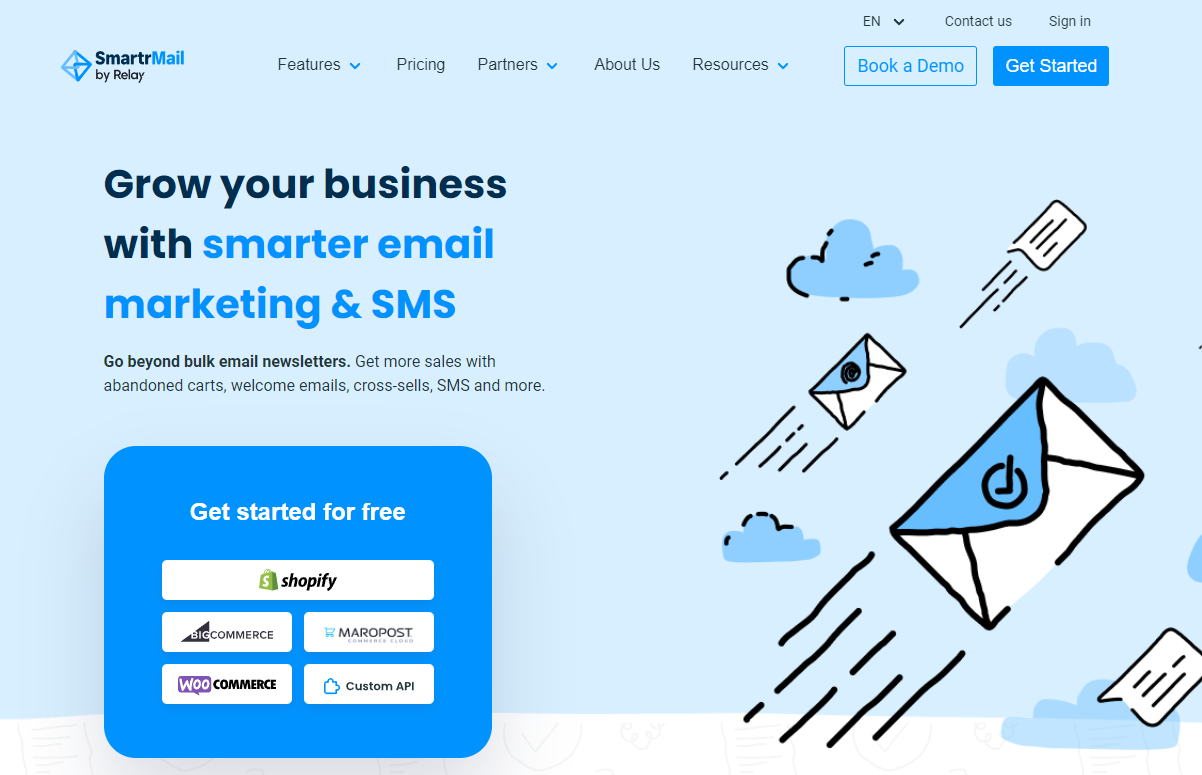
Smartrmail has plenty of advantages if you go premium, but it's one of the most generous services that you can use without paying.
You can have up to 250 email subscribers and shoot off 1250 emails a month for free, which is great if you're just starting off on your newsletter journey.
The platform offers tons of useful features that you can take advantage of too, from various automated workflows to AI powered product recommendations and newsletter creation based on customer buying data.
There's A/B testing of subject lines, product lookups within your newsletters, segmentation, and you can add custom HTML code if you want to.
- Pros: You can test out the advanced Pro plan with a free trial, and Smartrmail offers just about every feature a newsletter really needs.
- Cons: The number of subscribers you can have on a free plan is limited, but it's definitely better than nothing.
- Pricing: The free plan gives you 250 subscribers and 1250 emails per month, without locking off any features. Paid plans start with Essentials at $10 per month for 500 contacts, and Pro at $49 per month for larger lists with advanced features.
4. Mailchimp
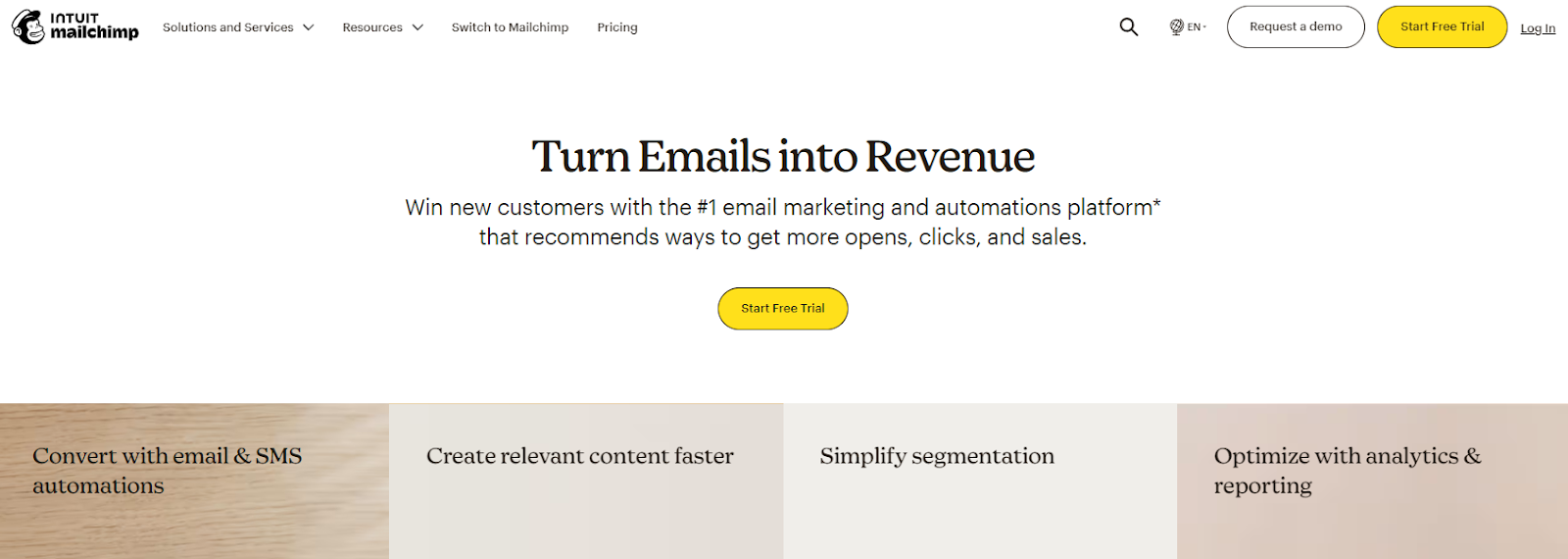
Mailchimp started out as an email newsletter platform for small businesses but is now very much an all-in-one marketing platform.
That's good news for because it offers lots of advantages no matter what stage of your business or content creation journey you're in.
As a platform, it's easy to use, and can help manage your website, landing pages, socials, SMS campaigns alongside your newsletters, and even generative AI tools to improve or fully build your emails.
Mailchimp also features a drag-and-drop email builder that can really help minimize the time you need to perfect design.
It's also kinda fun to play around with, and helps unlock your creative side!
- Pros: Mailchimp is really easy to use and intuitive in its design, and it serves as an all-in-one marketing platform. That helps small businesses since you can conserve your time and budget.
- Cons: The free plan is very limited, and you'll have to buy templates if you really want your newsletters to look good.
- Pricing: Mailchimp's full-featured Premium plan starts at $350 per month for 10k contacts, Standard starts at $20 per month for 500 contacts, and Essentials drops down to just $13 per month for 500 subscribers.The Standard plan has most of the tools you'll need to scale, featuring advanced automations and data-driven optimization, and it scales well — at a maximum of 100k contacts and 1.2 million monthly email sends, it only goes up to $800.
5. Constant Contact
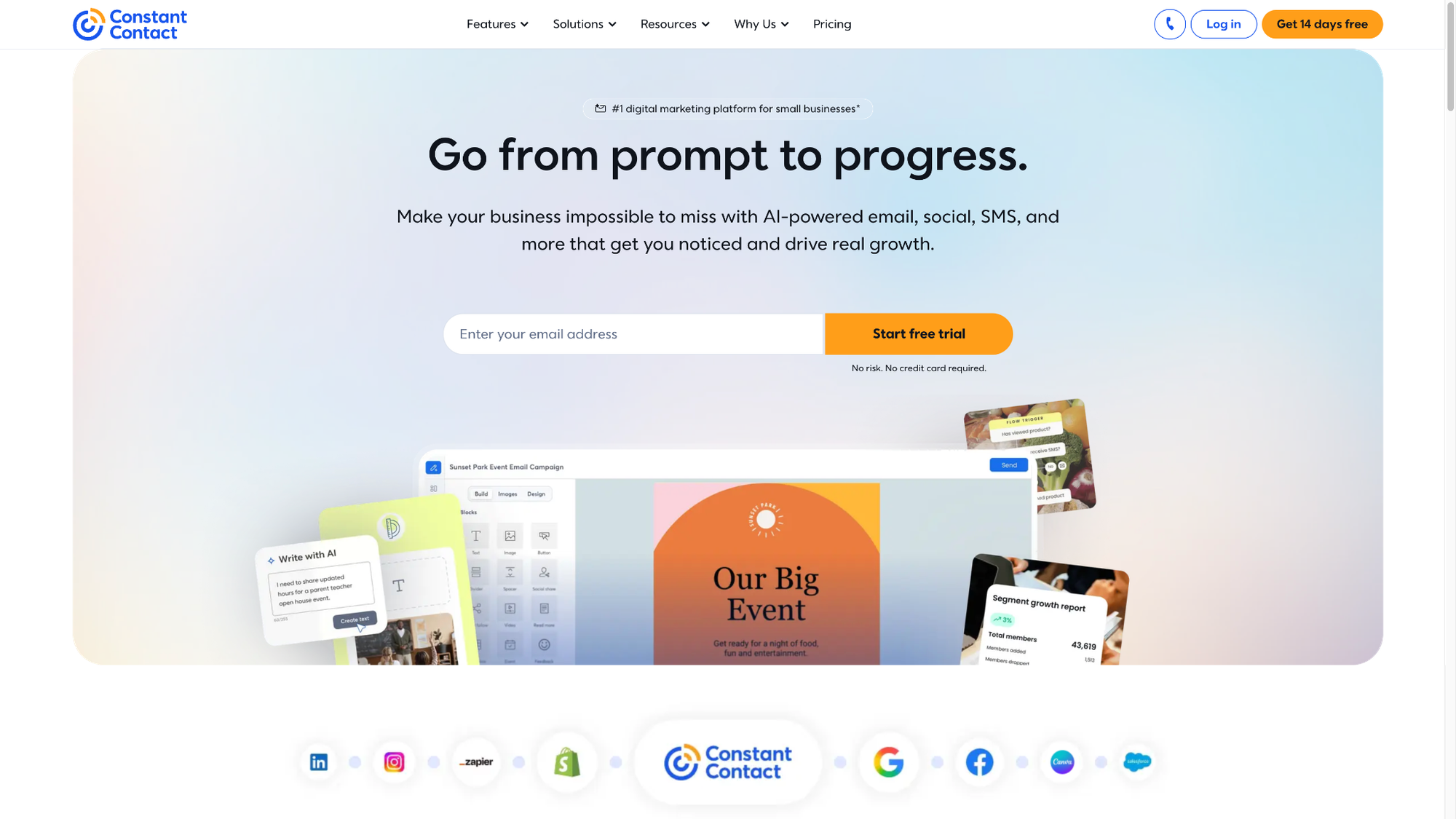
If you're running a small business or nonprofit, Constant Contact probably doesn't need much of an introduction. It's been around since 1995 and built specifically for teams that want professional email marketing without an enterprise-level learning curve.
What sets it apart from most platforms on this list is that email is just the starting point. Constant Contact also handles SMS* messaging and social media scheduling for Facebook, Instagram, LinkedIn, and TikTok - all from the same dashboard. So instead of juggling a newsletter tool and a social scheduler, everything lives in one place.
The 600+ email templates, drag-and-drop builder, and AI writing assistant make it easy to produce polished campaigns quickly. There's also a Canva integration that lets you pull designs directly into your emails without downloading or reuploading anything.
One thing that consistently gets called out in reviews: live phone and chat support is included on every paid plan - not just the expensive tiers. That's unusual, and it matters a lot when something breaks mid-send.
- Pros: A genuine all-in-one for small businesses - email, SMS*, event management and social media from one dashboard, with live phone support on every plan and up to 30% off for nonprofits.
- Cons: Automation isn't as deep as ActiveCampaign, and SMS* is only available in the US and AU currently (upcoming launch in the UK expected during August).
- Pricing: Free trial available, no credit card required. Paid plans start at $12/month (Lite), with Standard at $35/month and Premium at $80/month which includes 500 SMS* messages per month. An SMS* add-on is available from $10/month on Lite and Standard plans.
*Currently available in US & AU
6. Kit
Kit — formerly known as ConvertKit — is all about creators and creativity. What does that mean? For starters, maximum automation and a super easy-to-use set of features.
Platforms that are tough to work with really kill creativity, and Kit is totally aware of that — even the UI design is clean and pleasant, giving you a canvas to express yourself.
On top of that, it also offers several monetization options right from the inside your newsletter.
That's a big one, since you can unlock premium conversion, list your digital products, and offer subscriptions without your readers needing to click away.
- Pros: Provides plenty of monetization options and growth-related features to go alongside engagement boosts.
- Cons: Design is text-forward, which can suit some types of content better than others.
- Pricing: Kit's free plan covers up to 10,000 subscribers. Paid options start with the Creator plan at $39 per month for 1,000 subscribers, going up to the Creator Pro plan at $79 per month for 1,000 subscribers with advanced features like A/B testing, referral systems, and advanced reporting.
7. Benchmark
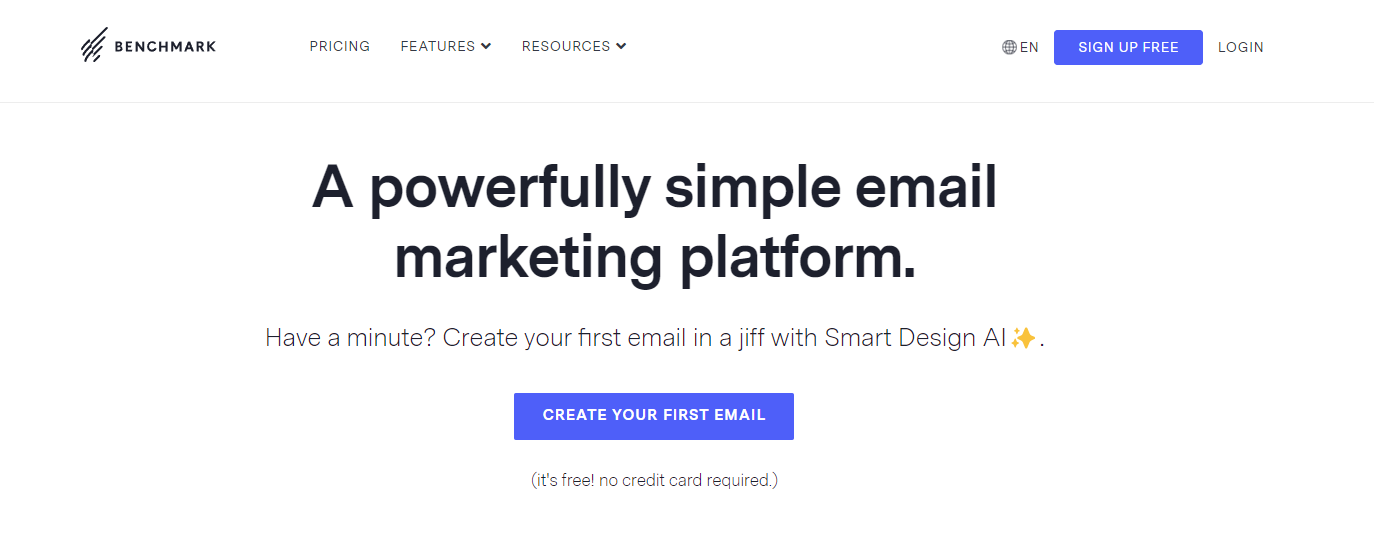
Benchmark is an email newsletter platform that's chock-full of features, with AI leading the charge.
The platform's "Smart Design AI" is a companion that helps you whip up professional emails featuring your own logos, images, colors, and messaging with minimal input.
That sounds good, but how it does that is the cool bit – it pulls all of that data straight from your website, then whips up copy for you.
All that remains is for you to do the editing.
And, as it happens, there are tools to help you out here too. There's a drag-and-drop editor, HTML code editor, or a plain text editor to choose from in order to get the job done.
- Pros: Benchmark's flagship is its Smart Design AI, but also has all of the automations and other options that you need from an email newsletter platform.
- Cons: The free plan is very limited, basically just giving you a single sign-up form and basic segmentation and automations.
- Pricing: Benchmark offers a free plan with 500 contacts and 3,500 emails per month. Paid plans start around $15 per month and scale based on your contact list size and email volume needs.
8. Substack
Substack. Of course it had to be Substack.
This service has been a gamechanger for a lot of influencers, combining power with reach. And, what do you want from a newsletter platform? To get your message out to your audience directly, of course.
Substack does that, does it it well, and does it for free to boot.
As far how things are beneath the hood? Substack is a blog, webside, content platform and payment processor all rolled into one.
It's also important to add that there aren't any editorial restrictions when you use Substack, and you retain full ownership of all of your content.
Plus, there's also a network effect to take advantage of — Substack visitors can happen upon your content when they're browsing, so the platform can help you grow.
- Pros: Substack is free to use, and it gets the job done by sending your content to the inboxes of your audience. Importantly, site viewers can organically find your content, which sets it apart from many other platforms.
- Cons: Substack isn't a specialist newsletter platform so you don't have as many features and design options as other services.
- Pricing: Free to use, but the platform takes 10% of your revenues when you turn on paid subscriptions.
9. Flodesk
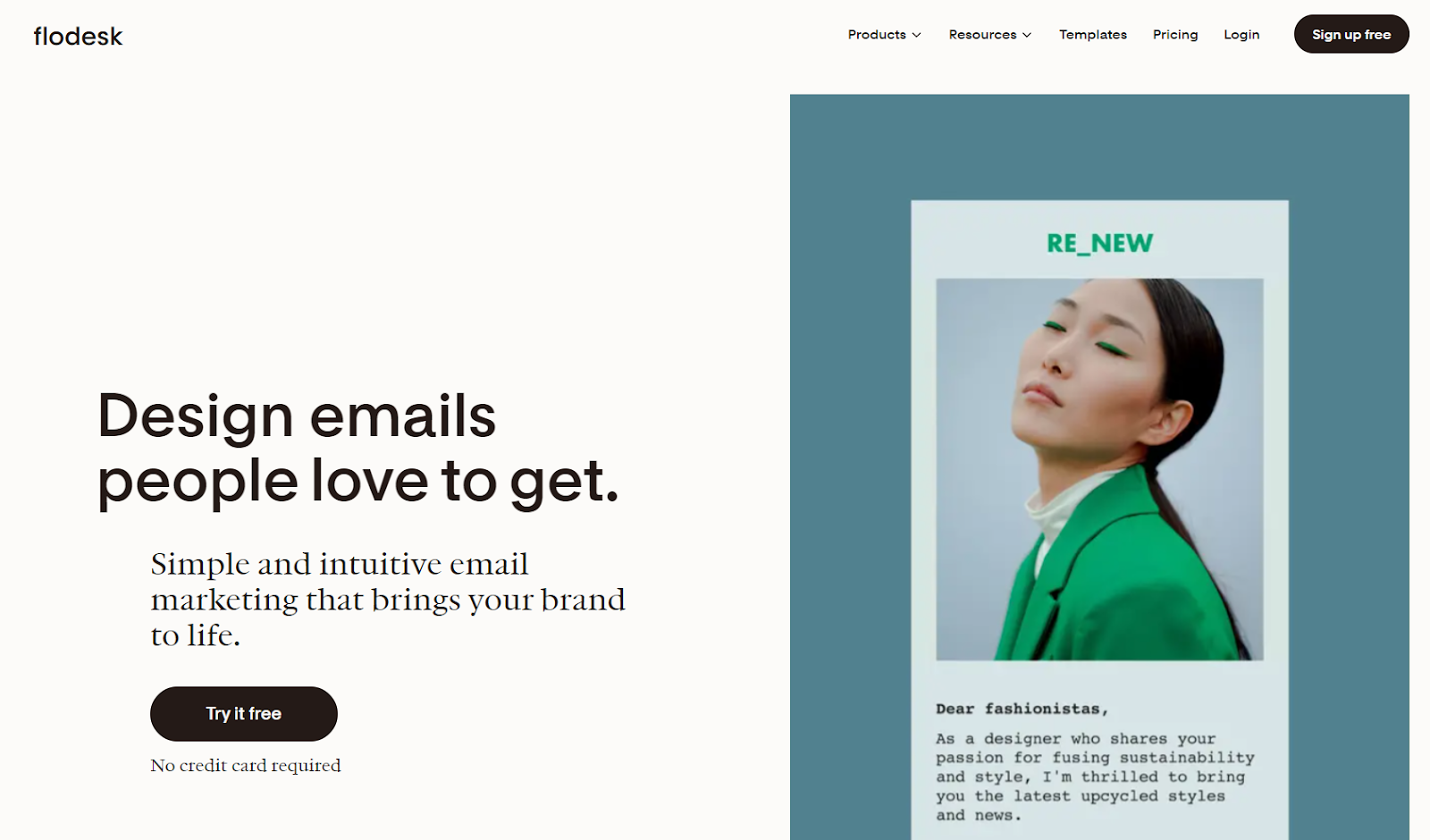
Just about every newsletter platform we've covered so far uses contact-based pricing. That means one simple thing: the more you grow, so does the amount you pay them.
Let's be straight here. Props to them for figuring out an effective way of pricing for their own services. Still, you're not here for their top line — you want to grow yours.
Enter Flodesk, an excellent newsletter platform that offers beautiful design templates and powerful automation features.
Flodesk has all of the features you might want as you scale, too. Automation, analytics, advanced segmentation? It's all there, along with a pricing model that scales with your growth.
- Pros: Flodesk is a simple, feature rich platform that includes plenty of monetization options within your newsletters.
- Cons: Pricing changed in late 2025 - new customers now pay based on subscriber count rather than the previous flat-rate model.
- Pricing: As of November 2025, Flodesk uses subscriber-based pricing starting at $25 per month for smaller lists. Note: Customers who signed up before November 28, 2025 are grandfathered into the previous $35/month flat-rate pricing.
10. Beehiiv
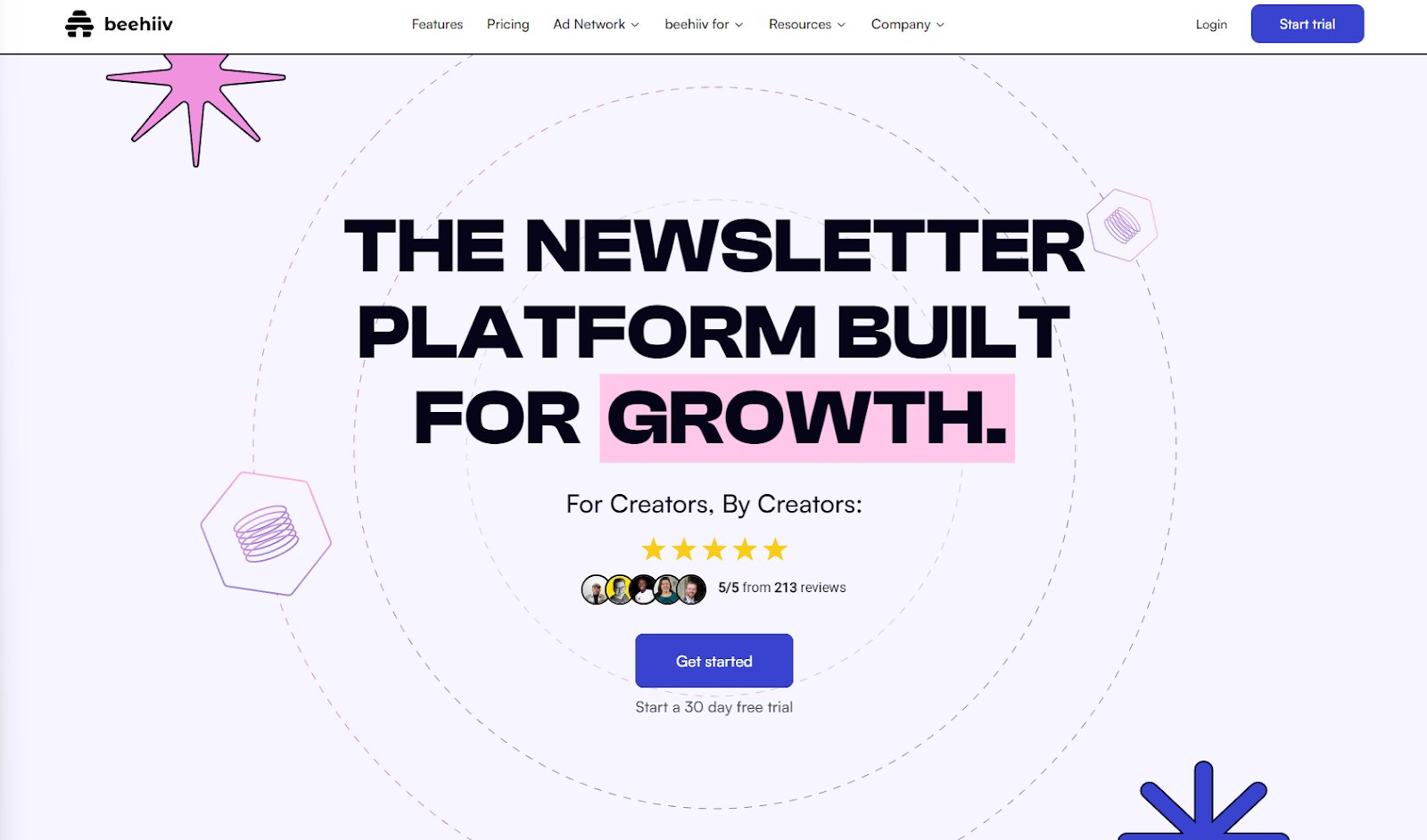
Sometimes, the best platform are put together by users who just can't find the perfect option — so they just pick up tools and build it themselves.
Developed by the team behind the Morning Brew, beehiiv is a newsletter platform that lets you build an epic newsletter without needing to know any code.
It's easy to work with and packed with tons of familiar features like AI writing assistants and social helpers, but it's a standout option because of its monetization.
So, how can you make money with beehiiv?
First of all, beehiiv allows monetization via its ad network — this feels like a surprisingly obvious addition given that you can monetize most other types of content through ads.
And if that's not cool enough, you can also earn by recommending other newsletters or converting readers into premium subscribers.
- Pros: Modern, intuitive design and extremely powerful tools to help you put out your newsletter, including automations and generative AI that help you save time.
- Cons: Slightly lacking in terms of visual customization compared to some of its competitors.
- Pricing: beehiiv has a free plan supporting up to 2,500 subscribers. The main premium plan is called Scale, starting at $49 per month for 1,000 subscribers and unlocking access to all beehiiv's key features including full monetization. Finally, the Max plan starts at $99 per month for 1,000 subscribers, letting you get rid of beehiiv branding and access priority support.
Discover more email newsletter software in this guide
11. Omnisend
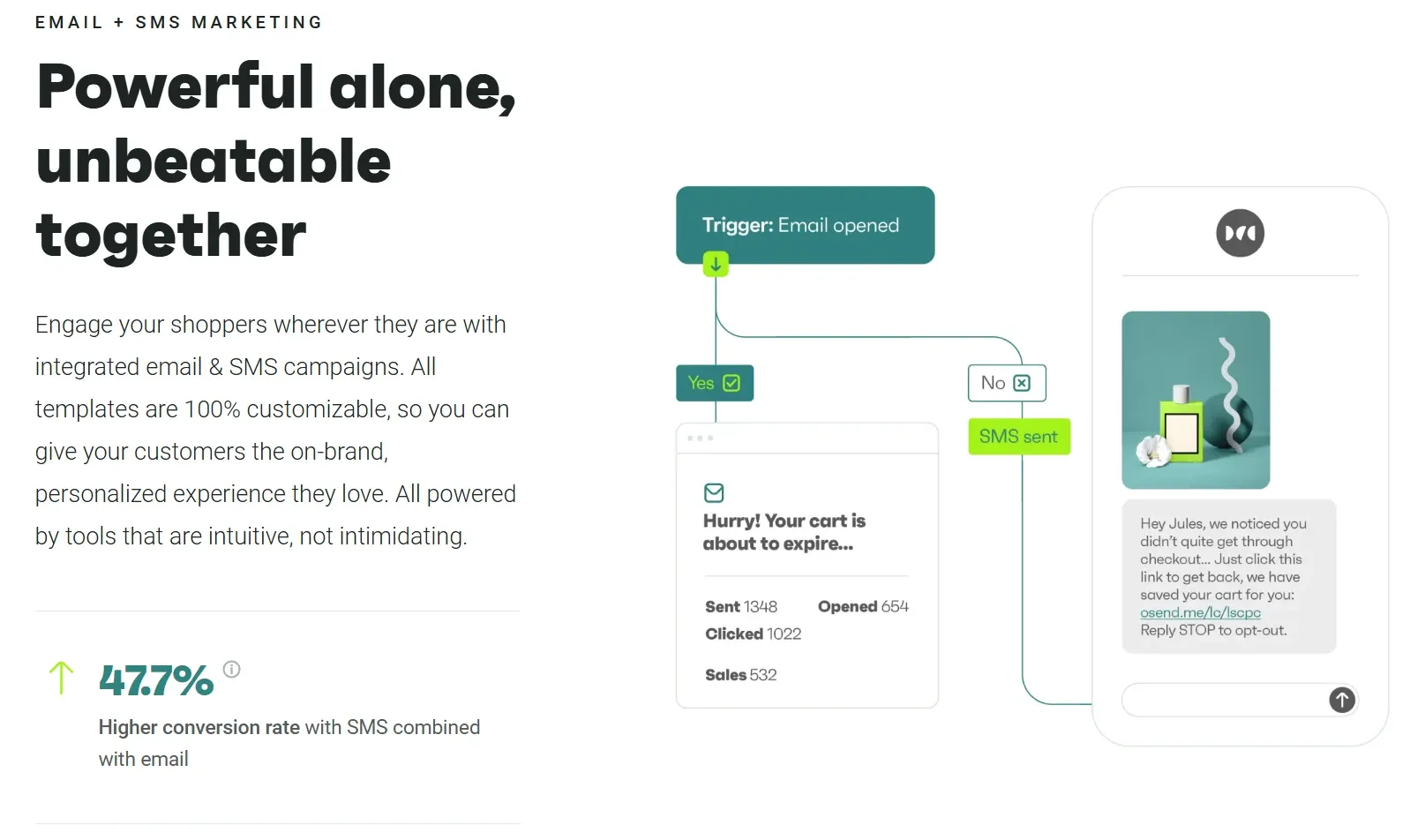
Unlike many other newsletter platforms, Omnisend is built for ecommerce businesses that want a strong automation system.
One of the most powerful aspects of Omnisend is its integration with Shopify and other ecommerce platforms that allows you to convert people from mail subscribers to buyers.
It's also not going to fall behind on AI capabilities - whether you want help on subject lines or the entire content, Omnisend's AI assistant will help you out.
- Pros: Omnisend is perfect for ecommerce businesses that want to improve their marketing with newsletter campaigns. Something went wrong? Even the lowest membership tier offers 24/7 customer support.
- Cons: If you're not selling products, you won't need some of the coolest Omnisend features.
- Pricing: Omnisend offers a free plan for up to 250 contacts. The Standard plan starts at $16 per month for 500 contacts with unlimited emails, while the Pro plan starts at $59 per month for 2,500 contacts and includes unlimited emails plus bonus SMS credits equal to your plan cost.
12. Sender
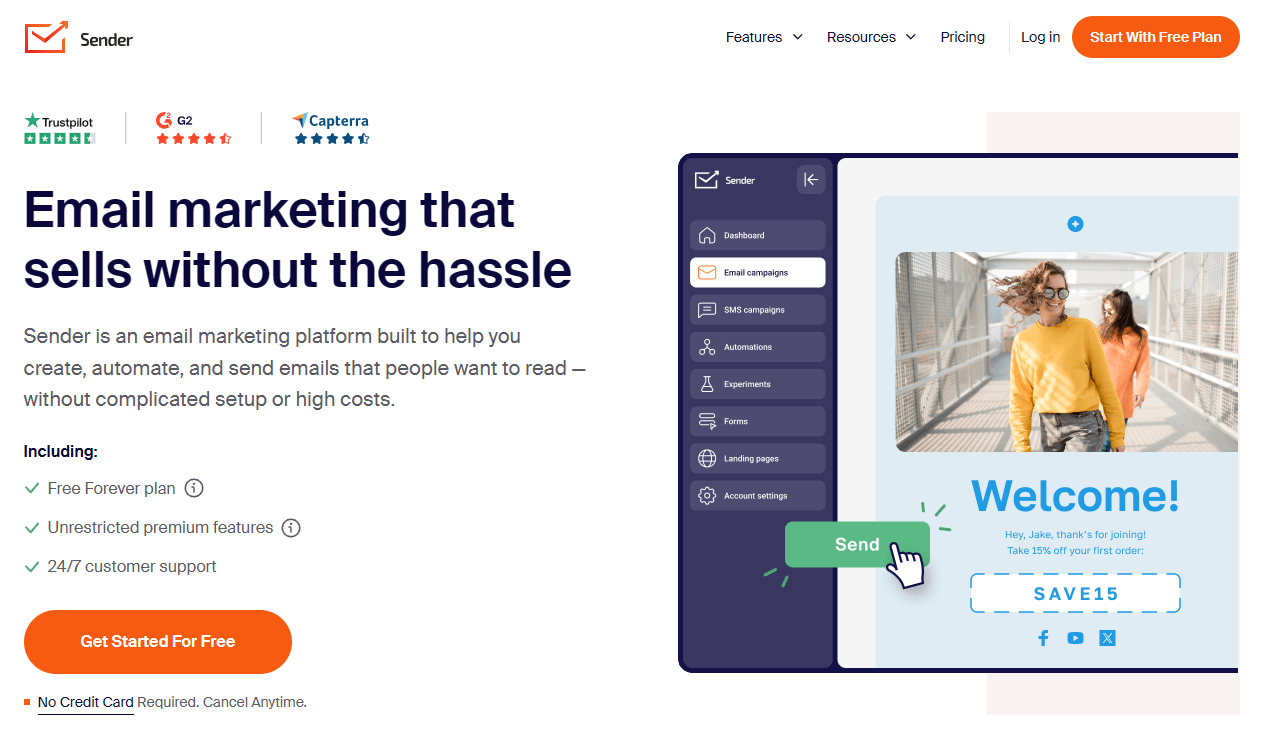
Sender is one of the best online newsletter platforms for small and growing businesses that want a range of features without being hit by high pricing as they scale.
The platform gives you all the tools you need to create professional newsletters, send bulk campaigns, automate key customer journeys, and even handle transactional emails from the same place. That’s a big win if you want to keep things simple while still having room to grow.
It’s also built to be easy to use, with an intuitive interface, drag-and-drop builder, and responsive templates that help you put together professional emails without a steep learning curve. In addition, Sender offers audience segmentation, solid deliverability, detailed reporting, ecommerce analytics (on the Standard plan and above), and integrations with tools like Shopify, WordPress, and WooCommerce.
- Pros: Sender is feature-rich, easy to use, and offers excellent value for money. It combines newsletters, bulk emailing, automation, segmentation, and transactional email in one platform, while also giving users 24/7 customer support even on the free plan.
- Cons: Some advanced features are locked behind paid plans, so growing businesses may need to upgrade to unlock more powerful reporting and automation tools.
- Pricing: Sender offers a Free Forever plan for up to 2,500 subscribers and 15,000 emails per month. Paid plans start at $7/month for Standard and $14/month for Professional, with pricing scaling as your list grows. There’s also an Enterprise plan for large businesses with complex needs.
What to look for in an email newsletter platform
Choosing a newsletter platform comes down to a few key features. Some are must-haves for everyone, others depend on the kind of business you’re building.
Here's a quick overview:
| Factor | What it means | What to look for |
|---|---|---|
| Deliverability | Emails must reach inboxes. | 95%+ inbox placement, SPF/DKIM/DMARC, spam testing. |
| Ease of use | Should be simple to build + send. | Drag-and-drop editor, templates, clean dashboard. |
| Design & templates | Good design = higher engagement. | Customizable templates, mobile-responsive layouts. |
| Pricing & scalability | Costs increase as you grow. | Clear pricing, fair subscriber tiers, or flat-rate plans. |
| Automation | Sends emails without manual work. | Welcome flows, drip sequences, triggers, conditional logic. |
| Analytics | Shows what's working. | Opens, clicks, A/B tests, revenue/engagement tracking. |
| Segmentation | Targets the right readers. | Tagging, behavioral segments, custom lists. |
| Integrations | Must connect to your stack. | Shopify, Stripe, CRM tools, Zapier/Make, Whop integrations. |
| Monetization | How you earn from your list. | Paid newsletters, ads, product sales, bundling with Whop. |
| Support & reliability | You need help when things break. | Live chat/email support, uptime history, docs/knowledge base. |
Below, we'll take a look at each feature in more detail:
Deliverability and inbox placement
Deliverability rate is the percentage of emails that successfully land in inboxes rather than getting blocked or filtered.
The fanciest design or most compelling content won't matter if your newsletters end up in spam folders.
The best platforms maintain strong relationships with email providers like Gmail, Outlook, and Yahoo, and provide features like authentication protocols (SPF, DKIM, DMARC) to verify your emails are legitimate.
Look for platforms that are transparent about their deliverability rates – reputable services typically achieve 95%+ inbox placement.
They should also provide spam testing tools and sender reputation monitoring to help you maintain high deliverability as you grow.
Ease of use
The best newsletter platforms let you build attractive, professional-looking newsletters without knowing a single line of code.
Look for drag-and-drop editors, pre-built templates, and live preview modes that show you exactly how your email will appear on desktop and mobile devices.
The platform should have an intuitive interface for managing your subscriber list, scheduling sends, and reviewing performance metrics.
After all, you've got other things to put all that time and effort into, so to minimize headaches in the long run, find a platform that's easy to use.
Design and templates
Your newsletter's visual appeal directly impacts engagement.
Look for platforms that offer a robust template library with designs suited to your industry. The best platforms provide customizable templates that let you adjust colors, fonts, layouts, and branding elements to match your style.
Mobile responsiveness is also non-negotiable here: over 60% of emails are opened on mobile devices, so your newsletters must look great on every screen size. Check that the platform automatically optimizes designs for mobile viewing.
Pricing and scalability
Most newsletter services operate on some sort of flexible pricing system.
Some have plans that ramp up when you have a bigger audience, while others (like Substack) take a percentage across the board (usually 10% of revenue).
Consider your growth trajectory: if you're planning to scale quickly, flat-rate pricing might save you money. If you're just starting out, free plans let you test the waters without commitment.
Automation capabilities
Automation is what transforms a newsletter from a manual chore into a growth engine that works while you sleep.
At minimum, look for platforms that offer welcome email sequences (automatically sent when someone subscribes) and scheduled sends. More advanced automation includes drip campaigns, behavioral triggers (sending specific content based on subscriber actions), and re-engagement sequences for inactive readers.
Analytics and reporting
Analytics and reporting are another important part of running a business, or keeping an online community growing.
Look for platforms that track essential metrics like open rates, click-through rates, unsubscribe rates, and conversion tracking.
More sophisticated platforms offer A/B testing capabilities (comparing different subject lines or content to see what performs better), engagement scoring, and revenue attribution.
Segmentation and targeting
Segmentation means dividing your audience based on things like demographics, behavioral traits, purchase history, engagement levels, or custom tags you create.
This lets you send hyper-relevant content to specific groups rather than blasting the same message to everyone.
It's crucial for building strategies around marketing and sales, so it's something to look for if you're getting really serious about your business.
That said, super niche newsletters or really new ones can probably ignore this feature until you've built up a larger, more diverse audience.
Integrations
Your newsletter platform shouldn't exist in isolation – it needs to connect with the other tools you use to run your business.
Essential integrations might include ecommerce platforms, payment processors, CRM systems, and landing page builders.
If you're running an online community or course business, integrations with platforms like Whop let you seamlessly connect your newsletter to your broader ecosystem.
Monetization
Your newsletter should help you make money, not just send updates.
Different platforms offer different ways to earn: Substack and beehiiv let you charge subscriptions, beehiiv has an ad network, and Kit supports digital product sales. On Whop, you can bundle newsletters with courses, communities, coaching, subscriptions, and payments (all under one storefront).
Even if your newsletter stays free, it should still drive revenue. Some platforms let you sell products directly inside the email, cutting friction and boosting conversions.
And remember: a smaller, highly engaged audience often outperforms a big, passive one. Newsletters win when there’s a connection.
Support and reliability
Look for multiple support channels: email support, live chat, phone support for premium tiers, and comprehensive documentation or knowledge bases.
Community forums can also be valuable for getting peer advice and troubleshooting tips.
Check the platform's uptime history and whether it has a track record of service interruptions. The last thing you want is your platform going down right when you're scheduled to send a time-sensitive announcement to your audience.
Newsletters: 3 successful examples for a little inspiration
1. Morning Brew
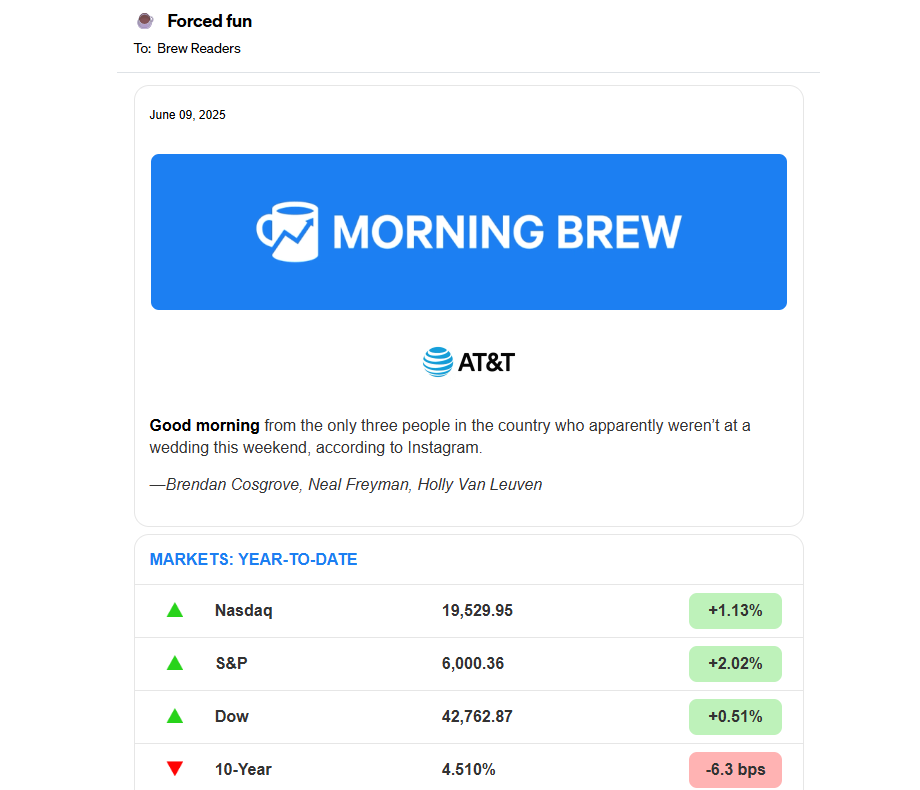
Morning Brew started as a simple business newsletter and grew into a content network — big enough to be acquired by Business Insider.
Today, it reaches millions of subscribers, but its growth wasn’t luck. It was monetization done right: native ads, sponsorships, branded content, and a consistent daily format readers came to rely on.
Key takeaway: Pick a niche and show up consistently. Morning Brew owned the “daily business news” slot from day one — and built a massive business around it.
2. Product Habits
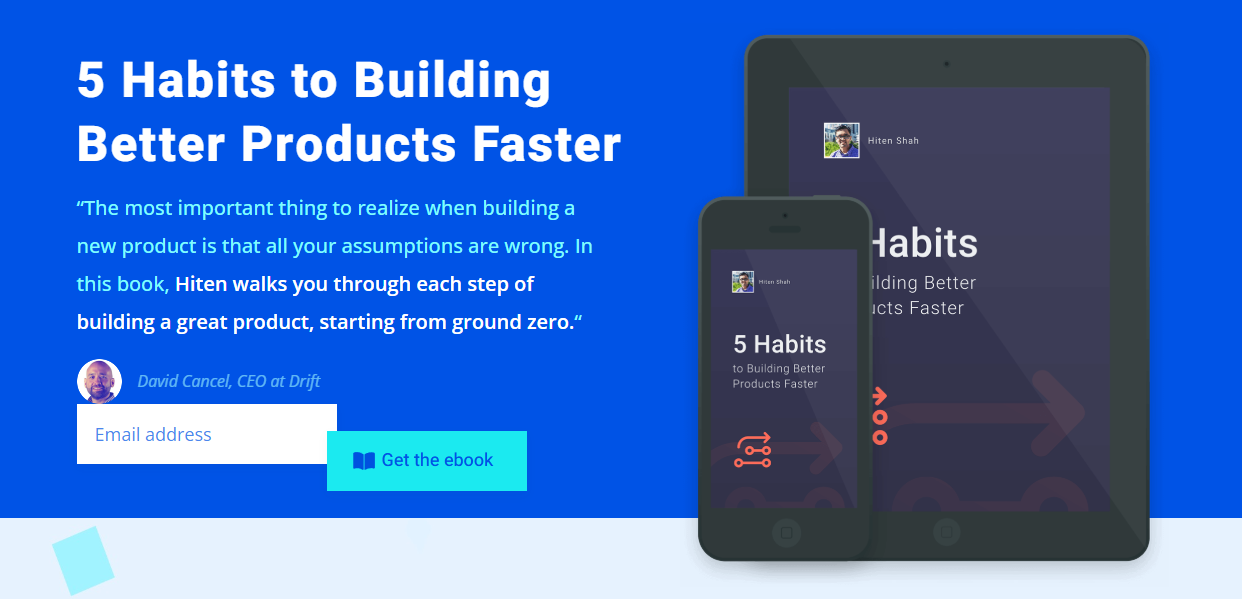
Hiten Shah's Product Habits newsletter is a good source of the sort of insights that are driving the world of ecommerce forward at any given point.
It's not just theory either — readers get plenty of case studies that show innovative principles put to the test, and how companies tackle the problems put to them.
Complex topics made accessible, actionable tips delivered right into your inbox, and, wait for it... A free ebook for subscribing?
The incentives to bang your email address in are laid out loud and clear.
Key takeaway: Something like a free ebook or PDF document can be enough of an incentive to get people to subscribe. Once you've got them on your newsletter, you've got a chance to demonstrate your value, engage, and ultimately convert.
3. Distance Covered
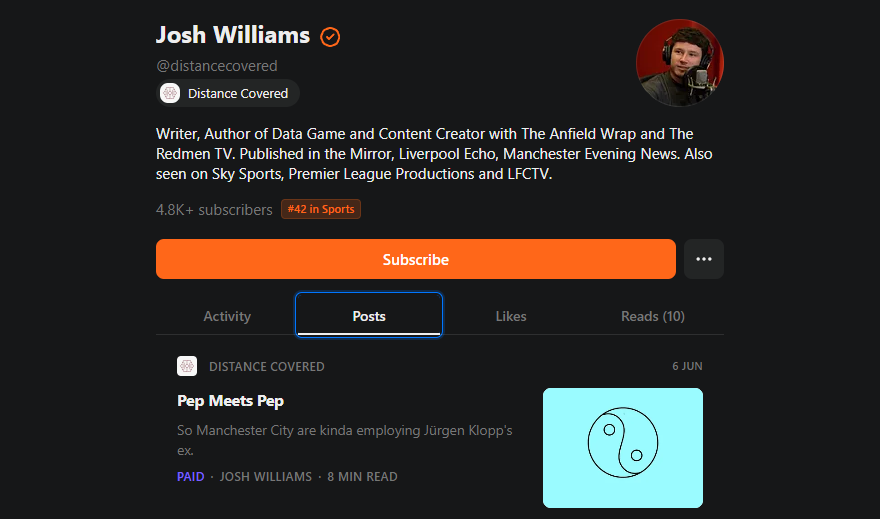
Distance Covered is a newsletter published by author, podcaster, and football statistician Josh Williams.
It's currently #42 in the Sports category on Substack, which isn't bad at all — certainly not when you consider that Josh's work, which is focused on stats and data, is pretty niche.
That said, he's covering the sport with the most global appeal, and focuses on a club, Liverpool FC, which is highly successful and widely supported.
Josh is well known for his podcasting, and he mixes in a significant amount of this form of content if you become a paid subscriber.
Top-tier subscribers also get a signed copy of his book, so there's tons of value to be had for those who do take the plunge.
Key takeaway: Giving your audience multiple forms of content (if possible) is definitely the way to go, and platforms that offer many types of digital products are worth considering.
Your newsletter is just the start. Whop helps you build more
You've just explored our list of powerful newsletter platforms, each with its own strengths.
But if you're an ambitious creator or business owner, you've probably already realized something: most newsletter platforms have limits.
You can send great content, but what happens when you want to sell a course? Launch a paid community? Offer exclusive content tiers?
Suddenly, you're juggling multiple platforms, payment processors, and tools that don't talk to each other.
That's where most newsletter platforms fall off, and Whop steps up.
Instead of sending readers to scattered marketplaces or third-party sites, you can build everything in one place: content, products, community, and monetization.
Ready to go beyond newsletters and build a real business around your audience? Sign up to Whop and get everything you need.





![Mighty Networks: is it the best choice for your community? [2026 review]](https://storage.ghost.io/c/12/7b/127b828b-bdc2-4972-9cf2-de857df9c324/content/images/size/w1000/format/webp/2024/05/What-is-Mighty-Networks-Features--Pricing--and-Alternatives-2024-Review.webp)

![Top 17 best online course platforms to sell your course [2026]](https://storage.ghost.io/c/12/7b/127b828b-bdc2-4972-9cf2-de857df9c324/content/images/size/w1000/format/webp/2026/01/best-online-course-platforms_1x.webp)