You can sell digital products without a website using platforms like Whop or social media marketplaces, like Instagram Shop or TikTok Shop. If you want the lowest fees and the easiest business management, Whop is the top choice.
Key takeaways
- Platforms like Whop let you sell digital products instantly with a built-in storefront, payments, and delivery—no website needed.
- Use social media to build trust and drive traffic to your storefront, but process payments on a secure platform.
- Turn customers into advocates by setting up affiliate programs and collecting reviews to boost credibility and sales.
The easiest way to sell digital products without a website is to use a platform that gives you a built-in storefront - like Whop - where you can upload products, set pricing, and start taking payments instantly.
This guide shows you how to do it step-by-step, from setting up your store to marketing, growing your audience, and scaling your digital product business.
How to sell digital products without a website (in 4 simple steps)
To sell digital products without a website you need to pick a platform, research the market, list your products, and start marketing.
Here's how:
1. Pick your platform
Your platform is your storefront - it’s where people browse, buy, and access your digital products.
You don’t need a full website; you just need a place built for selling.
If you want something simple, flexible, and built for creators, Whop is a strong choice. You can sell almost anything, from courses to ebooks, coaching, software access, templates, memberships, and more.
Whop gives you:
- No monthly costs (just a low 2.7% + $0.30 transaction fee)
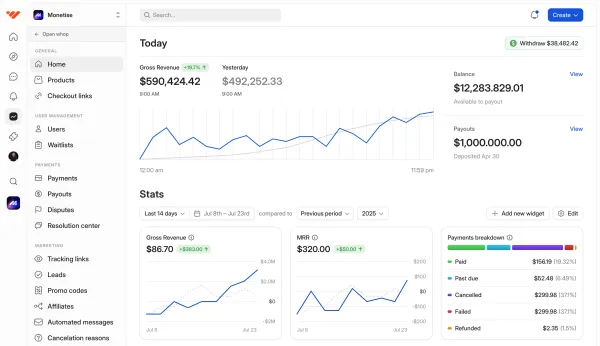
- A clean dashboard to manage products, customers, and payments
- Built-in payment processing (including credit and debit card, BNPL, and crypto )
- Automated delivery for files, licenses, and access
- Affiliate tools to reward fans and drive referrals
- Analytics to track performance and optimize sales
- Support and guidance as you scale your business
How to sell with Whop:
Getting started takes minutes:
- Go to Whop.com and click Start Selling
- Create your account
- Choose a business name and product type
- Enter your dashboard and create your first product
Add your pricing, description, and visuals - then publish. You’re officially selling digital products without a website.
2. Research the market
Before you launch a full product range, look at what similar creators are selling. That will help you position your offer and understand what buyers look for.
As OnlyTapa says in the video below "Look at the companies who are killing it now - not five years ago because the may be on the decline - but look at the ones who are growing their revenue month after month, year after year".
Browse marketplaces and storefronts, paying attention to:
- Pricing ranges
- Keywords being used in titles and descriptions
- The type of visuals and branding used
- What makes each product different
- How many similar products already exist
If you want to sell ebooks, check other ebook creators. If you’re selling trading guides or fitness programs, look at communities and coaches in those niches.
Understanding the landscape helps you spot gaps and opportunities, and avoid copying what’s already oversaturated.
3. List your products
Now it’s time to bring your research to life.
Choose products that fit your niche and offer clear value. If you notice a gap - fill it! If a category feels competitive, make your version better and more appealing.
Write clear, benefit-focused descriptions. Highlight what customers get and why it matters.
Then make it look good. Use tools like Canva to create cover art, product previews, and hero images - and don't underestimate the power of a VSL (video sales letter).
Once your listings are live, it’s time to get people in the door.
4. Start marketing
Your storefront only works if people see it. Start where you already exist - social media, group chats, online communities, or your personal network.
Share value first, then point people to your product. Consistency beats volume, so show up often, not just when you’re selling something.
If you want to market on a shoestring, try organic social marketing. As Dylan says below - "The best part of viral marketing is that you're not spending any money on it."
If you have a budget, you can explore:
- Paid ads
- Influencer campaigns
- Giveaways
- Email newsletters
"Ads allow you to scale to a level where organic content is not always consistent".
More digital product guides
Where can you sell digital products?
Now that you know how to sell digital products without a website, the next step is choosing where to actually sell them.
You can use platforms like Whop, promote through social media, or direct buyers to a simple landing page all without needing a full website.
The key is having a place where people can see your offer, pay for it, and receive what they purchased.
Let's take a closer look.
Whop
Whop is built for creators who want to sell online without building a website. You get your own storefront, product delivery system, customer management, and marketing tools - all in one place.
Whether you’re selling software, services, courses, coaching, templates, ebooks, or access to your community, you can run it all through Whop.
The platform supports one-time purchases, subscriptions, free trials, bundles, and memberships, so you can price and package your offers however you like.
The setup process takes minutes. Once you create your whop, you can list products, accept payments, share links anywhere you market yourself, and tap into Whop’s marketplace for extra visibility.
Behind the scenes, Whop handles the heavy lifting - payments, fulfillment, access, analytics, customer support tools, and growth features - so you can spend more time selling and less time managing tech.
If you want a simple way to launch, scale, and actually earn from digital products, Whop gives you everything you need to run your business in one place.
Social media
Social media is one of the most powerful tools for selling digital products. You can promote directly on-platform or use it to drive traffic to your storefront.
Most successful creators treat social media as a funnel: attract attention, build trust, and send buyers to a secure checkout or sales page.
Different platforms work better for different niches, so expect some trial and error. What converts well for fitness coaches might flop for traders or designers - test formats, content styles, and audiences until you find what works.
The four most common platforms creators use to promote and sell digital products are Facebook, Instagram, TikTok, and X (Twitter).
Here’s how they stack up:
Facebook offers multiple selling options, but they don’t all work for digital products.
You can use:
- Facebook Pages to market your products
- Groups if the admin enables selling
However, Facebook Marketplace does not support digital goods, and buyer scams are common. Instead of taking payments in Messenger, it’s safer to advertise on Facebook but complete transactions on a platform like Whop.
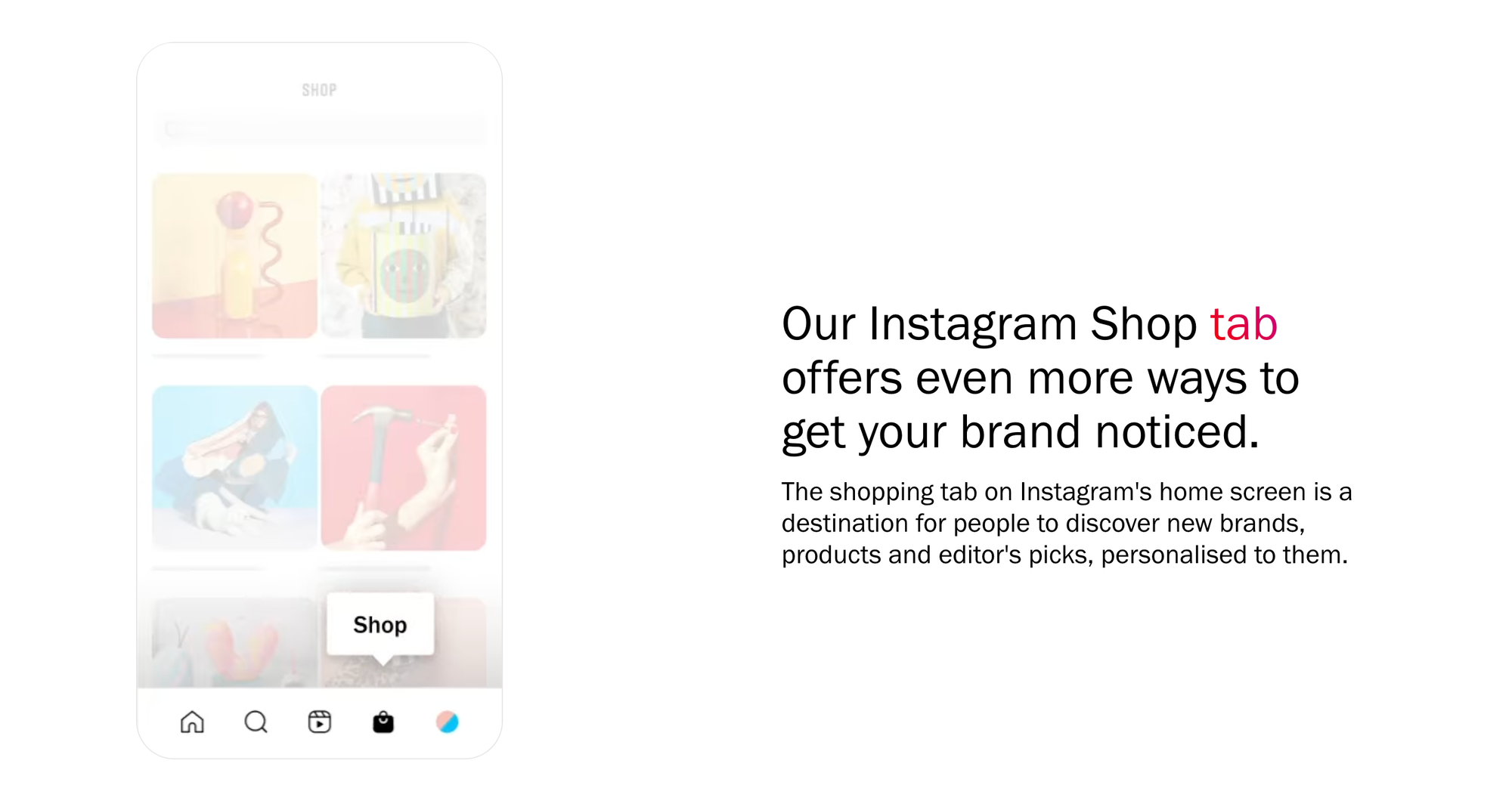
Instagram works similarly to Facebook, with Shopping features and DM-based selling.
You can:
- Promote products visually
- Build a personal brand
- Direct followers to your storefront or checkout link
Again, avoid transacting purely in DMs - Instagram is better as a marketing channel than a payment processor.
X (Twitter)
X/Twitter doesn’t support built-in selling for digital products.
Creators typically:
- Build authority through posts and threads
- Share proofs, results, testimonials
- Link to their storefront or landing page
You can technically negotiate in DMs, but off-platform payments are risky, so use X to attract attention, not handle transactions.
TikTok
TikTok Shop lets users sell physical goods directly through the app, but it doesn’t support selling digital products.
Even so, TikTok is a major driver of digital product sales because its short-form content can spread fast. Many creators promote:
- Coaching
- Templates
- Ebooks
- Memberships or communities
You’ll simply send viewers to an external storefront or checkout.
Landing page
If building a full website feels overwhelming, a landing page is a simple alternative. It’s essentially a lightweight website - a single page designed to present your offer and drive action.
Landing pages work well when you sell a small number of products or want to keep customers focused on one outcome. They’re often used in ads, email campaigns, or social media posts to guide people straight to a purchase.
Just note that a landing page alone can’t process payments. You still need something to handle checkout and delivery.
Platforms like Whop make this easy - you can embed or link Whop checkout pages into your landing page so customers can buy securely without leaving the experience.
Tips to successfully sell digital products
Once your products are live without a website, the real work begins - getting people to notice, trust, and buy them.
Here are some proven ways to boost visibility and sales.
Upgrade your product pages
Don’t just upload a basic listing and hope for the best. Unless you already have a large audience, you’ll need compelling pages to stand out.
As you grow, focus on:
- SEO: Research keywords your customers search for and use them naturally in your titles and descriptions. It helps people find you.
- Promotions: Intro prices, bundles, or limited-time offers can encourage first buyers.
- Hashtags: When posting on social media, relevant tags increase reach.
- Analytics: Study what sells, what doesn’t, and refine accordingly.
A clear product page with benefits, proof, and strong visuals will consistently convert better.
Set up an affiliate program
One of the fastest ways to get more customers is to let existing buyers help you. Affiliate programs reward people for referring others - and it works.
On Whop, you can create custom affiliates or enable open referrals so anyone who buys can invite friends. This builds loyalty, drives traffic, and turns happy customers into advocates.
Encourage reviews
Social proof matters, especially when you’re new. A handful of genuine reviews can dramatically increase trust and conversions.
Ask buyers to leave feedback in a way that fits your product flow. If you deliver files by email, add a reminder to review. If your listing has in-platform rating features, prompt customers after they’ve accessed what they bought.
The more positive proof your product collects, the easier it becomes to sell the next one.
Start selling with Whop
Whether you want to sell services, coaching, digital products, software, memberships, or access to your community - Whop makes it easy to launch and grow without building a website or juggling a stack of tools.
You can create your storefront in minutes, set your own pricing, deliver your products automatically, and start earning, all while Whop handles payments, customer access, analytics, and support.
More than two million memberships have been sold on Whop, with over $2 billion processed - proof that creators, entrepreneurs, and online businesses can scale from idea to income here.
If you’re ready to build a business on your terms, Whop gives you everything you need to start selling, growing, and earning, all in one place.
FAQs
How do you sell digital products without a website?
The easiest way is to use a platform that gives you a built-in storefront, like Whop. You upload your product, set pricing, and start taking payments - no coding or website setup required.
What platform is best for selling digital products without a website?
Platforms like Whop are ideal because they handle storefront creation, payment processing, customer access, delivery, analytics, and marketing tools, letting you sell without needing a website or multiple apps.
Can I really make money selling digital products without a website?
Yes. Many creators sell successfully through storefront platforms, social media funnels, and landing pages. The key is choosing the right platform, marketing consistently, and offering products people actually want.
What digital products can I sell without a website?
You can sell ebooks, templates, courses, coaching, memberships, software access, trading insights, services, reselling guides - virtually anything that can be delivered online.
How do I get traffic if I don’t have a website?
Use social media, landing pages, referral programs, affiliates, giveaways, email marketing, and marketplace visibility. These channels drive buyers directly to your storefront or checkout page.