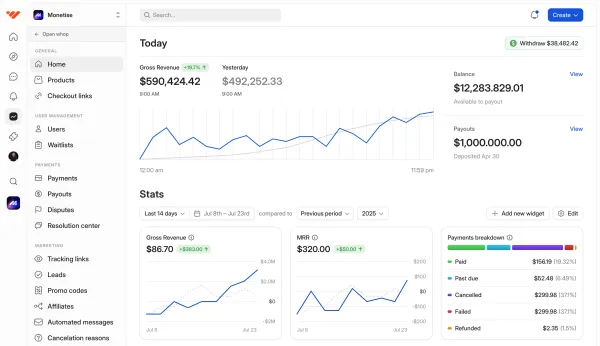
The easy way to sell online courses is choosing a profitable topic, creating content, and launching your course on platforms like Whop. Learn how to sell online courses in this guide.
Key takeaways
- Choose a course topic that balances your expertise, market demand, and personal interest to avoid burnout.
- Validate your course idea through polls, forums, and audience feedback before investing time building content.
- Build an engaged community around your course to turn one-time buyers into loyal, repeat customers.
To sell an online course, pick a topic you're an expert on, do market research to see what's in demand and what your competitors are doing, create a whop, upload your lessons, and launch your online course.
The online course industry is exploding right now. We're talking $300+ billion globally in 2025, with the US market alone hitting nearly $100 billion. And it's only getting bigger—projected to reach $319 billion by 2029.
Creators on Whop have already sold over $1.8 billion worth of digital products, and courses are a huge part of that. We’re talking low effort, low cost, major profit.
So lock in and listen up. Here’s how to build and sell your first course, the easy way.
Quick answer: How to sell online courses successfully
| Step | Action | Timeline | Income potential |
|---|---|---|---|
| Choose topic | Pick profitable niche you know well | 1-2 days | Research phase |
| Validate idea | Test demand before building | 3-5 days | $0 (saves time/money) |
| Create course | Build 5-10 core lessons | 1-2 weeks | Content foundation |
| Launch | Go live with basic version | Same day | $1K-5K first month |
| Scale | Add community, upsells, marketing | 3-6 months | $10K+ monthly |
How to create an online course: step-by-step
1. Choose a profitable course topic

This is the million dollar question.
The key is finding the sweet spot between three critical factors:
- Your expertise level
You don't need to be the #1 expert globally, you just need to know more than your target student. Personal experience often beats academic credentials. - Market demand
People are actively searching for solutions —existing competitors prove there's money to be made. - Your interest level
You'll be creating content for months/years. Passion prevents burnout and shows in your teaching, and authentic enthusiasm attracts better students.
Need inspiration? Dive into Reddit threads, TikTok comments, Discord servers, or scroll through Whop Discover to see what creators are already cashing in on.
Take Adam Caspary. He built Digital Nomad University to teach people how to make money online and travel the world – something he’d been doing himself for three years.
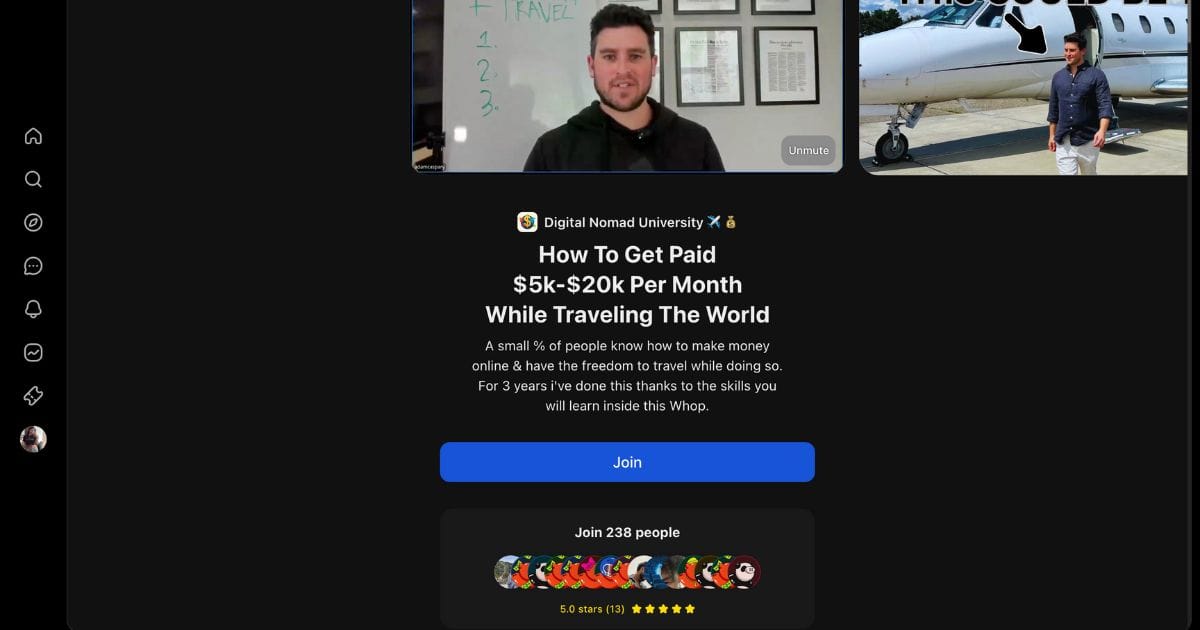
With 238 members and all 5-star reviews, Adam’s living proof that when you know your stuff, building a successful course is way easier than you think.
Position it well, and even niche knowledge can become profitable.
- 200+ online course ideas across all niches
- Profitable online course ideas, from an experienced course creator
2. Validate your idea (before you waste time)

Before you go all in, make sure people actually want what you’re selling.
Put your idea out there and get feedback before you build the whole thing.
How?
Post polls on Instagram or Twitter, ask your followers what they’re struggling with, or check search trends on Google and TikTok to see if people are already hunting for your topic.
Lurk in forums and Reddit groups to spy on what questions keep popping up around your niche.
Heck, call your friends and family and ask for honest feedback.
Oh, and if you already have a whop? Use it! Ask your members what they want to learn or what problems they need solving.
The goal: confirm your idea isn’t just cool to you, but something people want.
3. Create your course

Now it’s time to build – but I have tips for avoiding common traps.
Firstly, don’t overwhelm yourself trying to create a 20-hour mega-course right off the bat.
Start simple, focus on clear lessons that actually teach something valuable.
Secondly, include a mix of videos, slides, or PDFs. Why? Because people learn in different ways. Plus, it keeps things interactive for your students (i.e, less boring). Toss in quizzes or memes along the way, if that’s your style.
And try to make your content evergreen. If you want to make passive income, your course material shouldn’t feel outdated or expired within months. If you need to use timely information, keep your course material easy to update.
BTW: Whop’s in-browser course builder app makes this all ridiculously easy. You can add unlimited chapters to your course, upload all kinds of media, and create interactive quizzes.
Keep it engaging, keep it real, and keep it easy to update.
4. Pick the right platform (Hint: It’s Whop)

There are plenty of places to host courses: Teachable, Kajabi, Thinkific. And sure, shoutout to these guys, they get the job done – but their memberships often come with pricey plans, strict limits, and confusing extra fees.
It’s lowkey a bummer.
| Whop | Teachable | Kajabi | Thinkific | |
|---|---|---|---|---|
| Monthly fee | $0 | $29+ | $69+ | $39+ |
| Take rate | 2.7% | 5-8% (varies by plan) | 0-3% (varies by plan) | 0-5% (varies by plan) |
| Courses | Unlimited | Limited by plan | Limited by plan | Limited by plan |
| Community | ✅ | Based on plan | Based on plan | Based on plan |
| Livestreaming | ✅ | ❌ | ❌ | ❌ |
| Setup | 5-15 min | 30+ min | 2+ hrs | 30+ min |
| Types of offers | Courses, memberships, coaching, services, hybrid offers | Courses only | Courses, coaching, memberships | Courses only |
The real price comparison (platform fee + take rate):
- Whop: 2.7% + $0.30 on $5K sales = $135 total
- Teachable Basic: 5% + $29/mo on $5K = $279 total
- Kajabi Basic: 3% + $69/mo on $5K = $219 total
- Thinkific Basic: 5% + $36/mo on $5K = $286 total
Here's why creators choose Whop:
- Free to join: No upfront cost to start your whop and build a course.
- 2.7% + $0.30 platform fees: That's it. No membership fee. No monthly ongoing costs. Whop only makes money when you make money.
- Unlimited courses and lessons: No sneaky caps.
- Community tools and livestreaming: We make it easy to engage your students without needing additional apps.
- Flexible pricing: You can choose your pricing and offer members options such as pay once, subscriptions, or even buy now, pay later.
- Built-in sales and marketing: Exposure on Whop’s Discover page to boost your reach, as well as the ability to rank in leaderboards.
5. Price your course
Dylan Lundgren and Malcolm Bryant's stream at Whop Power Users
"You wanna add as much value on it as possible. So by the end of somebody about to make a purchasing decision, it's like 'Okay, if I say no to this, I'm dumb. I have to buy this product.'"
-Malcolm Bryant
Setting your price can feel daunting, but remember: it’s about value, not just dollars.
Think about what your course offers, how deep the content is, and what your audience can realistically pay.
Beginners may start at a lower price to build traction, while more specialized or advanced courses can command higher prices.
Whop makes pricing flexible and easy. You can run discounts, limited-time promos, or bundle deals to boost sales and make it exciting.
Remember: your initial pricing isn’t set in stone. You can experiment by testing different price points, listening to feedback, and adjusting to find the sweet spot between profit and sales.
6. Build your sales page
Your sales page is your course’s first impression, so make it count.
Start with a headline that hooks. Short, sharp, memorable. Then (briefly) tell visitors what they’ll learn – and why it matters.
Keep it benefits-focused, not just features. Think: “Go from zero followers to TikTok pro in 4 weeks”, not “Course includes 12 video lessons.”
Dylan Lundgren and Malcolm Bryant's stream at Whop Power Users
Social proof also goes a long way, so consider adding testimonials or reviews if you have them.
Check out this sick example from Cyberflow for their Hack Like a Pro course:
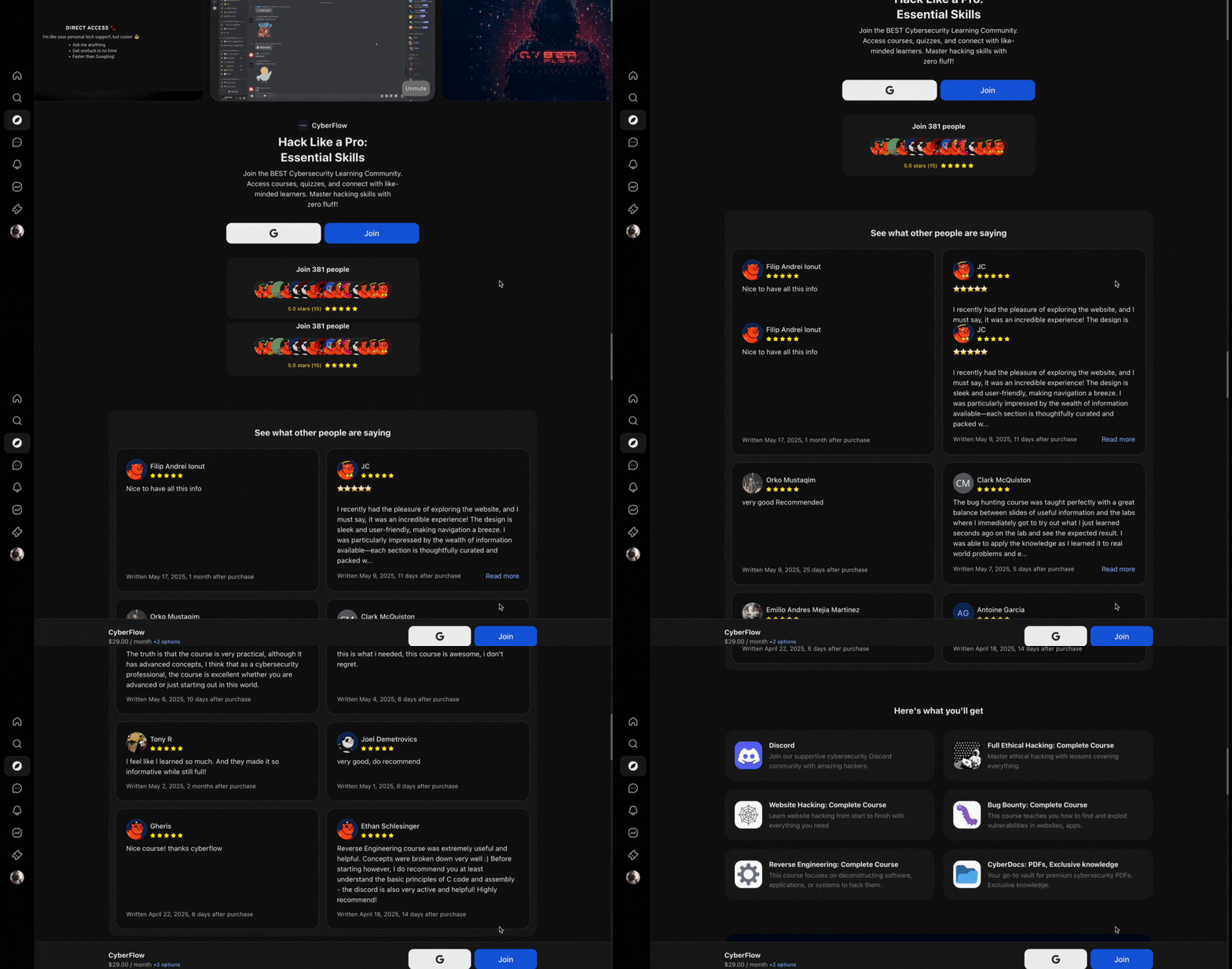
Immediately, I can see what the course is selling, some personality from the creator, a clear list of benefits, and a ton of other happy members.
And when I read the reviews, it’s easy to see the value within the course and feel confident in making a purchase.
Sharp headline, keyword-rich blurb, and outline of benefits and features. Perfect.
7. Market and launch your course

When you launch your course, you can’t just post and pray.
You gotta market it. More than that, you gotta be strategic about where you market it.
TikTok, Discord, Twitter, and YouTube Shorts are the go-to platforms for gaining visibility. Views can rack up fast, and the algorithm can carry your content far, without having a big following.
Still, you’ll likely have to put some cash behind it, especially if you’re sponsoring content.
The problem with that? It’s expensive and doesn’t really guarantee views.
Instead, you can use Content Rewards and let experienced creators do the heavy lifting for you.
Clippers take your course promos, slice them up, remix them, and share it across their own channels.
You only pay when their clips or tweets get views, so there’s no wasted budget on ads that might not work.
Build your own army of micro-influencers without the upfront cost or risk.
8. Scale and grow your online course business

So, your first course is getting signups, and now? It’s time to think bigger.
An easy way to boost your income is to start adding upsells and bundles to increase the value per customer. Consider offering exclusive bonus lessons, 1:1 coaching, or digital downloads.
Then, once you’re ready to expand, you can launch more courses to diversify your offerings and attract new audiences.
These might be totally new, or they may be extensions of your first course (or even mini-courses for those with lower budgets). Each new course builds on your credibility and reach.
If you really want to maximise your growth, reinvest some of your earnings into ads or collaborations with creators via Content Rewards.
9. Build a community around your course

Strong online communities turn one-time buyers into loyal fans.
When learners feel connected (to you and each other), they’re more likely to complete courses, buy upsells, and recommend your content to others.
This ongoing engagement drives steady income and opens doors for future launches.
It’s easy to grow an engaged community on Whop, with features to organise multiple chatrooms with varying accessibility, livestreams, and forum posts. You can create dedicated spaces for Q&A, member support, bonus upsells, and exclusive live sessions, all within the same hub.
Keep your audience engaged without needing extra platforms.
Examples of thriving creator-led course communities:
These creators have built epic, engaged communities around their courses – helping them build their personal brands, grow their membership, and frankly? Earn more money.
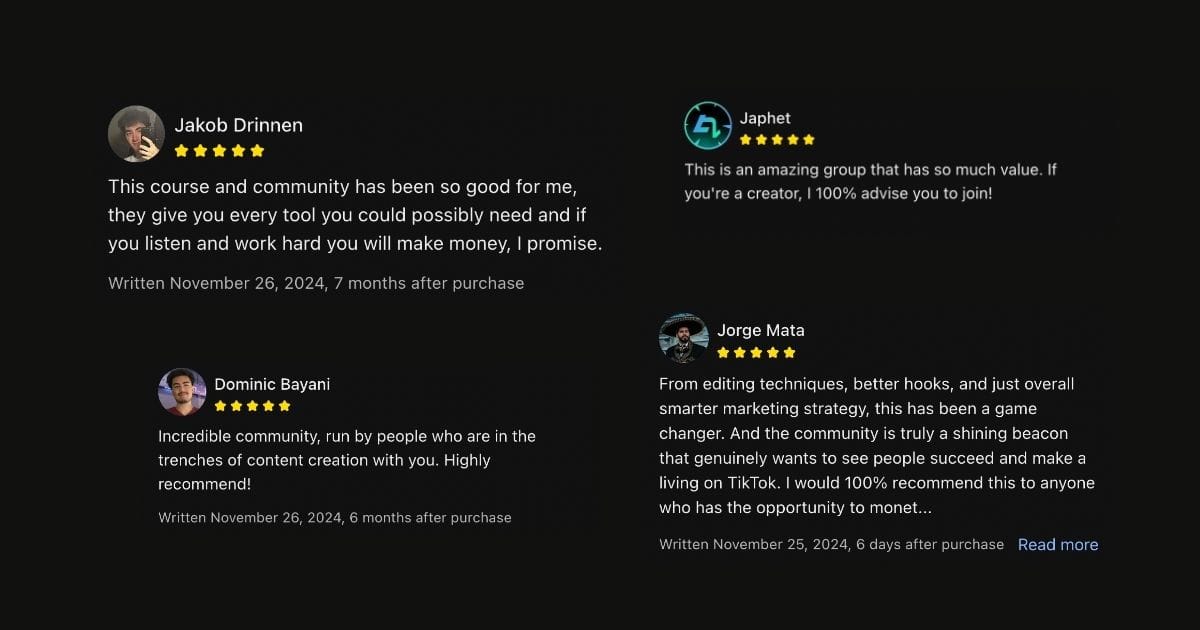
This UGC course doesn’t just teach you how to make videos; it shows you how to turn content into serious income.
With claims of members earning up to $10K a month, it’s built for creators who want to move fast and get paid. Inside, there’s a thriving 300-member Discord where people share wins, swap tips, and hype each other up.
You’ll also get access to live workshops, bonus giveaways, and real-time support that actually feels human. The 5-star rating reflects a community that’s genuinely active and invested in each other’s growth.
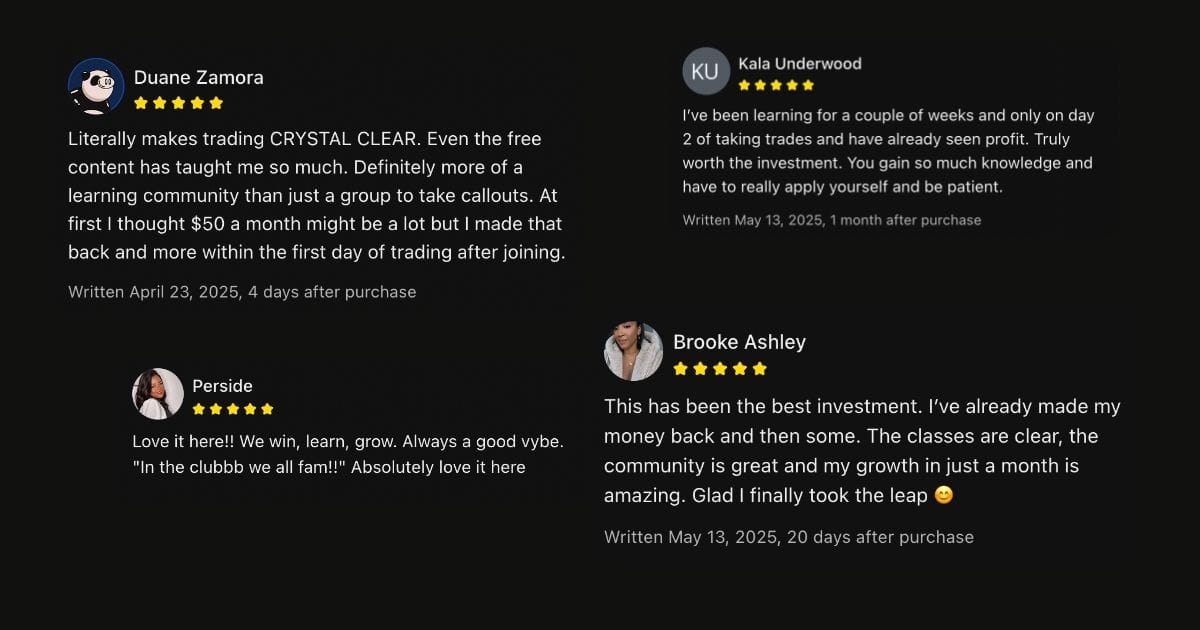
Crystal Academy proves that when you combine quality education with a genuine community, people show up and stick around.
Led by Sierra Smith, the group offers daily live trading sessions, expert signals, and step-by-step course content to help members level up fast.
And the members are highly active, logging thousands of minutes on Whop each day. They’re not just watching passively. They’re learning together, trading with each other, and building momentum – as a group.
That kind of daily engagement isn’t an accident. It comes from a space where people feel supported, challenged, and part of something bigger.
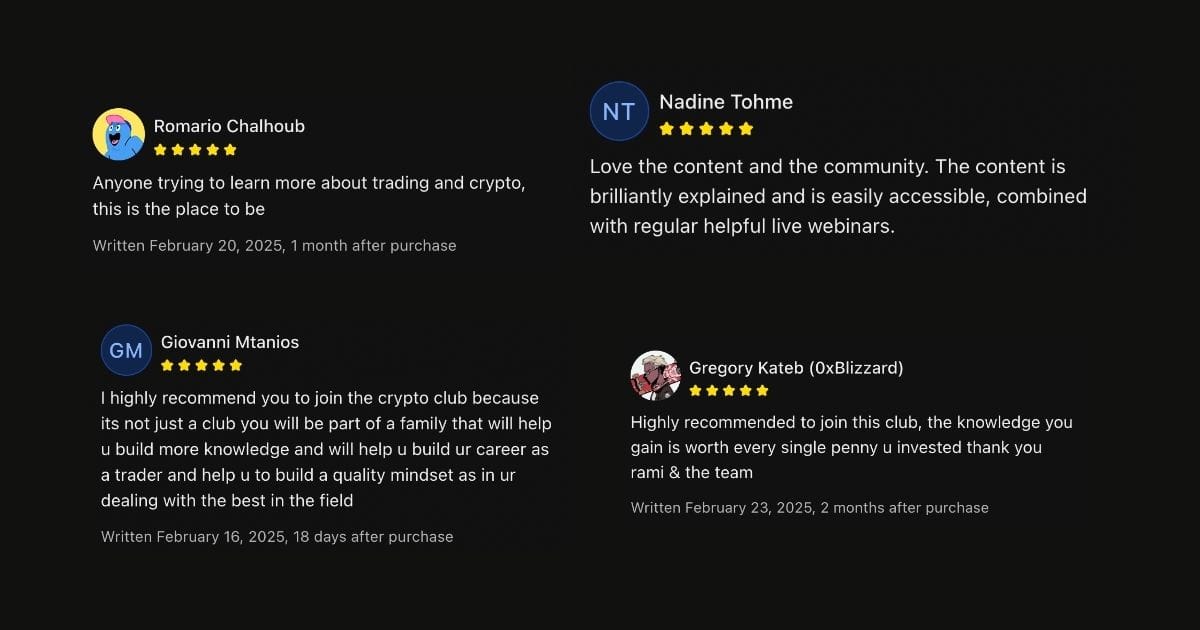
Day Traders Club demonstrates the power of a strong community. Sure, there are daily signals, a complete trading course, and custom AI tools – but what really stands out is how members lean on each other.
New traders get real-time support. Experienced ones share wins, losses, and strategies that actually work. It’s a constant feedback loop that helps everyone improve faster. Instead of learning alone, members grow together, asking questions, sharing ideas, and supporting one another.
If you’re building a course or community, this is the model to look at: real value paired with real connection.
People don’t just want information; they want to belong somewhere.
Why selling online courses is a smart move
Online courses (alongside other info-products) are all over your social media feeds for a reason: they’re one of the easiest ways to build a business without the usual headaches.
No stock to manage, no shipping delays, and zero physical storefronts. Just you, your knowledge, and the good ol’ internet.
Courses allow you to build passive income, too: create it once and keep earning around the clock (even while you’re sleeping or binge-watching Netflix).
Plus, your reach isn’t limited by your location. Whether you’re in Boston, Melbourne, London, or Bali, your course can be found by buyers worldwide.
Volky from Digital Nomad Community
"For anyone making money online, if you're in a career and you've been doing that career for a long time, the next logical step is always going to be to teach others how to do what you do and create an additional source of income for yourself."
- Volky, Digital Nomad Community
And if you want to build a personal brand or start leveraging an existing audience? Courses help build influence and solidify your authority in your niche. Because when you teach something valuable, people start seeing you as a go-to source.
That type of influence can open doors to new opportunities, such as sponsorsed content opportunities, consulting gigs, or premium memberships.
So yeah, courses are a goldmine.
But they’re also one of the fastest ways to turn your skills into income, without burning out (or selling your soul to the algorithm).
Real courses making real money with Whop
By now, I’d hope you get that courses aren’t a scam, they aren’t a huge slog, and they definitely aren’t a waste of time.
You can make real money from a course, in practically no time, with the right niche, know-how, and marketing methods.
Here are some of my favourite courses on Whop atm, with creators making bank:
Wealth Group
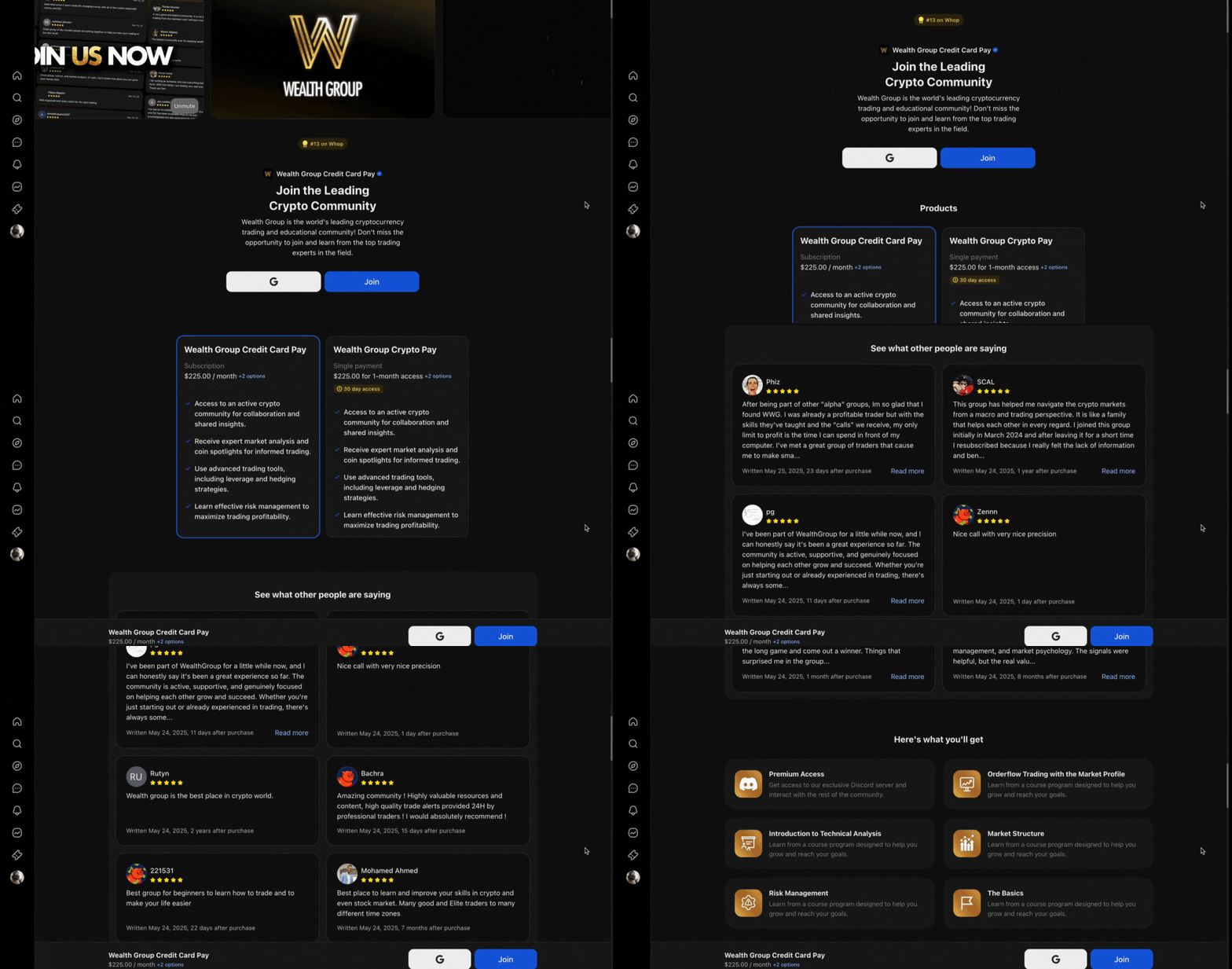
Wealth Group ranks #14 on Whop and charges members $225 a month – a solid price point that shows people trust what they’re getting.
It’s run by Johnny (aka Crypto God Jon), a trader with over 7 years of experience, who breaks down crypto trading into clear, actionable steps.
Members gain access to multiple course programs and an active Discord channel where they can discuss trades, strategies, and market moves in real-time.
Unlike traditional one-off course sales, Wealth Group thrives on recurring revenue. Members pay every month to stay in the loop, and John continues to earn even when he’s not actively launching new content.
With consistent value and community engagement keeping churn low, this is a textbook example of how to scale knowledge into profit.
Lion’s Den
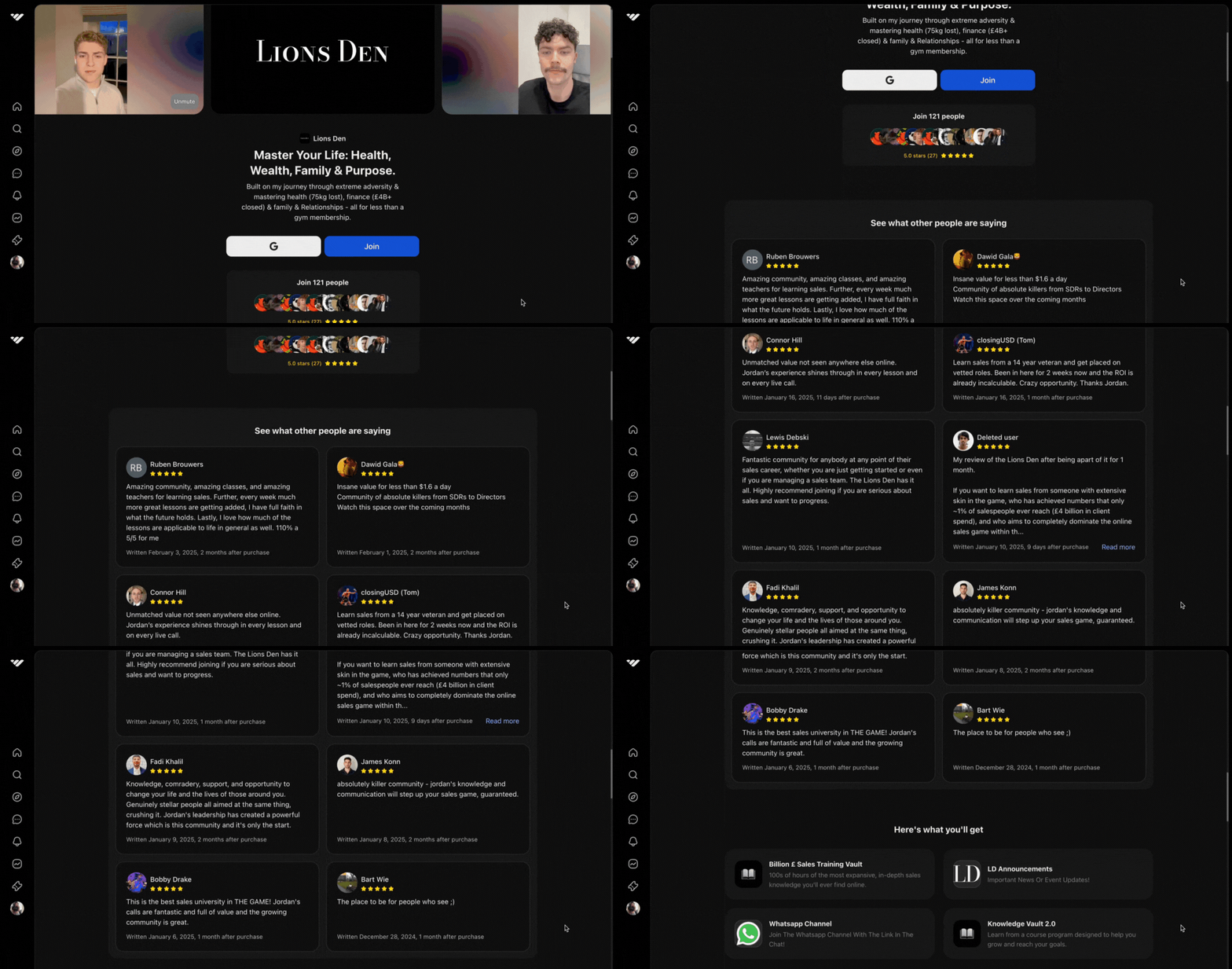
Lions Den is a £50/month membership community with 121 members, led by sales pro Jordan, who has managed over £4 billion in client spend across 14 years. Sheesh.
This isn’t your average course, either. Lions Den combines life and sales coaching with practical, actionable strategies to enhance health, finances, family, and sense of purpose.
Members get access to a massive training vault packed with hundreds of hours of deep sales knowledge, plus a course program designed to help you grow and hit your goals.
Regular live coaching sessions and Q&As keep things interactive, while a dedicated WhatsApp channel makes community support just a message away. The group also keeps members updated with all the latest news and events through their announcements tab.
Lions Den is about building sustainable success, not only when closing deals, but also in life.
AI Launchpad
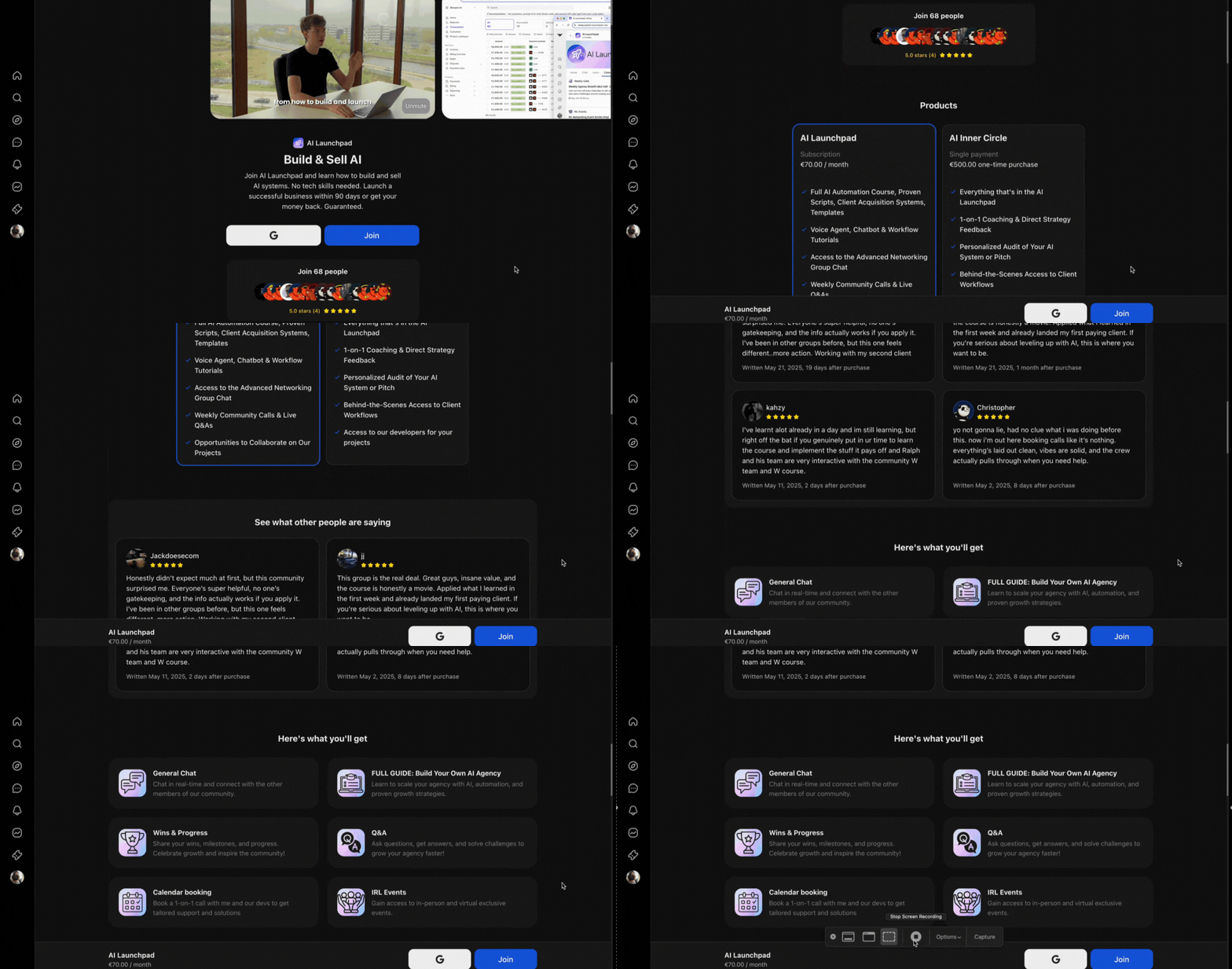
AI Launchpad VIP is a solid monthly membership at €70/month that helps anyone (even the tech-illiterate) get into building and selling AI tools.
Once you’re in, you can access a detailed course on AI, automation, and growth strategies, plus access to a real-time community chat to connect with other members.
Got questions? There’s a Q&A section, and members can even book 1-on-1 calls with the founder or dev team for personalized help. Plus, users share their wins and milestones with the community to keep the motivation high.
On top of that, members receive exclusive invitations to virtual and in-person events (because networking in real life still matters, you guys).
With 60+ members already, it’s a solid spot to learn skills and get the support you actually need to grow and start making money with AI.
Copywriting Crash Course
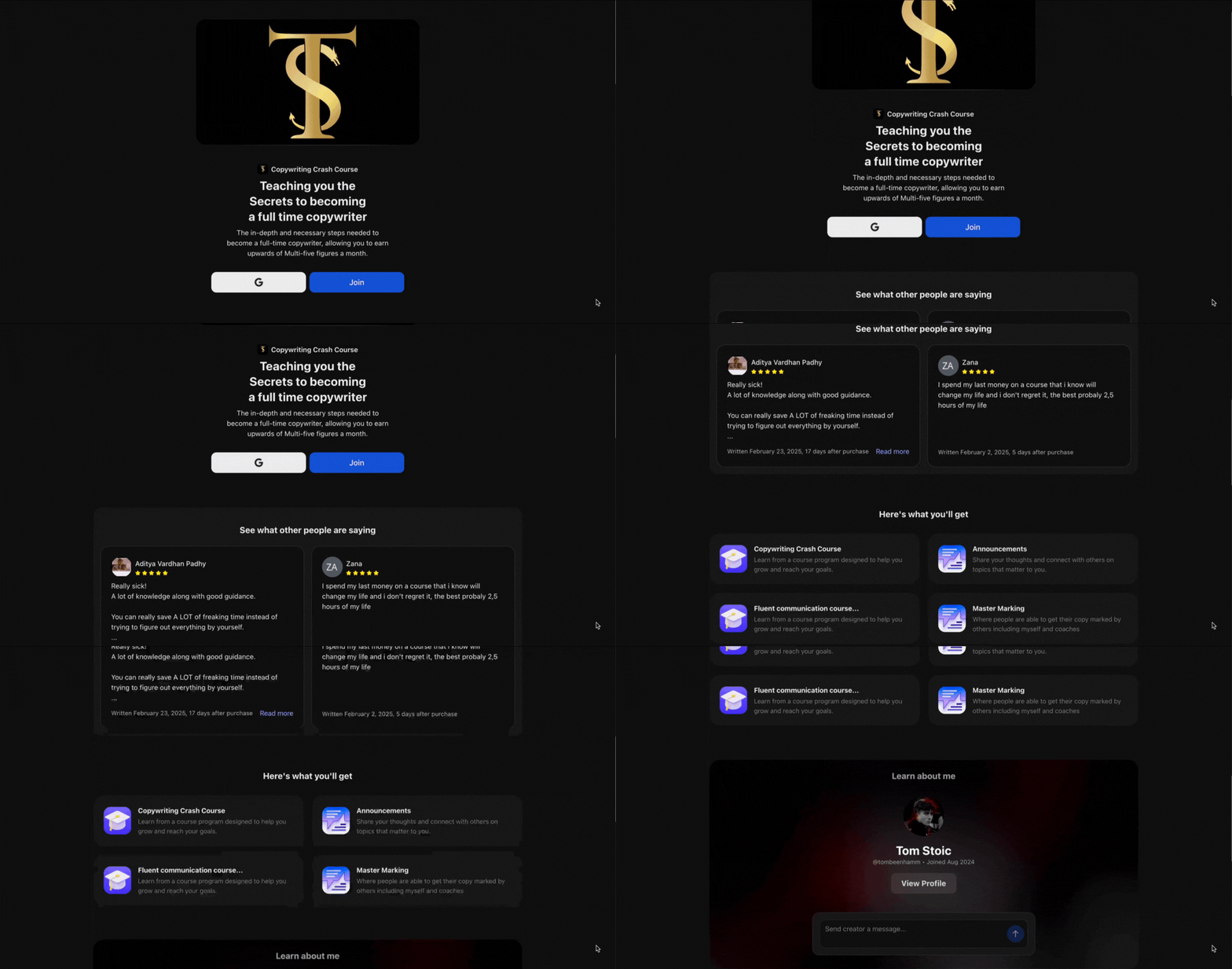
For those sick of the 9-5 grind and ready to actually earn multi-five figures a month from anywhere, the Copywriting Crash Course is here.
For $187 a month, users gain access to 60 modules packed with the essentials to launch their copywriting hustle.
Inside, there’s a supportive group chat, networking opportunities, and chances to get copy marked by both the creator, Tom, and his coaches. The course teaches everything from the basics to advanced strategies, designed for people who want legit time, money, and location freedom.
Reviews all seem to praise the value of the course and its ‘killer’ content. “Really sick!” says one reviewer – high praise indeed, tbh. Another said the course was the best couple of hours they ever spent, and it was worth every cent.
Not bad at all.
Launch your course. Build your community. Get paid.
Courses are one of the best ways to turn what you know into real income, and the best part?
Anyone can do it.
While others trade time for money, smart creators build scalable income streams teaching what they already know.
Your knowledge is valuable. The question isn't whether you can create a profitable course — you can. The question is: are you ready to start?
Stop planning. Start earning. Create your course on Whop today – it takes less than 5 minutes to get started.
FAQs
Do I need experience to make a course?
No experience needed.
If you have knowledge or skills that others want to learn, you’re already qualified to create a course. You might decide to teach a specific skill, a unique strategy, or a side hustle you’ve mastered – whatever it is, there’s an audience out there eager to learn from you.
Many successful course creators started with just basic expertise and built their way up, so don’t wait to share what you know.
Teaching online courses is one of the best ways to monetize your knowledge, regardless of your background.
Can I make more than one course?
Absolutely! You can create and sell as many courses as you want on Whop.
This flexibility lets you bundle courses together, offer upsells, or launch completely new topics over time. Our platform is designed to scale with your business growth, whether you’re a one-course creator or running a full-on educational empire.
Remember, offering multiple courses can help you reach different audiences and maximize your income potential.
How do I price my course on Whop?
You’re in control of your pricing. If you want to charge a one-time fee, set up monthly subscriptions, or offer payment plans, it’s easy to customize your pricing strategy with Whop.
Experiment with different price points to find what works best for your audience and course content. Finding the right price is key to attracting students while maximizing your revenue.
Can I offer free courses?
Yes, free courses are a great way to build your audience up and gain some trust.
Offering free content lets potential students sample your teaching style and expertise before committing to paid courses. It’s a proven strategy to grow your email list, increase engagement, and funnel learners into higher-value paid offers down the line.
Whop supports free and paid course options so you can tailor your approach and figure out what works best for your goals.
How much can I really earn?
There’s no cap.
Some creators earn a few hundred dollars a month, while others scale up to five- or six-figure monthly incomes. Your earnings depend on your niche, the quality of your course, your marketing efforts, and how well you engage your audience.
Income by experience level
| Experience level | Monthly income range | Typical pricing | Students needed |
|---|---|---|---|
| Beginner (0-6 months) | $500 - $3,000 | $50-200 per course | 10-50 students |
| Intermediate (6-18 months) | $3,000 - $15,000 | $200-500 per course | 50-200 students |
| Advanced (18+ months) | $15,000 - $100,000+ | $500-2,000+ per course | 200+ students |
However, with the right strategy and consistency, online courses can become a profitable and sustainable source of income.
Where can I learn more about building courses?
Visit our Blog for in-depth guides, data-backed insights, and actionable tips on course creation and marketing.