
Lemon Squeezy is an ecommerce platform for digital products, but is it the best on the market? In this article we look at where Lemon Squeezy falls short, and six alternatives for digital creators.
Key takeaways
- Whop offers the lowest fees at 2.7% plus free signup, while Gumroad's 10% fee makes it the most expensive option.
- Lemon Squeezy lacks course and membership selling, upsells, and key integrations that competitors like Whop provide.
- Choose based on your priorities: Paddle for global reach, Sellfy for no transaction fees, or Whop for features and low costs.
Lemon Squeezy became popular for giving software companies a way to bundle payments, subscriptions, and Merchant of Record services.
But it’s no longer the only platform doing that.
If you’re looking for a Lemon Squeezy alternative, chances are you’ve hit a specific limitation: maybe the pricing no longer makes sense, you need more flexibility, you want built-in distribution, or you’ve realized your business needs something different as it grows.
In this guide, we compare the best Lemon Squeezy alternatives in 2026 and break down who each one is actually best for.
What is Lemon Squeezy?
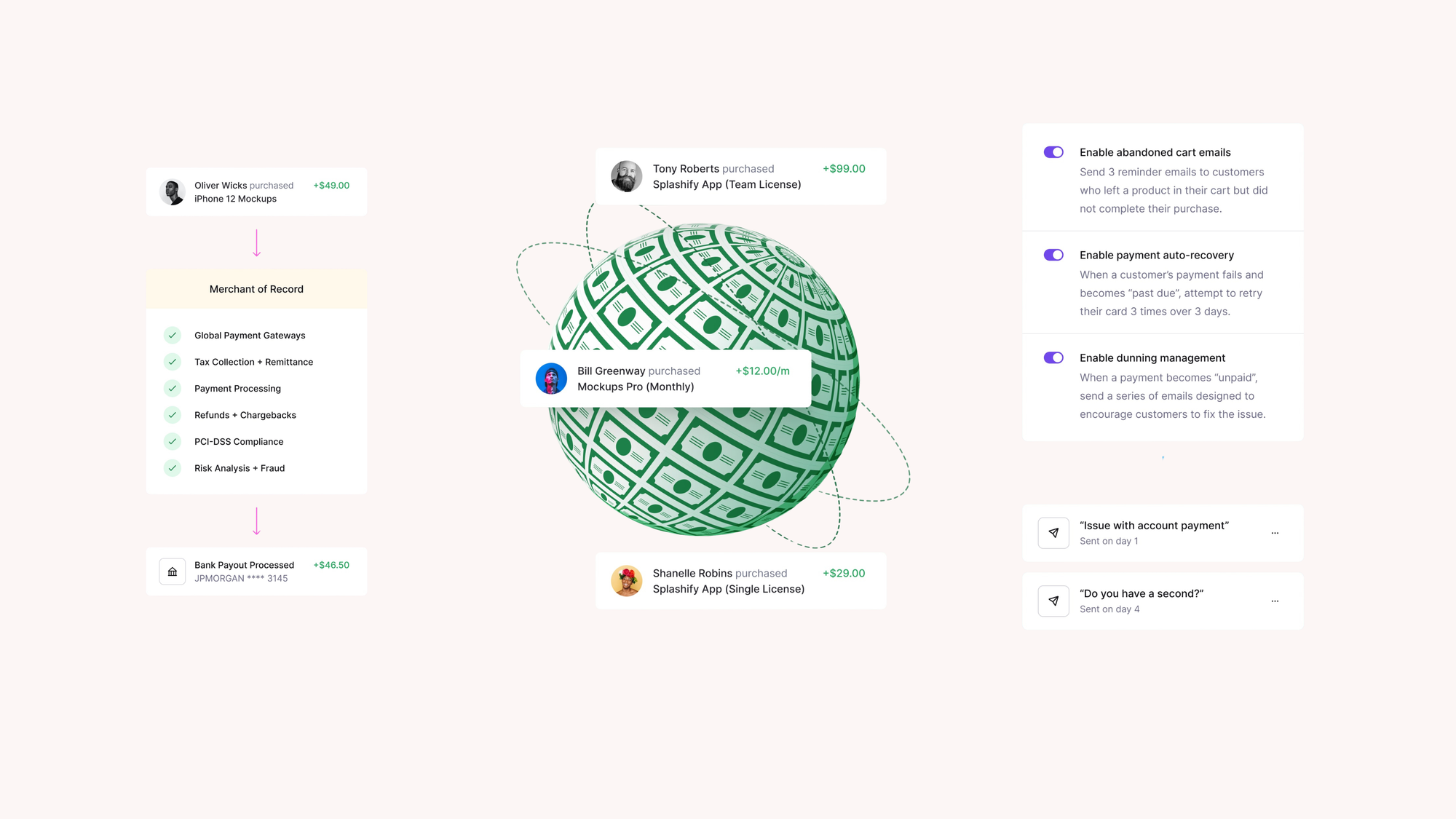
Lemon Squeezy is an ecommerce platform for software companies that combines payments, subscriptions, storefront tools, and Merchant of Record (MoR) services in one place.
Instead of piecing together separate tools for checkout, recurring billing, tax compliance, fraud prevention, customer management, and product delivery, Lemon Squeezy aims to bring those workflows under a single platform.
That broader product offering is a big reason it became popular with SaaS founders and online sellers.
Alongside payments and subscriptions, Lemon Squeezy also offers features like usage-based billing, affiliate tools, discounting, customer portals, reporting, storefront creation, and digital product delivery.
But while the all-in-one approach works well for some businesses, it isn’t always the best fit for everyone.
Depending on what you sell, you may find yourself wanting stronger SaaS billing infrastructure, more ways to distribute products, lower costs, deeper analytics, or a platform that’s built around a different business model.
That’s where the alternatives below come in.
The 6 best Lemon Squeezy alternatives
Let’s get straight to it. We’ve selected 6 of the best platforms that are similar to Lemon Squeezy but excel in at least one aspect when compared to the digital platform.
1. Whop
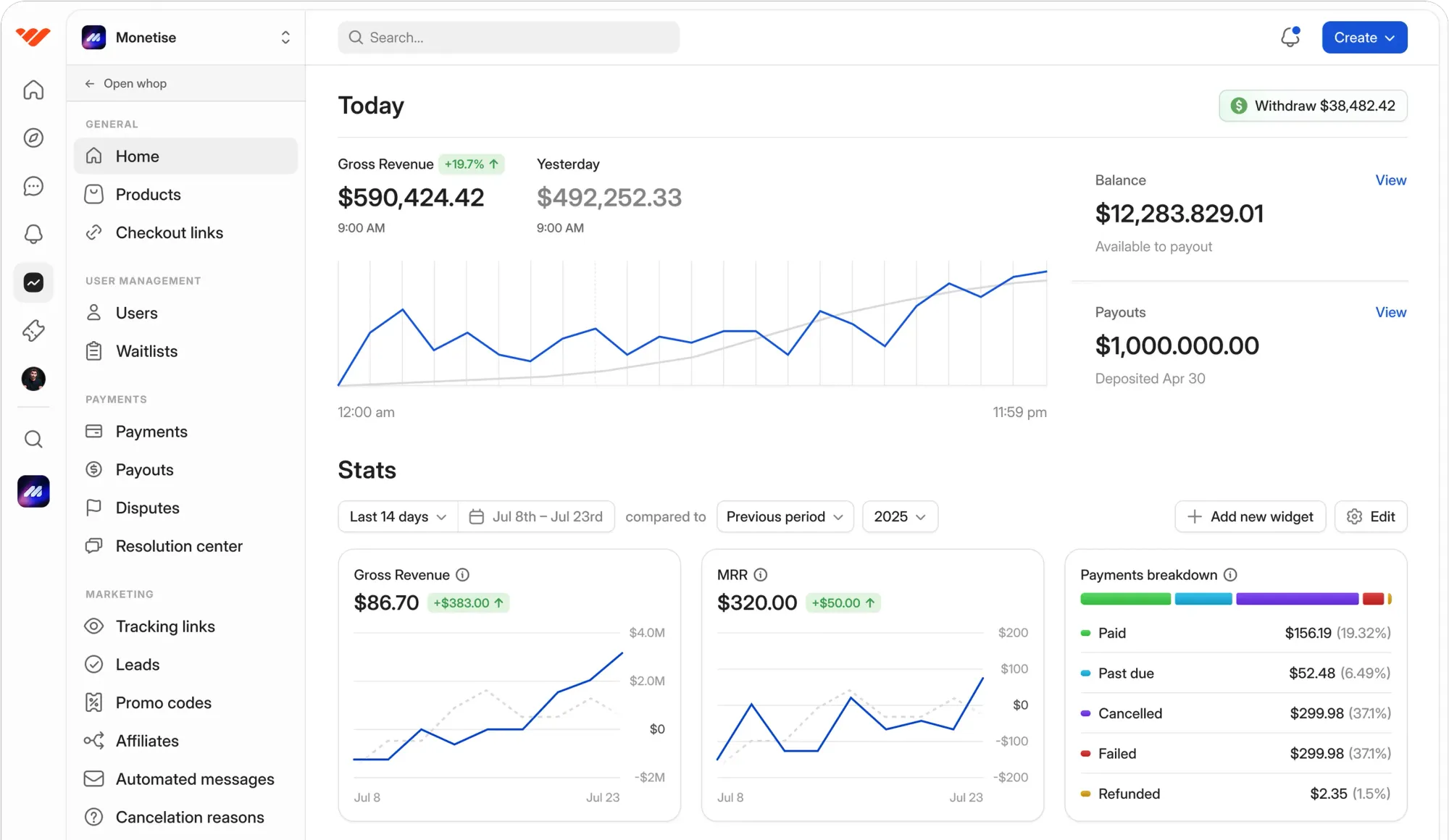
Best for: Software companies and internet businesses that want to accept payments, run subscriptions, and grow from one place.
Whop is built for businesses that want more than checkout infrastructure.
While Lemon Squeezy focuses on helping software companies accept payments and manage subscriptions, Whop combines payment acceptance with the tools businesses actually use to operate and grow.
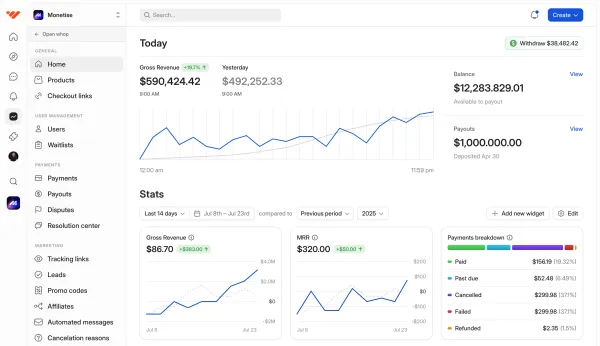
Accepting payments globally, running subscriptions, sending invoices, managing payouts, reducing failed payments, and delivering products and access. It's all covered, without adding more tools to your stack.
If your business is selling software, memberships, services, communities, courses, or access-based products, Whop makes it possible to run everything from one system instead of stitching together billing, payouts, fulfillment, and growth tools across multiple providers.
Sellers also get more ways to convert and retain customers through flexible checkout experiences, local payment methods, financing options, payment orchestration, and built-in revenue infrastructure.
If Lemon Squeezy is built to simplify selling, Whop is built to help businesses scale what happens after the first payment.
Pros:
- Accept payments in 100+ local payment methods
- Run subscriptions, invoicing, payouts, and billing in one place
- Payment orchestration to reduce failed payments
- Flexible fulfillment for software, memberships, services, and more
- Fast setup with infrastructure that scales
Pricing: Free to get started. Standard pricing starts at 2.7% + $0.30 per successful domestic card transaction, with custom pricing available for larger businesses.
2. Creem
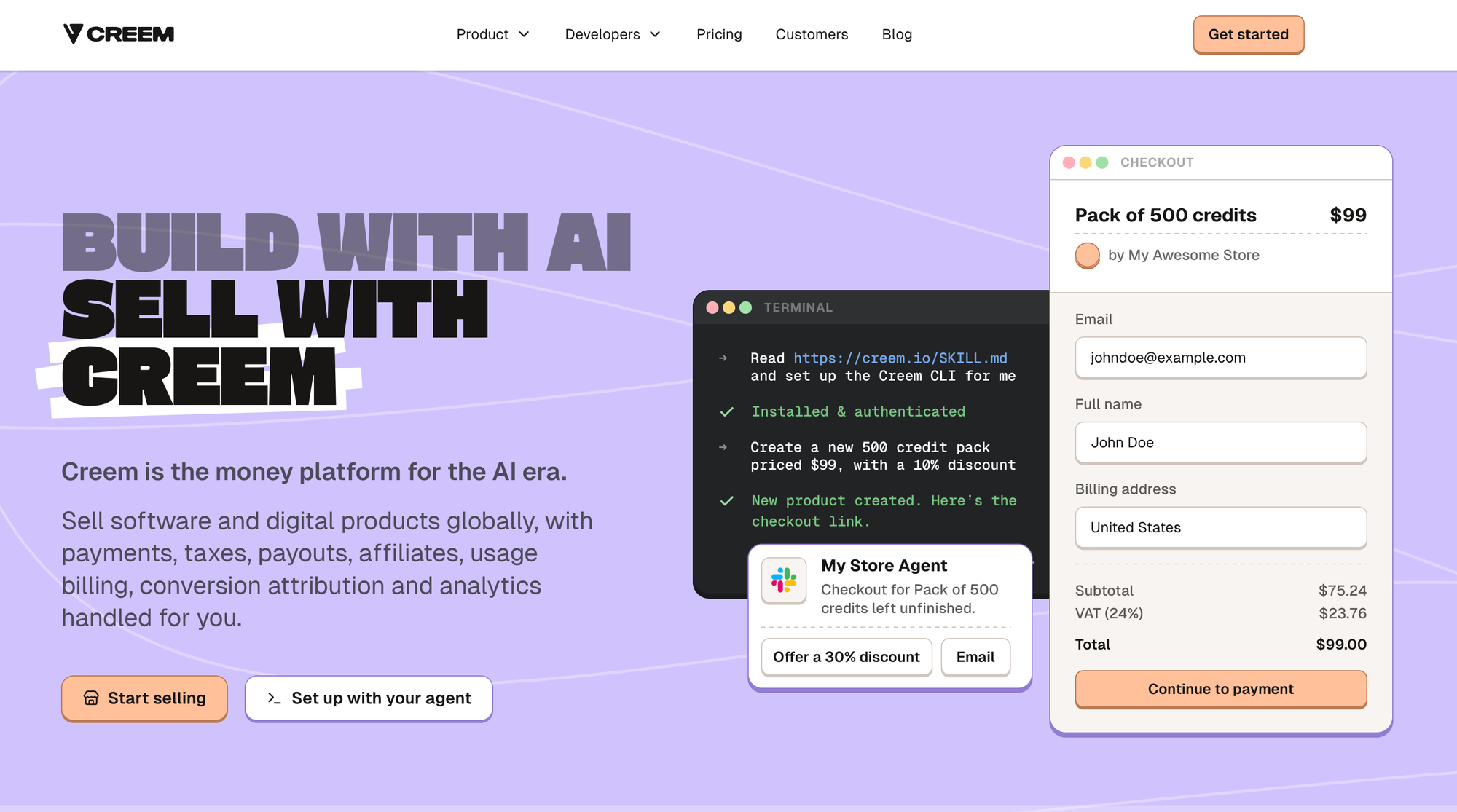
Best for: AI and software products that sell prepaid credits or usage, or share revenue with co-founders and partners.
Like Lemon Squeezy, Creem is a Merchant of Record: it is the legal seller, and it handles VAT and sales tax, invoices, fraud, and chargebacks for you. License keys, file delivery, subscriptions, and hosted or embedded checkout come built in, as they do at Lemon Squeezy.
Compared to Lemon Squeezy, Creem charges less per sale (3.9% + 40¢ against 5% + 50¢), and the gap widens when you sell subscriptions worldwide: Creem adds nothing for international cards or renewals, while Lemon Squeezy adds 1.5% and 0.5%.
It is also built around how AI products bill. Prepaid credit wallets take payment before customers use compute, and usage meters bill per call or minute as they consume.
Revenue splits and affiliate commissions pay out from the same balance, so co-founders, partners, and licensors get their share without a separate payout tool or spreadsheet.
Moving from Lemon Squeezy is covered too. Creem imports your existing customers and subscriptions, and its team helps with the switch on Discord. Checkout runs on your own subdomain, styled with your logo, colors, and theme.
Pros:
- Lower per-sale fee than Lemon Squeezy, with no monthly or setup fee
- No extra fee on international cards or subscription renewals
- VAT and sales tax collected and remitted
- Prepaid credits and usage-based billing
- Automatic revenue splits and affiliate commissions
Cons:
- Splits and affiliates each add 2% on the standard plan
- Payout transfer fees apply
Pricing: 3.9% + 40¢ per successful transaction, with tax, invoicing, compliance, and dispute handling included.
3. Paddle
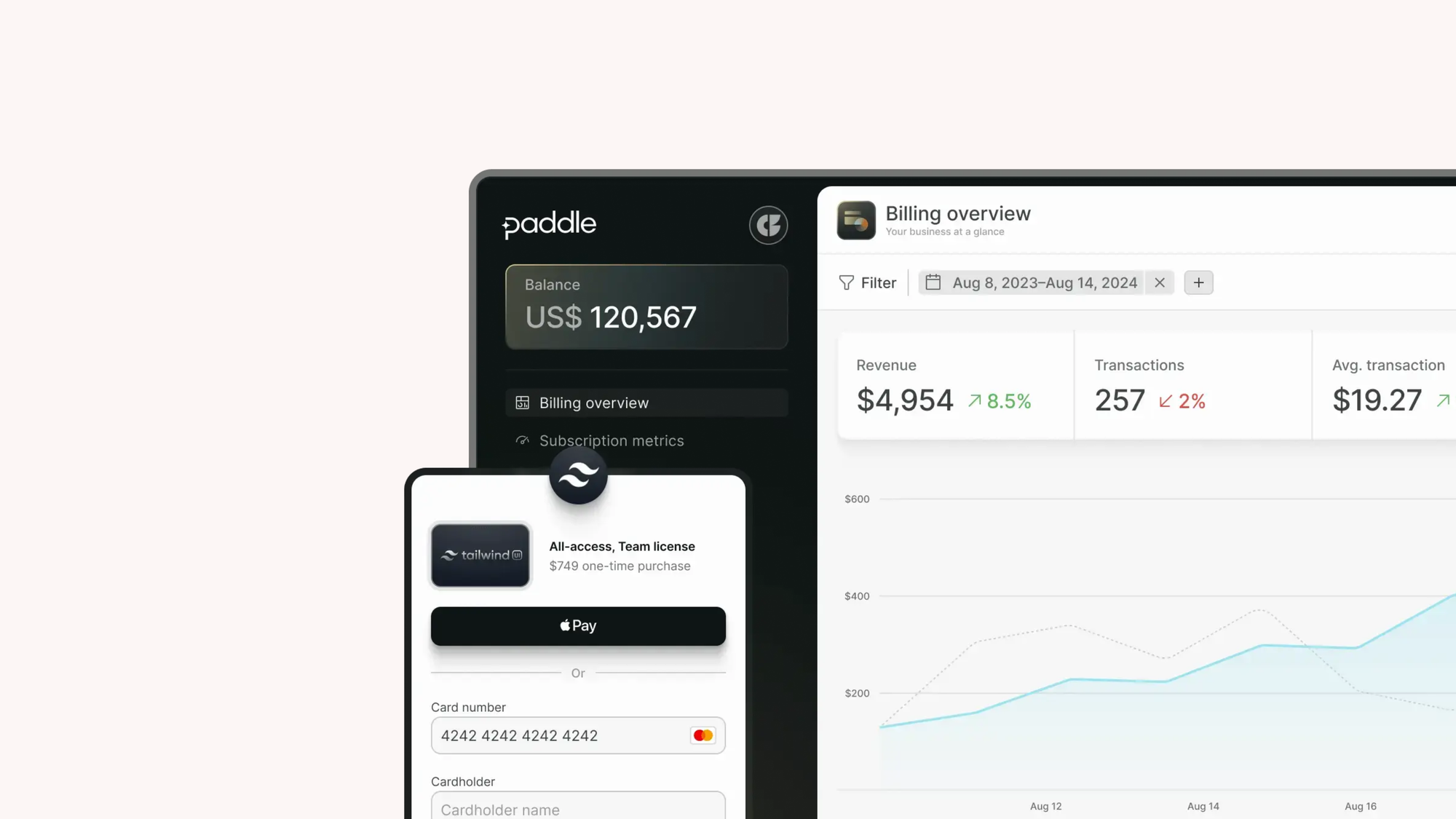
Best for: Software companies that want a mature Merchant of Record setup and deeper subscription operations.
Paddle is built specifically for software businesses and combines subscription management, global payment acceptance, tax handling, fraud protection, and customer billing under one platform.
Compared to Lemon Squeezy, Paddle puts more emphasis on operating subscriptions at scale.
Features like payment orchestration, subscription analytics through ProfitWell, and churn recovery tooling make it a stronger fit for businesses with more mature billing operations.
That extra infrastructure comes with tradeoffs though. Paddle can be more opinionated, more involved to implement, and more expensive depending on your margins.
Pros:
- Built specifically for software companies
- Merchant of Record model with tax handling built in
- Payment orchestration and subscription optimization tools
- ProfitWell analytics and retention tooling
Cons:
- Higher cost structure than some alternatives
- More setup than lighter commerce platforms
Pricing: Standard pricing starts at 5% + $0.50 per transaction, with custom pricing available for larger businesses.
4. Gumroad
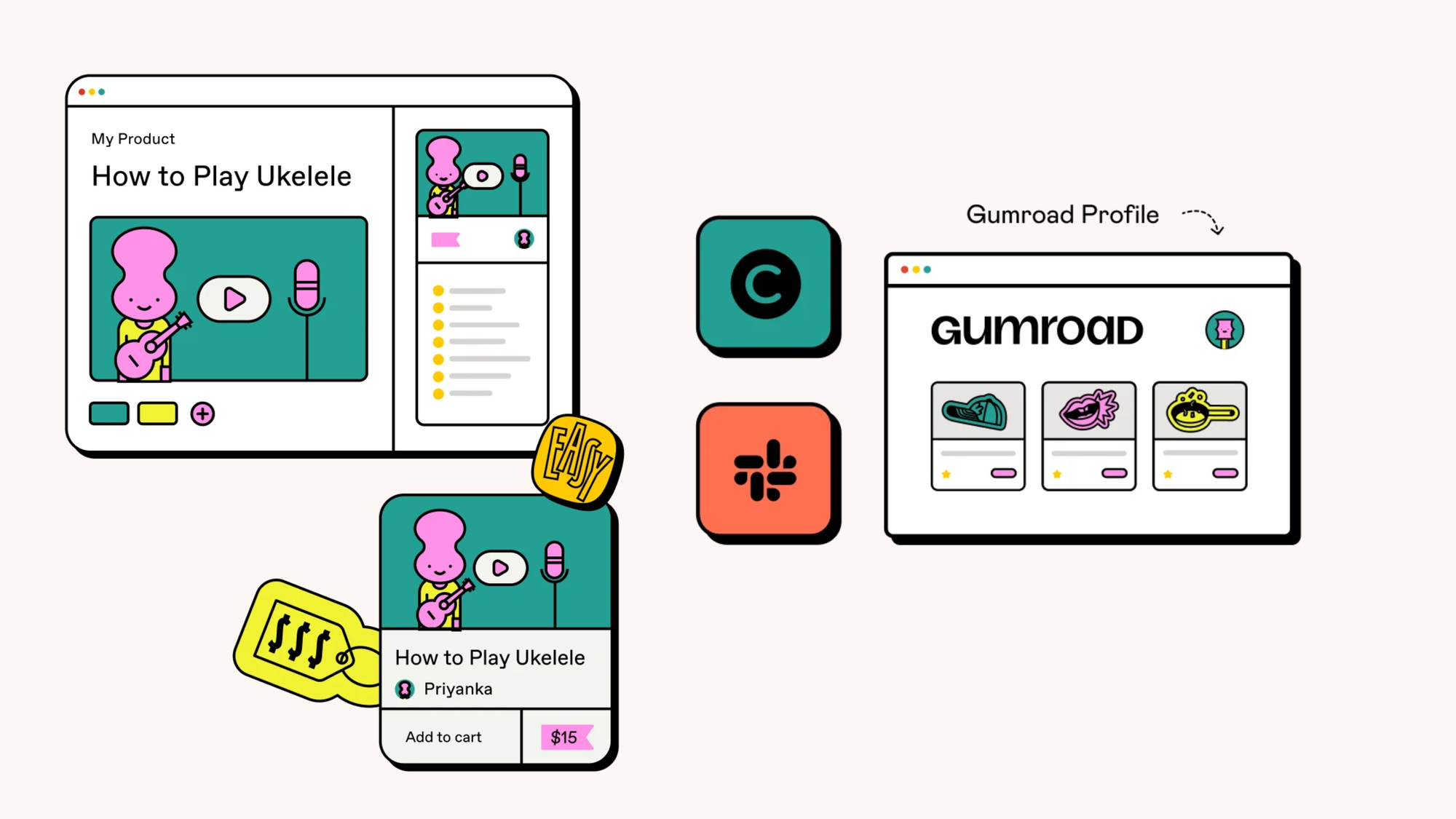
Best for: Individuals and small businesses that want a fast route to selling online, happy to trade for flexibility.
Gumroad has stayed popular for one reason: it removes friction. You can launch quickly, accept payments, and start selling without spending weeks setting up storefronts, billing systems, or infrastructure.
But compared to Lemon Squeezy, Gumroad is generally less focused on software operations and more focused on helping people start selling with minimal setup.
Where it starts to feel limiting is scale: as businesses grow, transaction fees can become expensive, customization options remain fairly lightweight, and teams often start wanting more ownership over checkout, customer experience, subscriptions, or reporting.
Pros:
- Established platform with a very wide audience
- The marketplace helps you scale easily
- Tons of product statistics are provided
- Huge variety of digital services and products to sell
Cons:
- The transaction fees are some of the highest on the market
- Customer support is slow, sometimes taking days to answer
Pricing: 10% + $0.50 per transaction for direct sales. Sales through Gumroad Discover are charged at 30% per transaction.
5. Payhip
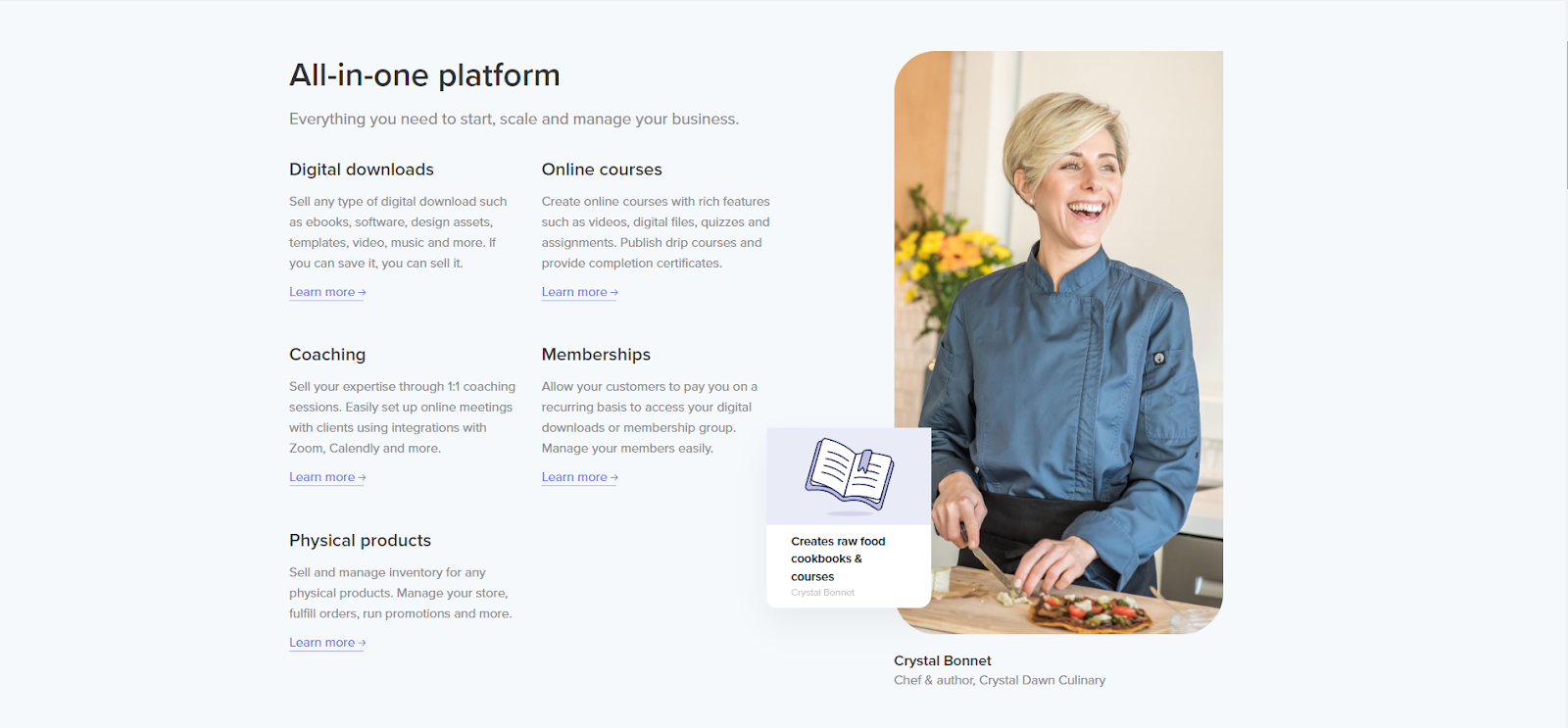
Best for: Businesses that want a simple storefront and don’t need advanced payments infrastructure.
Payhip sits somewhere between a storefront builder and a commerce platform.
Unlike a lot of commerce tools, every Payhip plan includes the same core functionality, the main difference is how transaction fees change as your business grows.
Businesses can sell courses, memberships, downloads, coaching, subscriptions, and physical products while getting access to storefront tools, email marketing, discounts, and built-in VAT handling.
Compared to Lemon Squeezy, Payhip feels less focused on software infrastructure and more focused on helping businesses launch and operate with minimal setup.
But its simplicity comes with tradeoffs. Businesses that need deeper subscription operations, more advanced payment optimization, broader payout infrastructure, or more operational tooling may eventually outgrow it.
Pros:
- Lower base transaction fee
- Plenty of customization options
- Superior marketing tools
- Specializes in VAT tax handling
Cons:
- Standard payment provider fees still apply
- Reporting and operational tooling are lighter than larger platforms
- Less suited to businesses with complex billing needs
- Fewer growth and infrastructure tools than more mature stacks
Pricing: Payhip has 3 different plans:
- Free Plan: Forever-free with a 5% transaction fee
- Plus Plan: $29/month with a 2% transaction fee
- Pro Plan: $99/month with no transaction fees
6. Sellfy
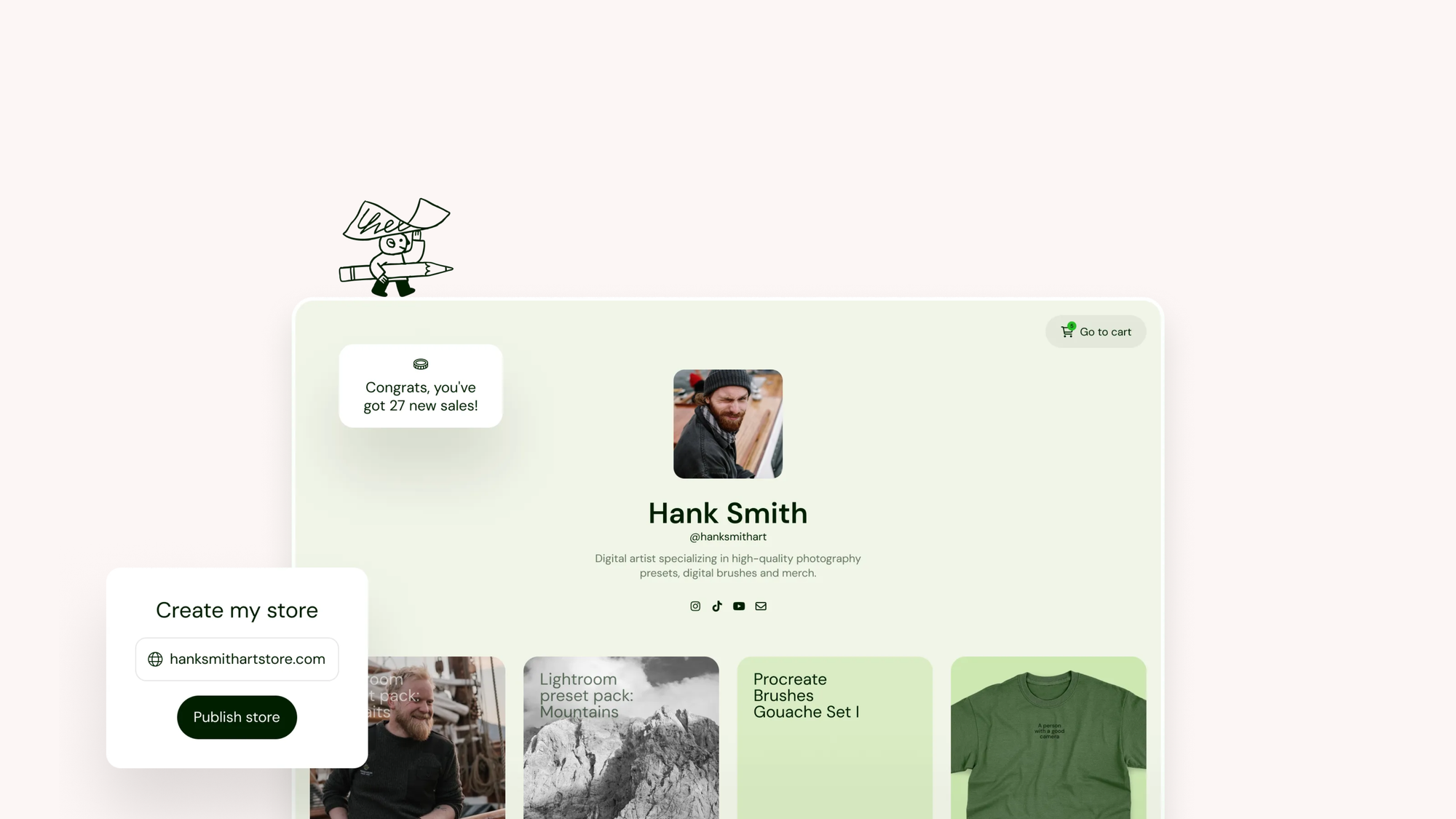
Best for: Businesses that want fixed monthly costs and built-in selling tools.
Sellfy takes a different approach from Lemon Squeezy. Instead of charging transaction fees, it uses a subscription model and bundles storefront creation, selling tools, and marketing features into one product.
Businesses can sell subscriptions, courses, downloads, merch, physical products, and print-on-demand items while managing everything through their own storefront.
Features like email marketing, upsells, affiliate programs, cart abandonment, discounting, and embedded selling come built in rather than relying on additional tools.
Compared to Lemon Squeezy, Sellfy feels less infrastructure-focused and more storefront-first.
That makes it attractive for businesses that want predictable costs and a fast path to launching, but less attractive for teams that care more about billing sophistication, payout flexibility, or payment infrastructure.
Pros:
- No transaction fees on any plan
- Built-in email marketing and selling tools
- Supports subscriptions, merch, physical products, and print-on-demand
- Store builder with custom domain support
- Affiliate marketing and upsells included
Cons:
- Annual sales limits apply by plan
- Supports fewer payment rails than larger platforms
- Less suited to complex subscription operations
- Monthly pricing may become less attractive for smaller businesses
Pricing: There are 3 plans that all come with no transaction fees
- Starter: from $22/month (up to $10k annual sales)
- Business: from $59/month (up to $50k annual sales)
- Premium: from $119/month (up to $200k annual sales)
Which Lemon Squeezy alternative should you choose?
The right choice depends on what kind of business you’re building.
But if you want to accept payments, run subscriptions, manage fulfillment, grow revenue, and operate your business from one place, Whop gives you more room to scale without adding more tools.
The internet economy is moving toward smaller teams, faster execution, and businesses that own more of their growth stack. Whop is built for that.
Streamline SaaS billing, subscriptions and storefronts with Whop
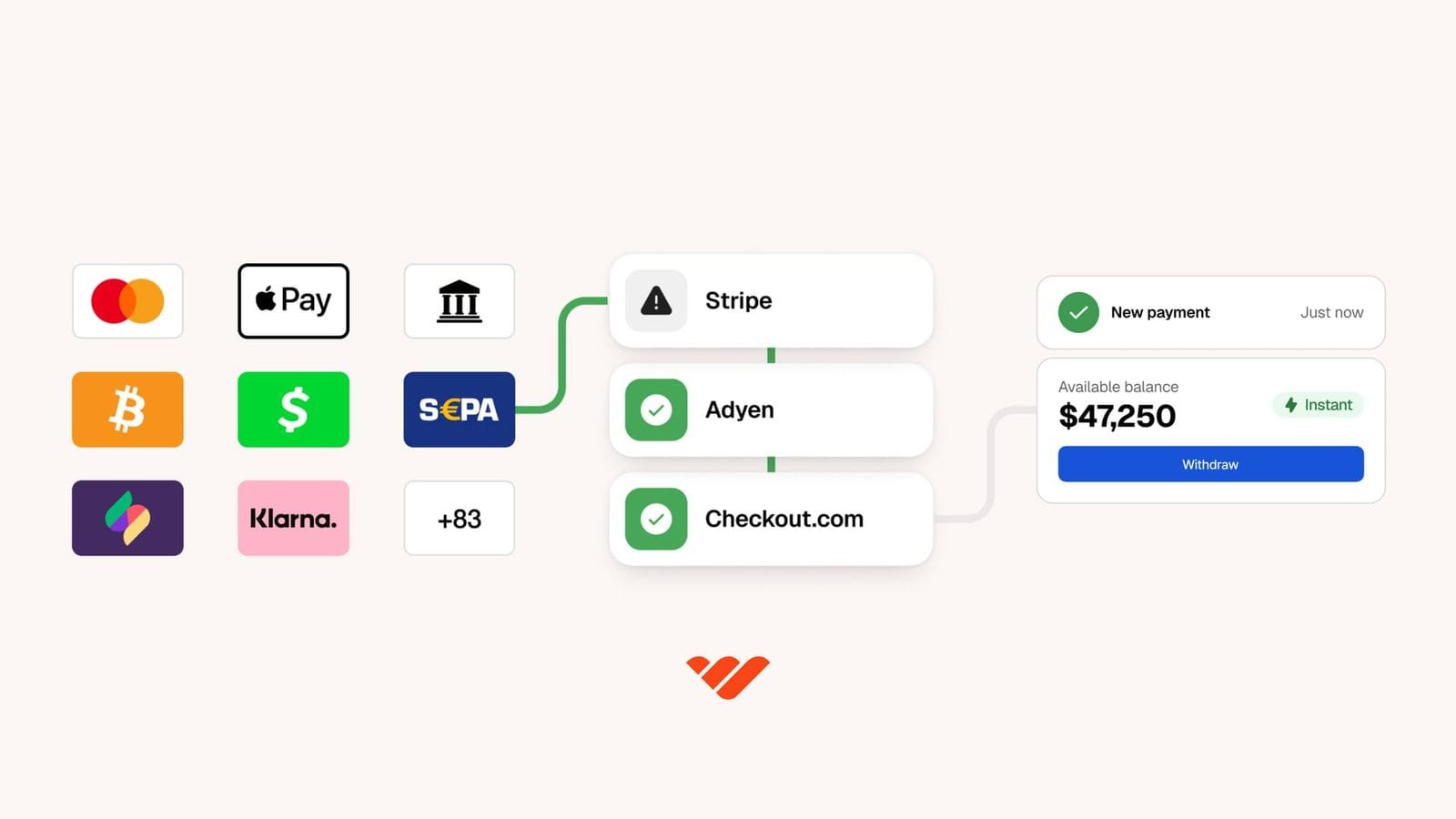
SaaS businesses have more choice than ever before in how they launch, grow, and operate online.
Deeper subscription tooling, stronger storefront experiences, built-in distribution, lower costs, or infrastructure that does more after the payment is complete.
That’s why there isn’t one universal replacement; there’s the right fit for the business you’re building.
Whop is built to help SaaS businesses and software companies accept and bill for subscriptions, manage licenses, and handle global tax automatically.
"Whop gives me peace of mind - I don't have to worry about our payment stack working. Our team has gotten back so much time."
Nick Lawton, CEO of SideShift
You can set up SaaS billing with Whop in under 15 minutes. Sign up today to get started.







![Mighty Networks: is it the best choice for your community? [2026 review]](https://storage.ghost.io/c/12/7b/127b828b-bdc2-4972-9cf2-de857df9c324/content/images/size/w1000/format/webp/2024/05/What-is-Mighty-Networks-Features--Pricing--and-Alternatives-2024-Review.webp)

![The best online newsletter platforms [2026]](https://storage.ghost.io/c/12/7b/127b828b-bdc2-4972-9cf2-de857df9c324/content/images/size/w1000/format/webp/2024/05/Best-online-newsletter-platforms.webp)
![Top 17 best online course platforms to sell your course [2026]](https://storage.ghost.io/c/12/7b/127b828b-bdc2-4972-9cf2-de857df9c324/content/images/size/w1000/format/webp/2026/01/best-online-course-platforms_1x.webp)