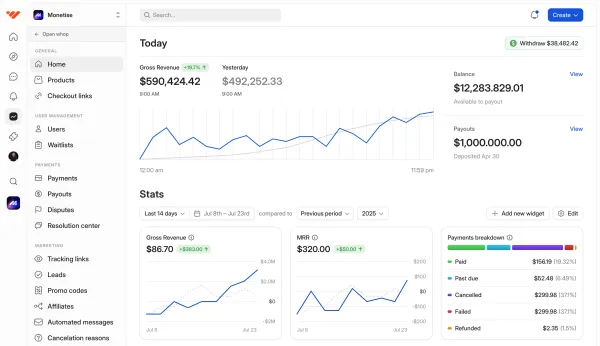
The best way for freelancers to get paid is with an all-in-one platform like Whop, which handles payments, client access, and service delivery. Other options include Wise, Payoneer, PayPal, Stripe, bank transfers, digital wallets, and crypto, each with its own benefits and fees.
Key takeaways
- Whop is the author's top recommendation because it combines payments, client management, and service delivery in one platform.
- Traditional payment methods like PayPal and bank transfers create major headaches for traveling freelancers and international payments.
- Each payment platform has tradeoffs between fees, flexibility, and reliability—choose based on your client locations and work style.
The payment methods that have worked for me as a freelancer are Whop, Wise, Stripe Payments, PayPal, local bank transfers, Payoneer, digital wallets, ACH/EFT invoicing, marketplace payouts, and - when both sides are comfortable - crypto.
And out of all of them, Whop is the one I personally believe makes the most sense for freelancers.
Here’s how each option works, what I’ve learned from using them, and how to choose the right setup for your own freelance workflow.
Payment methods for freelancers, tried and tested by me
1. Whop: my go-to all-in-one payment and service delivery platform
Whop is the platform I personally recommend because it combines payments, product delivery, client management, and subscriptions in one place.
Instead of using Stripe links, Google Drive folders, invoicing tools, and access systems, freelancers can onboard clients through Whop and everything - from payment to fulfillment - is taken care of.
It’s built for all business models, freelancers included. As a freelancer you can create and sell service packages, digital downloads, consulting calls, templates, and more.
Or, you can use Whop invoices purely for invoicing your clients.
Whop even supports direct crypto withdrawals to your preferred wallets (like Kraken) with destination addresses.
Features:
- All-in-one setup: Accept payments and automatically deliver services, files, or ongoing access.
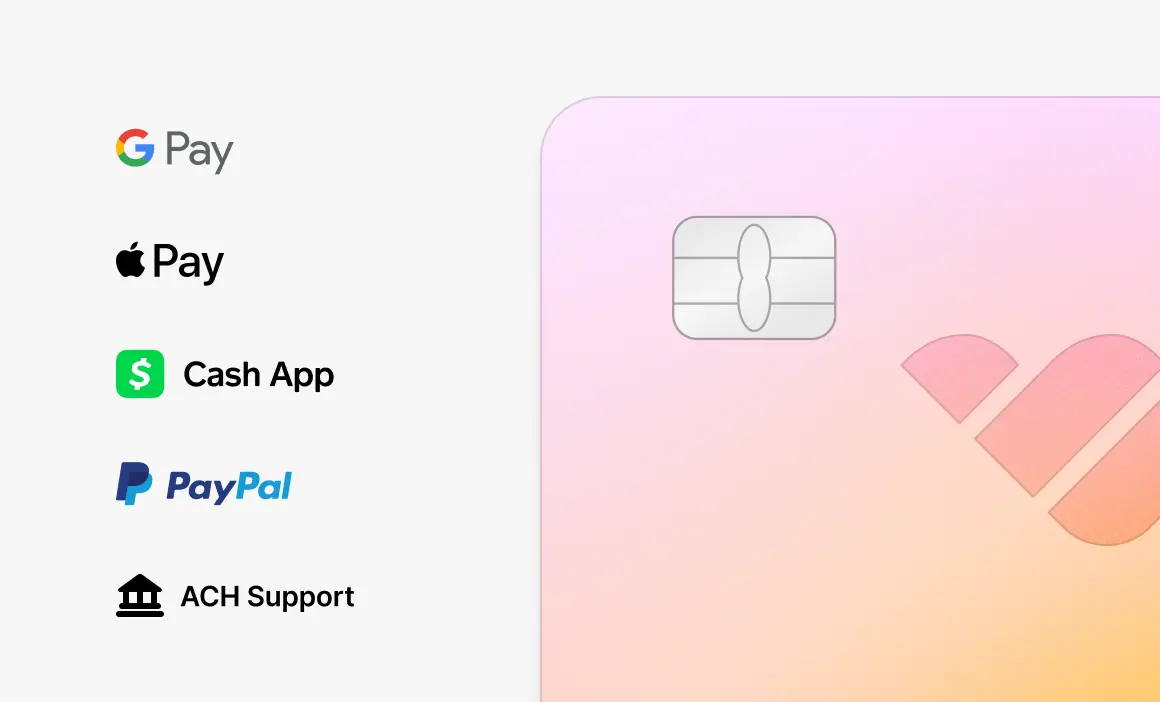
- Multiple payment methods: Cards, digital wallets, bank payments, crypto, and international payments.
- Instant access delivery: Clients immediately receive what they purchased.
- Subscription and recurring billing tools: Useful for freelance retainers or ongoing work.
- Client management tools: Track purchases, refunds, access, and communication in one dashboard.
- Integrated storefront: Create a simple public page showcasing your freelance services.
- No-code setup: You can offer services or products without touching any technical setup.
Fees:
- 2.7% + US $0.30 per successful card transaction.
- No platform fees.
- Payouts to your bank follow standard processing times depending on your country.
Why I suggest Whop: the mix of payments plus automatic delivery and minimal admin beats any standalone processor I’ve tried.
2. Wise: useful for international clients and cross-border payments
I have previously used Wise when working with clients or projects that involve international currencies.
It is helpful if you need to get paid in one currency and spend or hold money in another (which happens frequently when clients are overseas).
Wise makes currency exchange, cross-border transfers, and holding multi‑currency balances much easier than traditional banks (and often cheaper).
Features:
- Multi‑currency account: Hold, manage, and receive money in many currencies (USD, EUR, GBP, AUD, etc.).
- Local account details in certain currencies: You get “local” bank‑details (IBAN / account numbers) for several currencies, which lets clients send payments as if you were local to them.
- Transparent mid‑market exchange rate: Wise does not inflate the exchange rate; conversion is at the real mid‑market rate.
- Flexibility to send, receive, convert money globally: Useful if you invoice in one currency, get paid in another, or need to pay international contractors/suppliers.
- Debit card included (in many regions): You can spend directly from your Wise balances, useful if you travel or handle business expenses across currencies.
Fees:
Now, this is where Wise loses my vote. I have found that Wise takes a higher fee than other payment solutions. As I am based in Australia, the account set up fee to get paid into a business account is $65.
- Account setup / registration: Free to open the account.
- Multi‑currency local account details (for receiving in 22+ currencies): For some currency‑account setups, there may be a one‑time fee (e.g. for certain plans, or depending on your country). For example in Australia the 'unlock' for international receive-capability was shown as 65 AUD.
- Receiving local payments (in supported local currencies, non‑wire): Free.
- Receiving international payments (USD, EUR, GBP etc.) via SWIFT/wire: Fixed fee applies, e.g. USD wire payments incur a fee (around USD 6.11), GBP/EUR similar fixed amounts.
- Sending or converting money/international transfers: Fee varies by currency and amount, but Wise’s fees start from around 0.33%–0.63% depending on region and currency.
- ATM withdrawals (if using the Wise debit card): In some regions, up to a certain withdrawal limit is free per month; beyond that there may be small fees.
When to use Wise: Wise gives freelancers flexibility. Because you can hold and convert multiple currencies, you avoid losing money on poor exchange rates or hidden bank markups.
3. Stripe Payments/invoicing: globally-recognized, card-friendly payments
Stripe is probably the most well-known payments platform for freelancers and online businesses, and for good reason.
It’s widely trusted, globally recognized, and can handle card payments from almost anywhere.
The fees are competitive, especially if you’re primarily taking credit card payments, and it integrates with a huge ecosystem of tools - so if you want flexibility and control, Stripe is hard to beat.
That said, my personal experience hasn’t been perfect. At one point, Stripe held a payment of mine for 60 days.
I had to go through multiple verification processes that didn’t make much sense, and the online portal didn’t reflect the reality of the review process. I ended up having to call customer service multiple times, who confirmed I was no longer under review even though Stripe’s system still said I was.
So while Stripe is excellent in many ways, there can be headaches if you run into account or verification issues.
Features:
- Global reach: Accept payments from almost any country using cards or wallets.
- Card-friendly: Works with all major credit and debit cards, and digital wallets in many regions.
- Invoicing tools: Create, send, and track invoices directly in Stripe.
- Recurring payments: Built-in subscription and recurring billing support.
- Integrations: Connect with dozens of business tools, ecommerce platforms, and accounting software.
- Developer-friendly: Full API access for custom setups or automations.
Fees:
- 2.9% + US $0.30 per domestic card transaction (typical for U.S. payments).
- International cards: +1% fee for cross-border transactions.
- Currency conversion: +1% if Stripe needs to convert currencies.
- No monthly fee for basic processing; optional paid features (advanced fraud, reporting, etc.) exist.
Why freelancers use Stripe: Stripe is reliable, globally recognized, and widely accepted by clients- just be aware that account holds or verification issues can be stressful, so always plan for potential delays in receiving your money.
4. PayPal: familiar, widely used, accessible worldwide
PayPal is probably the most widely recognized and trusted online payment platform. Almost every client knows it, so it’s easy to get paid quickly, and the interface is familiar.
I’ve used it for years and it’s convenient for one-off payments or recurring invoices, especially with clients who already have PayPal accounts.
But there is a big problem for some freelancers - PayPal isn’t the most flexible option if you’re a digital nomad or a freelancer who likes to travel.
In my experience, if you move to another country, you often have to close your existing account and open a new one in your new country (something I found frustrating and time-consuming).
It’s reliable for domestic or long-term clients in one country, but not ideal if you want full mobility with your payments.
Features:
- Globally recognized: Most clients know and trust PayPal.
- Send and receive payments instantly: Works for one-off payments or recurring invoices.
- Invoice creation: Create, send, and track invoices directly in PayPal.
- Buyer and seller protections: Provides dispute resolution for both parties.
- Integration with many platforms: Popular with marketplaces, online stores, and freelance tools.
Fees:
- Domestic payments: 2.9% + fixed fee (varies by currency, typically $0.30 USD).
- International payments: Higher fees - usually 4.4% + fixed fee depending on currency.
- Currency conversion: Additional 2.5–3% above the exchange rate.
- No monthly subscription required for basic accounts.
Why I have used PayPal: PayPal is easy for clients, fast, and trusted worldwide. But if you move frequently or work from multiple countries, it can be more hassle than it’s worth.
5. Bank transfer/direct deposit (local): low-fee, domestic-friendly
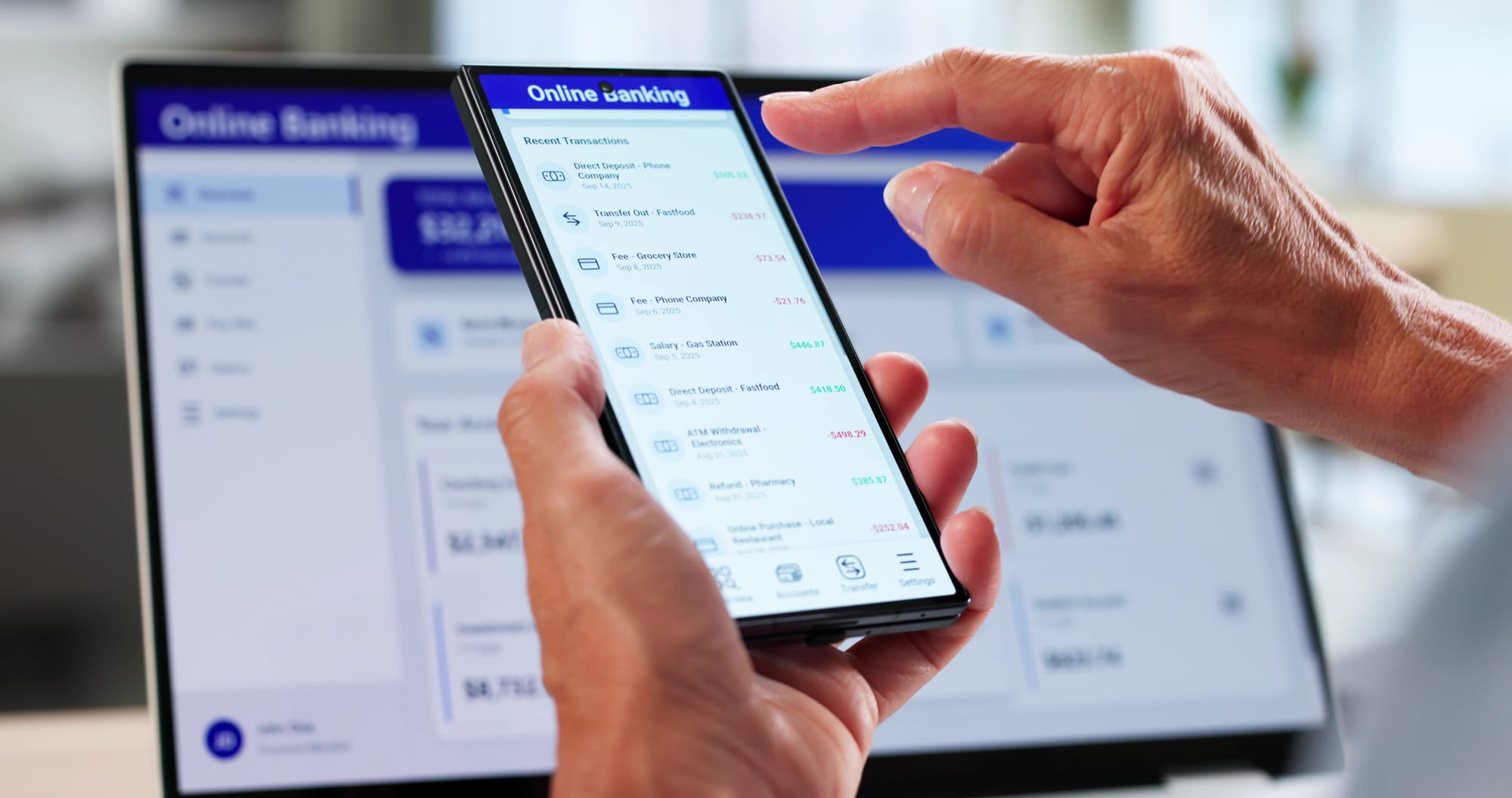
Bank transfers are straightforward if you’re working with domestic clients. You give them your account details, they transfer the funds, and the money hits your account without any platform fees.
It’s reliable and doesn’t involve card processing fees, making it ideal for local payments.
That said, I’ve run into two major issues with bank transfers:
- You rely on the client to initiate the payment
Unlike sending an invoice link, you’re depending on your client to open their banking app, enter the details, and press 'send.'
If they work with multiple freelancers or have lots of bills to pay, you can end up waiting longer than expected (in my experience, months). - International payments can be a nightmare
I’ve personally had a payment from a French company take six months. They required specific codes that I, as an Australian resident, didn’t have.
During the process, my bank even stopped accepting certain international payments, so I had to redo invoices multiple times. (You can use traditional transfer services like Western Union, but between the fees and delays? They can be just as painful.)
Features:
- Direct deposit to your bank account: Funds go straight into your account.
- Low or no fees for domestic transfers: Usually no percentage-based fees.
- Works with most domestic banks: Reliable and familiar for local clients.
Fees:
- Domestic transfers: Often free, or minimal flat fees depending on your bank.
- International transfers: Can vary widely; may include wire fees, currency conversion, and intermediary bank fees.
When to use it: For domestic clients, bank transfers are simple, cheap, and reliable. For international clients or complex organizations, the process can be slow, error-prone, and stressful.
6. Payoneer: global payout infrastructure, multi-currency support
Payoneer is a good option if you work with international clients or platforms that pay in multiple currencies. It’s particularly useful if you’re freelancing globally and want to avoid the delays and high fees that can come with traditional bank transfers.
Payoneer gives you a way to receive payments from clients or marketplaces as if you had a local bank account in multiple countries, which can simplify cross-border payments significantly.
In my experience, Payoneer is reliable, and it’s much faster than standard wire transfers.
The platform also supports withdrawing funds to your local bank account, spending via a Payoneer debit card, or sending payments to other Payoneer users - making it versatile if you work internationally or hire contractors yourself.
Features:
- Receive in multiple currencies: USD, EUR, GBP, and more, with local account details in certain currencies.
- Global payout support: Accept payments from clients or marketplaces worldwide as if you had a local bank account.
- Payoneer debit card: Spend your funds directly or withdraw cash at ATMs.
- Mass payouts: Useful if you work with platforms that pay multiple freelancers at once.
- Integration with marketplaces: Many freelance platforms (Upwork, Fiverr, etc.) support Payoneer for payouts.
Fees:
- Receiving payments from other Payoneer users: Typically free.
- Receiving international client payments / marketplaces: Usually 0–3% depending on method.
- Currency conversion: 2% above mid-market rate.
- ATM withdrawals: Varies by region; typically a small flat fee per withdrawal.
- Annual account maintenance: Sometimes a small fee (varies by region; often around $29).
My thoughts: Payoneer makes international payments smoother than standard bank transfers and gives me multiple ways to access and spend my money. It’s especially handy if you're dealing with overseas clients regularly.
7. Digital wallet payments (Apple Pay / Google Pay / region-specific wallets): convenient and mobile-first
I’ve looked into digital wallets like Apple Pay and Google Pay for receiving payments, but in Australia, there’s a limitation: you can’t be paid directly via Apple Pay. For me, Apple Pay is tied to my own bank or card and isn’t a standalone way to receive funds from clients.
But in the U.S., Canada, and parts of Europe, services like Venmo, Zelle, or even Apple Pay Cash let freelancers get paid peer-to-peer. That means digital wallets can actually be a direct way to get paid quickly.
Features:
- Instant payments (through supported processors).
- Mobile-first: Great for clients on the go.
- Secure transactions: Built-in tokenization and authentication.
- Integration with Stripe, PayPal, and other processors that support wallets.
Fees:
- Fees are charged by the processor (e.g., Stripe, PayPal), not the wallet itself.
Why I mention it: Because although digital wallets don't work for me, they can make paying frictionless for freelancers and clients in other countries.
8. Invoice and ACH/EFT for recurring or subscription-style freelance work

For ongoing freelance work or subscription-style clients, I often used invoices combined with ACH/EFT payments.
This setup works particularly well for domestic clients who prefer paying directly from their bank account on a regular schedule. It’s predictable, professional, and gives both sides a clear record of what’s due and when.
That said, it’s best suited for clients who are familiar with the process. Unlike platforms like Whop or Stripe, where payment and access are automated, ACH/EFT relies on the client to actually process the transfer on schedule.
So for international clients or companies with large accounting teams, it can be slower or more complicated (as I’ve experienced with international bank transfers).
Features:
- Recurring payment support: Perfect for retainer clients or subscription-style arrangements.
- Professional invoicing: Track due dates, payment history, and outstanding balances.
- Direct bank transfers (ACH/EFT): Clients pay straight into your bank account.
- Automated reminders: Many invoicing tools let you automatically remind clients when invoices are due.
Fees:
- Domestic ACH/EFT: Often free or very low-cost depending on your bank.
- International ACH/EFT: Can involve wire fees, currency conversion, or intermediary bank charges.
- Invoicing platforms: If you use a tool like Xero, QuickBooks, or Zoho, there may be a subscription or per-invoice fee.
Why I've used it: For recurring work with domestic clients, invoicing and ACH/EFT is straightforward and low-fee. It gives a professional feel and predictable cash flow. Having said that, international clients or large organizations can introduce delays or complications.
9. Marketplace and gig-platform built-in payment systems

I've worked through Upwork and Fiverr, and so have relied on their built-in payment systems.
These platforms handle invoicing, payment collection, and even currency conversion, so I don’t have to chase clients or worry about whether a transfer will go through.
The system is automated, making it convenient if you’re juggling multiple clients or smaller projects.
But, there are trade-offs. These platforms take a percentage fee, which can eat into your earnings, and you’re tied to their payout schedules.
In my experience, it’s great for finding new clients and getting paid reliably - but it’s not always the most profitable option if you have repeat clients outside the platform.
Features:
- Integrated payment processing: The platform collects funds from clients automatically.
- Currency conversion and international support: Many marketplaces handle payments from global clients.
- Invoice automation: You don’t need to manually send invoices, everything is tracked in-platform.
- Payment security and dispute resolution: Platforms provide protection for both freelancers and clients.
- Quick access to new clients: Payment systems make it easy to accept work from multiple clients worldwide.
Fees:
- Platform fees: Typically 5–20% (ouch!) depending on the marketplace.
- Currency conversion: Often included in the platform’s fee structure.
- Withdrawal fees: Some platforms charge a small fee to transfer money to your bank account.
When they work: For one-off projects or finding new clients, marketplace payment systems are incredibly convenient. They remove the hassle of chasing payments and provide peace of mind - but the fees mean they’re best used alongside other direct payment methods for ongoing work.
10. Cryptocurrency payments (only if both you and client are comfortable and aware of volatility)
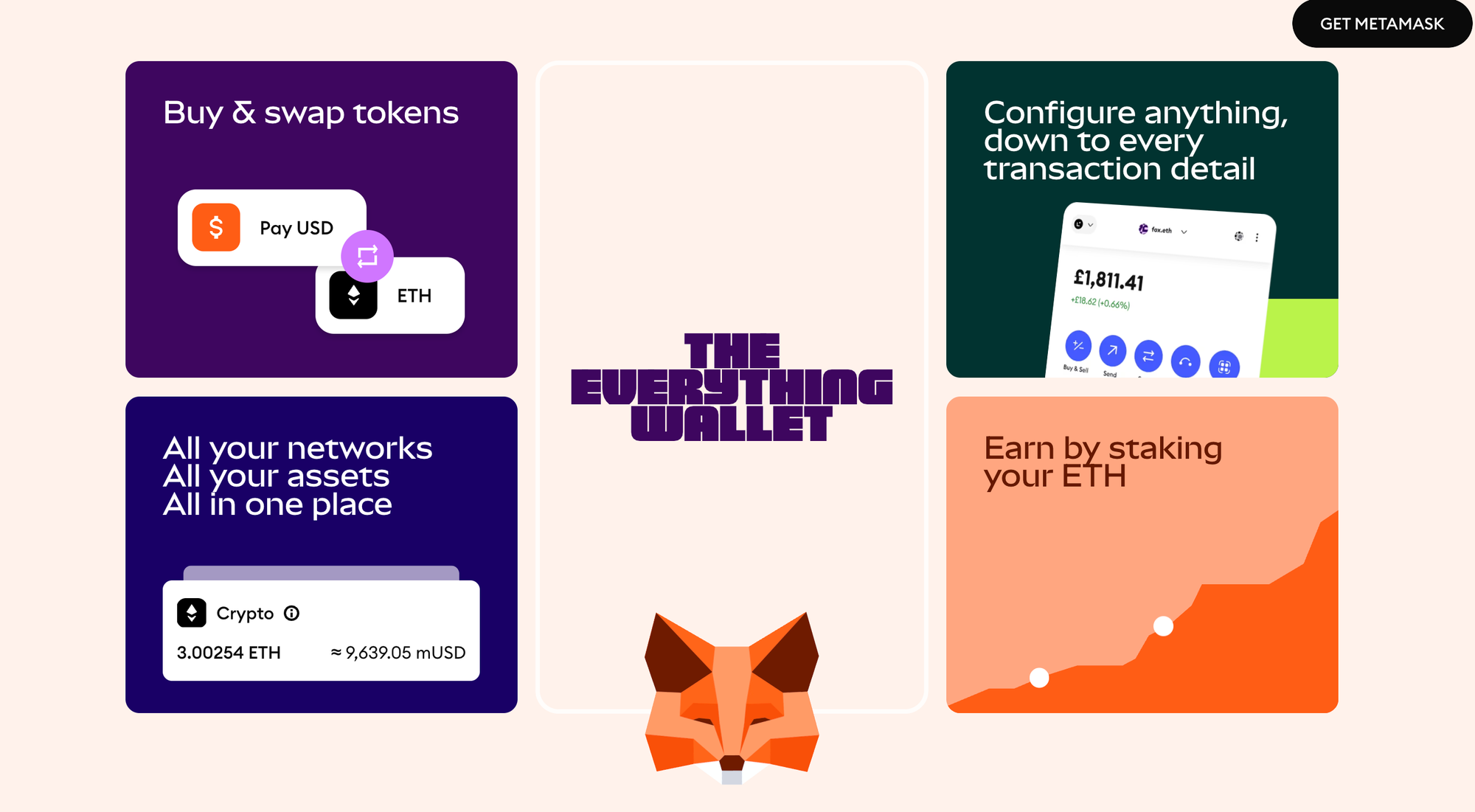
I’ve experimented with accepting cryptocurrency from clients, and it can work well in certain situations - but it’s not something I use regularly.
Crypto payments are instant, borderless, and don’t rely on traditional banks, which is appealing if your client is familiar with digital assets (at the time I was taking on a lot of work for NFT and crypto clients, so they were more than happy to pay in crypto).
Still, there are some key things to keep in mind. First, crypto prices are volatile, so the value of what you receive can fluctuate quickly. There are also tax implications and reporting requirements to consider, which vary by country.
Personally, I only accept crypto if I plan on holding it as a crypto investment for at least a year, rather than converting to fiat money straight away.
Features:
- Borderless payments: Clients anywhere in the world can pay instantly.
- Low friction (if both sides are set up): No bank transfers or international fees.
- Privacy and security: Payments are on-chain, reducing reliance on intermediaries.
- Fast settlement: Funds transfer quickly once the transaction is confirmed.
Fees:
- Network fees: Minimal, depends on the blockchain used (e.g., Ethereum, Bitcoin).
- Exchange conversion fees: If you convert crypto to fiat, platforms may charge 0.5–2%.
- Wallet or platform fees: Some wallets charge withdrawal or deposit fees.
When crypto works: Crypto is only suitable if both you and the client are comfortable with it. For me, it’s an occasional option, mostly for tech-savvy clients or niche projects, rather than a primary payment method.
How to pick the payment method (or methods) to suit your freelancer situation
After trying nearly every payment method out there, I’ve learned that no single option works for every situation.
The key is matching your method to your client type, project size, and your own workflow.
Here’s how I think about it:
Consider where your clients are located
- Domestic clients? Bank transfers, ACH/EFT, or Whop work well.
- International clients? Wise, Payoneer, or Whop make payments faster and cheaper than traditional banks.
Think about frequency and size of payments
- One-off projects: PayPal, Stripe, or Whop are easy.
- Recurring or subscription-style work: Invoice + ACH/EFT, Stripe subscriptions, or Whop subscriptions keep cash flow predictable.
Factor in speed versus fees
- Fast payments sometimes cost a little more (PayPal, Stripe).
- Low-fee options like direct bank transfers or Wise are slower for international clients but save money.
- Whop keeps payments fast without the extra fees.
Ease of use for you and your client
- Platforms like Whop or marketplaces handle delivery and payment in one place.
- If your client isn’t tech-savvy, familiar tools like PayPal or Stripe invoices might reduce friction.
Common freelancer payment mistakes I’ve made (and how to avoid them)
Over the years, I’ve made my fair share of mistakes when it comes to getting paid as a freelancer.
One of the biggest problems I ran into was relying too heavily on clients to initiate bank transfers.
I’ve waited weeks - or even months - for payments, especially from international clients. I don't know about you, but when you take the leap to freelancing you simply cannot be waiting to be paid for month on end.
Another mistake was putting all my trust in a single platform like PayPal or Stripe without a backup. If your account gets restricted, good luck getting paid.
I’ve also lost money by not checking fees upfront. Currency conversion charges, high transaction fees, or withdrawal costs have all caught me off guard at one point or another.
I could have avoided all of these issues - if only I had used Whop from the start.
Why Whop is my number one choice for freelancers
Whop is my top pick because it simplifies the entire payment process while giving you flexibility and global reach.
With Whop, you can accept payments from clients anywhere in the world using cards, wallets, or local methods without worrying about complicated banking codes or international delays.
Payouts are available in over 240 territories, and everything from checkout to service delivery is automated, which saves you time and stress.
Unlike juggling multiple systems, Whop handles payments, client access, and delivery in one place.
There’s no monthly subscription - you pay only per transaction - and it comes with tools like checkout links, embedded payments, invoicing and storefront pages right out of the box.
Whop turns getting paid into a seamless, reliable part of running any freelance business.
FAQs
What’s the easiest way for freelancers to get paid?
From my experience, using an all-in-one platform like Whop is the easiest. It handles payments, client access, and service delivery automatically, so yo don’t have to chase clients or worry about delays.
How can freelancers get paid internationally?
If you work with clients overseas, platforms like Wise, Payoneer, and Whop make international payments simple. They let you receive funds in multiple currencies without the headache of traditional bank transfers.
Are there low-fee payment methods for freelancers?
Yes. Bank transfers and ACH/EFT are usually low-fee for domestic clients, while Wise and Payoneer reduce costs for international payments. Whop also keeps fees predictable with a per-transaction model and no monthly subscription.
Can freelancers use PayPal or Stripe safely?
Absolutely, but there are caveats. I’ve had issues with Stripe verification delays and PayPal requiring a new account if I move countries. They’re great tools, but I always keep a backup method like Whop or Wise.
What’s the best payment setup for recurring freelance work?
For retainers or subscription-style clients, I recommend invoicing plus ACH/EFT or using Whop subscriptions. Automated billing ensures predictable cash flow and reduces admin time.