A marketing funnel is what turns leads into checking out your product and becoming repeat customers. This guide shows you how to design, optimize, and scale for results.
Key takeaways
- Even a simple marketing funnel with clear stages can dramatically increase sales and make business growth predictable.
- Top-funnel content should educate and build trust without pushing sales, positioning you as an expert.
- Funnels reveal where customers drop off, giving actionable insights to improve conversions at each stage.
A marketing funnel is how you get customers from browsing to buying.
You don't need a dedicated team of marketers, and you don't need any prior marketing experience. You probably have a funnel in place already – but finessing it is key.
By the end of this article, you'll be able to either build your marketing funnel without confusion or tighten up your existing one.
We'll even throw in some real examples from Whop creators nailing their content and marketing funnels so that you can get some inspiration.
Let's get started.
What is a marketing funnel?
A marketing funnel helps you guide potential customers from discovering your product to making a purchase, and even beyond into repeat sales.
It’s all about your target customer’s journey.
So, first, they find out you exist - i.e, they’re at the top of the funnel. How? Usually through organic content, paid ads, partnerships – you get the idea.
Then, they check you out specifically over competitors (as in, they’re not just stumbling across your content, they’re actively engaging with it and your offer).
This is the middle of the funnel.
By the time you’ve brought them into the bottom of the funnel, they’re ready to buy, and – if you play the game right – recommend you to others, and keep coming back.
Without a funnel, you’re relying on random traffic and hope, which makes growth unpredictable.
Do you actually need a marketing funnel?
Yes, if you want to sell consistently.
Funnels don’t have to be complicated. At a basic level, they can include:
- Awareness: Ads, social media, or content that gets people to know you exist.
- Consideration: Email campaigns, lead magnets, or free resources that build trust.
- Conversion: A smooth checkout process or sales page that encourages action.
- Retention: Follow-ups, upsells, and customer engagement to turn one-time buyers into loyal fans.
Even a simple, well-structured funnel can dramatically increase sales and make your business more predictable and scalable.
Let’s look at each stage in a lil' more detail:
The 3 key stages of a marketing funnel
Every type of marketing funnel includes the main three stages, often known as Top of the Funnel (ToFu), Middle of the Funnel (MoFu), and Bottom of the Funnel (BoFu).
Let's break them down.
Stage 1: ToFu
This is where you’re catching the biggest crowd. People at this stage are curious about a topic or problem, but they don’t know you (or your product/offer) exists yet.
Let's say you’ve built a course on Whop teaching students to start a reselling side hustle. Your ToFu audience is searching things like “how to make extra money in college” or “best side hustles for students.”
They’re just starting to look, so it’s way too early to hit them with a sales pitch. Ew.
What you want to do for this crowd is share content that’s educational and helpful: think blog posts, TikToks, YouTube videos, even threads breaking down quick tips related to making money in college.
"In the video you offer them something for free that's actually very valuable.
You want to share your most helpful information for free to make it undeniable that you are the GOAT at that thing."
— Brett Malinowski, Head of Marketing at Whop
I wanna show you Mino Lee as an example of somebody nailing their marketing funnel.
Mino runs Content Academy on Whop, which teaches newbies how to create and scale content from zero followers.
Here's an example of his ToFu content:
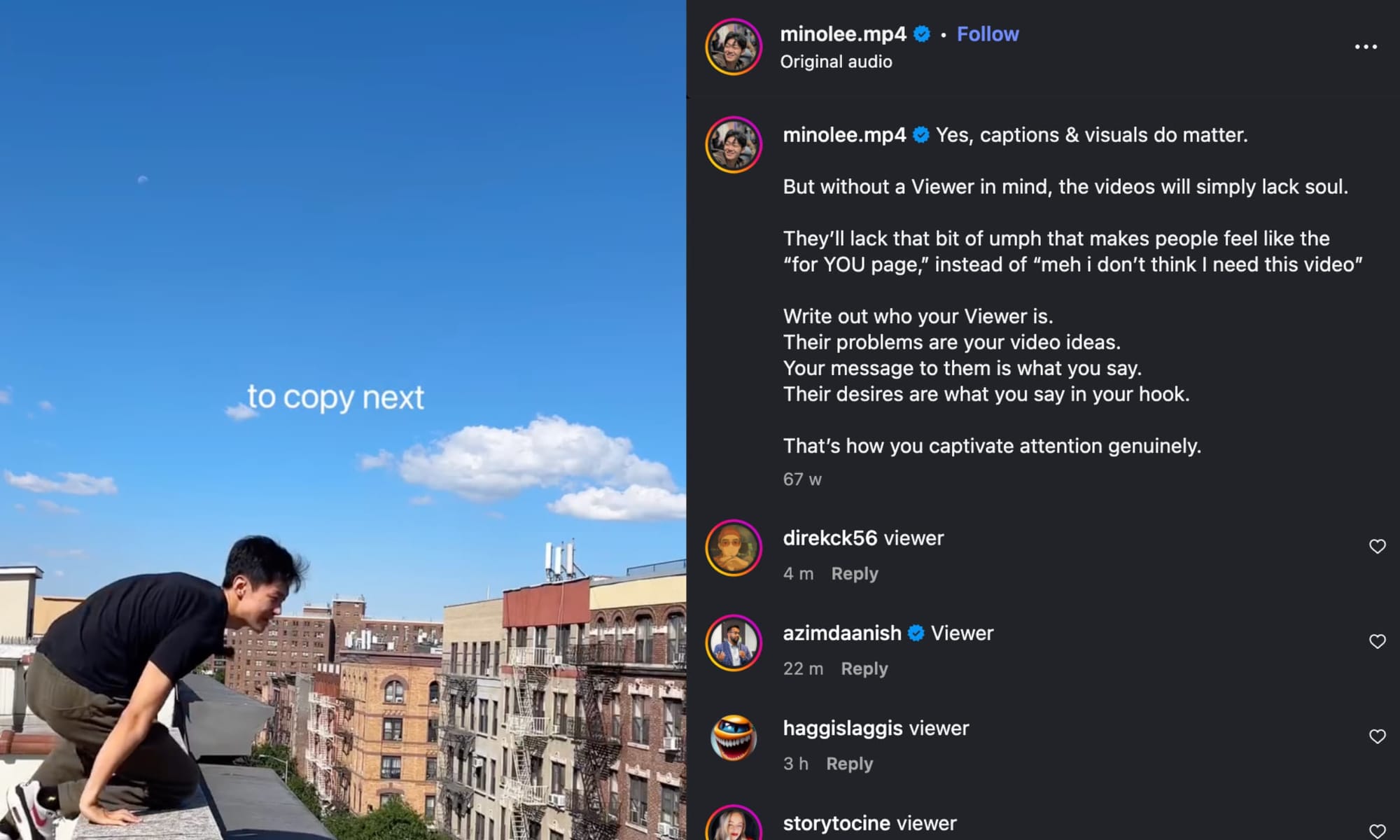
An Instagram Reel teaching people something valuable about creating content – applicable tips, engaging format, personal advice from somebody with a huge audience.
Remember: if your content answers their questions, they’ll start to trust you and might click through to see what else you offer - i.e, making it to the next stage.
Stage 2: MoFu
Now your target customer knows they want a solution.
This is the middle of the funnel — your audience already knows they want a solution, but they’re still weighing their options.
They’ve gone past the random Googling stage and are now asking, “Which side hustle is right for me?”
This is where you step in with deeper content: breakdowns of different hustles, comparisons of popular tools, or guides that explain what makes one platform better than another.
"You just need to figure out how to make a better piece of content than your top 3 competitors, and make sure it's new and novel information that they haven't covered already."
— Brett Malinowski, Head of Marketing at Whop
This type of content helps them evaluate their choices and positions you as the expert they can trust.
You can start to bring your product into the conversation now, too:
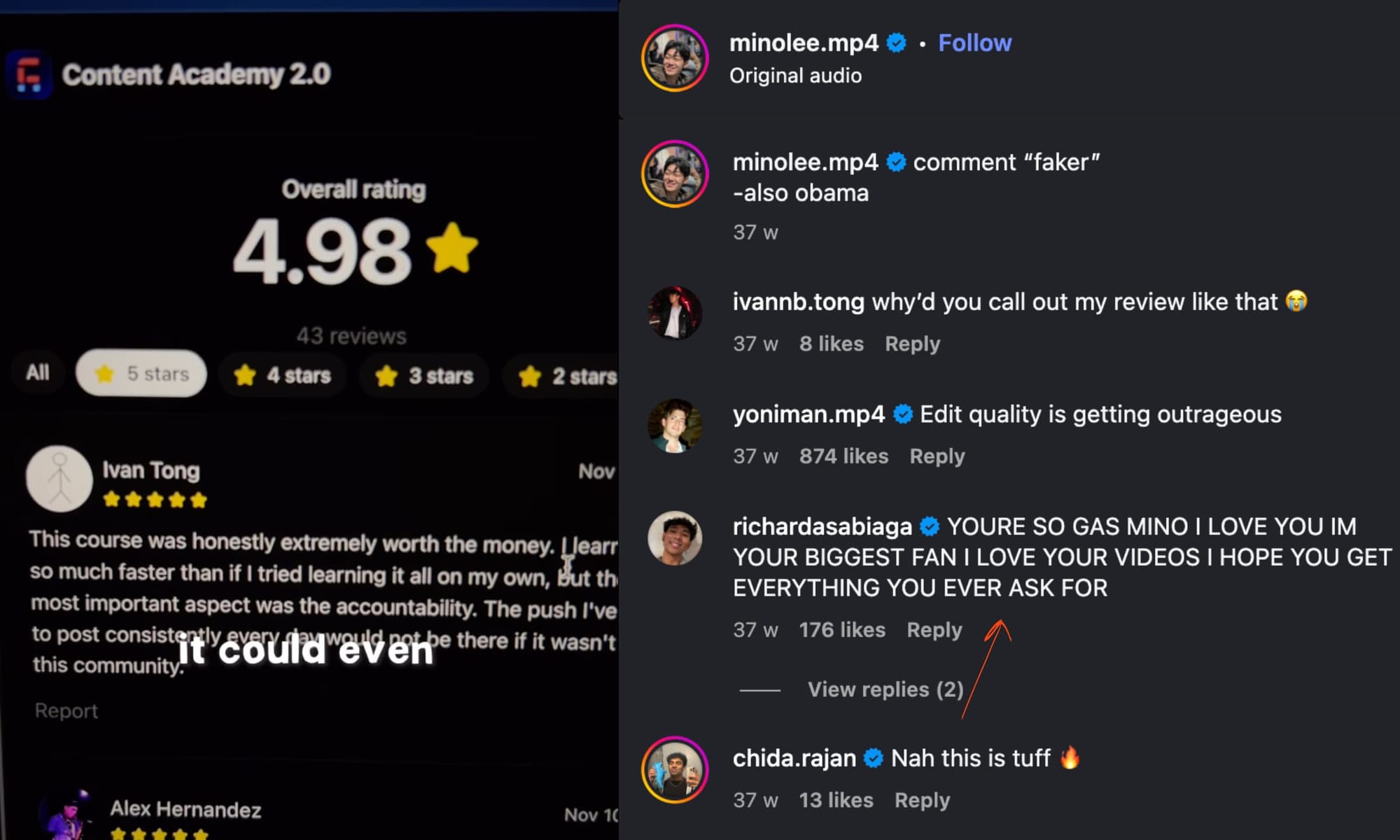
In one Reel about how to make $100k with an online business, he slips in screenshots of his course, flashes 5-star reviews and a near-perfect rating, and even uses an automated DM strategy so anyone who comments “faker” gets a direct link to his offer. It’s smart, because it blends education with proof.
Share customer stories and testimonials, show off the features of your offer (for the reselling example, you could explain why reselling is the #1 side hustle among Gen A and Gen Z), or teach why it’s the easiest hustle to start with limited capital.
The goal is to give them all the info they need so when they’re ready to buy, your product is the obvious choice.
Stage 3: BoFu
This is the moment you’ve been working for; you've nurtured your lead until they're ready to become a customer.
They’ve researched, compared, and landed on you as the obvious solution – nice one. Now, your job is to make the buying process effortless.
When they hit your whop, for example, it needs to feel legit: clear product descriptions, strong offer headline, engaging visuals, transparent pricing, and a simple checkout flow.
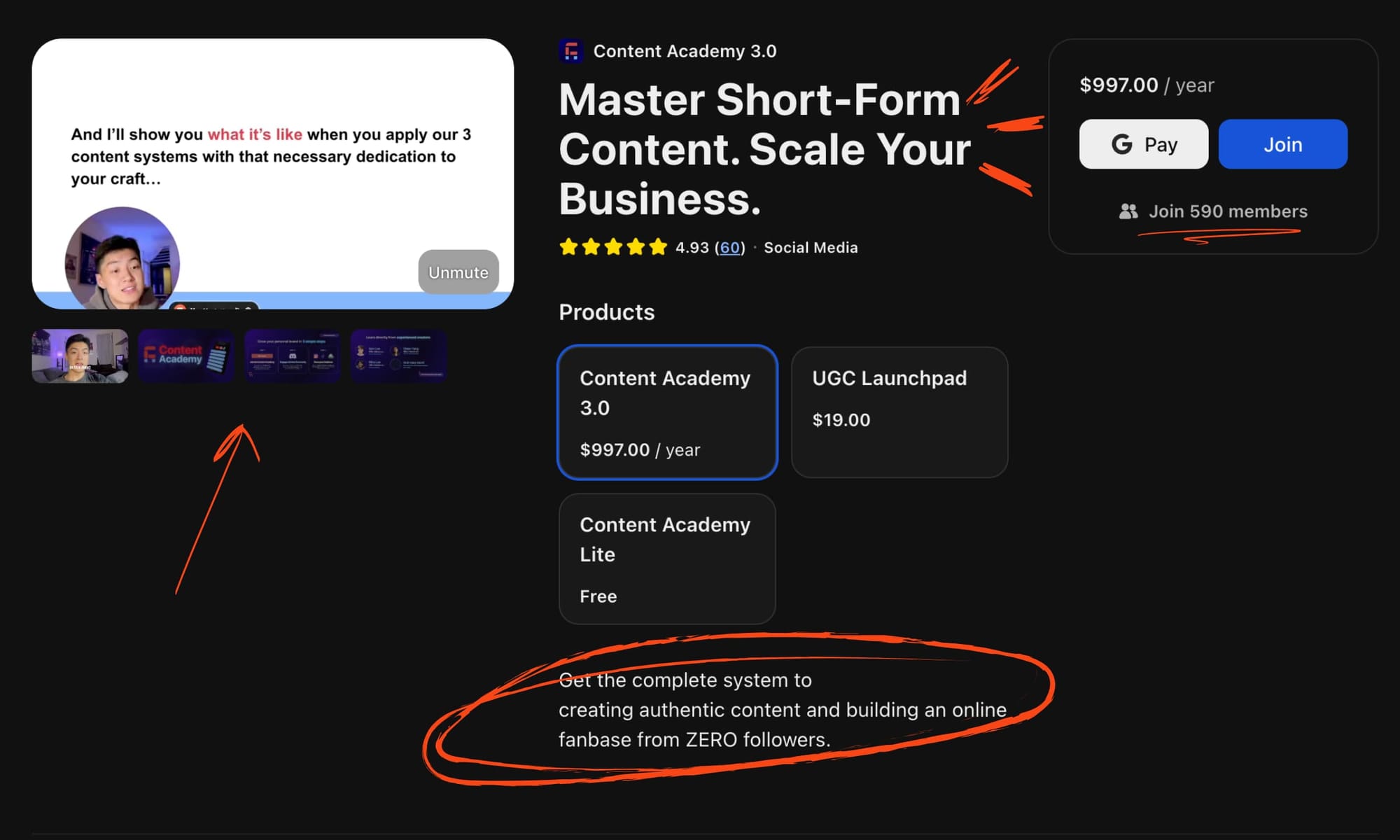
Again, Mino nailed this.
I've highlighted everything that makes his landing page convert: the headline is direct, clear (and has a value proposition), he's included informative videos and graphics, you can see his reviews and member count, and the description is compelling without being off-putting.
Honestly? A+.
If your storefront page feels sketchy (or your own site takes forever to load), they’ll second-guess their decision (and probably bounce elsewhere).
Our engineers have worked to make this part easy. Your Whop storefront is already designed to look professional and trustworthy without you needing to spend time (or cash) on design.
That way, you can focus on what you actually sell, not stressing about whether your checkout page scares people off.
Why every business needs a marketing funnel
A marketing funnel is one of the best ways to make sure you’re not leaving potential customers in the dark.
I mean, think about how you buy. You’re looking for something (maybe a community to join, a course, or even a SaaS tool), but the website doesn’t give you enough info. It asks you to invest without actually saying why you should part with your cash.
That’s when you close the tab, abandon your cart, or stop searching altogether.
When you have a proper funnel in place, you’re filling in those gaps with content, answers, and resources that people need at each stage.
At the top, you’re educating. In the middle, you’re guiding comparisons. At the bottom, you’re making the buying process as smooth and stress-free as possible.
Other benefits of marketing funnels: Going beyond sales
The thing about building a funnel is that the benefits don’t end at conversions. The process forces you to actually understand your customers on a deeper level.
When you build a funnel, you’re breaking down every step of their journey and asking: What do they need here? What’s missing? What would make them bounce?
That process gives you insights you can use everywhere, from how you write product descriptions to how you create content to how you handle support.
A funnel also gives you measurable checkpoints.
Instead of staring at one big “sales” number, you can see where people are dropping off: discovery, consideration, checkout, or retention.
And long-term? Funnels let you move from one-off transactions to relationships. You’re not just chasing the first sale, you’re setting up systems that turn customers into repeat buyers and affiliates or advocates.
How to create a marketing funnel in 6 steps
To build a funnel that works, you’ll need a mix of research, the right tools, and content that speaks to your audience at every stage.
The good news? Funnels are flexible. It doesn’t matter if you’re running a brand with a marketing team or you’re a solopreneur doing everything yourself – the same framework applies.
Here’s how to build one in 6 steps:
1. Define your target audience
Before you can attract people into your funnel, you need to know exactly who they are.
“Target audience” isn’t a buzzword, guys; it’s about being clear on who you want to buy your product.
New example, say you’re selling a paid community on Whop that teaches beginners how to use AI to code.
Your obvious audience is aspiring or new developers. But with a little digging, you might discover another demographic: people in their 30s and 40s who need tech skills to build remote businesses.
See where I’m going with this?
Pro tip: The more audience segments you uncover, the more entry points you can create into your funnel, and the more people you can convert.
2. Figure out what problems your audience is trying to solve
Your funnel should start with empathy.
What keeps your audience up at night? What are they Googling? If you run a coding course, your audience might be asking:
- “How do I make extra money online?”
- “How do I make money with coding in 2025?”
- “Which AI tools make coding easier?”
Your job is to answer those questions with content that’s actually useful, not just a thinly veiled ad.
Pro tip: This positions you as a trusted expert, which makes people more likely to remember you when it’s time to buy. It also helps build up your personal brand as an expert/guru/authority.
3. Start creating ToFu content covering this problem space
Top-of-funnel content is all about reach.
This is where you give away free, high-value content that builds trust and gets attention.
Good ToFu content:
- Explains big-picture problems and trends in your space.
- Offers practical tips without pushing your product.
- Is easy to share (think TikToks, threads, blog posts, guides, free tools).
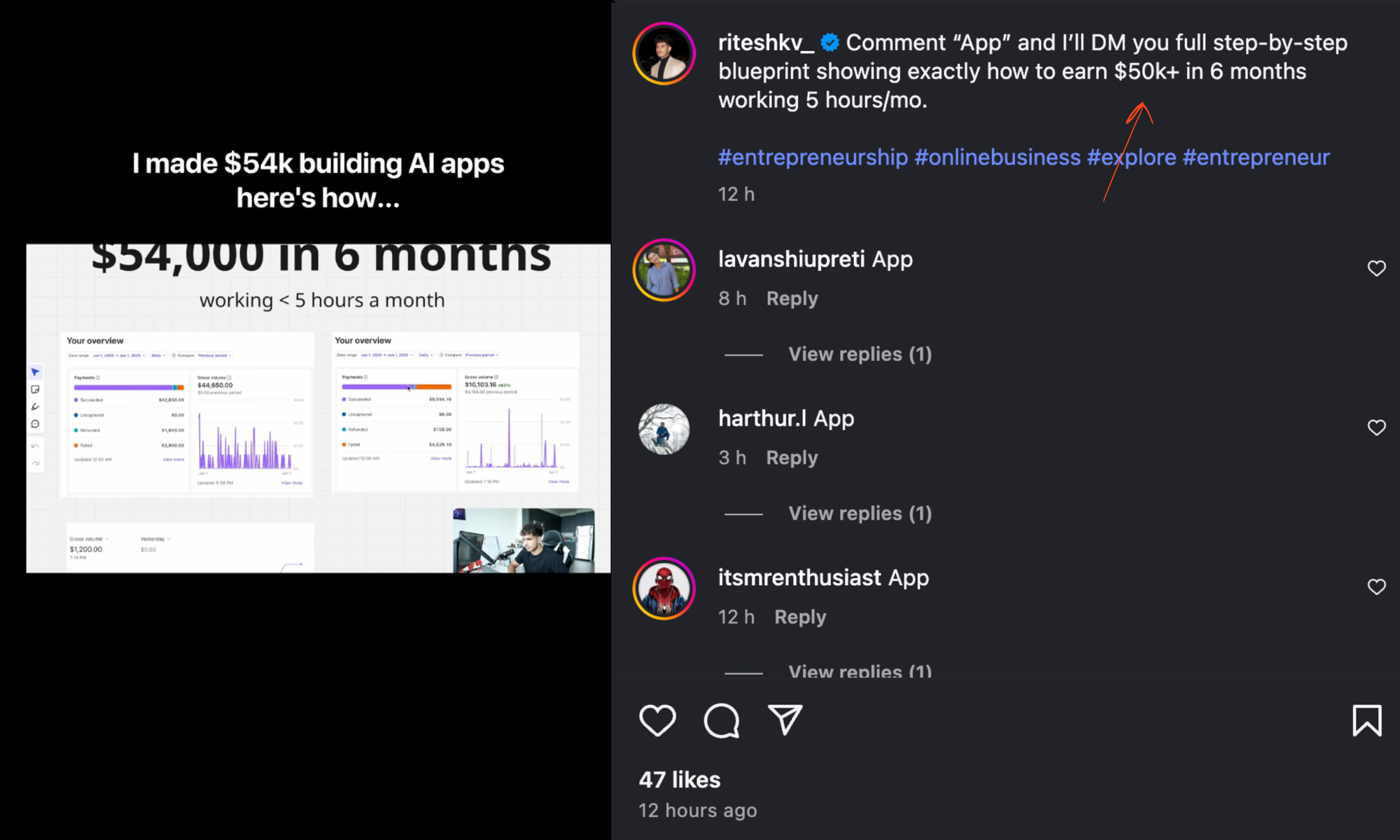
Example: Ritesh teaches others to create bots without coding skills.
He creates ToFu content that provides value, captures his target demographic with SEO, and leads them into his funnel with a personalised, free offer:
Pro tip: The goal here isn’t to sell: it’s to educate, attract, and leave people wanting more. Make blog posts, infographics, webinars, podcasts, ebooks, social media clips, and basically anything else you can think of.
4. Create content showing how your product solves the problem (MoFu)
You've captured some leads, so now to cater to people at the middle stage of your funnel, it’s time to lean into your product (without being pushy, please).
Middle funnel content should educate people about your solution and why it’s the best fit.
Great MoFu content:
- Guides decisions: “Learning to code with AI vs. starting from scratch: what’s better?”
- Shares success stories: From real customers and their wins following purchase.
- Offers product demos: Show off your product in action – short-form video is great for this.
Pro tip: According to the latest stats, video MoFu content can increase conversion rates by 66%. Worth noting.
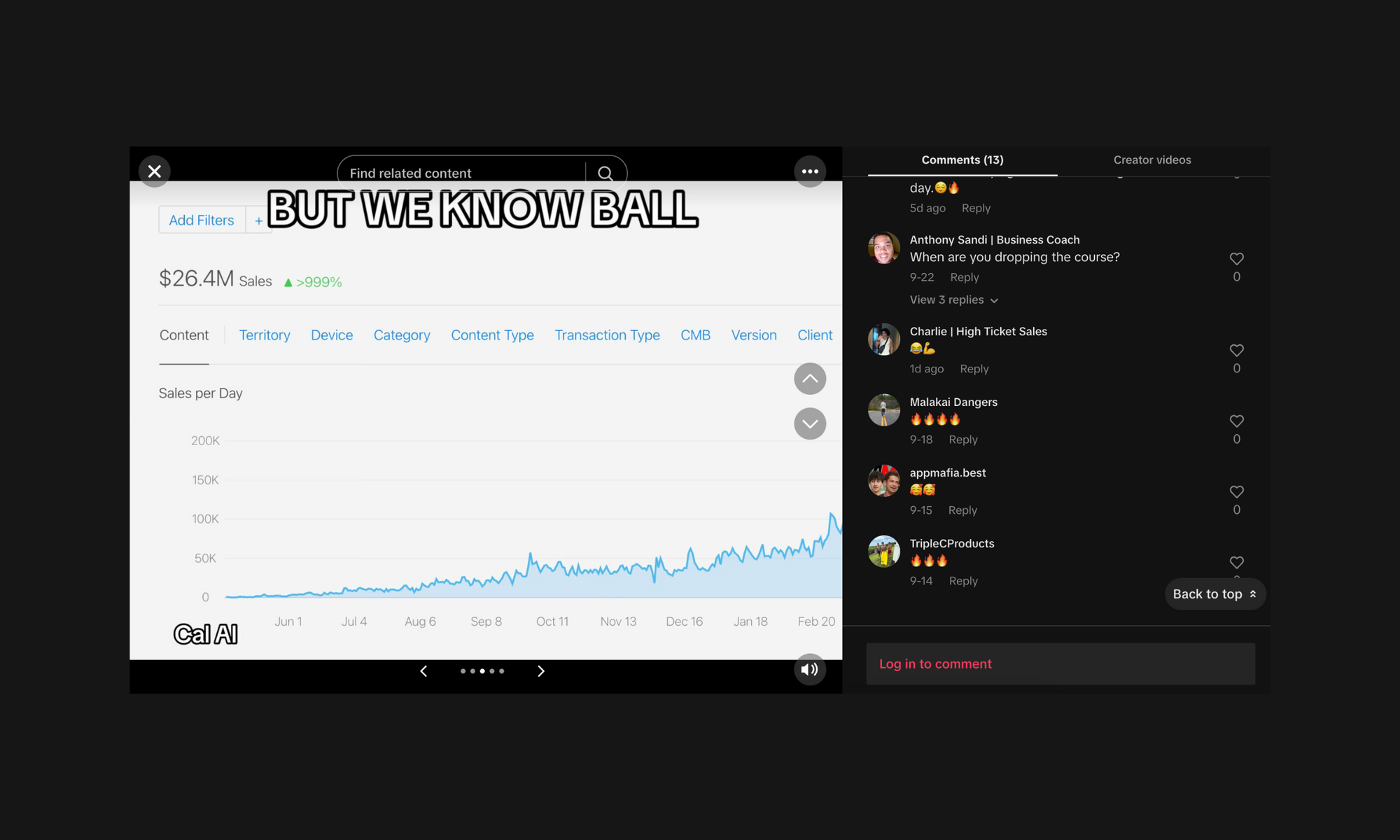
Example: App Mafia offers one of the biggest courses on Whop, with over 27k members.
Their value proposition? Clear: 'Go from $0 to $100k months with mobile apps'.
Their MoFu content? TikTok videos with bold, confident, backed-up statements:
5. Create a great landing page for interested buyers (BoFu)
By the time people hit the bottom of the funnel, they’re ready to buy – but only if the experience feels seamless.
A sick landing page should:
- Be clean and easy to navigate (no clutter or 10 different CTAs).
- Include a strong headline and value proposition.
- Use visuals, testimonials, and social proof to build trust.
- Make the CTA impossible to miss (“Join Now,” “Start Free Trial,” etc.)
- Have a secure payment system (like Whop Payments).
- Feature an FAQ section with the most common pushbacks answered.
All of these features come pre-built into your whop to make it easy to design a highly-converting landing page, even if you're new to selling online.
Pro tip: Adding customer testimonials to your landing page can increase conversions by 34%. That’s why there's a dedicated space for reviews on your Whop storefront.
Here's a great example of a landing page/BoFu from Whop seller Alexis, founder of Her Last Call Academy, a remote-closing and high-ticket sales community:
Beautiful infographics. Speaks directly to pain points. Great reviews. Tick, tick, tick.
6. Encourage repeat sales and recommendations
This is the stage to add the final push: not by spamming ads, but by making the choice feel obvious and low-risk.
Instead of re-explaining features, focus on building on persuasion:
- Lead magnets or free trials: Let people test-drive what you offer.
- Exclusive perks: Bundles, discounts, or loyalty points.
- Smart urgency: Limited spots, deadlines, or bonuses that give people a reason to act now.
The goal here isn’t to overload your customer with more info – it’s to clear their hesitation and make this purchase the easiest move they can make.
Create promo codes, discounts, bundles and more buyer incentives with Whop. Watch the video above to learn how.
Next steps: Funnel optimization
Once your funnel is in place, your content is going out, and sales are coming in?
It’s time to focus on optimisation. I mean, it’s rare to get everything perfect at first go, so refining your funnel is key to growth.
Here’s how to take it further:
A/B testing:
- Test ToFu content formats (TikTok clips vs. blog posts). Which gets more engagement? Which drives more traffic to your storefront?
- Test MoFu email subject lines, CTAs, or comparison layouts.
- Test BoFu landing pages with different headlines, visuals, and pricing options.
Personalized content:
- Use email segmentation to send people content that matches their exact interests.
- Use visitor behavior (pages viewed, items clicked, cart activity) to show products they most likely want. Use Whop Analytics, AI plugins, or automated email/product suggestions.
AI-powered automation:
- You can employ AI chatbots that answer product questions in real time.
- Use predictive analytics that spot when someone’s close to buying.
- Automated retargeting of ads to show people exactly what they were looking at.
Check out the Whop App Store for integrations to boost your funnel, like AI-powered chat, video testimonial embeds, lead magnet forms, and more.
The non-linear funnel: Planning for every stage of the customer journey
Everything has a catch — this included. Most customers don’t move neatly from ToFu → MoFu → BoFu.
I know, annoying. In reality, they bounce around, come in at random points, and use different platforms along the way.
Here’s how to plan for that reality:
1. Create entry points at every stage:
- Top-funnel: Blog posts, TikToks, podcasts.
- Mid-funnel: Case studies, product demos, comparison articles.
- Bottom-funnel: Pricing pages, free trials, testimonials.
2. Connect your content
Every piece of content should link to the next logical step. A comparison guide should link to your product page and your beginner-friendly blog posts.
3. Cross-channel consistency
People might meet you on Instagram, read your blog, and then Google your brand later.
Keep your messaging, design, and offers consistent across every channel so they feel connected at every touchpoint.
In reality, no funnel is perfectly linear, and customers enter at different stages.
So, your best approach is to plan for every stage and capture leads wherever they are in their journey.
Create the ultimate marketing funnel with Whop
Your funnel only works if you have the right tools, storefront, and platform to back it up – and that’s where Whop comes in.
Use your whop to show off your products with a strong landing page, engage and convert visitors, get discovered, handle payments and fulfillment, and scale with your funnel strategy.
Wanna boost conversions even further? Use Content Rewards and have clippers share content related to your products, or have affiliates spread your offer for a commission (paid by us).
Memberships, digital downloads, SaaS, mentorship, courses – whatever you’re selling online, Whop offers a seamless platform to implement and optimize your marketing funnel.
Start building your marketing funnel with Whop and turn strategies into sales.
FAQs
What is a marketing funnel?
The marketing funnel is a model or a plan that charts a customer’s journey with your company. It starts with them searching about a topic related to your brand and reading informational content you’ve posted, then you slowly introduce them to your brand and show the customer what your products can do for them.
The more interested they get, the more in-depth the content gets. Then they’ll click on a link to your site, get drawn in by an exclusive offer, and buy your product. This is pretty much the "ideal" situation when it comes to customer acquisition, and a marketing funnel helps you maximize the number of times it happens.
What kind of businesses use marketing funnels?
Pretty much every business! It doesn’t matter if you’re big or small or whether you sell physical or digital products; everyone can benefit from a marketing funnel. After all, it’s just a template—you can fill it with all kinds of ideas that are relevant to your company and your product.
Is a marketing funnel something you buy?
It can be. You might see marketing funnels being sold as products, but what you’re really getting is more like a marketing funnel kit.
These products usually come with some premade assets and visuals for lead magnets and maybe even a content schedule and social media templates. But it’s still up to you to plan out your funnel and fill these templates with content that’s relevant to your product.