Fulfillment fast, payments faster: ecomflow runs on Whop
Key takeaways
- Scaling fulfillment globally means scaling finance too — invoicing and reconciliation break before shipping does.
- Passing custom metadata through Whop's API auto-matches every payment to its invoice, eliminating manual reconciliation.
- Offering local payment methods like iDEAL speeds client payments while keeping your bank details private.
Ask any DTC brand about fulfillment and you'll hear the same complaints: slow shipping, customs delays, and having to constantly chase up their inventory.
Why? Because while tech has advanced, fulfillment largely hasn't. Infios' Supply Chain Execution Readiness Report found nearly half of supply chain execs lack automation for daily tasks.
ecomflow was built to solve this. Founded in 2023 by operators with a decade building enterprise-scale brands in China, ecomflow is a tech-enabled fulfillment partner working with 300+ brands across 100+ markets, handling warehousing to last-mile delivery.
A business moving this fast can't have payments lag behind, which is why ecomflow runs on Whop.
The ecomflow model: from factory floor to doorstep
Traditionally, going the China route meant tying up cash in inventory for months before a single unit sold.
ecomflow changes that. They manufacture, warehouse, and ship for DTC brands, end to end, all from China. From their hubs, ecomflow ships worldwide, with fulfillment in 3-10 days.
Ship to that many countries, and something's always going to throw you off. Nolan Rook, ecomflow CTO, points to tariffs as one example: US and EU changes have shifted pricing across markets more than once. Still, demand for the air freight DTC model ecomflow runs on has only grown since 2020.
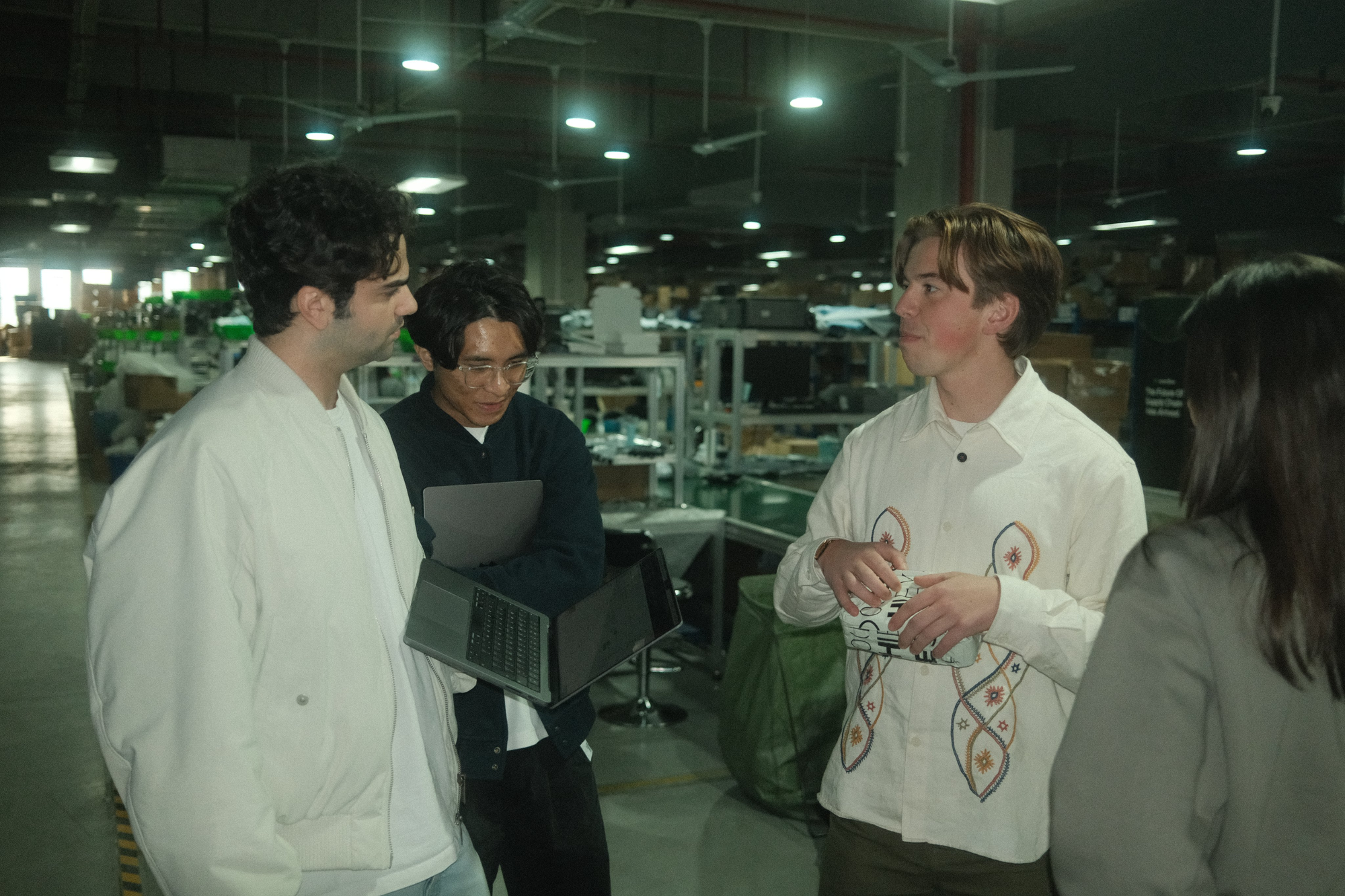
Three years in, the biggest change hasn't been where they ship, but how much of the business runs itself. Nolan explains: "We really switched from a sheets-based, manual-operations business to one where our brands can have their operations run almost fully automatically."
The results speak for themselves: ecomflow has fulfilled over 5 million orders for 300 brands.
Payments at global scale
Fulfillment wasn't the only thing ecomflow had to solve. Getting paid for it, across dozens of currencies and hundreds of clients, was another issue entirely.
"A lot of cash flow is always loaded for businesses," says Nolan. "It's really hard as a fulfillment business to have your cash flow on point."
It's a fair point. Behind every one of ecomflow's shipments is a brand that needs to be invoiced correctly – meaning in the right currency and on schedule.
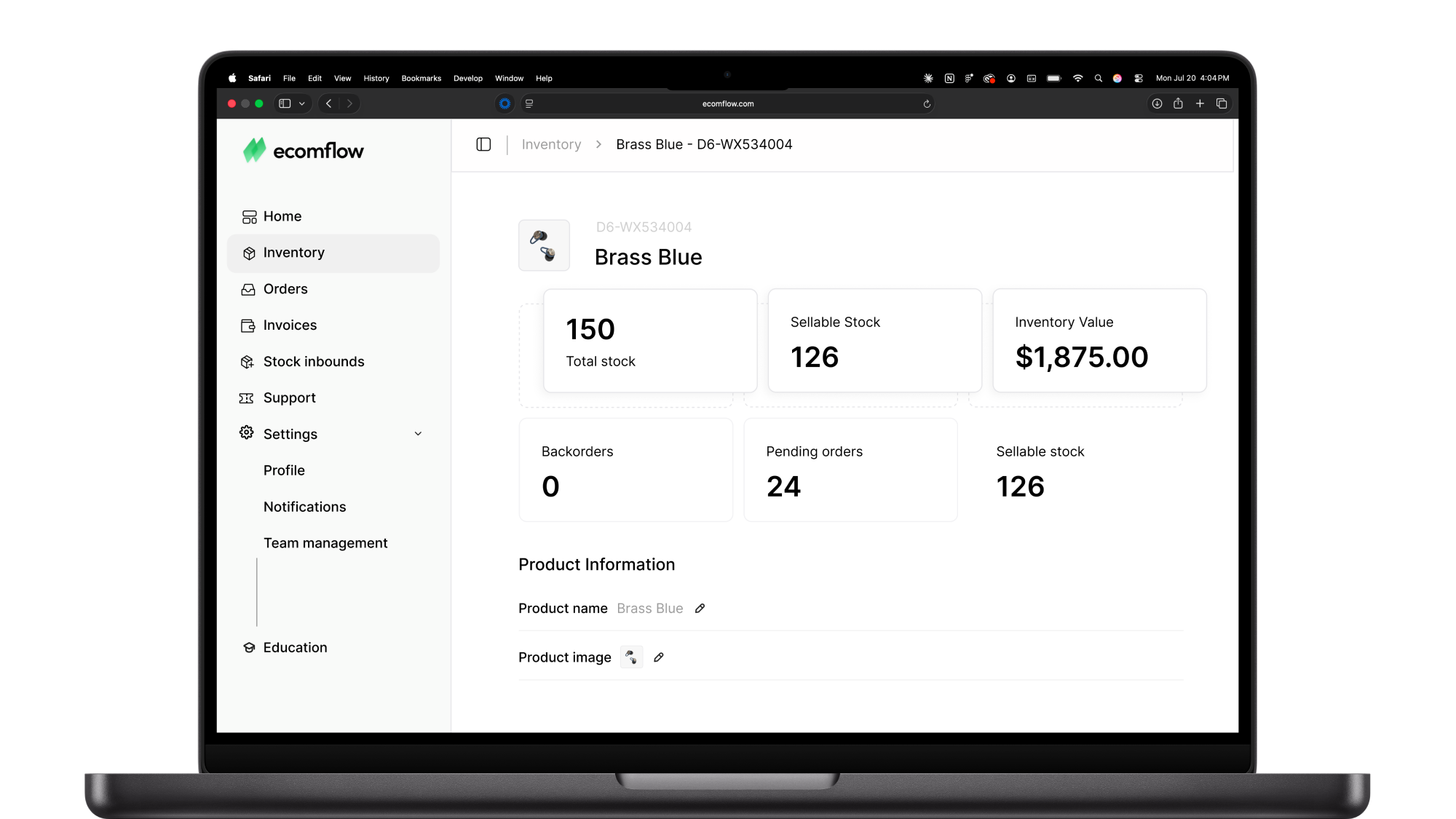
But getting that right is much harder than it sounds. A 3PL processing orders across dozens of countries is also running a finance operation: reconciling local payment methods and chasing down mismatched invoices.
For ecomflow, this used to create a huge mess: "We and our clients used different payment providers, and it was running fine," Nolan says. "But businesses would sometimes transfer random amounts. A client could have $10K outstanding and randomly transfer $5K, but that $10K outstanding was actually made up of multiple invoices."
Multiply that across hundreds of brands, and reconciliation becomes a full-time job on its own.
So ecomflow built the fix straight into their own system, using Whop's API.
Automated invoicing with Whop
Every ecomflow invoice starts the same. "The order ships, then we have a certain interval, and within that interval we bill all orders that have been shipped."
From there, the process is built entirely around ecomflow's own data.
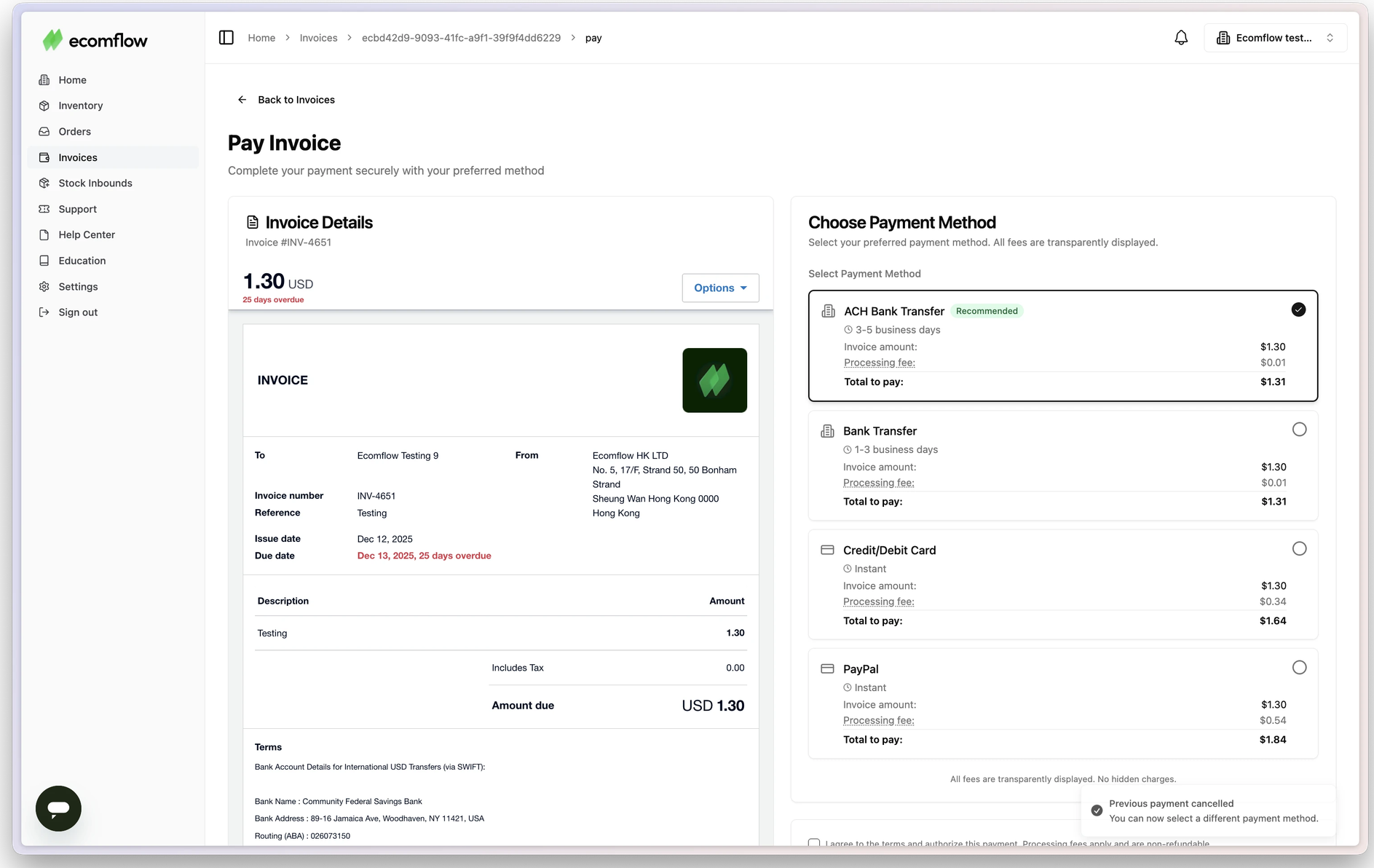
"We pass custom metadata: the invoice ID from our invoicing system, and the client name. So we automatically know which client is trying to make this payment."
That metadata rides along with Whop's SDK to initiate the transfer, which hands off to a Whop-hosted portal where the client enters their payment details.
Check out the developer docs to see what's possible, from automated invoicing to embedded payments and beyond.
With invoicing automated, ecomflow can now trust that payments reconcile properly too.
"We can pass anything to the transfer, any parameter, any information we need to automatically reconcile from our end. That's the biggest unlock."
That old problem, a random $5K payment against a $10K balance, just doesn't happen anymore. Payments and invoices match automatically.
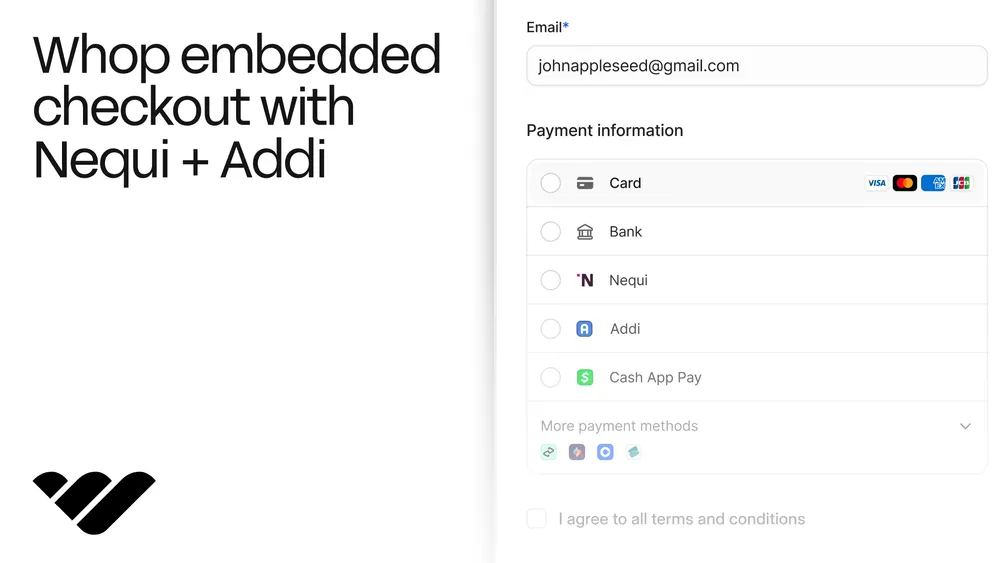
It's also opened up more choice in how clients pay. Brands based in the Netherlands can pay with iDEAL, the payment method most Dutch customers already use day to day, and clients elsewhere get the same benefit: paying with whatever's local and familiar to them.
"They have more methods to pay, which is a great benefit for them," Nolan says. "And for us, the benefit is we can just pass the payment information, so we don't need to give them our bank account, because it all just passes through."
From factory floor to fully automated
ecomflow scaled its fulfillment. Then it scaled how it got paid for it: invoicing, reconciliation, and local payment methods, all running through one system instead of three.
Ready to build something similar? From accepting payments to running ads and issuing cards, Whop gives businesses everything they need to launch, run and grow.