Recurly is a subscription management platform with a total of 55 million+ subscribers. It helps businesses like yours in getting, managing, and keeping subscribers.
Key takeaways
- Recurly is best suited for established businesses with sizeable subscriber bases, not early-stage entrepreneurs.
- The platform's churn management tools can significantly reduce subscriber loss, as demonstrated by TeacherVision's sub-1% involuntary churn rate.
- After the three-month free trial, costs escalate quickly with a $249 monthly fee plus 0.9% TPV fee once revenue exceeds $40k.
Recurly is a subscription management platform that businesses use to handle recurring payments, payment processing, subscriber management, and more. It hosts over 67 million subscribers and processes over $12 billion annually.
In this article, we’re taking a deep dive into Recurly, one of the best subscription management platforms available right now. But does it really live up to the hype, or are you better off using something else?
We’ll run through how Recurly works, cover its core features and pricing, and introduce you to some alternatives.
Recurly review: Is this subscription management platform worth it?
Recurly can be worth it if your business is handling a subscriber base and needs features like multi-currency billing, analytics, and customer management systems.
Boasting a total of 67 million subscribers and over $12bn in annual payments, Recurly has quickly established itself as a game-changing subscription management platform. In 2025, the platform was named "Best Subscription Management Platform" by SubSummit and expanded its capabilities through strategic acquisitions.
Its roster of multi-sector clients emphasizes its status – Paramount+, AccuWeather, LiveChat, etc.
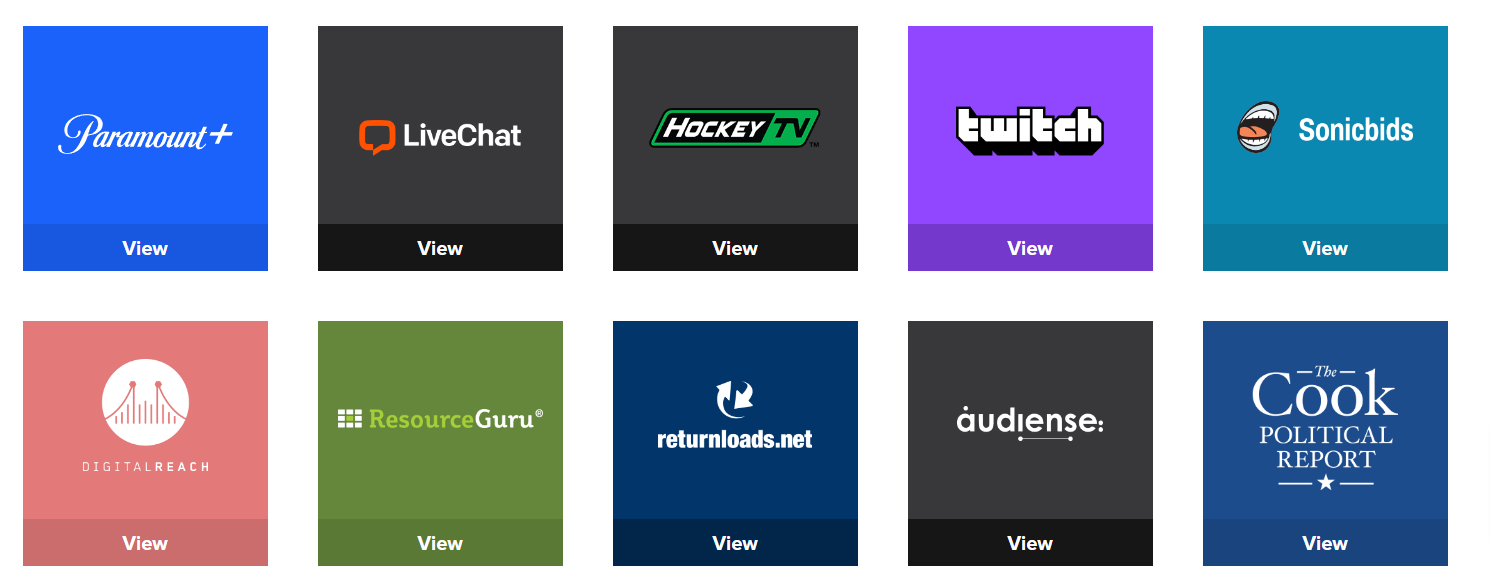
We’re in the world of global consumer brands and household names. You might even have a subscription or two of your own handled by Recurly.
Let's take a look at some of the main features of Recurly.
Recurly: Features
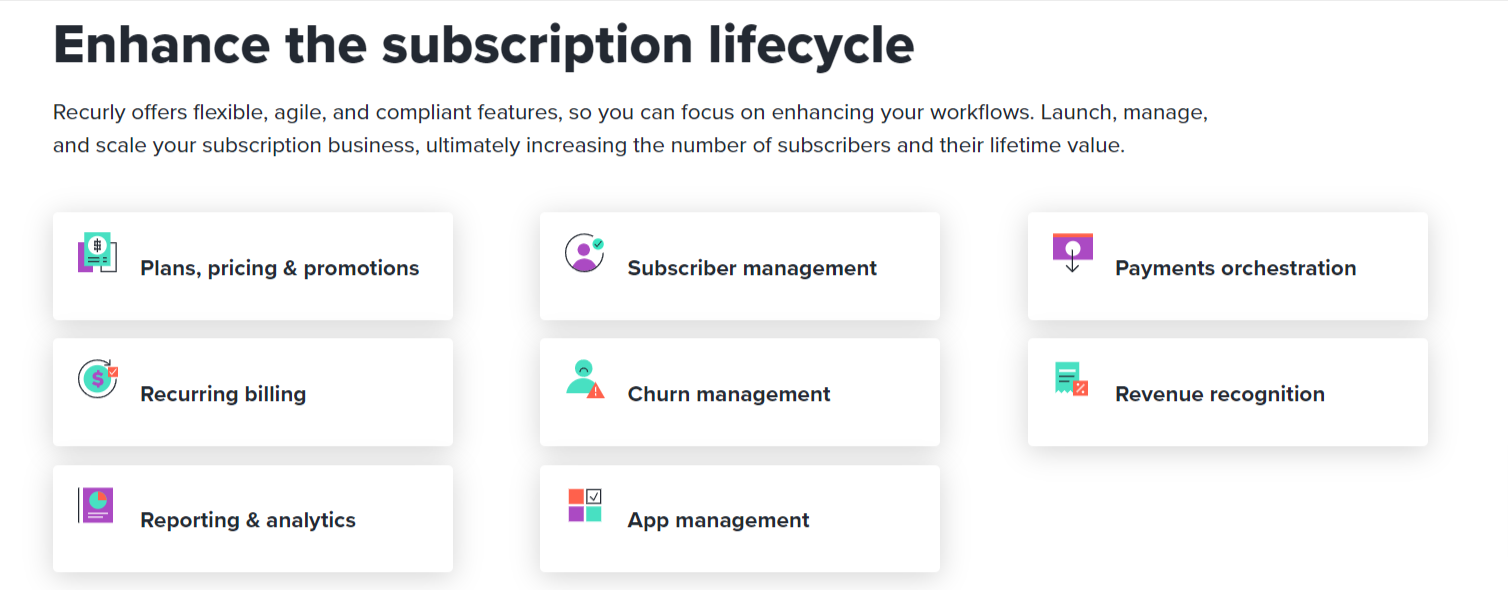
Recurly offers a suite of tools and features designed to help you attract and retain subscribers. Using the platform, you can customize your offering to subscribers.
The main features are:
Pricing, plans and promotions
This allows you to define your customer plans, set the pricing, and tailor your promotions. You can introduce a free trial, add tiered subscription plans, and set the parameters for your promotions.
Further functionality allows you to add value, such as by offering additional paid-for products and services to ramp up your revenue.
Subscriber management
This set of features covers onboarding new subscribers and giving your customers control over their subscription, such as the ability to change plans.
In addition, Recurly lets you tailor emails to customers, so you can – for example – communicate a new offer. Here, you can also see subscribers’ billing details and (if relevant) shipping info.
Payment orchestration
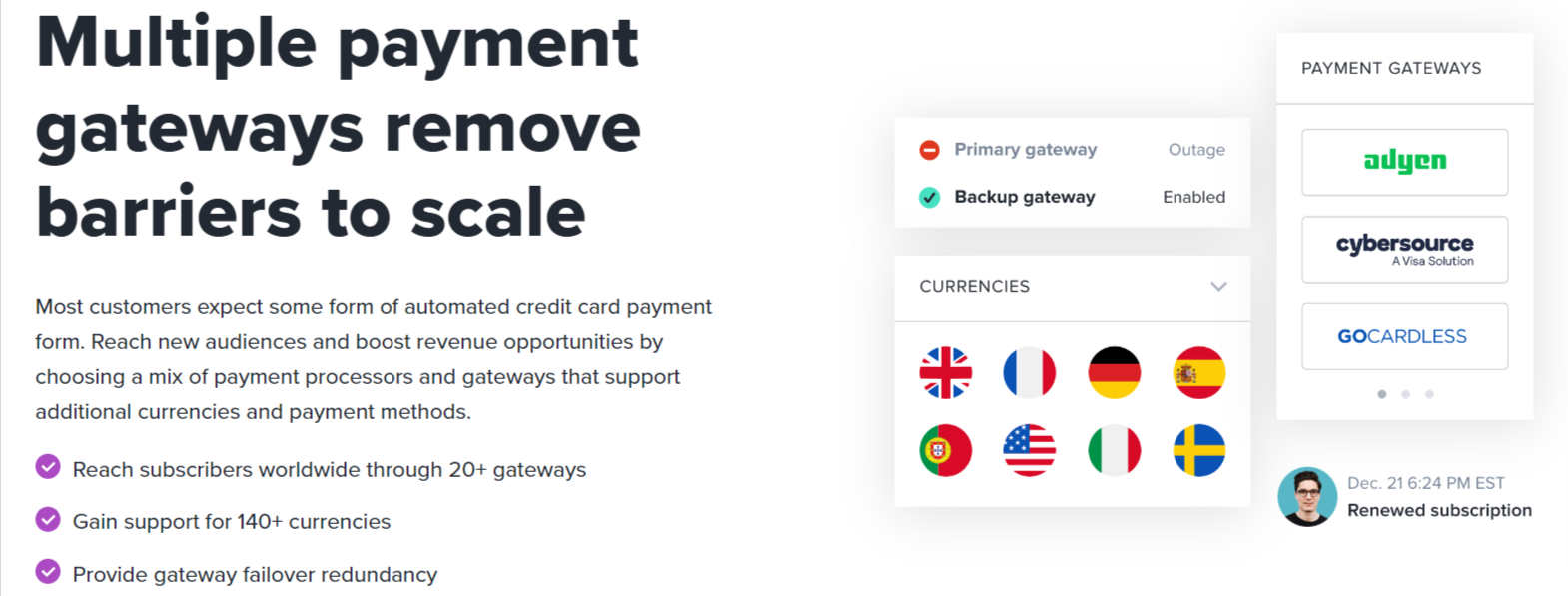
One of the most important functions is enabling subscriber payments. In this section of the Recurly dashboard, you can set up any or all of the payment gateways integrated with Recurly.
The platform offers multiple payment methods and processing options, including:
- Adyen
- Authorize.net
- Amazon Pay
- CardConnect
- GoCardless
- PayPal (including PayPal Business and credit cards)
- Stripe
- Worldpay
Set your preferred payment options to give your customers plenty of ways to give you money. Alternatively, you can limit the options you don’t want to offer or add country-specific payment types (such as BACS for UK customers and BECS for those in Australia).
Recurring billing
Some of the features in this area are more relevant to ecommerce customers who need to add shipping fees. If you need to send out customer invoices, you can set your preferences in this section.
It also offers a level of subscription flexibility. This includes – for example – giving people the option of an annual subscription which is billed quarterly.
Churn management
Recurly offers a range of tools designed to limit voluntary and involuntary churn. The measures to tackle voluntary churn includes such features as automated updating of payment details and enabling dunning campaigns.
[The term “dunning” comes from the 17th century but has been adapted to apply to email campaigns aimed at sending a reminder customers whose payments have not gone through.]
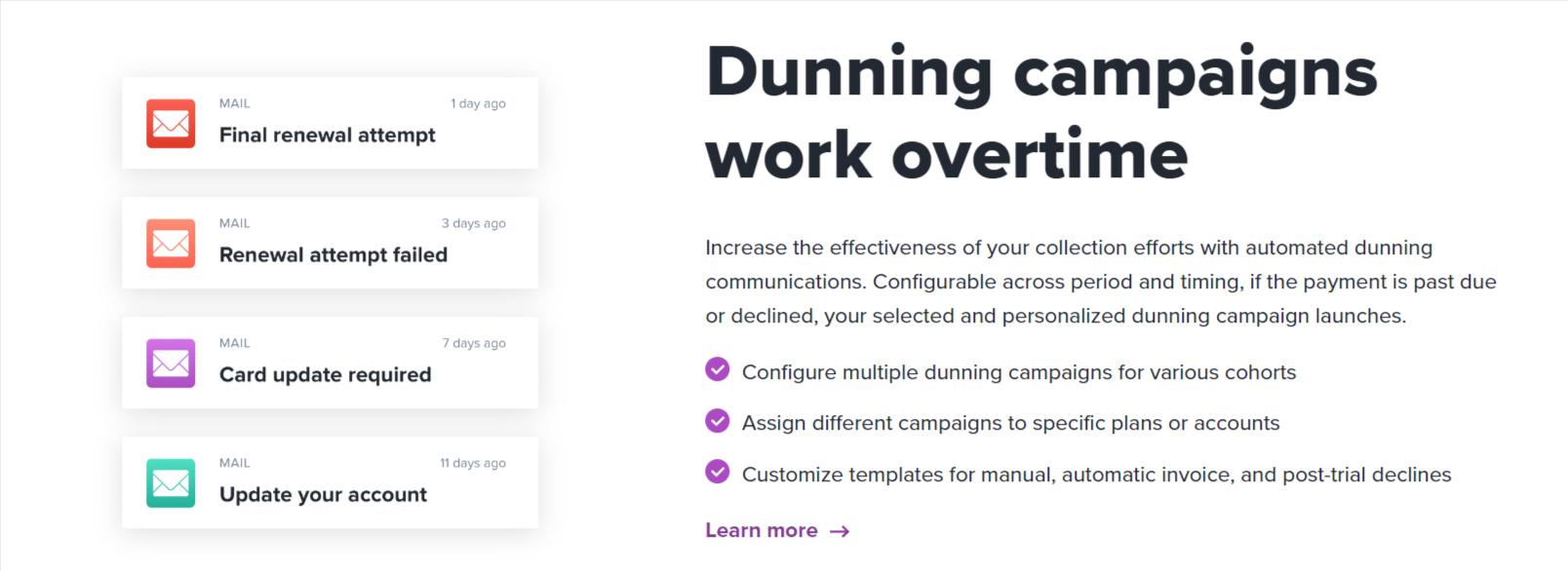
The tools to manage involuntary churn include offering options to pause subscriptions to give people a break from payments for a month or two.
Other options include enabling discounts and promos to entice people to stay. You can also give them the ability to downgrade their subscription to a lower tier.
What’s more, Recurly offers insights into the reasons why a customer has chosen to leave. This can help you to learn – for example, if your prices are too high or your content is not seen as value for money.
Hosted pages
With this feature, you can set options for customer checkout and payment. As well as giving your subscribers an easy and streamlined process, this gives you control over the look and branding of the pages.
You can also tailor the checkout to certain territories and regions, such as offering country-specific payment options.
Revenue recognition
This feature helps you as a business owner to comply with the applicable revenue reporting requirements under different countries’ tax and accounting rules.
The service is available as an add-on product to a Recurly plan – there’s more on this in the pricing section below.
Reporting and analytics
Another critical set of tools covers the data generated by your subscribers and subscription plans. The Recurly Analytics suite gives you a vast range of data and metrics to wade through.
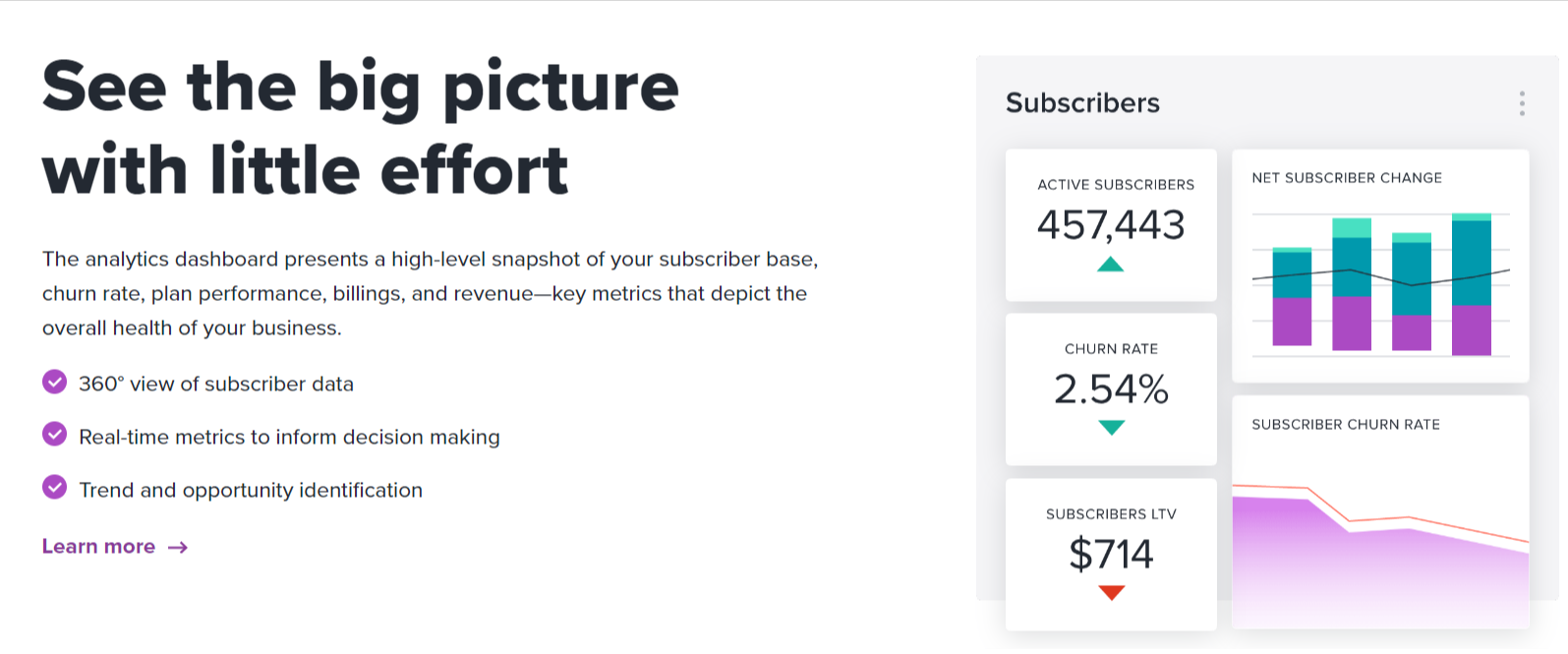
You can compare your performance against your competitors, manage MRR (monthly recurring revenue) calculations, and drill down into your subscriber and payments data.
In addition, you can compare different promotions and pricing structures. Recurly also gives you options over how you want to collect and receive all this data.
How do you manage subscribers using Recurly?
Once you’ve signed in, access to Recurly’s features is through the dashboard. From here, you can set your preferred options and create your subscriber plans.
Some of the features and options are limited for business owners on the lowest plan – there’s more on this in the pricing section below.
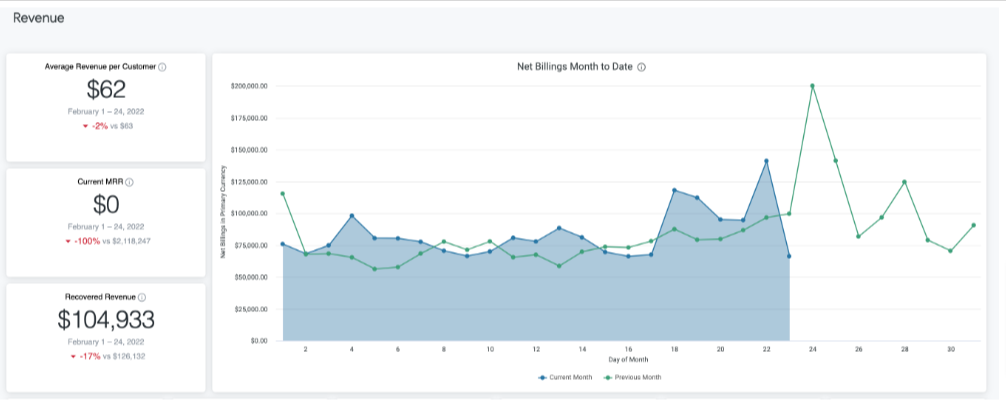
Here’s what the regular Recurly dashboard looks like:
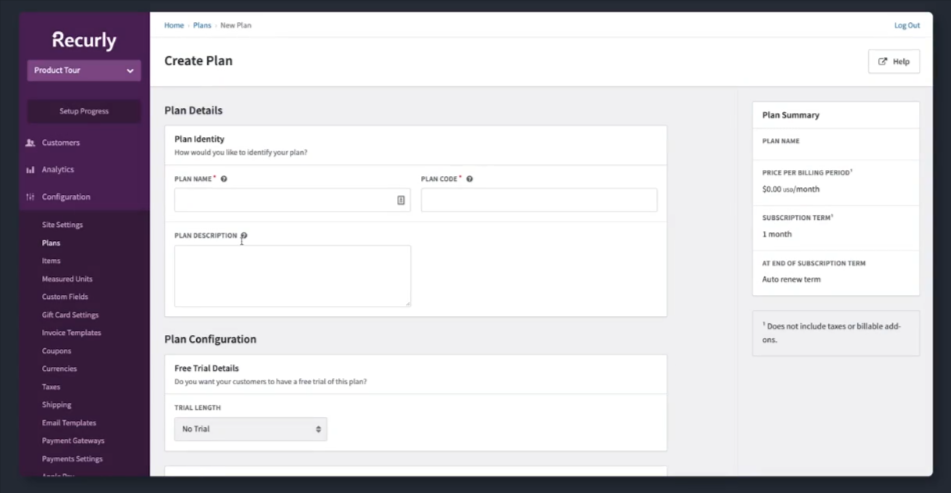
Recurly Analytics has its own separate dashboard:
How does Recurly work for an e-learning business?
One of the best ways to highlight how Recurly works is to see it in action.
So, here’s a look at how it’s used by TeacherVision, an online business that offers resources to teachers.
By the way, we’ve picked the e-learning space because with the sector expected to grow by a whopping 12% annually to the end of the decade, it’s a great option for building your online business.
Head to the TeacherVision website, and you’ll see a “sign up” button. Click on this and you’re given these options:
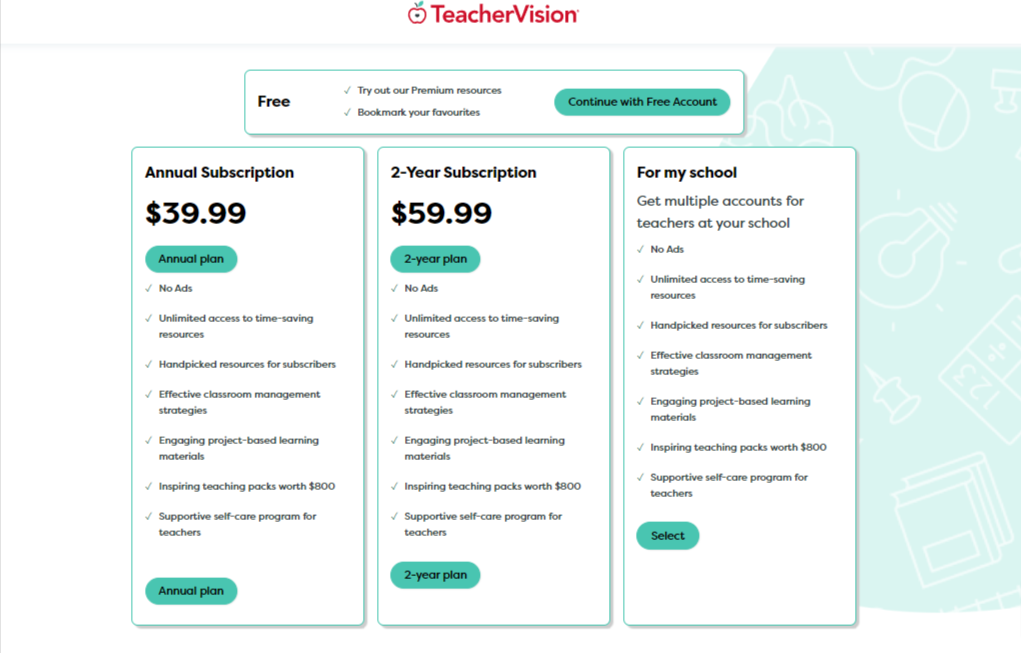
As you can see, the options include a free account, which gives users the chance to try out the premium content before committing to a paid subscription. The sign-up section also clearly lists the inclusions for each tier.
Once you pick one, you click through to the branded account creation and payment pages:
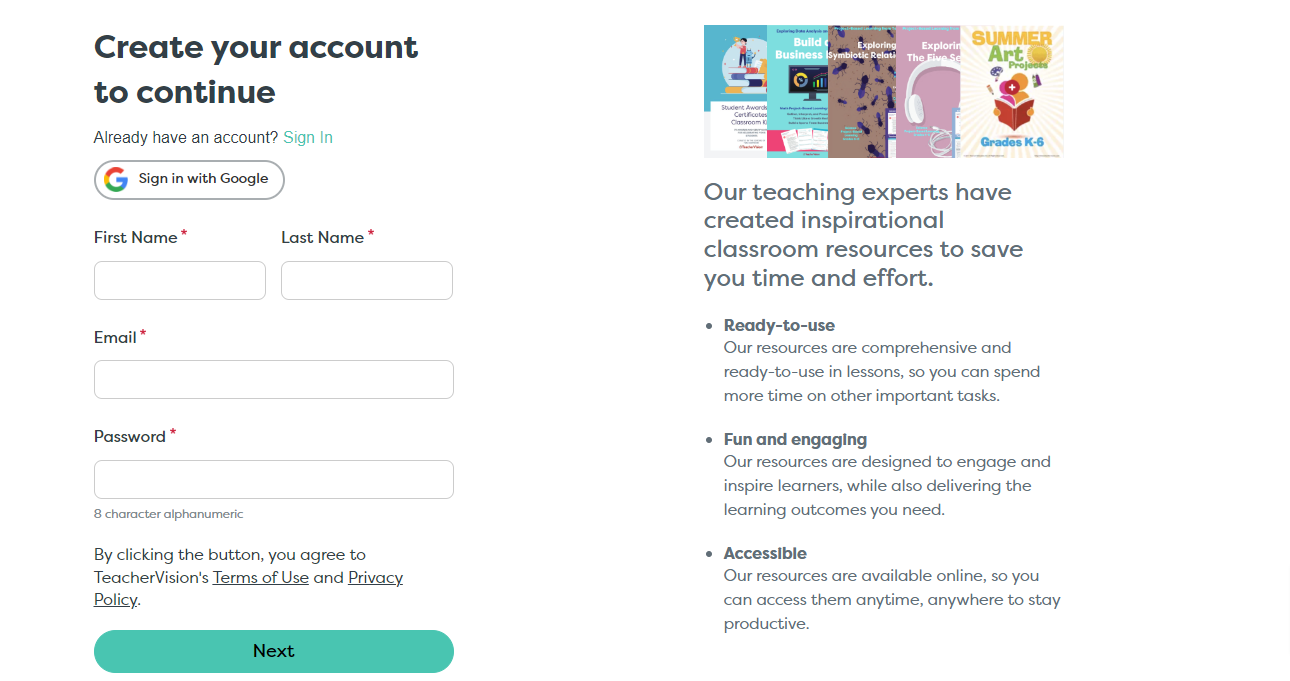
As a result of using Recurly, TeacherVision claims to have cut its involuntary churn rate to less than 1% - as a guide, an overall churn rate of anything less than 5% is good.
Courses are big business – get started on your e-learning journey for free today with Whop.
How much does Recurly cost? Recurly pricing
Recurly offers three plans. Right now, the entry-level Starter plan is $249 a month – pretty high if you’re getting going on your journey as an online entrepreneur.
This is also an increase from the previous entry-level option, the Core plan at $99 per month, which is no longer available.
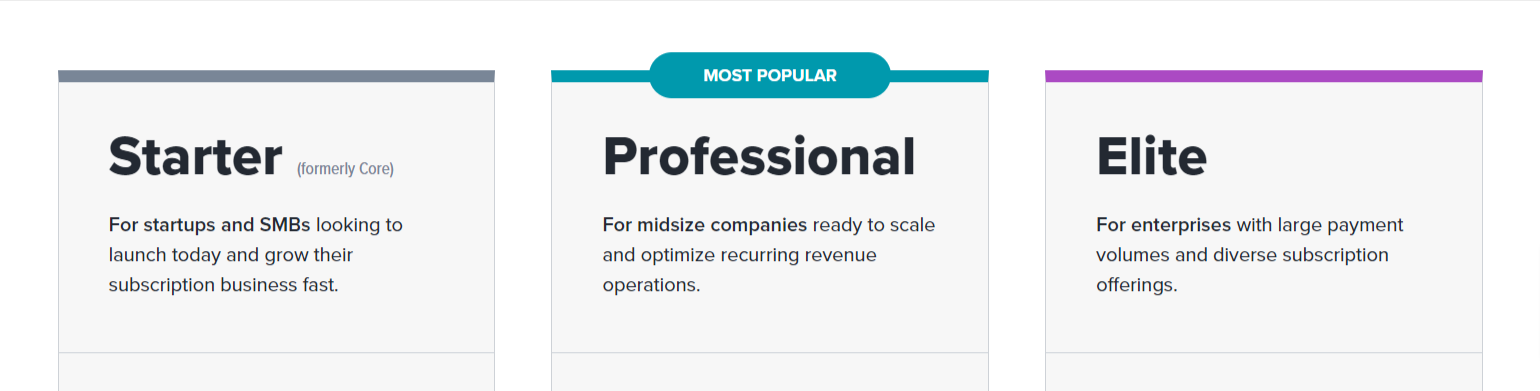
There are also the Professional and Elite plans. These plans offer pretty sophisticated functionality and are aimed at midsized companies and enterprise customers.
Recurly is tight-lipped about the cost of these plans. So, when you get to the point where you’re ready to level up, you’re encouraged to reach out for tailored pricing.
So, what does the Starter plan offer?
Or – to put it another way – what don’t you get with the entry-level option?
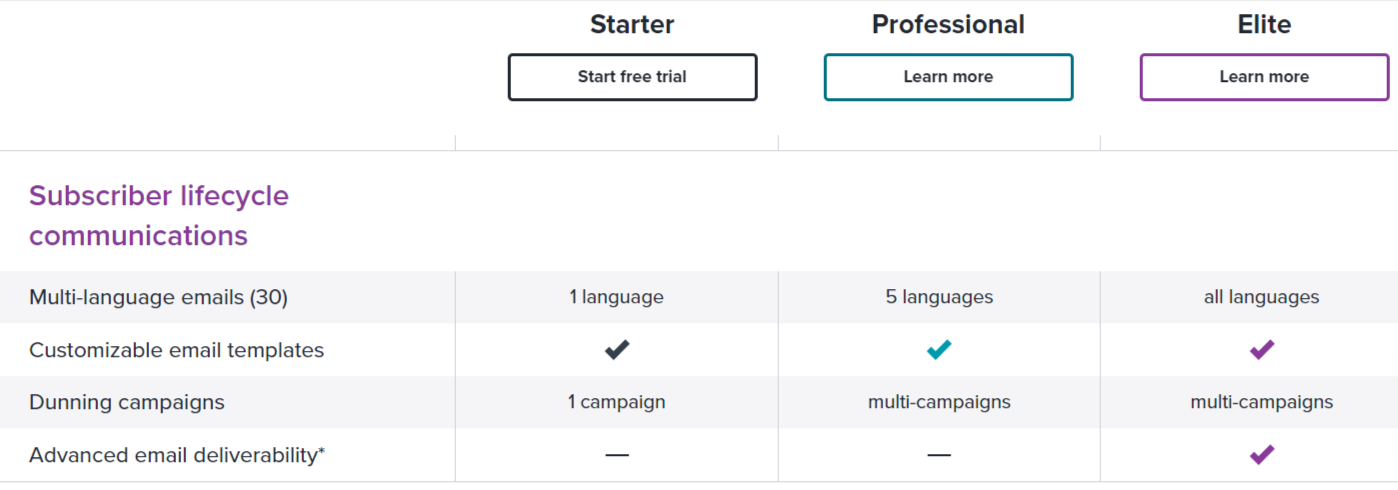
Recurly’s Starter plan is quite comprehensive for anyone building their subscription-based business – if you can swallow that monthly fee, that is.
The Starter plan offers a good level of subscriber management and flexibility. Drill down a bit further, and there are a few features that are not available at the entry level, like:
❌ No ability to add a backup payment method for subscribers (this helps with customer retention - without a backup, if a customer's card has expired and they don't update their details, they involuntarily churn.)
❌ No customizable invoices
❌ Fewer partner integrations (no Salesforce, Oracle NetSuite or Snowflake, for example)
❌ Only one language option for customer emails
❌ No ramp pricing feature (this lets you increase and decrease subscriber prices, such as offering an introductory “teaser” rate which later goes up)
❌ Only one dunning campaign included
Before we move on, it’s important to point out that there are other Recurly fees and add-ons to consider…
Recurly add-ons
Recurly offers a few add-on products for its customers (i.e., things that cost you extra).
For the entry-level plan, standard revenue recognition is the only available add-on. Again, the cost of this service isn’t set, with customers asked to contact Recurly for personalized pricing.
Customers taking one of Recurly’s higher-level plans can add on the advanced version of revenue recognition, plus an app management feature. This syncs Apple App Store and Google Play subscription data with web data to offer a single source of analytics.
Extra fees
Another charge to be aware of if you sign up to the Recurly platform is the Total Payment Volume (TPV) fee. Once you hit $40k of income a month, Recurly charges you 0.9% of your TPV.
So, for example, if you make $39k in a month, you pay just $249, but hit $40k and it ramps up to $609 (the $249 monthly plan fee + $360 TPV fee).
In addition, merchant bank account fees, payment gateway fees, and fees to import existing cards/customers may apply.
Free trial
The good news is that Recurly currently offers a three-month free trial on the Starter plan, so you have some time to check out the features before you commit.
During this time, you will still pay the TPV fee if you hit $40k in income.
Once the 90-day period runs out, your credit card will be charged $249 a month, unless you cancel.
We want you to get more for your efforts – with Whop, you only pay 2.7% + $0.30 on sales with NO monthly fee.
Recurly advantages & disadvantages summarized

We’ve covered a lot, so here is a quick summary of the pros and cons of Recurly:
| Pros | Cons |
| Lots of features and customization options | Too many features for many users |
| Three-month free trial | High monthly costs after the free trial |
| Multiple customer payment options | TPV and other fees applicable |
| Option to move up to midsize/enterprise plans | Complex to navigate |
| Add-on features available | Overwhelming level of detail for some users |
| Granular data and analytics | |
| Manage high numbers of subscribers |
Who is Recurly best for?
Having looked at all its features and pricing, Recurly is really best for online businesses with a sizeable subscriber base.
Not only is the monthly cost steep (after the free trial period), but the wealth of features might be too much for people who want to scale an online business and reap the rewards.
It’s a bit like paying higher rent to live in a building with loads of amenities you never use.
Look at Recurly’s list of customers and you’ll see that it works with lots of multinationals. This is a great advertisement for its service. However, if you want an easy, less complex way to get up and running, this platform may not be your best choice.
So, if Recurly isn’t right for you, which platform is?
How can a subscription management platform help you?
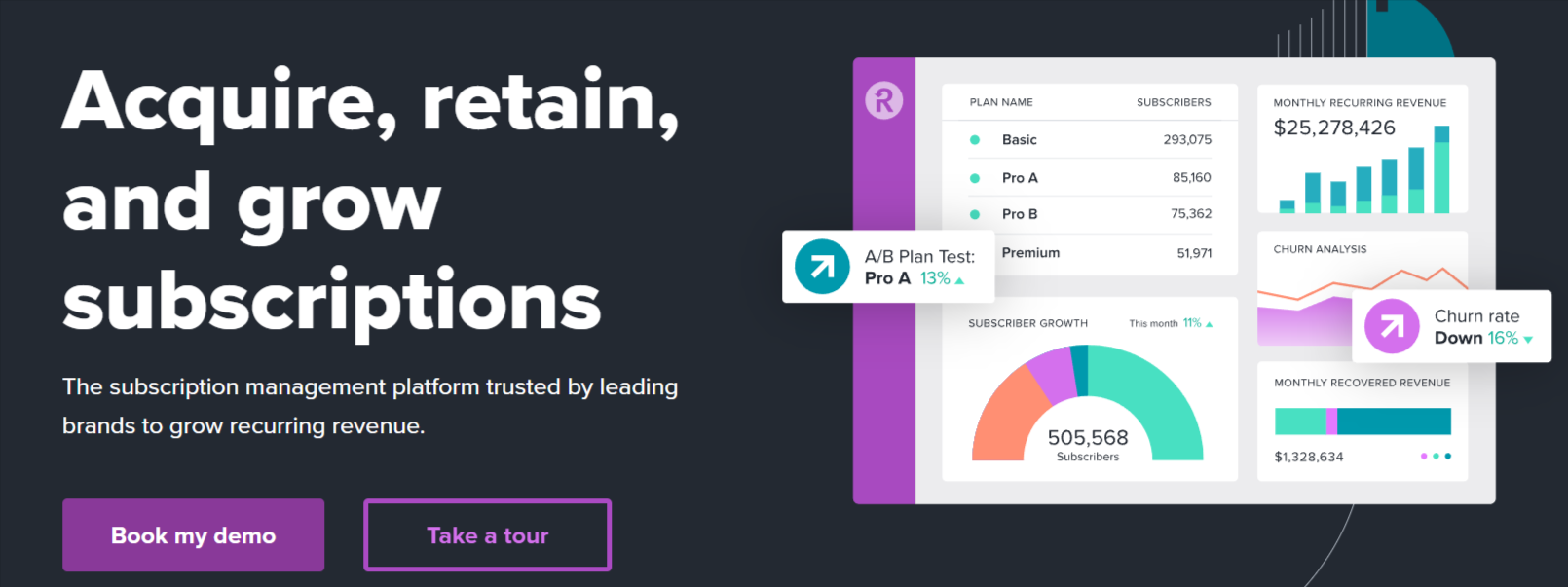
Subscription management platforms help you to retain your customers, while taking over some of the day-to-day admin related to running your business, such as:
Payment processing
This is probably the most important function these platforms serve. Once you’ve attracted a valuable subscriber, you want their payments to be processed reliably, accurately and securely.
Subscription management platforms handle different currencies, payment options, tiered payments, promotional pricing and more for the benefit of you and your customers.
Next read: What is a payment processor and how does it work?
Subscription plans
The platforms support the creation of different paid and free plans, so you can give your subscribers a variety of sign-up options. The management includes letting people switch up or down plans, adding trials, and running other promotions.
You can also add a free option to show off your content to encourage people to sign up for a paid plan.
Analytics
Another essential feature is the ability to easily access your subscriber and payment data so that you can track your progress. It also means you can compare the different promotions you run and subscriber plans you offer to find out which gains the most traction. This all helps you to boost your subscriber value.
Subscription management platforms’ offerings vary, but the aim is the same – to help you maximize your profits while minimizing the hassle.
Next read: How to use ecommerce analytics to boost your sales
Why you should start a subscription-based business
What do you want from your online business? If the answer is regular, recurring income with unlimited growth potential, then you need to build a subscriber base.
And with the global subscriber economy expected to reach $1.5tn in 2025, isn't it time you took your share?

Under a subscription model, people sign up and pay (usually) each month for your products or services. This might be extra podcast episodes, articles, ebooks or anything that adds value.
Online businesses might offer a mix of free and paid content – known as the freemium model – or put all their stuff behind a paywall.
Other options include free trials or offering memberships, which are similar to subscriptions but might have more of a community vibe.
The two most important things you need to think about when building a subscriber base are:
1. Number of paying sign-ups: To have a viable business, you need to have a high number of people willing to pay for your content. This means building a large audience, as only a proportion of your free or freemium users will be converted to paying subscribers.
2. Churn rate: This is a measure of the number of people who cancel their subscriptions compared to new sign-ups. All membership and subscriber-based businesses experience an unavoidable churn.
There are two types of churn rate:
- Voluntary churn: Customers who unintentionally stop paying due to such factors as expired credit cards.
- Involuntary churn: Customers who decide to cancel their subscription and stop payment.
The key is minimizing loss by giving subscribers reasons to stick around and make it easy for them to keep their subscriptions active.
Sell more of your subscription offers with Whop
Ready to start making real $$ with a subscription-based online business? Sign up for Whop.
It doesn't matter if you’re just getting started or looking for an exciting new recurring revenue stream; our subscription management tools take away the hassle.
Sell recurring access to anything, from digital products and Whop apps to SaaS, courses, livestreams, sports picks, and everything in between.
With Whop Payments, you'll pay transaction fees as low as 2.7% and be able to take payments from credit cards, crypto, and more.
"You can now get paid out in Bitcoin or Stablecoin and basically every single country in the world."
- Steven Schwartz, Whop CEO
Start building your subscriptions with Whop and sell, stack, and scale with ease.