
Most marketplaces keep 13–34% of every sale. Find the right number for yours, from take rate formulas to who should pay.
In 2020, Epic Games added its own payment option to Fortnite to avoid Apple's standard 30% cut on in-app purchases. Apple then pulled Fortnite from the App Store, and Epic sued.
Six years later, the fight is still going. In 2021, a federal judge ordered Apple to let apps send customers to the web to pay. Apple did, but still tried to take up to 27% of those sales. Courts ruled that was too much, and that Apple can charge only what its costs justify.
In June 2026, the US Supreme Court agreed to hear Apple's appeal.
The cut they're fighting over is called a take rate, and this case comes down to one question: how much of every sale should a platform keep?
If you're running a platform or marketplace, your take rate is one of the biggest decisions you'll make. Set it too low and you can't fund your growth. Set it too high, and your sellers leave or take their transactions off-platform.
So how do you find the sweet spot? Start by looking at what others are charging.
What is a take rate?
A take rate is the percentage of each sale a marketplace or platform keeps as revenue, calculated as (revenue ÷ GMV) × 100. A $100 sale that earns the platform $12 is a 12% take rate.
Take rate also means something different in lending and sales (the share of customers who accept an offer). This article covers the marketplace meaning.
Take rate vs commission
A commission or platform fee is what a marketplace charges, like a listing fee or a percentage of each sale. Take rate is everything it actually earns, including ads and seller services, as a share of total sales. That's why Etsy's transaction fee is just 6.5%, but its take rate is above 24%.
What take rate should I charge? Average marketplace take rates
Most public marketplaces keep between 13% and 34% of every transaction. Your take rate should relate to how much your platform does for each transaction:
- If your sellers are bringing their own customers, or if a big part of each sale pays for a physical product, charge a lower take rate
- If you bring the buyers, handle the payments, and protect all parties involved, charge a higher take rate
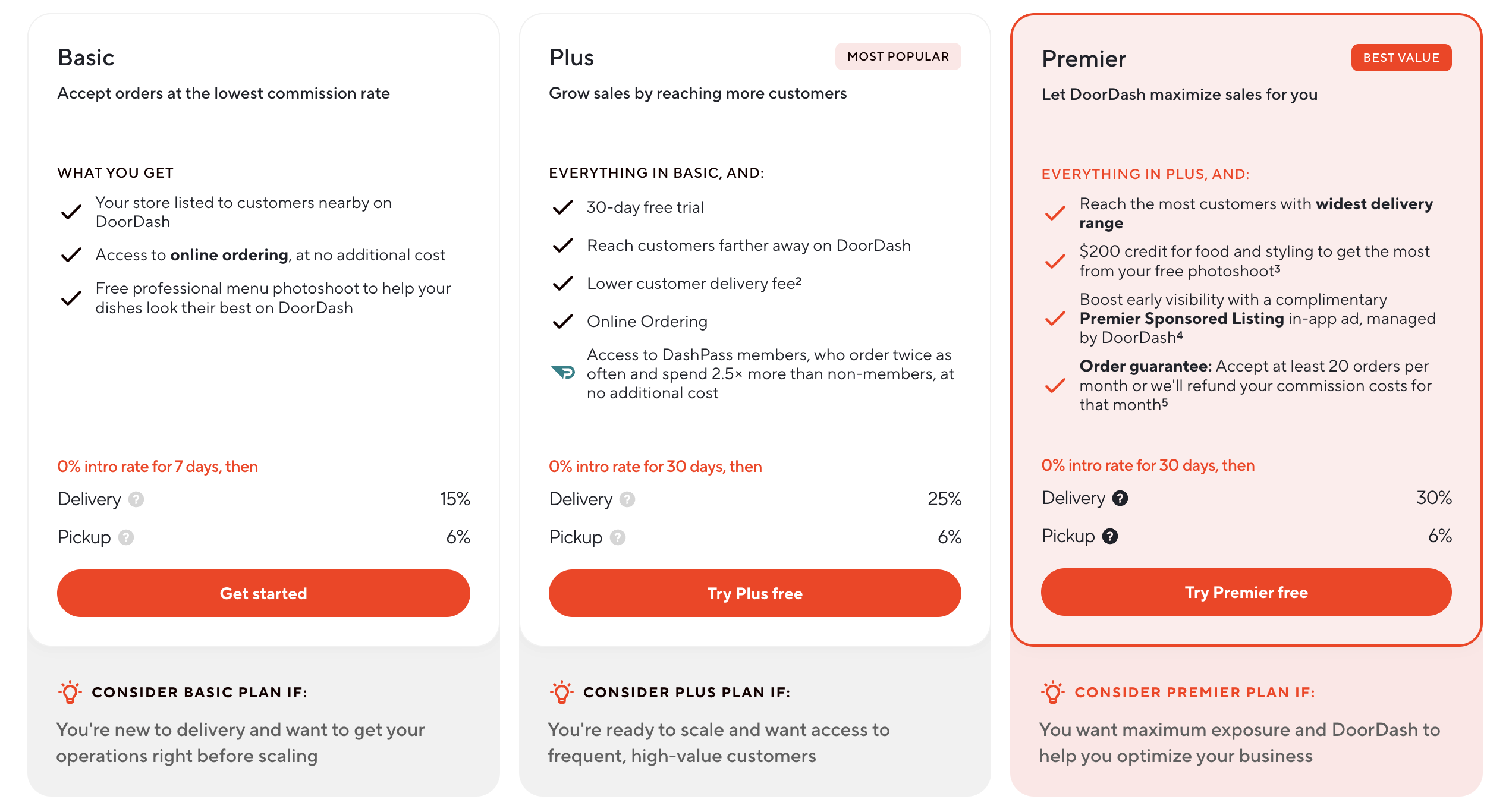
At the low end, DoorDash and Airbnb both sit at about 13.4%. Most of each booking pays for something that someone else supplies (like food or a host's home), meaning there is less room for a platform cut.
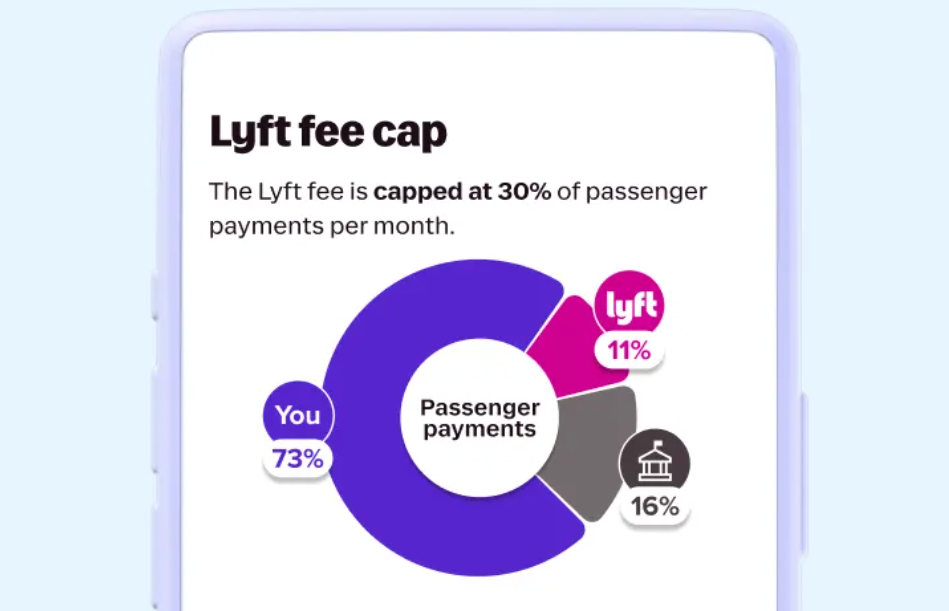
At the high end, Lyft's take rate works out to about 34.1%. A ride is a pure service, and Lyft supplies everything but the driver and the car, so it can charge more.
But Lyft doesn't keep a third of every fare. Much of that revenue goes straight back out on required insurance, payment fees, and, in some markets, driver pay. After those costs, Lyft kept about 14% of the value of its rides in 2025. That's the difference between take rate and net take rate (more on that later).
In the middle of the range sit platforms that sell extra services on top of their core fee. Upwork's take rate rose to 18.7%, driven by ads and paid seller tools.
That tells us something very important: take rates tend to grow by selling more tools to sellers, not just by charging a bigger commission.
So for a new marketplace, you don't need to launch with a high take rate. Start with a base fee that makes sellers want to join your platform. Then add optional paid features, like promoted listings, faster payouts, or seller analytics, that sellers choose to pay for once they're already making money.
To test this myself, I built a prototype marketplace called Squishy Swap, a place for collectors to buy, sell, and swap squishy toys. I set my fee at 10% + A$0.50 per order.
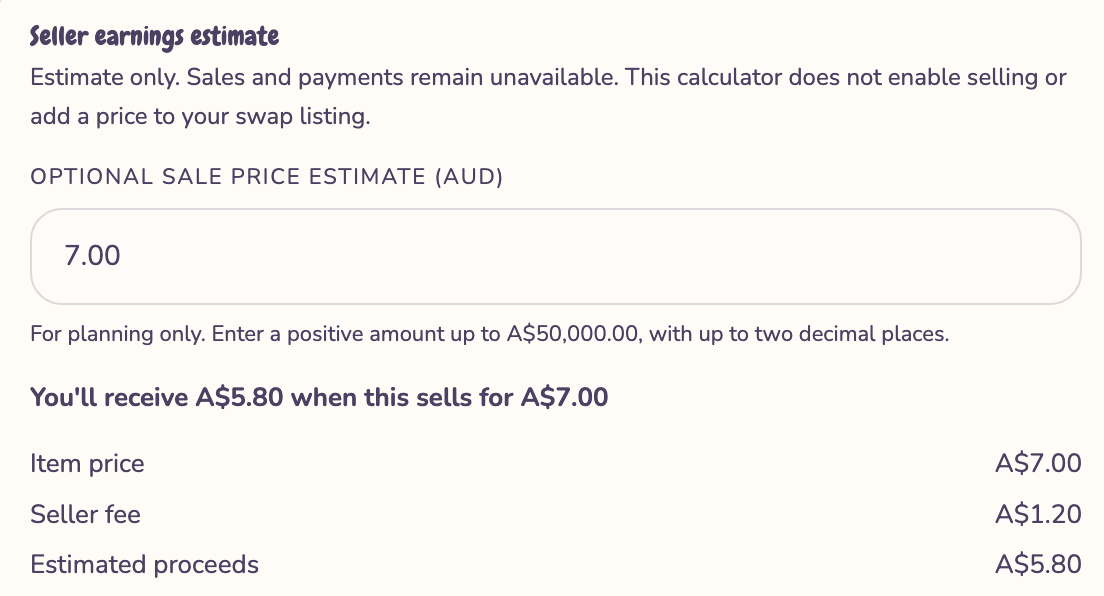
I expect most sales to be small, around A$3–10, so I kept the percentage low and added a small fixed fee to make sure even the cheapest sales cover my costs.
On the smallest orders, that still adds up to a high effective rate, which is why I let buyers bundle items so the fixed fee only applies once.
Let's take a look at how take rates vary by industry.
Typical take rate ranges by industry
| Industry | Typical take rate | Based on |
|---|---|---|
| Transportation (ride-hailing) | ~34% | Lyft |
| Freelance and professional services | 19–28% | Upwork, Fiverr |
| Ecommerce and retail | 14–24% | eBay, Etsy |
| Software, apps, and digital goods | 10–30%* | Apple App Store, Google Play, Epic Games Store, Gumroad |
| Travel and hospitality | 13–15% | Airbnb, Booking Holdings |
| Food delivery | ~13% | DoorDash |
| Creator economy (memberships and newsletters)* | ~10% | Patreon, Substack |
*Published fees, not take rates from company reports. These platforms either don't report take rates or are private, but because each takes a simple cut of every sale, their published fees are a good guide.
What do these figures mean for your business?
- Running a ride-hailing service? Expect to charge around a third of each fare, but much of it goes straight back out on insurance and other costs.
- Building a freelancer marketplace? Take 19–28%. The more infrastructure you offer, the more you can charge.
- Selling physical goods? Expect 14–24%. Your sellers are already paying for stock and shipping, so they won't want to part with much more. A meaningful share of your revenue will come from ads and other seller tools, not a base fee.
- Selling software, apps, digital products? Keep around 10–30%. Once a digital product is made, each extra sale costs the seller almost nothing (no stock, no shipping), so they can afford a bigger platform cut.
- Have a travel or booking platform? Take 13–15%. The majority of the fee will pay for the room or rental, so there's less room for your cut here.
- Building a food delivery app? Expect to retain around 13%. Like travel and booking, the physical part of the service makes up most of each order.
- Launching a creator platform? You can keep around 10% – creators usually bring their own audience over with them, so your fee should stay low to keep them on your platform.
Those ranges come from the take rates of some of the world's biggest marketplaces. Here's what each one kept in 2025.
Take rates at the biggest marketplaces (2025 data)
| Company | Business model | 2025 take rate | How it's calculated | Reported or calculated |
|---|---|---|---|---|
| Lyft | Ride-hailing | 34.1%* | Revenue ÷ gross bookings | Calculated |
| Fiverr | Freelance services | 27.7% | Marketplace revenue ÷ marketplace GMV | Reported |
| Etsy | Handmade, vintage, and resale goods | 24.2% | Revenue ÷ GMS | Reported |
| Upwork | Freelance services | 18.7% | Marketplace revenue ÷ GSV | Reported |
| Booking Holdings | Online travel | 14.5% | Revenue ÷ gross bookings | Reported |
| eBay | Ecommerce marketplace | 13.9% | Net revenues ÷ GMV | Reported |
| Airbnb | Short-term rentals | 13.4% | Revenue ÷ GBV | Calculated |
| DoorDash | Food and grocery delivery | 13.4% | Revenue ÷ Marketplace GOV | Reported |
All figures are for the full year 2025.
*Lyft's 2025 revenue includes a $168 million reduction from legal, tax, and regulatory reserve changes and settlements. Excluding it, the figure would be about 35.0%.
How I got these numbers
Every figure comes from the company's own 2025 annual report or full-year results. Where a company reports a take rate directly, I've used its number (this includes companies that report it under another name). Where it doesn't report take rate, I've divided its reported revenue by its reported transaction volume. Lyft's 14% figure, used earlier in this article, is what Lyft had left after paying the direct costs of its rides, like insurance and payment fees, as a share of the total value of those rides.
Uber isn't included, because in some markets it counts the full fare as revenue, which inflates its take rate compared with the other companies here. Companies measure sales and revenue in slightly different ways, so treat these as a rough guide rather than an exact ranking.
How to set your take rate: a 3-step playbook
We've looked at what others charge. Here's how to decide your own take rate.
Step 1: Work out what sellers will pay
The first thing to figure out is what you're actually selling.
Write down everything your platform does for each sale, then ask: how hard would it be for sellers to get this somewhere else? Bringing them buyers, protecting them from fraud, and handling disputes are hard for sellers to manage on their own, so they will pay more for this.
A basic checkout page is easy to find elsewhere, so it won't justify much of a fee.
The more you offer, the more you can charge. Fiverr, which kept 27.7% of its marketplace sales in 2025, believes that it is able to "command" its take rate because of the value it provides to "buyers and sellers in an otherwise fragmented, unstandardized and high-friction industry."
A few factors decide how much your sellers will usually accept as a take rate:
- How big your sellers are: thousands of small, independent sellers spread across the globe (like Etsy's) don't bring much revenue to the platform individually, so they don't hold much bargaining power. That means they're willing to accept higher fees. But if you rely on a handful of larger suppliers (like hotel chains), losing just one seller can hurt, so you want to keep them happy with lower fees.
- How unique your supply is: if you have a unique marketplace and sellers are offering something buyers can only find on your platform, then you can charge more. But if the same products can be found everywhere, buyers will shop around – and so will sellers.
- What other options your sellers have: can sellers list on another marketplace or sell from their own site easily? If so, then your take rate needs to compete with those alternatives, or offer something other sites can't.
- Order size and frequency: the work your platform does to match a buyer and seller is roughly the same whether the job is worth $20 or $20,000, but a percentage fee grows with the order. A 20% cut is $4 on the small job and $4,000 on the big one, which is when sellers start asking what they're really paying for.
The same math works in reverse for tiny orders. If most sales on Squishy Swap will be around A$5, my A$0.50 fixed fee alone adds 10% on top of my percentage. On a A$5 sale, my effective take rate is 20%. On a A$20 sale, it's 12.5%.
This is a fine line to walk. Charge more than your perceived value and you risk charging what investor Bill Gurley calls "a rake too far."
"If your objective is to build a winner-take-all marketplace over a very long term, you want to build a platform that has the least amount of friction (both product and pricing). High rakes are a form of friction precisely because your rake becomes part of the landed price for the consumer."
In other words, your fee ends up in the price buyers pay. Charge too much, and everything on your marketplace starts to look expensive.
Step 2: Work out your minimum take rate (take rate formulas)
Your take rate also has to cover what each sale costs you. There are three formulas that tell you whether it does.
- Take rate: how much do I collect from each sale?
- Net take rate: how much of that do I keep after each sale's direct costs?
- Per-sale break-even take rate: what's the lowest rate I can charge without losing money on each sale?
To show how these take rate formulas work together, we'll use an example of a marketplace with $4 million in yearly sales.
Take rate (what you collect)
GMV – gross merchandise value – is the total value of all transactions on your platform over a set period. Revenue is what your platform earns from those transactions over the same period.
If your marketplace earns $480,000 in revenue from $4 million in sales a year, its take rate is 12%:
$480,000 ÷ $4,000,000 × 100 = 12%.
Net take rate (what you keep)
Every transaction on your platform comes with costs: payment processing fees, refunds, chargebacks, fraud losses, and any promo deals or discounts you offer. Take rate tells you how much of your GMV you collect, but it doesn't tell you how much you keep. Net take rate subtracts those costs, showing you what's left over.
If your hypothetical marketplace spends $120,000 on payment processing, $20,000 on refunds and chargebacks, and $40,000 on promotions, your net take rate is:
($480,000 − $180,000) ÷ $4,000,000 × 100 = 7.5%
Per-sale break-even take rate (the lowest you can go)
Per-sale break-even take rate adds in any other costs that grow with each sale, like customer support, fraud prevention, and customer acquisition cost.
So if your $4 million marketplace also spends $60,000 on support and fraud prevention, and $100,000 on acquiring users, then:
($180,000 + $60,000 + $100,000) ÷ $4,000,000 × 100 = 8.5%
Putting it all together
| Cost | Amount | Share of sales |
|---|---|---|
| Payment fees, refunds, and promotions | $180,000 | 4.5% |
| Support and fraud prevention | $60,000 | 1.5% |
| Winning new buyers and sellers | $100,000 | 2.5% |
| Total | $340,000 | 8.5% |
Compare your per-sale break-even rate to your take rate, not your net take rate. Your $4 million marketplace charges 12% and breaks even at 8.5%, which leaves 3.5% of sales, or $140,000 a year, for salaries, product development, and profit.
Step 3: Decide who pays the take rate, and how
Once you've figured out what your take rate should be, it's time to decide who pays, and how. You can charge sellers, buyers, or both.
As a general rule, charge the party that gets the most value from your platform. Be careful with fees that buyers can see at checkout – according to Baymard Institute, 39% of shoppers who abandon a purchase do so because extra costs were too high, and 14% because they couldn't see the total cost upfront.
I considered adding a A$1 buyer protection fee to Squishy Swap, but on a A$5 squishy, that's a 20% markup at checkout. I dropped it and kept all fees on the seller side.
- Seller pays: the most common model, and the simplest for buyers. Airbnb is moving every host to this model, replacing a split fee, where most hosts paid 3% and guests paid 14.1–16.5%, with a single fee paid by hosts alone. Most hosts now pay 15.5%.
- Buyer pays: works when buyers get most of the value, like convenience or protection, and sellers would leave if fees were higher.
- Both pay: spreads the cost, so neither side feels the full fee. Upwork, for example, earns revenue from both freelancers and clients.
Beyond who pays the fee, there are several different fee structures that you can choose from. If your marketplace has big orders or long-term relationships (see step 1), a tiered or capped structure helps you stay competitive as deals grow.
| Fee structure | Best for | Example |
|---|---|---|
| Flat percentage | Simple marketplaces with similar-sized orders | Substack takes 10% of paid subscriptions |
| Fixed fee plus percentage | Marketplaces with lots of small orders, where a percentage alone won't cover costs | Gumroad charges 10% + $0.50 per sale |
| Tiered | Big orders or long-term relationships | Upwork used to charge freelancers 20% on the first $500 with a client, 10% up to $10,000, and 5% after that |
| Category-based | Marketplaces selling products with very different margins | Amazon's referral fees vary by category |
| Caps and minimums | Marketplaces with very cheap or very expensive items | Amazon sets a minimum referral fee per item |
| Subscription plus a lower rate | Sellers with steady sales who want predictable costs | Teachable's Starter plan costs $39 a month plus a 7.5% fee per sale. Higher plans cost more but drop the fee to 0% |
| Higher rate on sales you bring in | Platforms where some sellers bring their own customers | Gumroad charges 30% on sales from its own marketplace, versus 10% + $0.50 on direct sales |
| Variable rates | Marketplaces with very different types of deals | Upwork now charges freelancers between 0% and 15%, depending on the contract |
So, what should your take rate be?
The industry ranges are total take rates, which include ads and seller services. The starting rates below are the base fee you launch with – Etsy's 6.5% transaction fee becomes a 24% take rate once ads and services are counted.
| Marketplace type | Starting take rate | Fee structure | Who pays | First paid extra to add |
|---|---|---|---|---|
| Digital products or creators, where sellers bring their own audience | 10% or below | Percentage plus a small fixed fee per sale | Sellers | Promoted listings |
| Digital products, where you bring the buyers | Up to 30% on sales you source | Higher rate on sales you bring in | Sellers | Featured placement |
| Freelance and services, where you find the clients | 15–20% | Tiered, dropping as contracts grow | Sellers, or both sides | Ads and promoted profiles |
| Physical goods and resale | A single-digit transaction fee | Flat percentage, or fixed fee plus percentage | Sellers | Promoted listings |
| Big-ticket sales or one-off introductions | Skip the take rate | Listing fees or lead fees | Sellers | Featured listings |
Check that your number sits comfortably above your per-sale break-even rate before you launch.
What marketplace founders have learned about take rates
Isaac Newton famously said, "If I have seen further, it is by standing on the shoulders of giants."
When it comes to setting a take rate, the giants have already done a lot of the hard work for you. Here's what three of the most successful marketplaces learned along the way.
When Benchmark (Bill Gurley's firm) first met the oDesk team in 2006, the freelance marketplace was competing with rivals that charged around 30%. According to Gurley, oDesk cut its own commission to 10%. By 2009, it had overtaken its nearest competitor, and later became a part of Upwork after merging with Elance.
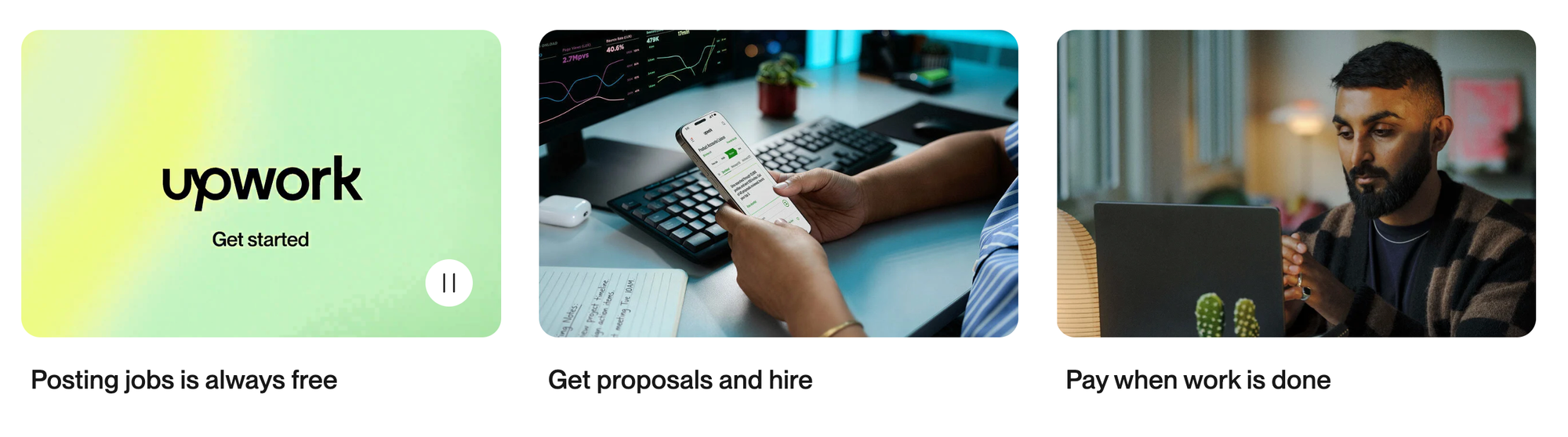
Gurley's takeaway for founders is that there's a big difference "between what you can extract versus what you should extract."
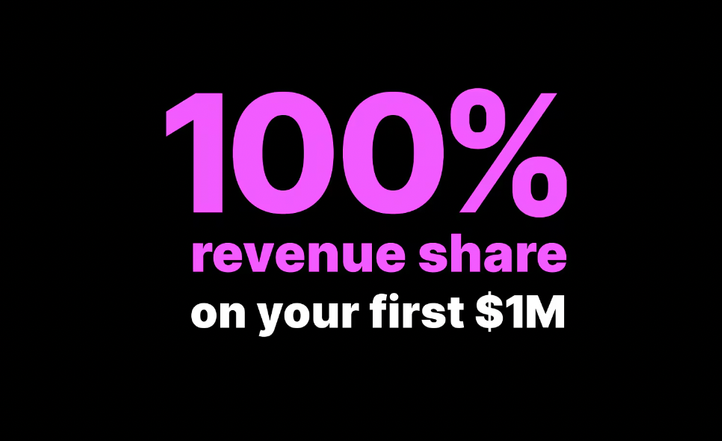
Epic Games used the same tactic against Steam. When Epic launched its store in 2018, it offered developers 88% of revenue, at a time when 70/30 was the standard split.
Today, developers keep everything on their first $1 million in sales per product each year, and Epic takes 12% after that.
But more sellers doesn't mean more revenue, especially if you've cut your fees. Court filings in the Apple case showed the Epic Games Store lost around $181 million in 2019, and was projected to lose $273 million in 2020, as Epic paid for exclusive games and free giveaways on top of its low fee.
Epic could afford that, because Fortnite was paying the bills, but if you plan to undercut rivals, figure out what is funding the difference.
And what about raising your take rate? In April 2022, Etsy increased its transaction fee from 5% to 6.5%. CEO Josh Silverman said that most of the extra revenue would go into marketing, seller tools, and customer experience. Thousands of sellers closed their shops for a week in protest, with over 87,000 people signing a petition.
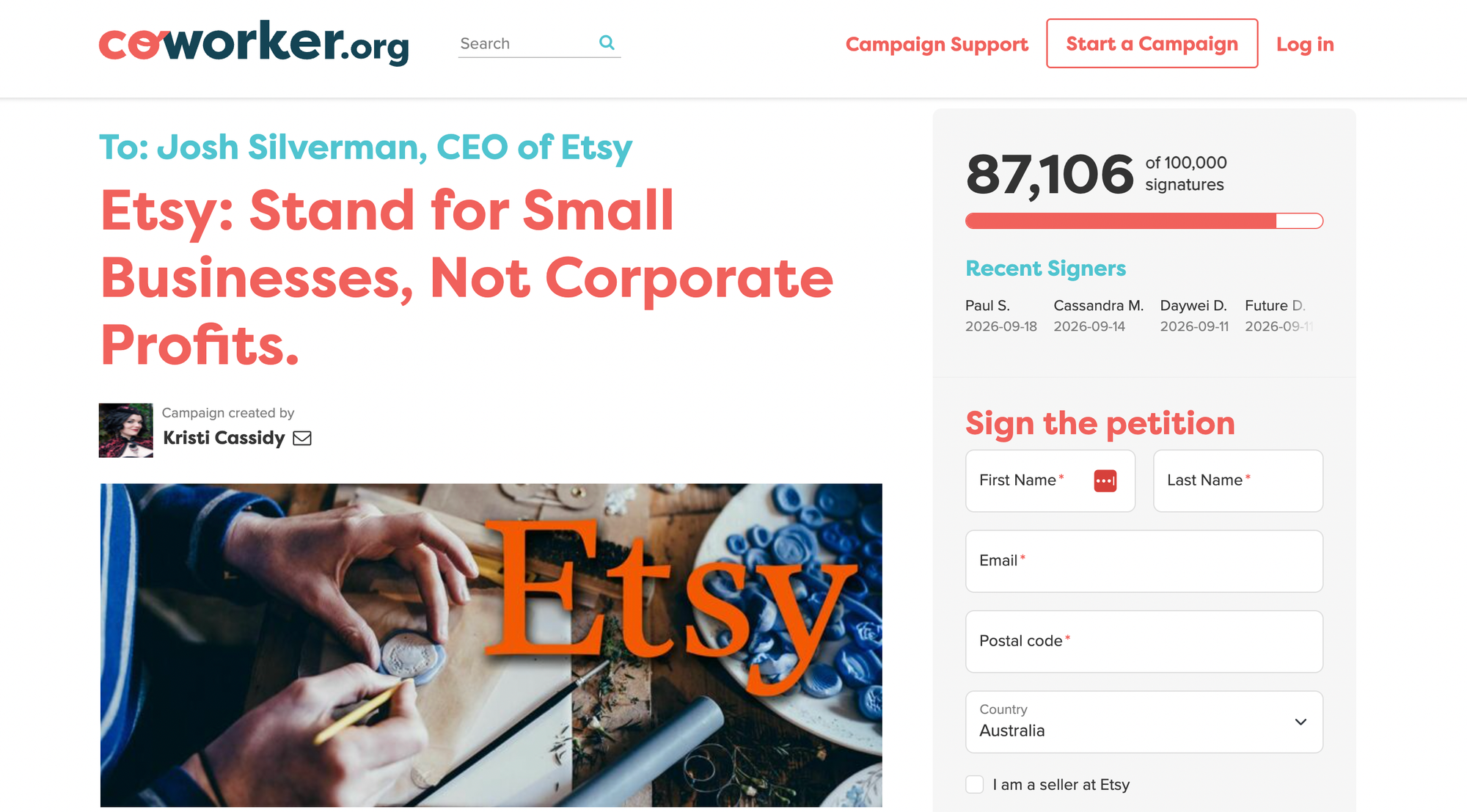
Etsy has since gone on to grow its take rate mainly through ads and seller services.
The lesson from all three: starting low can win you the market, but only if you can afford it, and it's much easier to add paid extras later than to raise a fee sellers have already gotten used to.
When is a take rate the wrong model?
A take rate works best when your platform handles the payment and stays involved in every sale. Without that, there's little to stop buyers and sellers from cutting you out.
Take a high-ticket marketplace, for example. On a house or a used car, even a small 3% can be a large chunk of cash that most sellers won't want to part with.
Marketplaces built around one-off introductions have a different problem: in hiring or home services, buyers and sellers only need to find each other once before they take the deal off-platform. In that case, if payment happens offline or just outside of your platform, there's nothing there for you to take a cut of.
In these cases, it makes more sense to charge for what you can control. This might mean charging sellers to list, like Craigslist, which charges a flat $5 to list a car or truck for sale by owner in the US instead of taking a cut of the sale.
Or, it could mean charging sellers for leads, like Thumbtack, where local pros pay to connect with customers who've requested a job, whether or not they win the work.
It could also mean charging a monthly subscription. Thinkific, the online course platform, takes this approach: in 2025, $59.8 million of its $73.2 million in revenue came from monthly plans rather than a share of creators' sales.
To put it simply, a take rate only works when the sale happens on your platform. If it can easily happen elsewhere, consider other fees instead.
Are there legal limits on take rates?
The short answer? Sometimes.
Remember the Apple story? Its take rate is now in front of the US Supreme Court, but Apple is far from the only platform whose fees are drawing attention from regulators.
Since May 2025, the FTC's Rule on Unfair or Deceptive Fees has required businesses selling live-event tickets or short-term lodging, including third-party platforms, to show the total price upfront – mandatory fees included. So if your marketplace operates in those categories, a buyer fee can no longer appear for the first time at checkout. It has to be part of the price buyers see upfront.
Some cities have gone even further and capped fees outright. Since the pandemic, New York City has limited how much delivery apps can charge restaurants on each order: 15% for delivery, 3% for card processing, and 5% for any other fees, a maximum of 23% in total.
But even a hard cap hasn't stopped platforms from growing their take rate. In 2025, as part of a settlement with the delivery apps, the city passed a new law, Int 762-B, that lets restaurants opt into an extra 20% for "enhanced services," like appearing at the top of search results or reaching customers further away. That takes the potential ceiling to 43% of an order, with the extra revenue now coming from optional seller services.
The lesson here? Avoid building a business that only works at the highest fee you can get away with. Keep your fees transparent, and leave some headroom in case a regulator determines that your rate is too high.
How to collect your take rate without building payments from scratch
Once you know your take rate, you need a way to collect it.
A standard checkout doesn't work here, because it's built to pay one business. A marketplace needs to split every payment between you and your seller (at a minimum), so you'll need a marketplace payment platform that offers split payments or connected accounts.
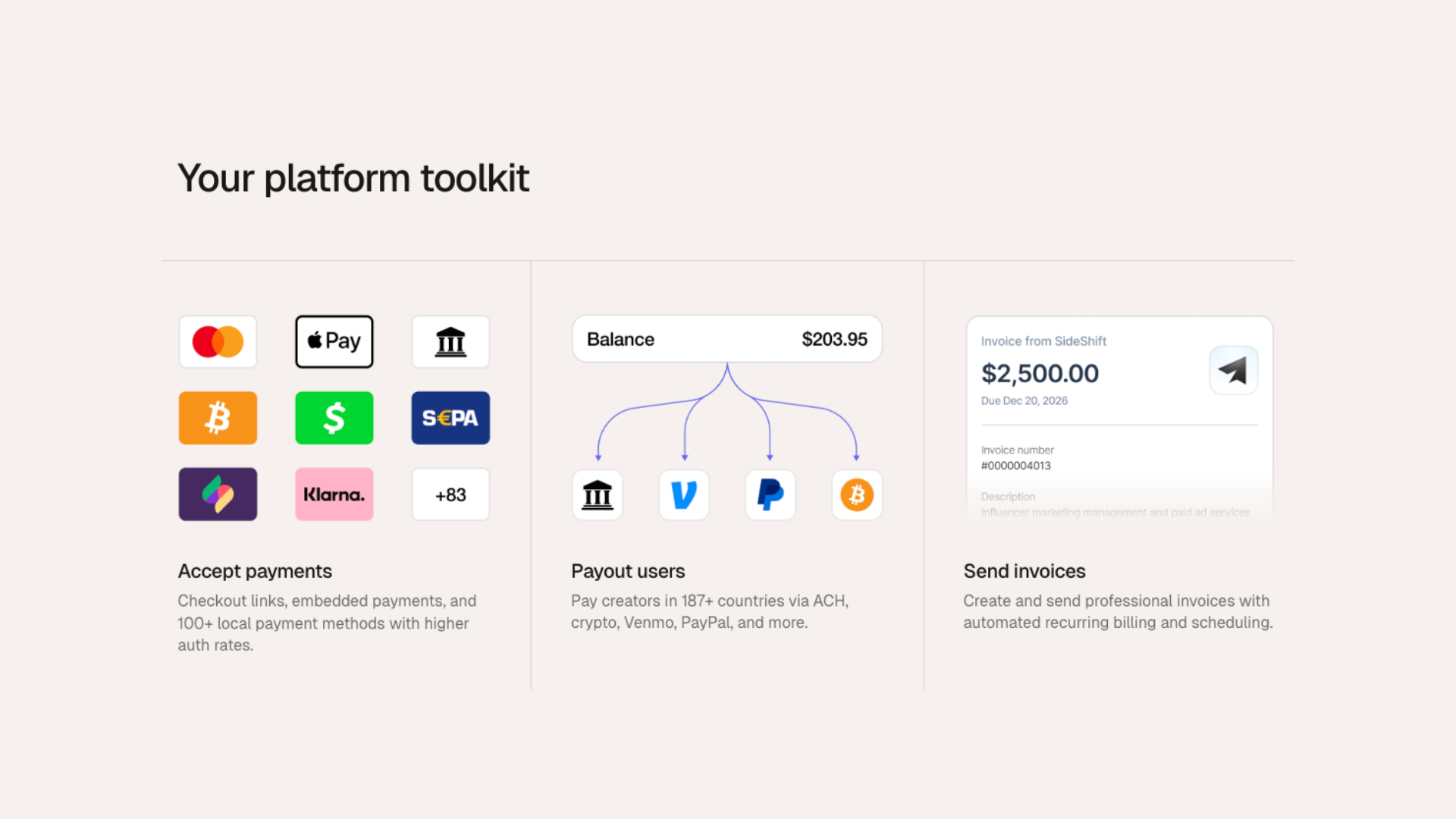
A marketplace payments platform will deduct your fee automatically at checkout and route the rest to your seller. It also means you aren't the one holding sellers' money.
Depending on where you operate, holding funds on someone else's behalf can bring licensing requirements, such as money transmitter rules in the US. A payments platform built for marketplaces is designed to keep that burden off you.
But not every platform will support the take rate you've just spent so much time designing, so check these four things before you choose:
- Can it handle your fee structure? If you've settled on a fixed fee plus a percentage, tiered rates that drop as sellers grow, or a higher rate on sales you bring in, the platform needs to let you set fees per sale or per seller. A single flat percentage across every transaction won't work here.
- Who pays the payment fees? Every platform charges its own fees on each transaction. Whether those come out of your cut or your seller's makes a difference to your net take rate. Look for a platform that lets you choose who pays.
- Who covers refunds and chargebacks? The same goes for refunds and disputes. If your platform absorbs them, they eat into your rate. If sellers do, your take rate needs to stay competitive enough that they don't mind.
- Does it help keep sales on your platform? This is the biggest question to answer. Why would anyone choose to use your platform over another one? Features like holding payments until the job is done, and letting sellers withdraw their earnings to their card, bank account, or wherever suits them best, make your platform the easiest place to do business, so make sure that your chosen marketplace platform provides these.
Building a marketplace? Power it with Whop
Whop makes it easy to build and run a marketplace.
Start with a Whop Blueprint, or build agentically using the Whop CLI. Behind the scenes, Whop splits every payment between you and your sellers, verifies sellers' identities, and pays them out.
I built the Squishy Swap marketplace prototype using an existing marketplace blueprint in just a couple of hours.
You set your take rate as an application fee on each checkout, so you can charge a percentage, a fixed fee, or both.
You also decide who carries the costs. With direct charges, the seller pays Whop's fees and handles refunds and disputes. With transfers, your platform does. And you can even cover payout fees for your sellers – a simple way to make your take rate more attractive without lowering it.
Whop is the end-to-end platform for building a business. Launch your marketplace today, and start collecting your take rate from the very first sale.
FAQs
What is a good take rate for a marketplace?
A good take rate covers your basic business costs and funds the growth you need, while also staying low enough that sellers don't leave. Most public marketplaces keep between 13% and 34% of each sale.
What is the average take rate?
There's no single average take rate, because the take rate depends on what a platform does for each sale. However, in 2025, take rates ranged from around 13.4% (DoorDash and Airbnb) to about 34.1% (Lyft). Freelance marketplaces sat between 19% and 28%, and ecommerce marketplaces between 14% and 24%.
Is take rate the same as commission?
No. Commission is the headline fee a platform charges; take rate is everything a platform earns as a percentage of total sales, which includes commission, buyer fees, ads, and seller services.
How do you calculate take rate?
Divide your platform's revenue by its gross merchandise value (GMV), then multiply by 100.
What is the best payment platform for a marketplace?
The best marketplace payment platform can collect your take rate automatically on every sale, supports your fee structure, verifies sellers, and pays them out without you building that infrastructure yourself. Whop lets you set your take rate as an application fee on each checkout, choose who pays fees and handles refunds, and onboard and pay sellers from one dashboard.







![17 best embedded payments platforms and providers [2026]](https://storage.ghost.io/c/12/7b/127b828b-bdc2-4972-9cf2-de857df9c324/content/images/size/w1000/format/webp/2026/09/blog-embeddedpayments.png)