From vibe-coded apps to AI clipping agencies, discover 35 side business ideas you can build with AI, plus real examples, costs, and income estimates.
Key takeaways
- AI side businesses fall into three models: build-once products, ongoing retainer services, and agent-run operations.
- Your edge is strategy, taste, and judgment, because AI already handles the production anyone can prompt for.
- Hand prospecting, outreach, and delivery to agents so you manage a system instead of grinding tasks.
61% of small businesses now use AI in some part of how they operate (OnDeck/Ocrolus report). Most of these businesses use AI for marketing or automating just one piece of work, but still heavily rely on human input for the rest.
Then there's the other end of the spectrum. In April of 2026, Andon Labs signed a three-year retail lease in San Francisco, giving the whole business to an AI named Luna. Luna picked the products, set prices, designed the branding, and hired her own human staff (some of whom didn't even realize that they were talking to an AI).
This guide sits between those two points. Some of the businesses below you build once and sell. Others you run as an ongoing service. And for a growing number, AI doesn't stop at building the product or writing the content – it can run parts (or all) of the business itself, with agents that find leads, draft outreach, and handle delivery while you manage the system.
If you're after quicker, gig-style ways to earn instead of building out a product or ongoing service, check out Make money with AI: AI side hustle ideas.
Top AI side business quick picks for 2026
Want to jump right in? Here are the top 6 businesses you can start with AI.
| Side business | Earning potential | Best for | Time investment |
|---|---|---|---|
| Build a consumer app | $500-$25,000+ a month | Anyone with a problem worth fixing | 1-4 weeks to build, then marketing forever |
| Ad creative for DTC brands | $1,000-$10,000+ a month | People with an eye for what converts | 3-7 days to start, heavy ongoing |
| Custom AI prompt libraries | $100-$3,000+ a month | Anyone with deep knowledge of one job | 1-5 days, needs regular updating |
| MCP servers for businesses | $500-$8,000+ a month | Technical builders who can talk to clients | 2-6 weeks, low upkeep after |
| Clipping and repurposing | $100-$5,000+ a month | Anyone who can spot a good hook | 1-3 days, batchable |
| CRM setup bundles | $500-$7,000+ a month | People who can learn one trade deeply | 2-4 weeks, mostly automated after setup |
Income ranges come from a mix of Whop seller data, founder-reported figures from public interviews and case studies, and pricing pulled from live product listings. They're a guide to realistic ranges, not a guarantee: your results depend on niche, effort, and how well you execute.
35 side businesses you can build with AI
A quick note before you dive in: AI doesn't just help you build these businesses – for several of them, it can run day-to-day operations too, from finding leads to publishing ads.
For each business idea on the list, you'll see a callout marked Agentic opportunity, showing what handing that part off to an AI agent could look like.
I'll dig into how this actually works in full at the end.
Content, marketing & writing business ideas
Anyone can ask ChatGPT to write an article. Making it actually worth reading takes more than a prompt – that's where you come in.
Businesses and creators everywhere need good content, and knowing how to wield AI tools (and improve what they hand you) is the whole skill. These businesses run on providing an ongoing service, usually for a subscription or retainer (see how to build and sell AI services on Whop for the setup mechanics).
1. AI content agency
Most business owners have a vague idea of how to get Claude (or basically any AI chatbot) to spit out a blog post. But building a whole content strategy around that – running the calendar, writing blog posts, web copy, product descriptions – is a different job entirely.
You can offer your services to businesses and creators, offering not just a single article, but a whole package. Use AI to write the underlying content, then follow up with your own common sense and better judgment to make it actually worth reading.
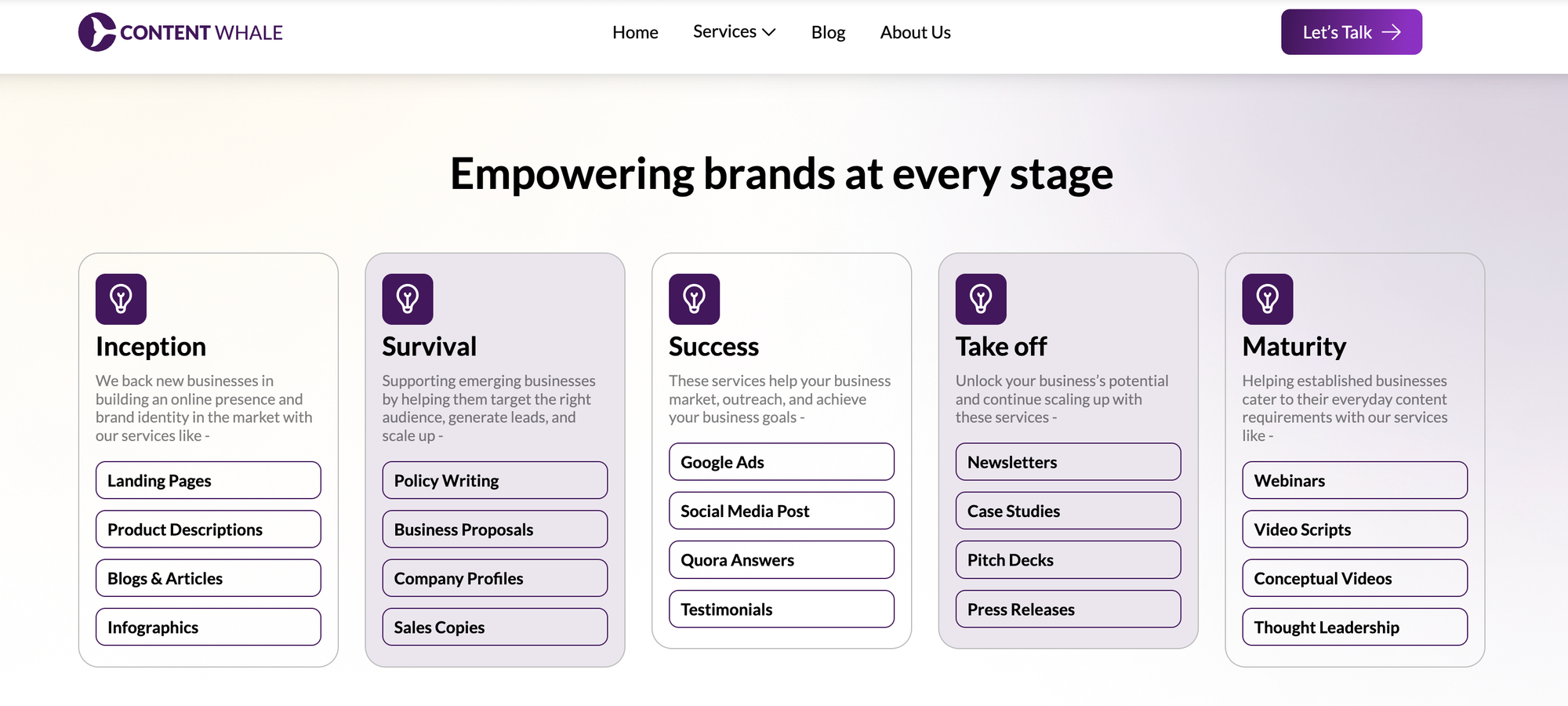
Vaibhav Kishnani built Content-Whale with just $35 in starting capital, and it's since grown into a $514,000-a-year content agency serving clients like Quikr and The Boston Consulting Group. Content-Whale itself isn't AI-first, but it proves the niche pays, and AI now collapses the cost of building a lean version of the same thing yourself.
This is a very scalable business, as the actual content generation doesn't take too long, and you can use AI for anything from finding clients to communicating with them, too.
- Startup costs: $0-$100 a month. You might want tools like a Claude or Canva subscription, or LinkedIn Premium for outreach.
- How to make it: Advertise your business and reach out to clients. Create a portfolio of example work with AI first, then set up your pricing and packages with Whop CLI.
- Agentic opportunity: Once you've got a repeatable process down, hand the prospecting to an agent. Have it find leads in your niche every morning, draft personalized outreach, and follow up automatically, so new client conversations are waiting for you instead of something you have to go chase.
- Time to launch: 1 day
- Estimated income: $200-$4,000+ a month
2. Resume/LinkedIn writing service
If you want something more low-key, you can work with individual clients as a resume, cover letter, and LinkedIn specialist.
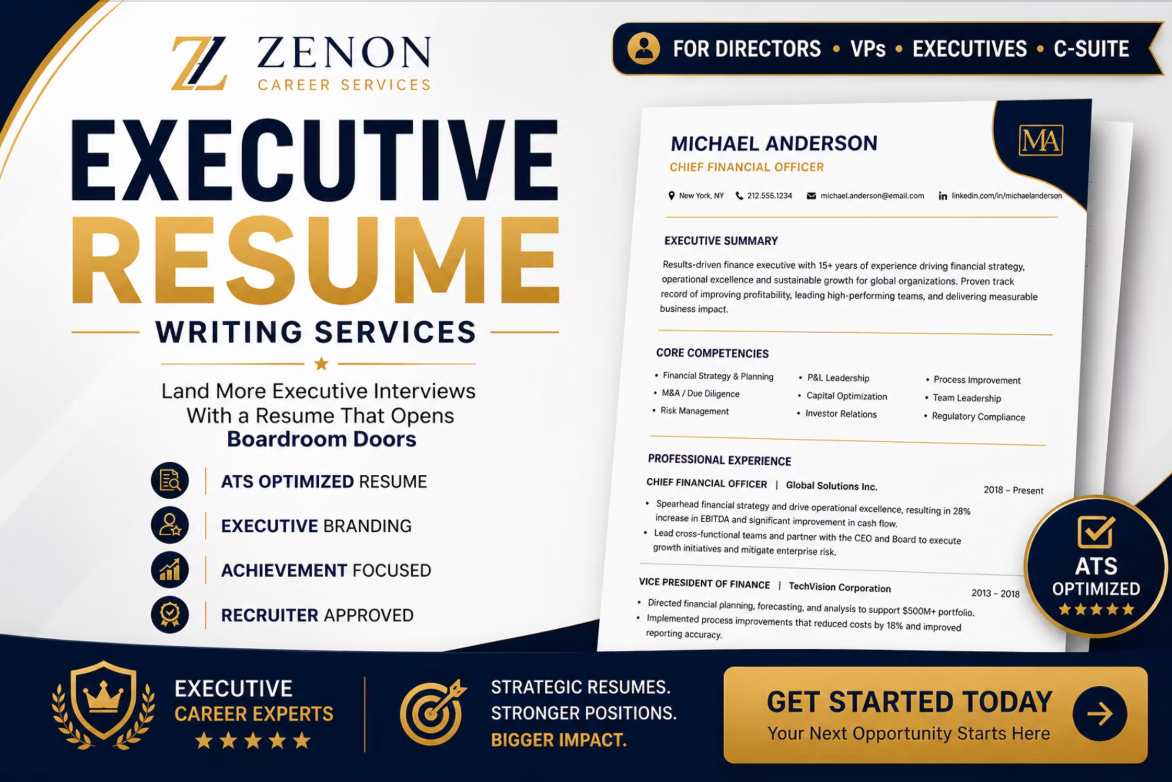
People will reach out to you when they need someone to help them apply to jobs, create resumes, or to optimize their LinkedIn profile. This works at every level, too – Zenon Career Services sells an executive resume package on Whop tailored specifically for directors, VPs, and C-suite clients, priced at $625 per service.
AI will do a lot of heavy lifting for you here. You can basically run the entire process with just a Claude subscription: research jobs and job descriptions, write and optimize resumes, create tailored cover letters, and so on, then get an agent to find leads for you.
- Startup costs: $0-$50 a month, though you could also create this with free AI tools.
- How to make it: Advertise your services on platforms like Facebook, Reddit, or LinkedIn. Reach out to job seekers and show them your AI-generated resumes, then set up your pricing tiers with Whop CLI.
- Agentic opportunity: An agent can monitor job-posting sites and LinkedIn for people who've recently changed job status, then send a personalized outreach message offering your service before they've even started applying elsewhere.
- Time to launch: 1 day
- Estimated income: $100-$2,000 a month
3. Market research and competitor analysis reports
Vibe coding is great, but building a business based entirely on vibes is less so. Every business owner needs some hard data in order to succeed.
That's why you can make good money by offering AI-based market research and competitor analysis.
You'll help answer the big questions: what the competitors are charging, where the gaps are, whether a new idea is even worth the time. Getting this information used to mean having to work with a five-figure agency on retainer, but now, you can replace that entire team with AI during the course of one afternoon.
You have to know what to look for. Once you do, prompt the AI, and it'll do the gathering and the synthesis. Tools with reliable web access, like Claude or Gemini, do well with these types of tasks.
- Startup costs: $0-$60 a month. Most free AI tools can do the trick, though a paid plan helps once you hit research limits.
- How to make it: Pick one industry and get to know it properly. Write two sample reports for real companies and use those to pitch. Sell the one-off report and the monthly monitoring as two separate products on your whop or through your own personal website.
- Agentic opportunity: Set up a recurring task that re-runs your competitor research on a schedule, weekly or monthly, and automatically refreshes the report for retainer clients, so the 'monitoring' product basically maintains itself.
- Time to launch: 1-3 days
- Estimated income: $300-$5,000+ a month
4. AI email marketing service
How many spam emails do you get per day? Plenty, I'd assume.
Email marketing is still one of the most effective channels out there: according to Litmus, it returns $36 to $42 for every $1 spent, beating paid search (~$2) and social advertising (~$2.80).
But small businesses and solopreneurs often don't know the first thing about email marketing, or understand what goes into creating a successful campaign. Basic research shows that you need at least a welcome sequence, a newsletter, and an abandoned cart flow, but how do you set that up?
You design the sequences and set the strategy, then AI takes it from there. It writes the emails, analyzes the product and market, and tracks open rates, click-through rates, and revenue per email so you always know what's working.
This type of gig screams for a retainer, and the retainer gets easier to hold onto the more of the day-to-day you hand off: once a campaign is live, there's no reason you need to be the one nudging subject lines or send times every week.
- Startup costs: $0-$100 a month. You'll usually work inside whatever platform the client already pays for, so you're mostly spending money on AI tools and Canva.
- How to make it: Build a sample welcome sequence for a brand you like and use it to pitch. Set the retainer up as a recurring subscription on Whop so that your clients can pay you easily.
- Agentic opportunity: An agent can watch a campaign's open and click-through rates and adjust subject lines, send times, or sequences on its own, so the retainer work becomes managing the agent's decisions rather than making every tweak yourself.
- Time to launch: 2-7 days
- Estimated income: $500-$6,000+ a month
5. Ad creative generation and testing for DTC brands
DTC (direct-to-consumer) brands live or die on their ad creative. They need more ads per month than most people care to watch.
Before AI, creating these ads meant finding copywriters, video makers, photographers, a studio, and more.
Today, AI can handle a lot of that work, but still, many businesses don't know how to achieve good results and stand out from the rest of the AI-generated crowd. After all, the ads still have to be high quality; they just want them to be both faster and cheaper.
That's your pitch: affordable ads at the pace the business needs, and increasingly, AI can carry the whole pipeline, not just the creative.
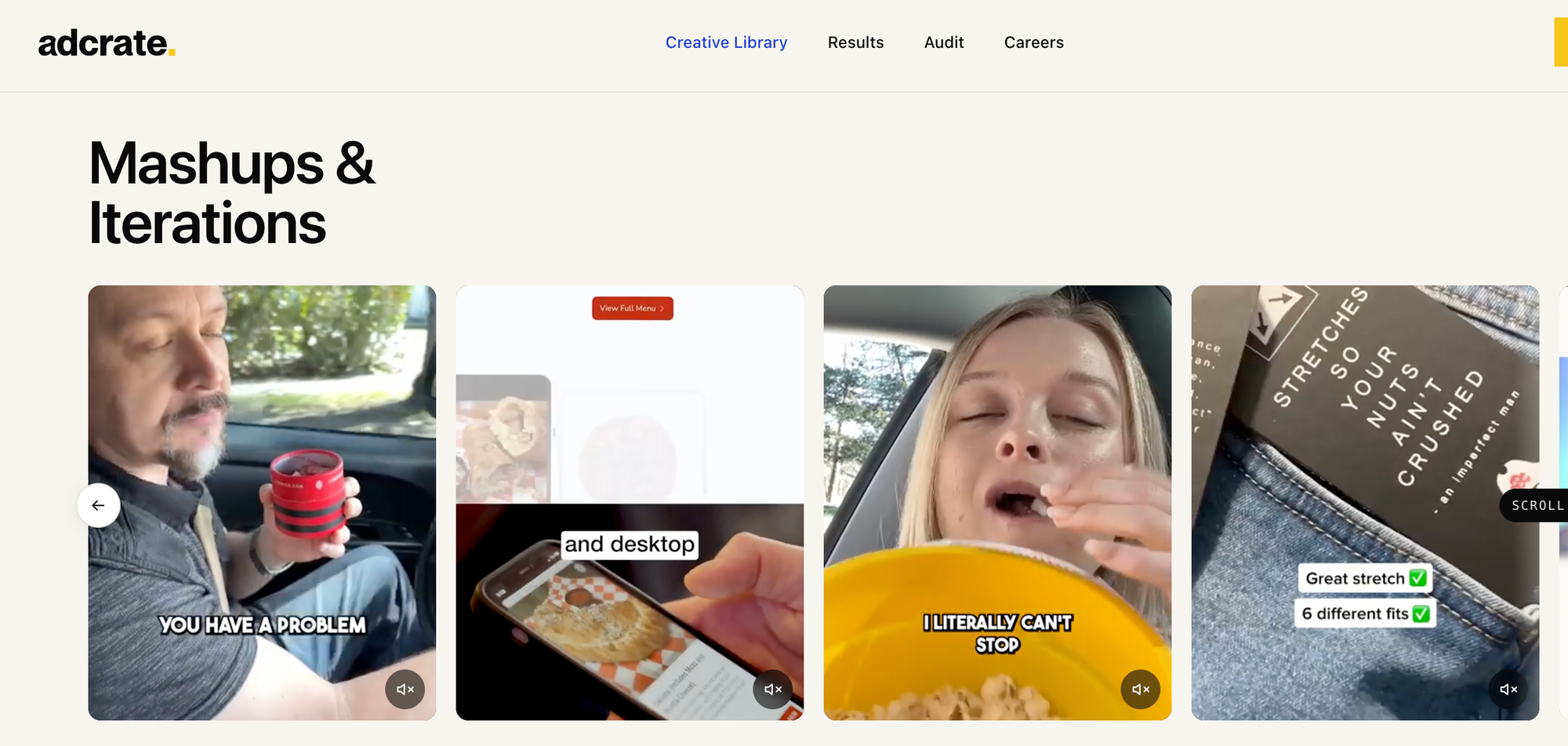
AdCrate, the agency run by Alex Cooper, works with eight- and nine-figure DTC brands like Huel, Licorice.com, and The Perfect Jean, leaning on tools like Arcads for AI-generated UGC video and ChatGPT to analyze reviews and competitors before a single ad gets made.
Keep in mind that Article 50 of the EU AI Act, in force since August 2026, requires AI-generated ad content to be clearly and machine-readably labeled as artificially generated wherever it applies. If you're working with brands selling into the EU, build that labeling into your workflow from the start rather than adding it in later.
- Startup costs: $50-$200 a month for image and video generation, plus an editing tool.
- How to make it: Make a spec reel for a brand you like and send it to them cold. Set up a portfolio website with Whop Blueprints to improve visibility and sell your service.
- Agentic opportunity: An agent can research a brand's competitors, generate ad creative using their real product catalog, and publish straight to Meta Ads Manager, cutting the entire loop from research to live ad down to minutes.
- Time to launch: 3-7 days
- Estimated income: $1,000-$10,000+ a month
6. AI-generated ebooks, guides, printables
With this AI side business, you'll be generating whole books, guides, and PDFs, then putting them up for sale – either one by one or in bulk.
This type of side income is referred to as selling digital products, and the "passive" part of it all kicks in once you have a few digital downloads under your belt, up for sale. At that point, your existing catalog stays online, available to anyone, while you work on the next set of products. The more products you sell, the higher the income.
Let AI handle the writing, and once you're comfortable with the process, it can handle the rest of the pipeline too – designing the cover, uploading the file, and setting the price – so you're reviewing finished products instead of assembling each one by hand.
- Startup costs: $0-$50 a month. You need an AI tool and something to design the PDF, and Canva's free tier covers most of it.
- How to make it: Prepare at least 5-10 products to start with. Upload them to your whop, set a price, and you get a checkout link that delivers the file automatically. Bundle the lot together as a higher-priced product once you have a few.
- Agentic opportunity: An agent can generate a new ebook or guide on a schedule, design the cover, upload it to your whop, and set the price, so you go from 'one product every few days' to a catalog that keeps growing on autopilot.
- Time to launch: 1-3 days for your first one
- Estimated income: $100-$3,000+ a month
7. Business, SOP, and pitch deck templates
Templates are the same business model as ebooks, but you're not selling these to individual people in need of fun or guidance.
In this instance, the buyer is a business, and the neat part is that businesses tend to have bigger budgets.
On the other hand, this is a more demanding sort of side business than making simple printables. You'll be making things like onboarding packs, pitch deck frameworks, hiring scorecards, client proposal templates, and more, all tailored to a specific field (and ideally, a specific business).
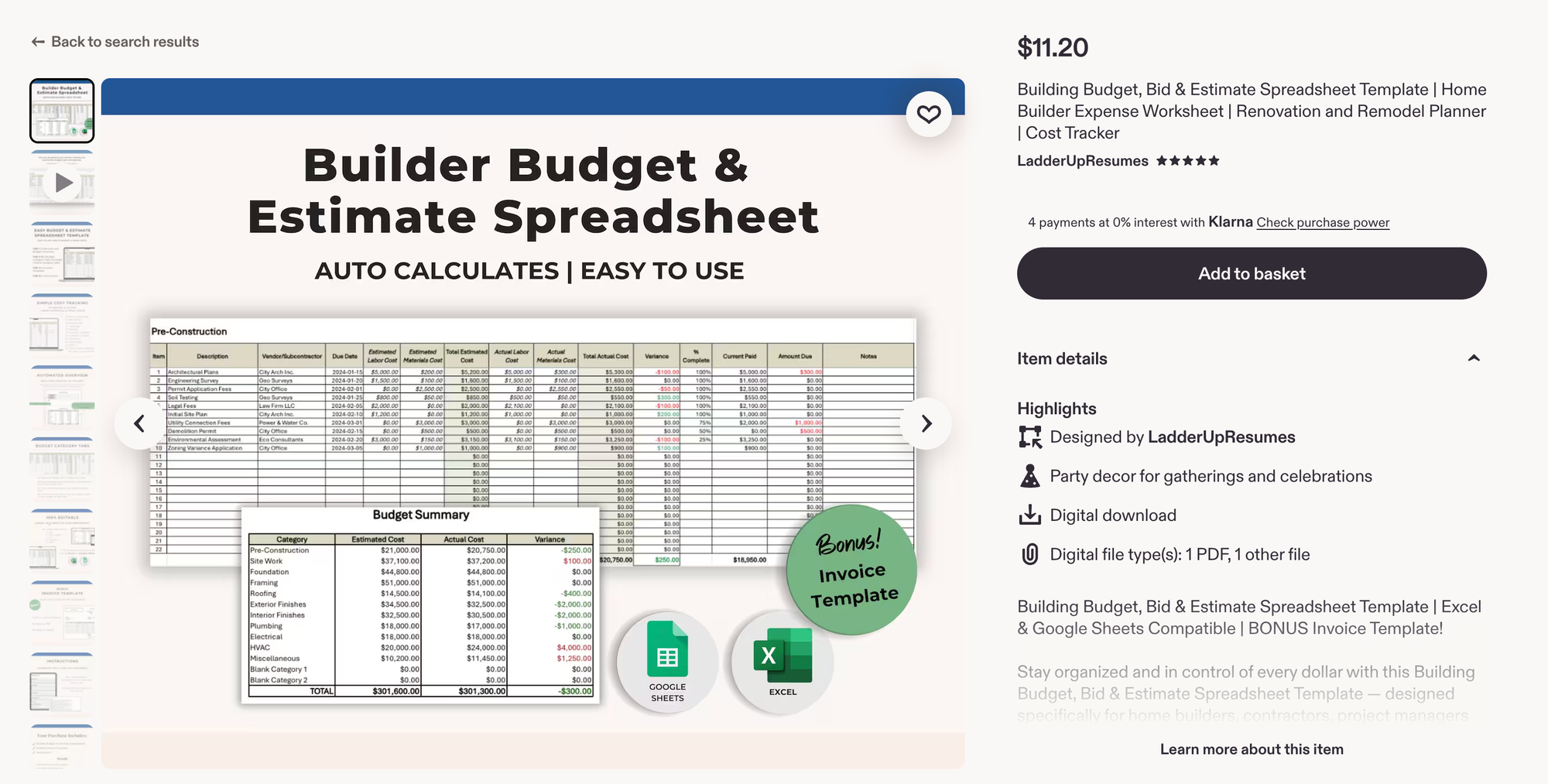
Like this one – an AI-generated builder budget and estimate spreadsheet. This cost nothing to create, and sells at $11.20, with over 300 sales so far.
Getting there starts with research: what does that industry already ask for on repeat, and what version of it doesn't exist yet? AI can help you find the gap, draft the document, and get it listed. You're mostly reviewing and refining rather than starting from a blank page.
- Startup costs: $0-$50 a month for an AI tool. Everything else you need is free.
- How to make it: Pick one industry you know. Build a bunch of useful documents and sell them in a bundle through Whop.
- Agentic opportunity: Get an agent to research a specific industry's common templates, draft each document, then create and price the product on your whop automatically.
- Time to launch: 1-5 days
- Estimated income: $200-$5,000+ a month
8. Custom AI prompt libraries for specific roles
You can use AI to create custom AI prompt libraries, and then sell them. The key is to distinguish between prompts that most people have no use for, and prompts that can be worth their weight in gold.
A prompt that helps someone write a birthday message or a few jokes isn't really worth paying for; anyone can do that by themselves. But a prompt pack that helps a recruiter scan through dozens of applications or a realtor write copy for every listing they're looking after translates to monetary gains, and that's what makes it worth checking out.
PromptBase, the marketplace founded by Ben Stokes, proved there's real demand here: it passed 11,000 users in its first month alone, and today its top sellers pull in $500 to $3,000+ a month just from their prompt libraries.
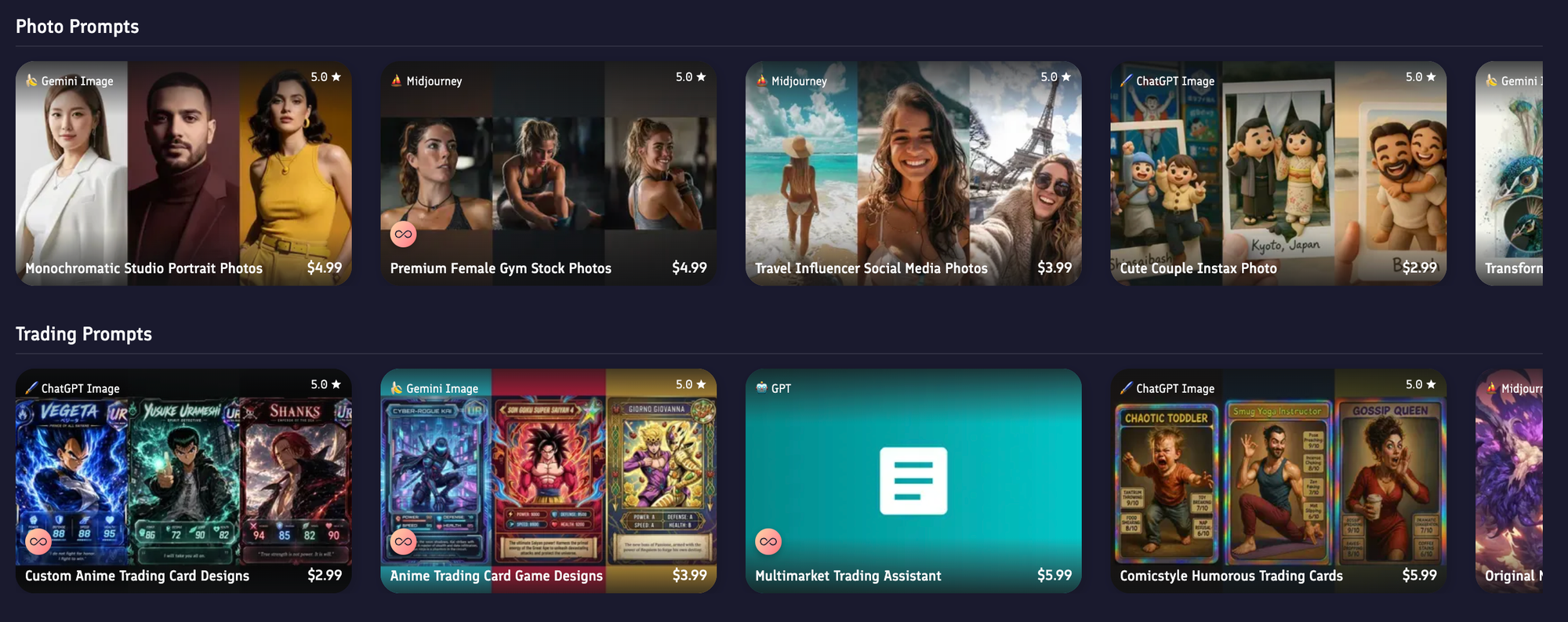
Speaking to Fast Company on the story behind PromptBase, Stokes says that he came across a need for prompts when trying to build another project:
“I wanted to buy a battle-tested prompt that could basically, you know, correct handwriting mistakes”
- Ben Stokes
This is the same pattern we keep coming across: solving a problem that you have yourself. The trick here is to look for repetitive tasks. Think of things people in specific industries have to do time and time again, and then figure out how to reduce that time sink for them.
One-off tasks won't have people clamoring to buy your AI prompts, but if it's a recurring net gain, the tables turn in your favor.
- Startup costs: $0-$50 a month for an AI tool. Paid versions are usually worth it here as you'll be working with robust prompts.
- How to make it: Focus on some industries you either already know or are willing to research, then brainstorm some recurring tasks your prompts could automate for them. Then, reach out to people directly or advertise your services in industry-related spaces, such as forums or Reddit.
- Agentic opportunity: An agent can monitor a niche's forums or subreddits for recurring complaints or repetitive tasks people mention, turn the best ones into new prompts, and add them to your existing pack.
- Time to launch: 1-5 days
- Estimated income: $100-$3,000+ a month
9. Flashcards and study tools for specific certifications
People studying for a certification are basically the ideal customer: they really want to succeed. If you can help them, they'll pay you.
Take the AWS Solutions Architect exam, for example. Students need to pay $150 to get certified, so passing the first time is important. If you can provide them with useful materials, from quiz banks to AI-powered study tools, you've got one foot in the door.
Jon Bonso built a business this way. Tutorials Dojo started as a side project on Udemy and now has over 280,000 enrollees preparing for AWS certifications through its practice exams and study materials. It predates today's AI tools, but it's proof the demand is real.

AI now makes building your own version of that practice-exam catalog dramatically faster. Feed it the official exam syllabus, and it'll generate hundreds of questions and resources for you to sift through. Pick the ones that are genuinely outstanding and sell them as a full-on certification bundle.
- Startup costs: $0-$50 a month. A subscription to something like Claude or ChatGPT should get you through most of it.
- How to make it: Study for and take the exam you want to sell materials for, then make a list of things you wish you had when you were taking that same exam.
- Agentic opportunity: Have an agent watch for updates to an exam's official syllabus, regenerate the affected questions, and republish the bundle, so your material doesn't go stale the next time the certification body changes the test.
- Time to launch: 1-4 weeks
- Estimated income: $300-$5,000+ a month
Video, audio & content repurposing
In the early days of the ChatGPT boom, AI videos could give you nightmares. Uncanny valley doesn't even begin to cover the monstrosities we were all subjected to (check out this AI slop article for a recap on what I mean).
Now? AI video and audio are slowly becoming indistinguishable from the real thing. You probably see dozens of them each time you scroll through TikTok without even knowing.
This means you can make some serious money with this skill, provided you use the right tools and the best possible prompts. You can take this to the extreme level by creating a whole AI influencer and making money from it, but most people succeed with much less outlandish gigs.
10. Clipping/short-form repurposing service
Every content creator, be they a YouTuber, TikToker, Instagram star, or streamer, is sitting on hours upon hours of unedited footage that nobody's going to watch.
Knowing how to find the right clips is a key skill that many people don't have (and it's incredibly time-consuming). Clipping content takes hours without the help of AI.
AI will find the right moments in content, cut the video to match a particular platform, add captions, and take the next step too: scheduling and posting the finished clips itself.
There are two ways to monetize this kind of skill: You either offer it as a service or do it yourself for your own gain. For the first, you take long-form content from various clients and cut it into viral-worthy clips, charging a retainer for your services. Do this yourself, or create a clipping agency and have others do the work for you.
And the second? You can use Content Rewards, where brands upload their source footage. You clip it, post it on your own accounts, and get paid on verified views.
- Startup costs: $0-$100 a month. Plenty of clipping tools have free tiers, although you may get better results with a paid option.
- How to make it: Look up some creators you like and clip some of their content, then reach out to them and offer your services, showing those examples. Once they say yes, use Whop CLI to create the retainer product and get a checkout link to send them.
- Agentic opportunity: An agent can monitor a creator's new long-form uploads, pull the best moments, edit and caption the clips, and post them across TikTok, Reels, and Shorts on a schedule.
- Time to launch: 1-3 days
- Estimated income: $100-$5,000+ a month
11. Podcasting
Hosting a podcast used to mean a host or two, some guests, and an hour or two of conversation. And yes, doing that can bring good money once you build up enough of an audience, but not everyone has the skills or the will to make their own podcast.
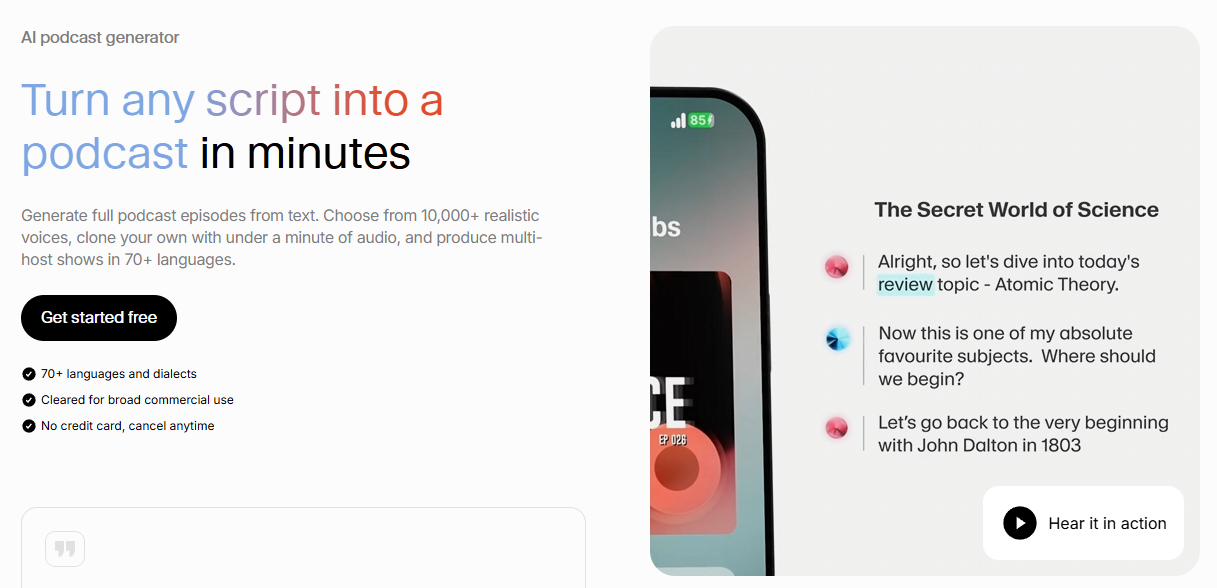
ElevenLabs is perhaps the most popular tool that lets you generate an entire podcast just with AI. It can create voices that sound human without that eerie hint of robotic undertones that many chatbots still have.
The way this works is you can write a script for an episode (with AI) and then have the app read it out loud with voices that never existed.
If you prefer to keep it more personal, record yourself and let AI handle the cleanup and the editing instead.
- Startup costs: $5-$100 a month. ElevenLabs has a free tier, and paid plans start cheap. You can host your podcast on Whop for free.
- How to make it: Pick a topic that you're interested in. Record yourself or use ElevenLabs. Monetize it through Whop.
- Agentic opportunity: Once you've got a format down, an agent can research trending topics in your niche, draft the next episode's script, generate it with ElevenLabs, and queue it for your review.
- Time to launch: 1-2 weeks
- Estimated income: $100-$3,000+ a month
12. AI audio services
Tied to the above, you can build a business using AI to handle audio – and not just for podcasting.
Voiceovers and dubbing are in serious demand right now, and the right AI tool lets you offer this as a service without ever touching a microphone yourself. Most requests will be for short-form videos like TikToks or Reels, but long-form content is where the real money is: adding a voiceover to a 20-minute video is a hassle most creators would happily pay someone else to handle with AI.
The demand is real. Voices, one of the largest voice-talent marketplaces, reports that talent earnings on its platform are up 170% since 2023, largely driven by AI voice work, and says a single branded AI voice deal can pay up to 85x more than a traditional voiceover job.
Audio cleanup is another service you can build around the same skill. A typical video or podcast is full of "uhh," "umm," and awkward pauses. Cleaning that up used to mean hours of frankly boring manual work. Now, you can offer to strip it all out for clients using AI instead.
- Startup costs: $5-$100 a month. ElevenLabs and Adobe Podcast both have free tiers, and paid plans are cheap enough to cover with your first client.
- How to make it: Build a before-and-after reel, since this is a job people need to hear to understand. Decide on a per-minute rate, then use Whop CLI to create the product and send clients a checkout link once you land one. Offer retainers to regular creators to secure a monthly income.
- Agentic opportunity: An agent can watch a client's upload schedule, automatically pull new raw audio as it lands, run the cleanup pass, and deliver the finished file.
- Time to launch: 1-5 days
- Estimated income: $200-$4,000+ a month
Workflow automation & tools for businesses
Time is money, especially when you're running a business. And despite the AI boom, many businesses waste precious hours on tasks that could be automated.
It's not that these businesses don't want to use AI. It's that they don't know how to. Service Direct's 2025 Small Business AI Report found that among small businesses that haven't adopted AI, 62% cite a simple reason: they don't understand what it could actually do for their business.
That's the opportunity. They're sitting on workflows they've grown used to, with no time or expertise to fix them – and that's your opportunity.
Two paths open up from here: build the tools and sell them (vibe code them if you like), or set the whole thing up for a business and charge a monthly subscription to keep it running.
13. Workflow templates sold as one-time products
All the AI tools and services in this section have one thing in common: you build something for someone else to save time. Creating workflow templates is a great example of this.
An n8n, Zapier, or Make workflow is essentially just a file you can export. They're some of the top products to sell right now.
A lead comes into the form, gets enriched, lands in the CRM, fires a Slack alert, and triggers a follow-up email. Build it once, you can sell it and adapt it for hundreds of new customers, too.
There's an obvious objection to tackle: n8n has free templates, some of which will do about the same as yours.
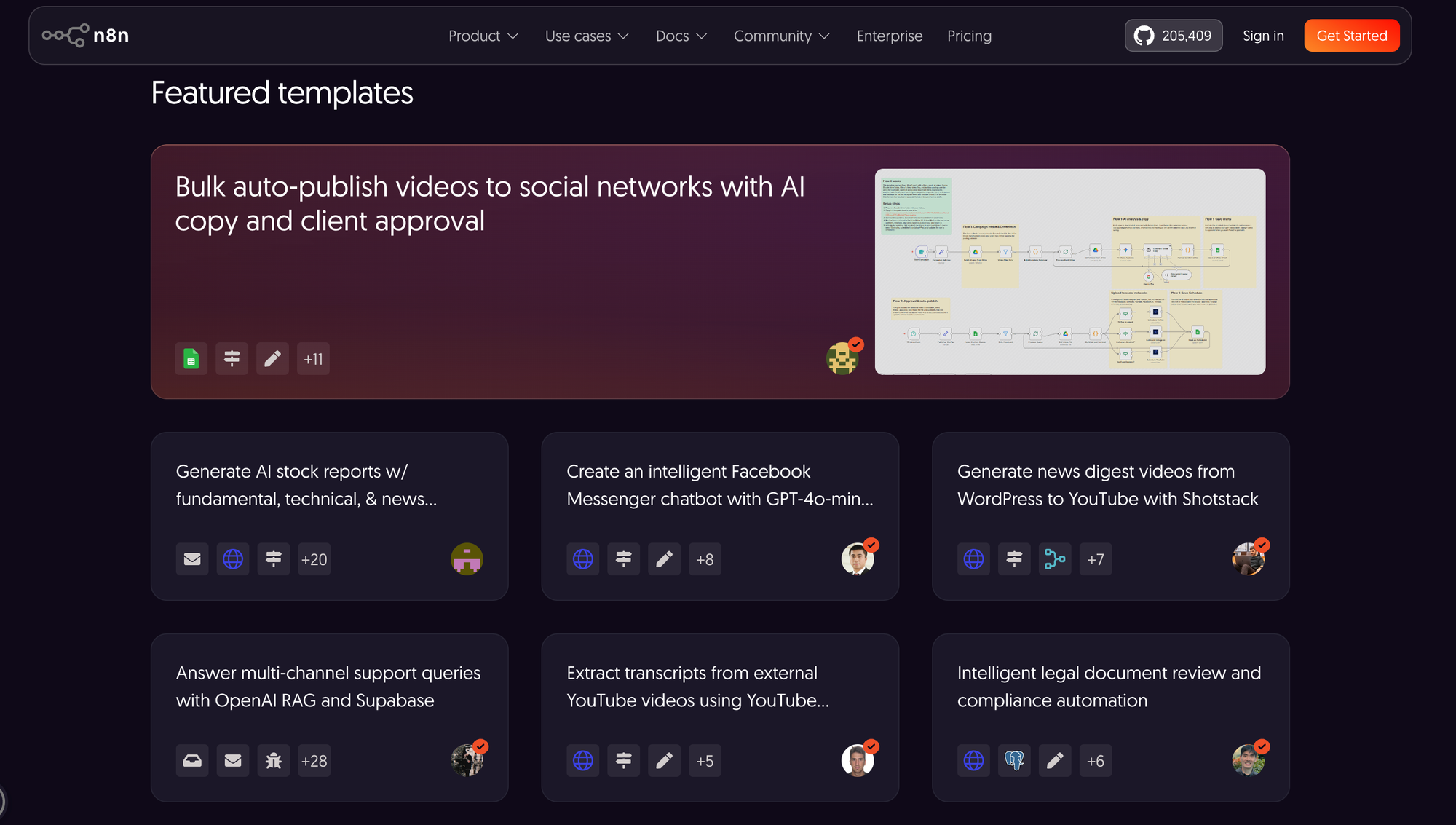
But paid templates are on n8n's own roadmap. The platform's Creator Hub, home to a 40,000+ global community, lists the ability to publish paid templates as a perk for verified creators, and n8n says it's already seen creators making solid money from their templates.
That's why you should test your own workflows and use AI to improve them, as well as tailor them to specific businesses or professionals. The more you know the core of the business, the better your template.
- Startup costs: $0-$50 a month. n8n is free to self-host, and Zapier and Make both have free tiers, so you may only need to pay for the AI tool.
- How to make it: Pick one industry and figure out what's a painful, long process that could be automated. Build it, find ways to break it, then fix it to make sure it's fail-proof.
- Agentic opportunity: An agent can monitor how your templates perform in the wild, flag the workflows that break most often, and draft a fix, so the maintenance side of a growing template catalog doesn't fall entirely on you.
- Time to launch: 1-2 weeks
- Estimated income: $200-$4,000+ a month
14. MCP servers for a business's existing tools
If you know your way around this topic, you could strike gold, but this one is fairly technical.
An MCP server exposes a piece of software's data and actions so an AI assistant like Claude, ChatGPT, or Cursor can use them directly. There's no training involved, it's just a standardized way for the AI to call the tools and pull the data it needs.
Suryansh Jaiswal, founder of 1ClickReport, learned this firsthand: he built his product's dashboard first and its MCP server second, connecting it to a business's Google Ads, Shopify, and Stripe accounts so an AI could surface wasted ad spend and revenue issues in plain English.
Six months in, he wrote that the MCP layer, not the dashboard he'd originally led with, had become the part of the product actually winning customers.
For you, the opportunity lies in building those connections for software that doesn't have one yet, then locking it behind a monthly paywall that makes sure those businesses keep coming back to you.
Claude Code or Cursor will write most of the actual code if you can describe what you need, which means you'll need a good understanding of the field to achieve good results.
- Startup costs: $20-$200 a month. Investing in a paid AI plan will pay off tremendously here.
- How to make it: Pick one piece of vertical software with an existing API and no MCP server. Build it, then gate it with Whop.
- Agentic opportunity: This one's already halfway there by design. Once the MCP server is live, an agent uses it continuously, checking a client's numbers on its own schedule and flagging problems before the client even asks.
- Time to launch: 2-6 weeks
- Estimated income: $500-$8,000+ a month
15. CRM setup bundles for local businesses
The days of writing dates down in a little notebook are so over. Plumbers, dentists, gyms, hair salons … all these businesses live or die by their CRM software.
The problem is that many businesses don't have anyone who can set this up for them and help them if something backfires.
Building them a robust CRM can become a profitable AI side business that gets you paid every month (if you build it as a SaaS). Explore what that particular field needs and adjust the CRM to match, with basic features like missed-call text-back, automated booking reminders, review requests, or follow-ups.
There are white-label CRM and automation platforms built specifically for this: they bundle the CRM with the automations, and you rebrand the whole thing under your own name. The client never needs to know what's running underneath, they'll just see your own service.
- Startup costs: $97-$300 a month for an agency-tier plan on a white-label CRM platform.
- How to make it: Pick one trade and learn how it actually runs. Build a demo account for that industry and show it to people rather than describing it. Take the setup fee and the monthly retainer through Whop so the recurring side handles itself.
- Agentic opportunity: The CRM's automations are already agents in disguise: missed-call text-backs, review requests, and follow-ups all run without the business owner lifting a finger. Your job is picking which ones to turn on for each client.
- Time to launch: 2-4 weeks
- Estimated income: $500-$7,000+ a month
16. Website audit and optimization service
Many businesses have their own websites. But a lot of these websites are awfully unoptimized.
Images that aren't compressed may take ages to load. No meta descriptions can hurt a website's SEO. Broken links are off-putting to new clients.
No one's going to tell these businesses about this, as most people just close the site and go to a competitor. That's what makes this type of service so valuable: you can be the one to tell them, and to help them fix it.
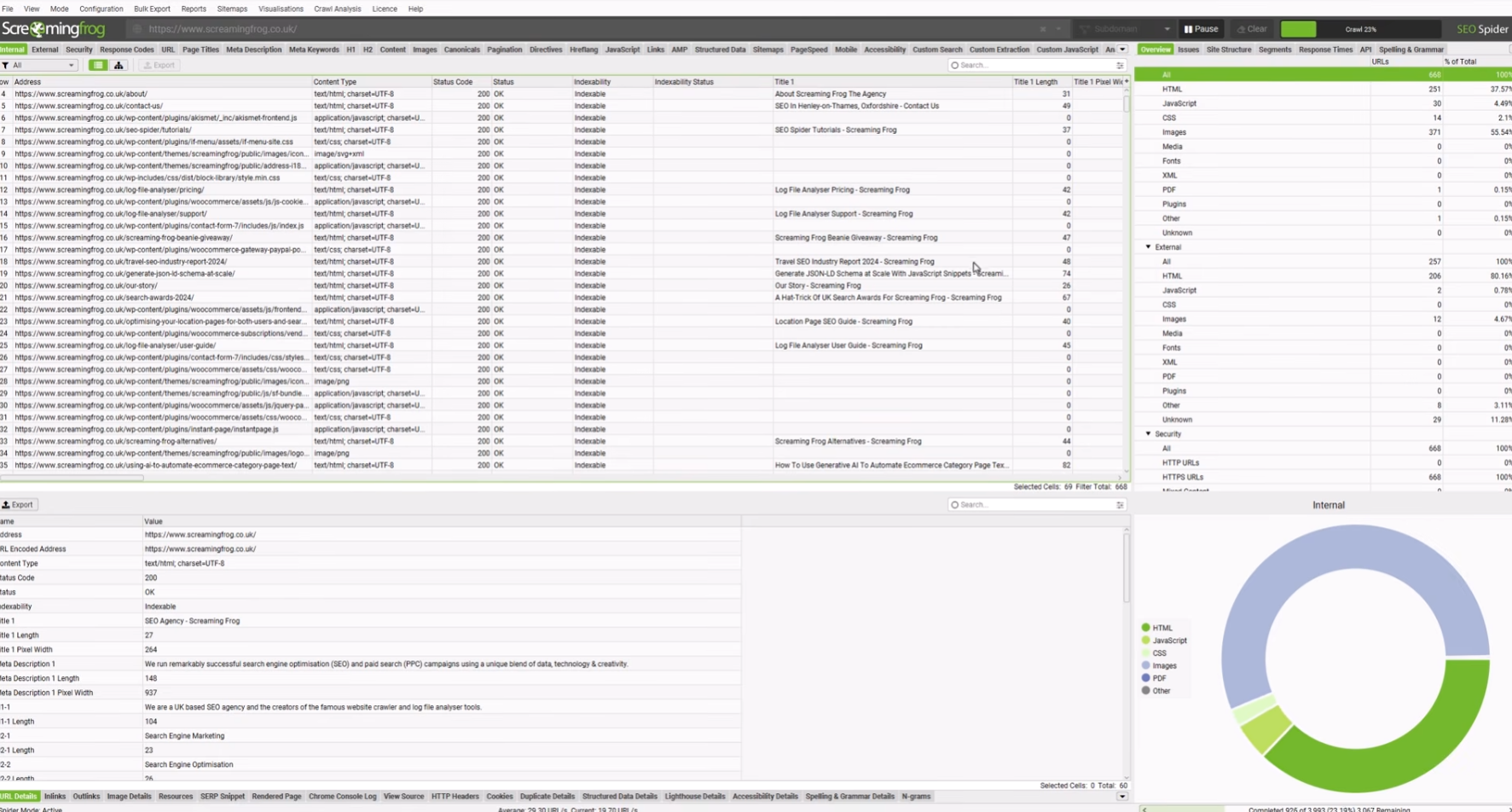
You can run a site through an SEO crawler like Screaming Frog to surface every technical issue – broken links, missing meta descriptions, slow-loading images – then feed those results into an AI like Claude or ChatGPT to turn them into an easy-to-follow report for the client.
What would take dozens of hours to do manually now takes minutes, and since a website never stays fixed for long, there's a natural upsell in running that same audit again every month instead of treating it as a one-time job.
- Startup costs: $0-$500, depending on how many tools you actually sign up for. A lot of this can be done for free on a smaller scale.
- How to make it: Start by setting up a high-quality website with Whop Blueprints or Claude Code. Pick an area and an industry, then have AI find some small businesses for you to audit. Audit them for free, reach out with a sample, and offer to fix their problems.
- Agentic opportunity: An agent can re-crawl a client's site every month, compare it against the last audit, and draft an updated report automatically, meaning a one-off audit becomes a recurring product without recurring manual work.
- Time to launch: 2-5 days
- Estimated income: $300-$5,000+ a month
17. AI decks and investor updates for small businesses
If there's one thing AI is great at, it's data, and data is precious to small businesses.
Many of them have investors, and those investors don't usually love waiting for weeks to receive a poorly made Excel spreadsheet with updates on how the business is doing.
Automating this with AI lets you help founders who already have too much on their plate. Lucid Financials built an entire business on this idea: an AI-powered accounting service for startups that turns bookkeeping into one-click board reports and investor updates, with founders crediting it for cutting hours of manual reporting into minutes.
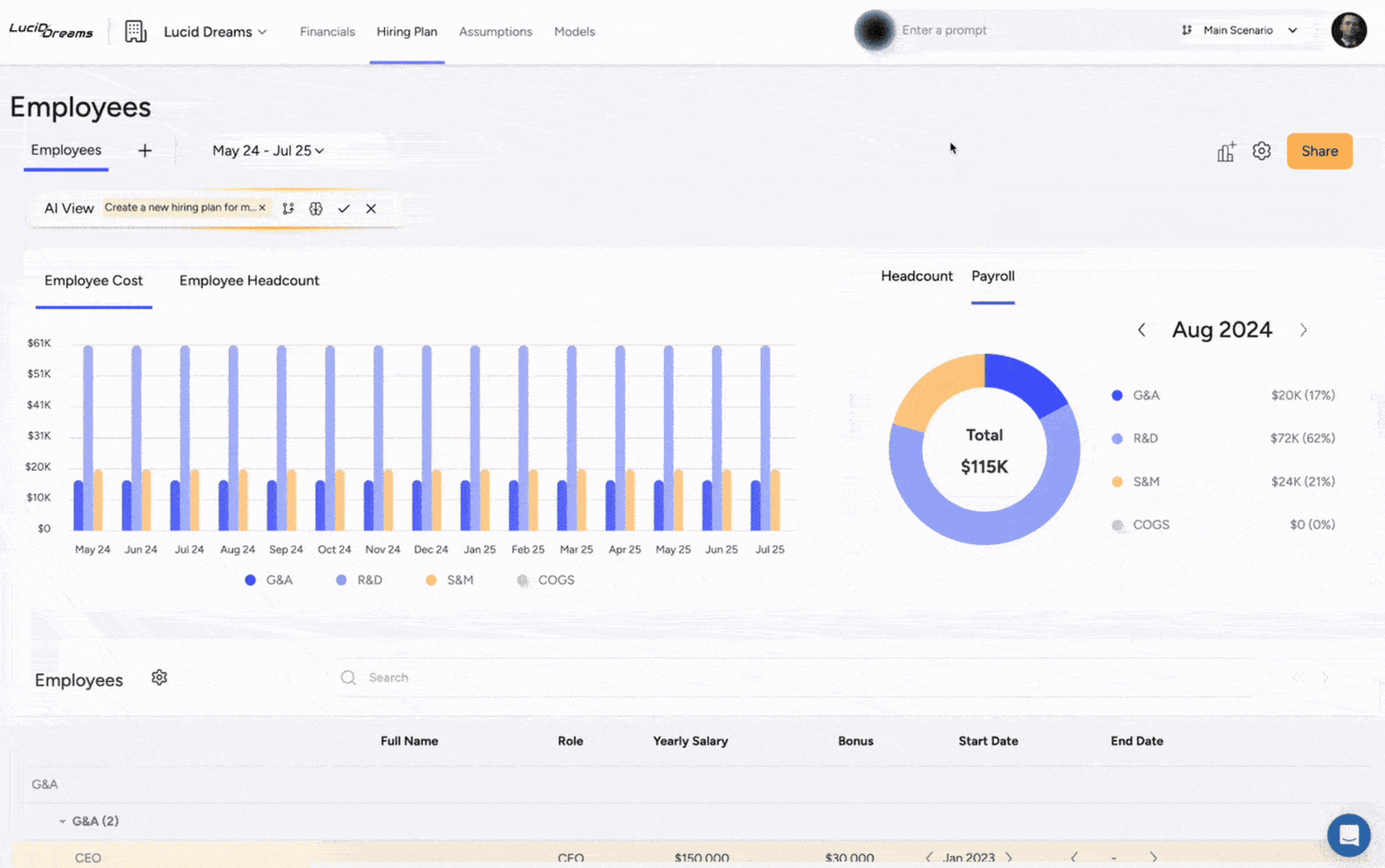
You'll use AI to pull the numbers, analyze them, and create optimized decks, emails, sheets, and graphs that make the data look appealing.
Make money by getting your clients to sign up for a monthly or quarterly subscription. You'll keep tabs on everything and deliver ready-made reports for them; they'll pay you a good sum of money for the peace of mind.
One thing that's somewhat unique to this AI side business: Have an NDA ready. You'll be privy to some of the most valuable information about these businesses.
- Startup costs: $0-$50 a month. A paid AI plan helps a lot, but you can get by with cheap or free tiers.
- How to make it: Use AI to make up some data for a sample company in an industry you want to pitch to, then create example decks/presentations and send them out.
- Agentic opportunity: Set up an agent to pull the latest numbers on a schedule tied to your client's reporting cadence, and draft the updated deck before the deadline.
- Time to launch: 2-10 days
- Estimated income: $200-$3,000 a month
18. Reusable brand design systems
Every new business, or even just one in need of a change, needs the same set of things.
Logos, website layouts, color palettes, fonts that work together, social templates … everything needs to follow that same branding for it to work well together. Typically, this type of work is handed off to a designer, but some clever prompts and the right tools get you good results much quicker. Depthlogix sells this range on Whop, with logo design, t-shirt design, and UX design all as separate products clients can pick from.
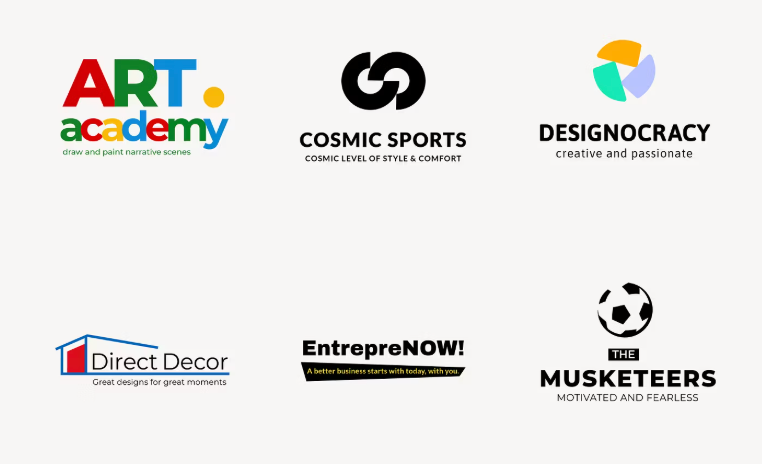
Preparing brand design systems means designing the complete kit, with various logo variations, type pairings, Canva templates, and social post layouts, plus a short guide explaining how to use them.
AI can do a huge chunk of this job for you, making up palettes that work well together and turning them into brand assets. For logos, use your own creativity combined with AI to make some eye-catching options.
If you niche down, this side business has legs: you need to know the trends in your field instead of just going by what you think looks nice. Once you've built that eye, you can hand the ongoing trend-watching to AI, letting it flag shifts in a niche's visual style and draft a new kit variation whenever one's worth acting on.
- Startup costs: $0-$50 a month. Canva and Figma both have usable free tiers, and a paid AI plan is optional.
- How to make it: Pick one industry and build three complete kits for it. Sell exclusive and non-exclusive licenses as separate products on your whop.
- Agentic opportunity: Get an agent to track what's trending in a niche's visual style, generate a new kit variation to match, and list it as a fresh product, so your catalog keeps pace with a niche's changing look.
- Time to launch: 1-7 days
- Estimated income: $50-$2,000 a month
19. AI-enhanced virtual assistant (VA) service
You can make decent money as a VA, but you can make even more money as a VA who's fluent in all things AI. According to a 2026 analysis of over 8,700 VA job postings, small businesses now search for AI help 24 times more often than they search to hire a virtual assistant, yet only 0.2% of VA job postings actually mention AI tool proficiency as a requirement. Meaning, the demand is there, but almost nobody's positioning themselves to meet it.
The best way to make serious money here is, unsurprisingly, going a bit more niche than just a "jack of all trades." A VA with some understanding of the industry, be it a law firm or a plumbing business, can truly step in and carry some serious weight.
Want something more hands-off? Instead of being the VA yourself, you can run one. Handle the client relationship and the judgment calls, and let an agent handle the emails, the calendar, the meeting notes, and the follow-ups underneath you. Meaning, you're not doing fewer hours of VA work, you're doing zero hours of it, and managing the system that does instead.
- Startup costs: $0-$50 a month for an AI plan and a password manager.
- How to make it: Start with low rates to build up some experience and references.
- Agentic opportunity: Have an agent handle the emails, the calendar, the meeting notes, and the follow-ups, while you're the person managing it and stepping in when judgment calls come up.
- Time to launch: 0-3 days
- Estimated income: $200-$2,000+ a month
20. SOP and documentation service
You know how programmers and developers always talk about needing good documentation? They're not wrong.
If you have a tool or a process within a company, and nobody knows that process from A to Z, that's risky. According to McKinsey, the average knowledge worker loses 1.8 hours a day – a full workday a week – just searching for information that a proper document would have already had.
Fortunately, you can make good money getting businesses out of that pickle with the help of AI.
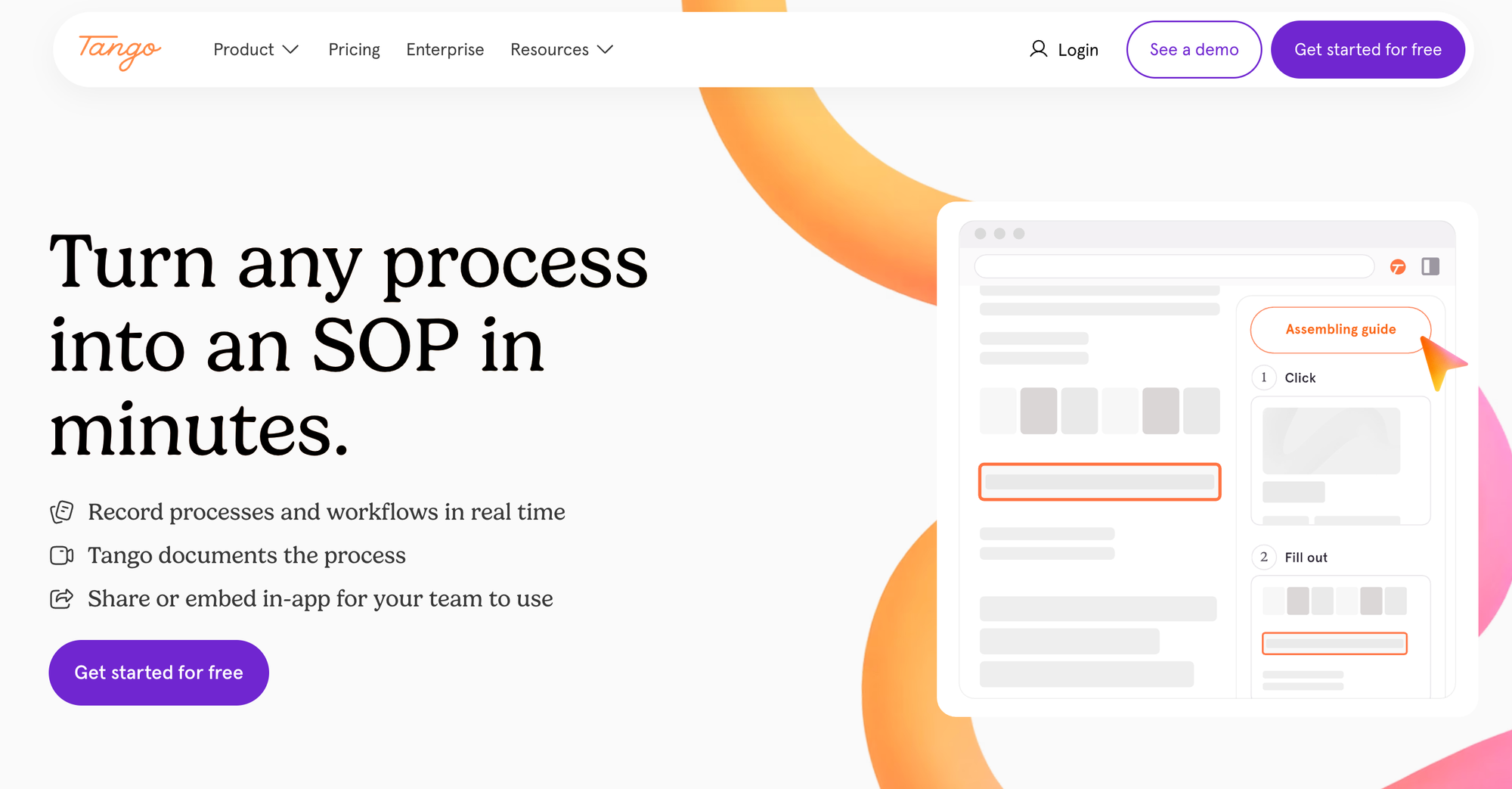
Gather what the business already has on its existing procedures, and if anything's missing, learn the process yourself. Feed all of that to an AI and let it turn it into a clear, in-depth process doc that guides anyone through it.
This is more often done as a one-off, but some businesses need recurring documentation, so offer packages that work for both types of clients.
- Startup costs: $0-$50 a month. All you really need is a paid AI plan (not necessary) and a transcription tool (depending on the gig).
- How to make it: Reach out to businesses via LinkedIn and advertise yourself on platforms like Reddit or Whop Discover, as it's hard to guess which business might need this service. Set up payments on a per-project basis.
- Agentic opportunity: For recurring clients, an agent can watch for signs a process has changed (a new tool, an updated form, a different workflow step) and flag or draft the doc update itself.
- Time to launch: 2-5 days
- Estimated income: $500-$6,000+ a month
Life admin, niche personal & local business ideas
New side business owners often worry about niching down too much. Yes, it narrows your customer base, but that's often the point.
For most of the ideas on this list, picking a niche is what makes you the obvious choice instead of just another option in a sea of people doing the same thing with AI.
Most people, even your elderly relatives, can use ChatGPT to some extent. To make your AI business stand out, you need to tailor it to specific people or businesses; that gives you an edge that translates to higher rates.
21. Digital legacy and memoir services
Do you have a box of memories in your house somewhere? Photos, maybe a few old home videos, some jewelry or letters … Stuff you don't want to throw out, but don't know what to do with.
You do? Well, so do most people. And many of us also have a "digital box" with more of the same thing, including voice recordings or emails (that usually costs us a lot of money in cloud storage to keep online).
AI lets you make sense of all those disconnected pieces and turn them into something real – a proper book, ready to print. The Life Before Me runs on this model: family members purchase a memoir as a gift, the storyteller records voice conversations answering guided prompts, and a multi-stage AI pipeline turns those recordings into a professionally designed hardcover book, no typing required.

This is a fairly intimate sort of service that requires a lot of empathy and people skills, and AI can't replace that, but it'll help you with all the tedious legwork that goes into putting the memoir together.
- Startup costs: $0-$50: all you really need is an AI plan and a transcription service.
- How to make it: Start by making a couple of these for your own family first, then share parts of them as your portfolio. Set up social media profiles to advertise your services.
- Agentic opportunity: An agent can run the ads targeting people around common gifting moments (Mother's Day, a parent's milestone birthday), handle inbound inquiries, and book the first call.
- Time to launch: 1-7 days
- Estimated income: $100-$1,000 a month
22. AI-assisted genealogy research and family history books
Following from the previous one, you can do more than just help people piece together old memories: You can help them uncover their past.
This role is more of a detective, but it still requires great people skills. You'll be working backwards through records, and AI can do a lot of the heavy lifting in the research required for that.
DNA test services are pretty widespread, so you may sometimes be hit with what feels like a hopeless case of tracing family back through the entire globe. You'll need to be patient, but most of all, proficient in AI research. There's no shortage of people to help – AncestryDNA alone has over 30 million people in its network, and the global ancestry testing market is worth $2.89 billion this year, which means millions of people are sitting on DNA results and family trees they don't have the time or skill to fully make sense of.
- Startup costs: $20-$200 a month. For optimal results, a paid subscription to something like ChatGPT or Claude is needed. You can also subscribe to various archives.
- How to make it: Specialize in one region or diaspora rather than generic genealogy. Buy access to a couple of relevant archives, then build a free sample tree for a volunteer family as your portfolio piece. Price per generation researched, since the search gets harder the further back you go.
- Agentic opportunity: Once you've specialized in a region, an agent can run the first pass on a new client's records, searching the archives you've bought access to and drafting a preliminary tree.
- Time to launch: 1-7 days
- Estimated income: $100-$1,000 a month
23. Hyper-specific comparison sites
This AI side business lets you take the idea of "going niche" to the next level. Say that someone out there is trying to figure out which dog DNA test is worth buying, or which wrist brace brings the greatest pain relief.
These people will turn to search, and will find some thin AI-generated insights based on a random Reddit thread from a decade ago. But if you were to set up a comparison site in an underserved niche, they could be finding your website instead.
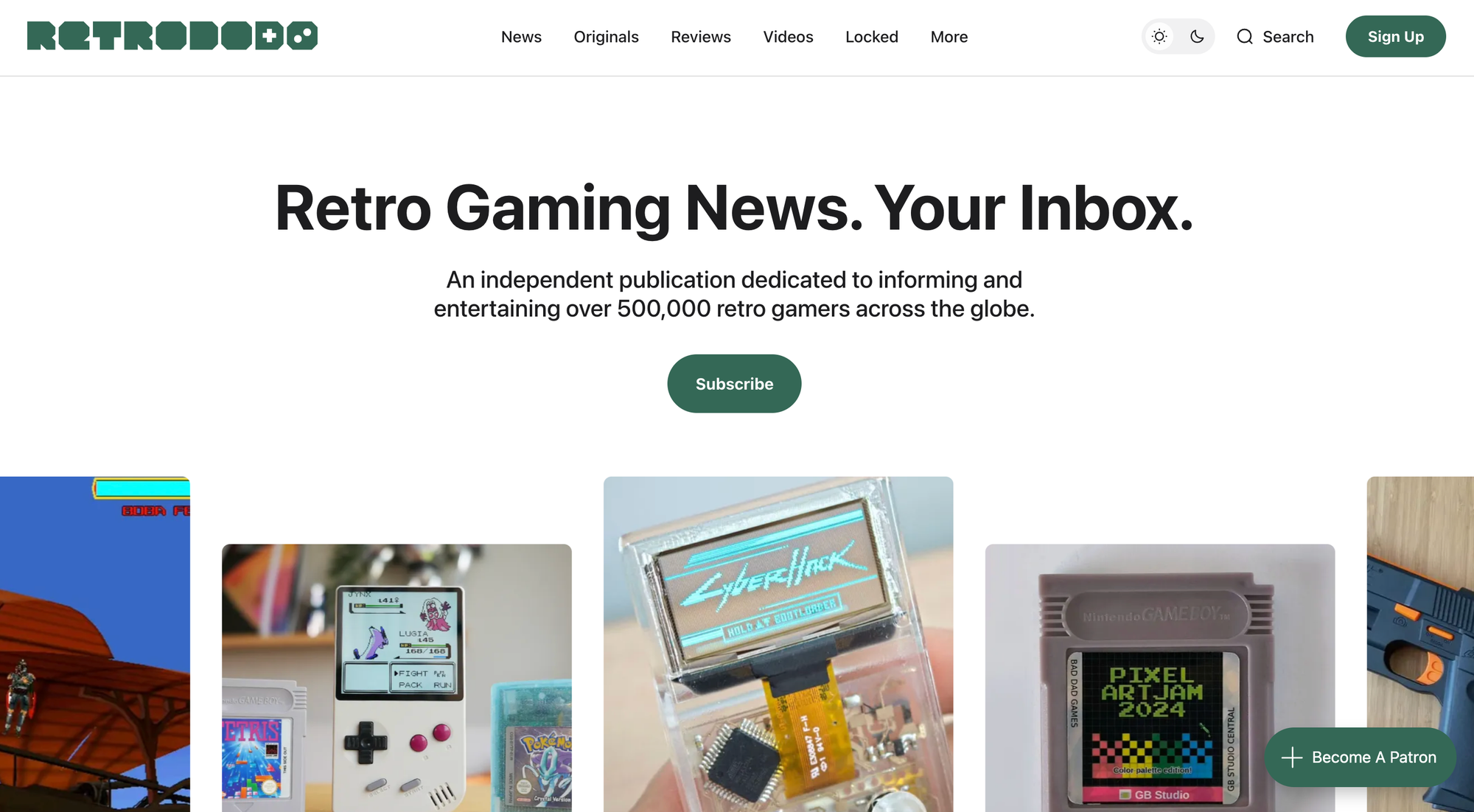
Brandon Saltalamacchia built Retro Dodo around one hyper-specific niche – retro gaming console reviews – and grew it into roughly $8,000 a month in affiliate income, hitting $55,000 in a single month three years after launch. It took Brandon years of manual reviews and writing to get there; the underlying appetite for hyper-niche comparison content hasn't changed, but AI now cuts that build time down to weeks.
It'll take time for the money to start rolling in, so your best bet is to set up multiple sites and treat them as semi-passive income. For more on making that work long-term, see how to generate passive income with AI.
- Startup costs: $10-$50 a month for hosting and a domain, plus whatever AI plan you use to code the site.
- How to make it: Make your own website with Whop Blueprints, then generate comparisons with AI. Invest in real-world videos and images to improve the site's credibility. Run the whole thing through Whop CLI: create and price your own products alongside the affiliate links, launch ad campaigns to drive traffic, and pull your stats to see which pages are converting.
- Agentic opportunity: Prices, stock, and reviews on the products you're comparing change constantly. An agent can re-check them on a schedule and update your pages automatically, so a "which dog DNA test is best" page from six months ago doesn't quietly go stale and start recommending something that's no longer the best option.
- Time to launch: 1-2 weeks to build, but up to a year to start earning
- Estimated income: $0-$2,000 a month
24. Non-dating matchmaking tools
Forget Tinder; who's going to help you match with a roommate who doesn't make you want to move to a farm and live like a hermit?
Non-dating matchmaking tools can be vibe-coded in a couple of days, and you might be able to charge decent money if you solve people's actual problems. Bunky proves the model works. It's a roommate-matching app for college students that's grown to over 120,000 users across 700+ campuses, using a mutual match system so nobody gets stuck with unwanted contact.

Bunky wasn't AI-built, but it's evidence the demand for non-dating matchmaking is real, and vibe-coding tools now make an app like it buildable in days instead of months.
You could create an app for someone who needs a mentor in a new skill, or someone to start a new business with. You could also help people find new players for D&D nights or someone to play tennis with.
You get it: the possibilities are endless.
For starters, set up the app, and advertise it inside a community that actually has an interest in the niche you're matchmaking for. Offer people free keys to beta test it for you and advertise it in relevant spaces.
- Startup costs: $0-$100 a month, depending on the AI plan you're using.
- How to make it: Pick a specific niche, research it into oblivion, and vibe code an app that fits it. Advertise it in relevant spaces. Run it through Whop CLI: create the product, price your matching tiers, launch ads to the community you're targeting, and track which channels actually bring in signups.
- Agentic opportunity: An agent can research where a niche's community actually hangs out (a specific subreddit, Discord, or forum), generate ad creative that speaks their language, and run targeted ads to that exact audience.
- Time to launch: 1-3 weeks
- Estimated income: $200-$4,000 a month
25. Paid niche newsletters
If you want a newsletter talking about AI or some popular hobby, you'll find millions of them. If you're stuck on an angle, this listicle of newsletter ideas is a good place to start browsing.
But starting a newsletter in a niche that's oversaturated is almost impossible at this point. Instead, try to think of something that's genuinely useful to people, such as scraped/synthesized public data.
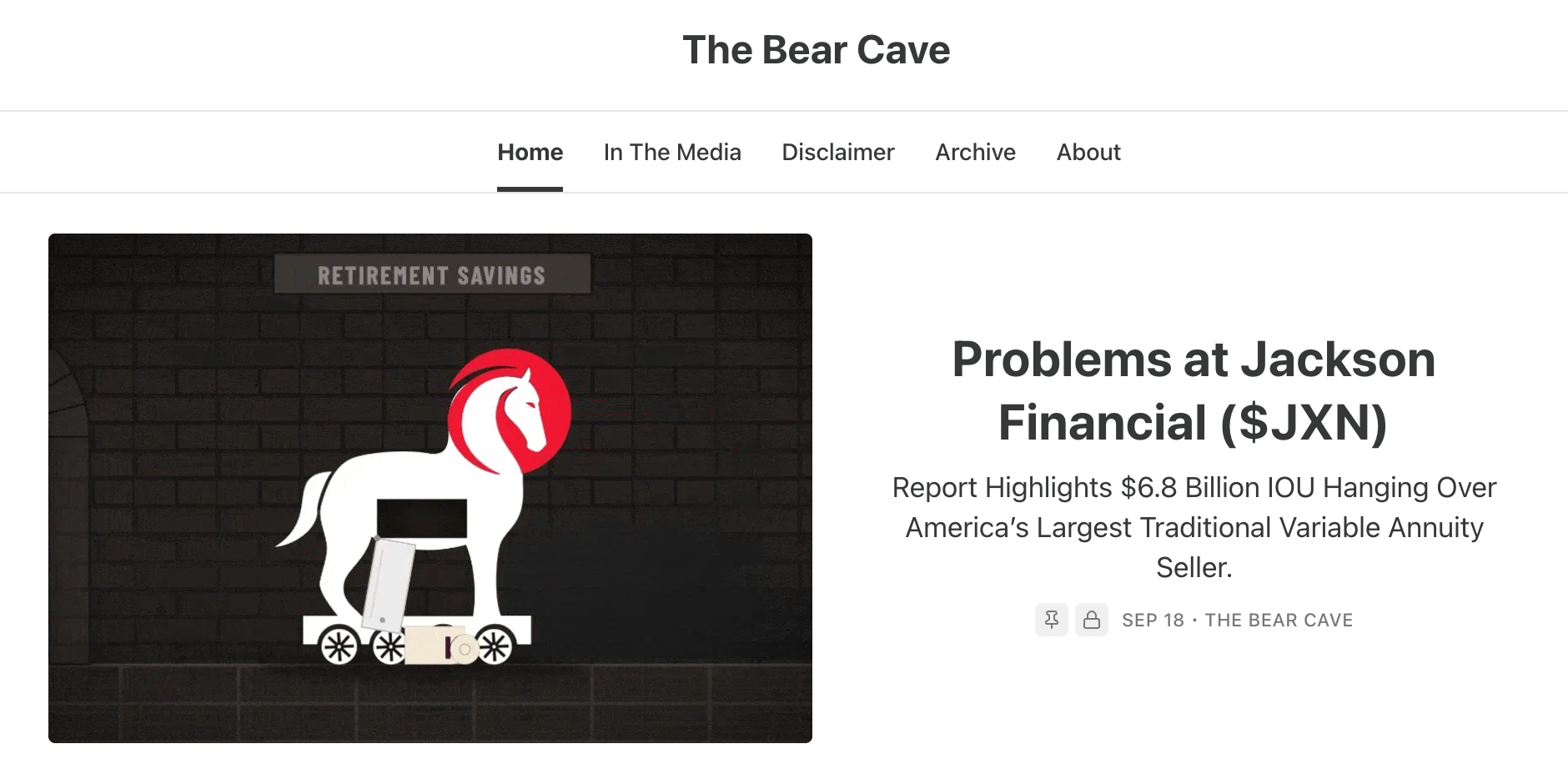
This type of data gives insights that most people tend to miss, and you can just use AI to find it, clean it, and make a weekly newsletter out of it. The Bear Cave, run by Edwin Dorsey, digs through SEC filings and financial data to expose corporate misconduct: pure data-mining turned into a subscription product with around 1,300 paid subscribers. It proved valuable enough that Hunterbrook Media acquired it in June 2026.
Dorsey did the filing research manually for years: the same digging is now something AI can do in a single afternoon.
Next step: advertising said newsletter in relevant spaces, such as Reddit. You should also try to build yourself/the newsletter itself a social media presence.
- Startup costs: $20-$100 a month for an AI subscription and any data sources you need, such as Statista. Whop is free to start.
- How to make it: You can start a Substack or run your newsletter through something like beehiiv. Build up your socials, send free samples, and then open a monetized tier with Whop.
- Agentic opportunity: Have an agent monitor your data source (SEC filings, public records, whatever your niche's raw material is) on a schedule, flag the entries worth writing about, and draft the first pass of each issue.
- Time to launch: 1-7 days, but you probably won't earn much for the first few months
- Estimated income: $50-$3,000+ a month
26. AI-designed goods for a specific subculture
If you have any sort of less-common hobby, you've probably gone through the painful experience of seeing a brand try to make a comment or a joke around your subculture, and have it fall flat completely.
That's because people outside of these niche subcultures don't get the vibe at all, and researching won't really let you be "part of the club." It's just stuff you learn and pick up along the way as you immerse yourself in a particular niche.
This is a good way to monetize a niche hobby. You can make tattoo flash sheets, menu design for specialty coffee shops, zines, patches for cycling clubs, album art, posters for local gigs – those are just some ideas. One Fiverr freelancer generates tattoo flash sheet concepts with Midjourney for $5 a design, giving clients a few AI-generated variations to pick from.

- Startup costs: $0-$50 for AI image tools. Using print-on-demand services means you don't have to pay for inventory space.
- How to make it: Join relevant groups on Reddit or WhatsApp, then share your designs and advertise them. Be careful, because some groups have very strong anti-AI policies – this isn't a business to automate the outreach for.
- Agentic opportunity: Keep this one on the production side, not the outreach: an agent can generate a batch of new design variations on a theme overnight, so you've got a fresh set to choose from each morning instead of starting from a blank prompt every time.
- Time to launch: 1-3 days
- Estimated income: $100-$1,500+ a month
27. AI room and interior design service
Do you have a good eye for interior design and decoration? You could be making some serious money with AI, and even then, it'd still be a good deal for your clients. Hiring an actual interior designer costs thousands.
AI has made the visual part of this super easy: you just upload a photo of a room and generate the same space in any layout you have in mind. Move furniture, add something new, knock down a wall.
Interior AI, built by well-known indie developer Pieter Levels (@levelsio), lets anyone upload a photo of a room and get a redesigned version in seconds – proof this service works as a lean, one-person business built almost entirely on AI image generation.

Present the designs to your clients along with a shopping list. Be careful and make sure that any new furniture actually exists and can be bought, as that's the thing that still trips AI up, so that cool new rug might not even be real.
- Startup costs: $0-$60 a month for reliable AI image generation.
- How to make it: Do some rooms for free for friends and family to get actual photos of results, then post them on your socials or your website (easily made with Whop Blueprints). Advertise widely. Sell fixed-price packages on Whop.
- Agentic opportunity: An agent can pull the redesign and check every item against a real retailer's catalog before it goes in the shopping list.
- Time to launch: 3-7 days
- Estimated income: $100-$2,000 a month
28. Menu engineering reports for restaurants and cafes
Many restaurants run on a shoestring budget, and the margins are paper thin. Beyond that, those businesses are often passion projects, so they're run by people who genuinely love cooking but may not have any time left at the end of the day to consider how profitable each dish is.
You guessed it: that's where you come in.
Menu engineering is the practice of working that out and then redesigning the menu so the profitable things get ordered more. When Alias Creative, a hospitality consultancy, ran a menu engineering pass for The Brasserie, revenue per table rose 15% and profit margins improved 12% - from repositioning and repricing existing dishes, no new equipment or overhaul required.
AI will help you decide which dishes add up if you feed it the menu, sales data, and ingredient costs. Then, you can use that same AI to create helpful graphs that actually help the restaurant turn a profit.
- Startup costs: $0-$50 a month for an AI subscription (optional).
- How to make it: Starting locally might be the easiest. Pick a restaurant, analyze the menu with whatever data is available to you, and present it with that partial analysis as a teaser. The more tailored your pitch, the higher chances of scoring a client.
- Agentic opportunity: Ingredient costs shift constantly. An agent can re-run the analysis every month as new sales and cost data come in, flagging when a dish's margin has dropped below where it should be.
- Time to launch: 3-10 days
- Estimated income: $200-$2,000 a month
29. Localization/translation service for small businesses
If writers are struggling in this economy, translators are struggling even more. Even basic Google Translate can manage a whole bunch of different content, and using free ChatGPT basically removes the need for proper translation services.
… or so people think.
The reality is that, unless you're writing the simplest stuff in the world, proper localization will always be better than just AI translation. Electrolux found this out with its slogan "Nothing sucks like an Electrolux" – a straightforward claim about suction in British English, but "sucks" reads as slang for "is terrible" in the US, turning a confident pitch into an accidental joke.

Sure, you can use the AI for translating everything, but localization makes sure everything else adds up, like currencies, payment methods, or even jokes.
Use AI as a translator and a fact-checker, then give it your own, thorough look, and send it off to help small businesses thrive in other markets.
- Startup costs: $20-$200 a month for an AI plan. If you hire native checkers for countries you're not familiar with, that's an added flat fee on top.
- How to make it: Pick one language to start with, then reach out to businesses and advertise yourself on socials.
- Agentic opportunity: An agent can produce the first-pass translation and flag anything culturally risky (slang, idioms, brand names that mean something different elsewhere) for you to double-check.
- Time to launch: 3-10 days
- Estimated income: $300-$3,000 a month
30. Plain language and accessibility rewriting
Staring at legalese or medical documentation can leave you scratching your head, because what does any of this stuff really mean? A lot of these documents don't just use specialized language, they sound as if they were written to be as confusing as possible.
Unsurprisingly, AI does a good job of detangling this and translating it into plain language.
Your job will be to prompt the AI in such a way that you end up with proper plain English, but also to make sure it didn't bury some important facts in the process.
Your buyers will, 99% of the time, be companies rather than people. They'll have masses of documents that need this "plain English" treatment. You can charge them per project or per hour.
- Startup costs: $0-$20 per month for an AI plan
- How to make it: Rewrite one real public document as a sample, with the original and your version side by side. Approach public sector organizations or charities and try your luck. The ultimate goal is scoring a retainer, which is the best way for freelancers to get paid.
- Agentic opportunity: An agent can find the leads for you – flagging public sector bodies and charities with notoriously dense public documents (a benefits form, a policy explainer) and drafting the outreach – while, on delivery, a separate agent produces the first plain-language draft and flags anything it dropped or softened, so you're checking specific lines instead of proofreading the entire doc.
- Time to launch: 1-3 days
- Estimated income: $100-$2,000+ a month
31. Contract and lease question-flagging
In a similar vein to the gig above, this is for all the lazy (and sane) people who don't want to spend three hours trying to read an important contract.
We've all signed contracts we didn't fully get, and accepted terms and conditions we didn't read at all. You can help people out by getting AI to draw all the important insights and flag any potential issues.
goHeather has proven the demand is real. This is a lawyer-trained AI contract review tool with thousands of business and law firm customers across the US, Canada, the UK, and Australia, priced well below the custom-quote enterprise tools most of that market used to be locked out of. You could make something similar.
Be mindful of doing this for legal reasons, though. You can't offer legal advice without being an actual lawyer, at least not everywhere. Your job is just to scan the contract and return insights that then need to be discussed with someone else.
- Startup costs: $20-$60 for an AI plan. For this, it's best to use paid plans at high capacity.
- How to make it: This is niche enough that you might have to start by establishing a social media presence. Build a website with Whop Blueprints, set up some socials and post your results regularly; people will reach out when they need this service.
- Agentic opportunity: Rather than waiting for people to find you, an agent can find them first, by monitoring forums and subreddits where people post about a confusing lease or contract they just signed, and reaching out to offer your service while the problem's still fresh in their mind.
- Time to launch: 1-7 days
- Estimated income: $50-$1,000 a month
32. Grant writing service for nonprofits
Nonprofits are constantly bogged down by needing extra funds. There are people whose actual full-time job is to write on social media, trying to get funding.
Grant applications are miserable to write, too, but AI can do well with them, especially if you go back in for another pass and make it sound more human and more effective.
AI will help you with research, too. If you're writing the grants, you might as well figure out where to send them out to, and then offer that as an added service. Nonprofits often don't have much money to spare, but hiring you will be way cheaper than a full-time employee.
- Startup costs: $0-$50 a month for an AI subscription. Some funder databases charge, too, but many are free.
- How to make it: Start by volunteering your time and your skills for a charity you're passionate about. Once they see results, you can use them as a reference for paying gigs.
- Agentic opportunity: Have an agent monitor grant databases for new funding opportunities that match a client's mission and eligibility, and flag the ones worth applying to before the deadline creeps up.
- Time to launch: 1-2 weeks
- Estimated income: $300-$2,000 a month
33. Consumer letter-writing service
We've all lost some money during the course of our lives, simply due to sheer laziness. Maybe a flight was delayed, and you never claimed for it, or maybe you missed an event due to illness and didn't bother checking whether you could get a refund anyway.
It's hardly ever a life-changing sum of money, but it adds up. You could offer to handle the whole process for people, from finding whom to email and where, to writing the email, to handling the entire correspondence, all with AI.
People are basically paying you for the effort that they don't need to put into it themselves.
The important thing here is to stick with consumer complaints. AI is pretty good at handling legal stuff, but you want to avoid charging money for something you may not be able to do with full confidence. So, unless you're a lawyer, stick to things that are easily verifiable on your end.
- Startup costs: $0-$50, all you really need is an AI plan, but probably not even that.
- How to make it: Pick some complaint types, learn their rules, and look for people who might need your help. Advertise yourself on Facebook Marketplace or Reddit, but also scour groups for people who have been wronged and offer to do this for them.
- Agentic opportunity: An agent can monitor Reddit and Facebook groups for people venting about a delayed flight, a missed refund, or a botched order, and reach out to offer your service while they're still annoyed enough to want it handled for them.
- Time to launch: 1-2 days
- Estimated income: $50-$1,000 a month
Micro-SaaS & AI app ideas
This last set of side business ideas is a little meta: using AI to build AI-powered apps and micro-SaaS products.
34. Build a consumer app
The app scene has exploded over the past two years, mostly thanks to vibe-coding platforms like Lovable, Replit, and Base44, which let anyone build a working app from plain-English prompts, not code. Stack Overflow finds that 84% of developers now use AI coding tools, while 13Labs found that 63% of vibe coders don't consider themselves to be devs.
Every one of these solved the same kind of problem: a small, recurring, annoying decision someone was tired of making.
Zach Yadegari and his co-founder Henry Langmack built Cal AI to fix tedious calorie counting, coding it together through their high school classrooms. They grew it to $30M+ in revenue, and MyFitnessPal later acquired it (it's projected to hit $50M this year).

RizzGPT took the same approach to dating-app messaging, helping people respond to matches, and made its founder $10M running on nothing but ChatGPT.
PlugAI did something similar and has surpassed 1.7 million downloads on Android alone.

On the more playful end, 3D AI Studio turns text or images into 3D models and went from zero to $300K ARR in six months as a solopreneur project, and apps solving smaller everyday annoyances – a dog breed identifier, a baby name generator, an AI outfit planner – regularly find an audience the same way.
I'm building one of these myself right now: Dyfal, a word-count and writing-goal tracker for writers, built entirely in Replit. So far I've paid $20 for a Replit Core plan and my app is almost publishy ready, after just five hours of building using plain-language prompts.
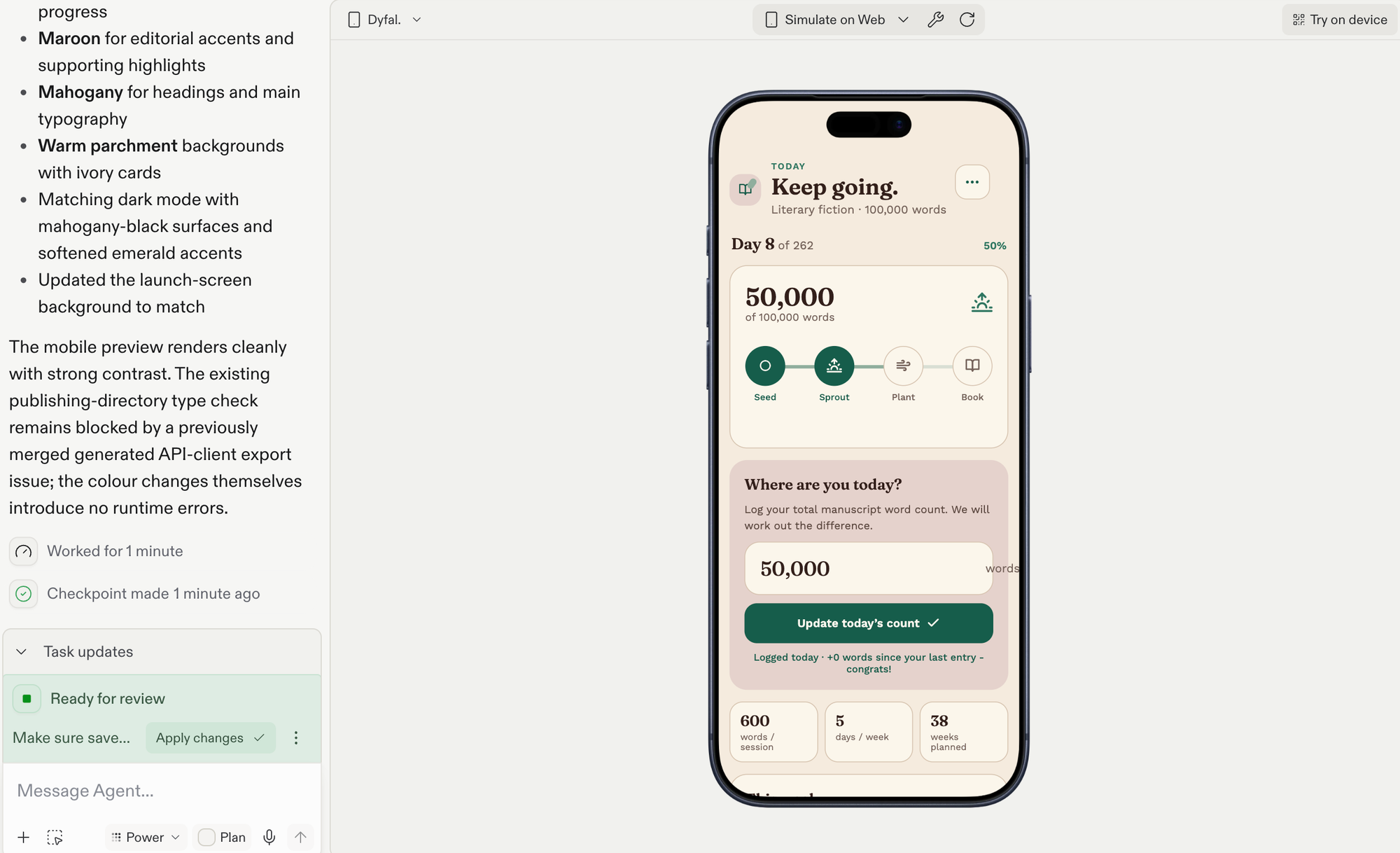
It's the same playbook as every example above: pick a problem you personally understand (in this case, staying motivated through a long writing project), and use a vibe-coding tool to build the version of it you wish already existed.
People will pay for convenience. If your app takes away even a small, recurring, annoying decision, you're onto something.
- Startup costs: $0-$300/month, depending on the tool and how generation-heavy the app is.
- How to make it: Build it in Lovable, Replit, Base44, or a tool of your choice. Then run the business side through Whop CLI: create the product, set your pricing, launch the ad campaign to acquire your first users, and pull stats to see what's converting.
- Agentic opportunity: Building the app is only step one: an agent can research your competitors' App Store reviews for common complaints, generate ad creative aimed at the gap you found, and run the campaign.
- Time to launch: 1-4 weeks
- Estimated income: $500-$25,000+ a month
35. Build a micro-SaaS or tool
This is the same idea, aimed at a narrower, more specific audience instead of consumers generally – usually creators, founders, or small businesses with one recurring pain point.
FounderPal generates marketing strategies, personas, and positioning for solopreneurs. The two founders built the first version in three weeks on a no-code base and made $60,000 in the first six months.
Formula Bot (now Better Analyst) fixed one specific frustration: Bressler got tired of colleagues knocking on his door for help with Excel formulas, so he built an AI tool that turns plain English into an Excel formula that actually works. He built it on Bubble, a no-code platform. By early 2026, Formula Bot had passed 1 million users.
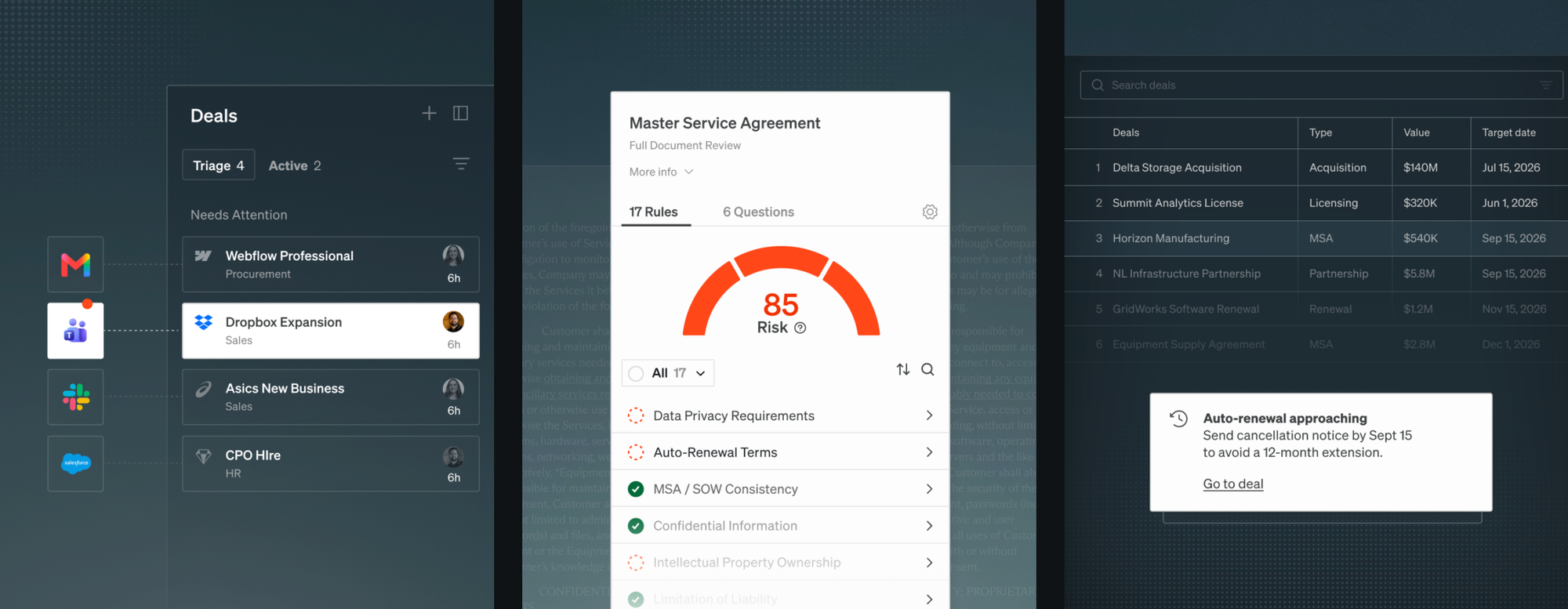
Spellbook does the same for lawyers specifically, offering AI contract review built for their exact workflow.
And Base44 took the idea a level further: instead of building one app, Maor Shlomo built a tool for building apps, hitting $1M ARR in three weeks and eventually selling to Wix in a deal now reported above $150 million in total consideration.
The common thread: don't build for 'everyone.' Pick an audience you understand, and build the one tool that removes their most annoying recurring task.
- Startup costs: $0-$1,000/month, depending on how technical the build is.
- How to make it: Build it with Claude Code, Cursor, or a no-code tool like Xano or Bubble. Then run it with Whop CLI: create the product, price it, set up recurring billing for subscribers, and issue promo codes for your first wave of customers.
- Agentic opportunity: Recall 1ClickReport's founder from earlier – he built his product's dashboard first and its MCP server second, and found that the MCP layer, not the dashboard, became the part actually winning customers. The same principle applies here: build the core tool, then let an agent handle onboarding new users, checking in on inactive ones, and surfacing feature requests, so the product keeps improving itself between releases.
- Time to launch: 2 weeks-6 months
- Estimated income: $0-$50,000+ a month
How to launch and monetize your AI-built side business
We've covered ideas from dog DNA tracking to making SaaS apps for founders, but the one common thread for all of these AI side businesses is that they need a tool in order to come to life.
Lovable, Replit, Base44, Claude Code, Codex, Cursor, n8n, ElevenLabs, and all the other tools we've mentioned are built on AI – knowing how to use them well is what gets you from idea to launch.
AI speeds up all the annoying parts founders had to deal with just five years ago. But once the building is done, you're left with the harder question: how do you actually turn this into money? Three things decide that: which idea fits you, how you launch it, and how you get paid.
First, pick a side business idea
With 35 ideas on the table, the right choice for you comes down to three things about you, not the ideas themselves.
- Start with your technical comfort level. No-code and vibe-coding tools like Lovable, Replit, and Base44 mean you don't need to write a line of code, but if you already think in systems, ideas like MCP servers or AI app builders will reward that background far more than a from-scratch beginner could pull off.
- Be honest about your hours. Content and service-based work (writing resumes, VA gigs, grant writing) slots into a few spare hours a week. SaaS apps and platforms are a different commitment: weeks of building before launch, then months of maintaining and marketing after.
- Know your budget. Most of these ideas cost less than $50 a month to start, which is part of what makes AI-built businesses so appealing in the first place. A handful, though – CRM setup bundles, MCP servers – need $100 to $300 a month in tooling before you've made a cent back, so go in with that runway already accounted for.
A rough rule of thumb: if you can only spare a few hours a week and want money in the first week, look at the service ideas. If you've got a free month and some patience, an app or SaaS tool has the higher ceiling.
Three types of businesses, three different ways to launch
Each of the businesses we've discussed sorts into one of three groups: services, downloadables, and apps or platforms.
Each has a completely different path toward launch.
Services
If you're selling services, you need a website and a social media presence. Build the site with Whop Blueprints, no code required. Socials can be automated with AI, but go easy: platforms flag it fast, and customers can tell. You don't need to show your face, but you do need a lead pipeline: a specific problem, and proof you can fix it.
Downloadables
The passive income makers. They're made once and then need to sit where people will see them and buy them. You front-load the work and then reap your rewards, but only if you list them on a good marketplace or have a great lead magnet driving people straight to them.
Apps and platforms
Apps and platforms are the hardest to launch, but have the biggest ceiling. You'll build for weeks before anyone sees it, and once it is built, you can market it agentically, with an agent handling the ad research, creative, and outreach. Offer free beta access or a discount to your first users in exchange for a review; those first few reviews are what everything after depends on.
Discovery: how people actually find you
Putting products online can feel like screaming into a void: you're competing with other people and millions of bots pretending to be people.
Make your product as discoverable as possible. Product Hunt still works for tools. Reddit works too, but only if you're already a real member of the community – most subreddits are allergic to self-promotion from strangers.
Cold outreach works for services, but expect a lot of silence. Use AI to tailor every pitch instead of sending the same message on repeat (or have AI handle outreach on your behalf).
And if organic discovery is too slow for your liking, you don't have to run ads yourself either – you can hand an agent a budget and let it run the campaign.
I'm currently doing exactly this for my own SaaS app, managing my Whop Ads is through the Whop CLI, so I just check in on how it's performing from the terminal, or from Grok Bot if I'm already on X.
The common thread: payments
It doesn't matter which of the three subcategories your product belongs to. It still needs to make you money, and that requires a secure, trustworthy payment infrastructure. Most people stall here: finding a platform is easy, integrating it cleanly is the hard part.
Downloadables and apps run on one-off payments; services, especially SaaS, need recurring billing. You need one system for both, because the moment someone decides to buy is when you're most likely to lose them. Baymard Institute puts the average cart abandonment rate at 70.22%, often over something as small as a declined card or a missing payment method.
Whop handles payments for you, whatever you're selling.
Running a service? Skip building a whole checkout flow: send a simple payment link, use tap to pay, or send an invoice for a one-off project.

Selling downloadables or an app? Whop's embedded payments drop straight into your product or site, so customers pay without ever leaving your experience.
Running a marketplace where multiple people get paid out? Whop handles that too. Embedded payments sit alongside payouts and split payments, so everyone gets their cut automatically without you playing middleman.
One system covers one-off payments, subscriptions, installment plans, cards, Apple Pay, Google Pay, and a growing list of international payment methods.
Beyond building: letting agents run the business
We've touched on how these businesses can be run agentically, not just built with AI. Here's what that looks like in practice.
Whop's Brett Malinowski built an entire local ad agency in under 45 minutes, hands-off.
Brett's AI agent researched competitor car dealership ads across dozens of Meta ad libraries, built a brand style guide, generated ad creative using a real dealership's actual inventory and pricing, then logged into Meta Ads Manager itself and set the campaign live.
The same agent then found 20 nearby dealerships and sent each one a personalized outreach message pitching the exact service it had just built.
And if you're worried about handing over sensitive data, there's no need to be. Brett says:
I do not give this AI agent any access to my accounts, I do not let it log in. I do not use any APIs, and I do not give it any sensitive data. This AI agent simply uses my browser, sees what I'm already looking at, and it starts taking control of the screen, and knows what to do.
Here's what a smaller, everyday version of this looks like, using the content agency idea from earlier in this guide as an example:
- Trigger: every morning at 9am, a scheduled task fires automatically.
- Tools: an AI agent with browser access, a lead-tracking sheet, and your outreach messaging skill (a saved set of instructions on how you want the pitch worded).
- What the agent does: finds 25 new leads matching your niche, adds them to the tracking sheet with contact info, and sends each one a personalized outreach message an hour later.
- What you review: replies. The agent doesn't close the deal or negotiate pricing, it gets the conversation started and hands you a warm lead with context already gathered.
- What it costs: roughly $20-$50/month for the AI plan running the agent, on top of whatever tools you're already paying for.
That's what you can do with just one day. Integrate AI into your everyday processes and you can run a small team of agents, each owning a piece of the business: one finding leads, one managing client check-ins, one drafting SEO content, one launching ad creative, each on its own schedule.
Whop CLI is built for this: an agent can pull your sales stats, issue a promo code, or set up pricing through plain-language commands instead of a dashboard.
How Whop CLI and Whop Blueprints help you run your business
That's the foundation: products, checkout, payments, currencies, all handled. But Whop doesn't stop at payments. It also gives you two ways to build the rest of the business around it, depending on how you like to work.
Whop CLI
If you're building an app, you don't have to leave your code editor to set up your actual product. Whop CLI does it for you.
All you have to do is install it, and from Claude Code, Cursor, or Codex, prompt it to 'create a product.' Specify the bare minimum: what it's called and how it's going to be priced. Ask for a checkout link.
Done. Whop CLI runs the actual commands and hands you a live, shareable checkout link without ever making you interact with any dashboard.
That's perhaps the best part. You can type your own commands, but you can also explain to your tool of choice what you want to achieve, and it'll translate it into commands for Whop CLI to use. It can run completely agentically.
Whop CLI also lets you run your entire business from one terminal. It's not just creating products, it also lets you set up ad campaigns, pull stats, deploy apps, issue promo codes, and more.
Avid X user? You can also use the Whop connector in Grok which extends the Whop CLI, giving business operators and their AI agents full access to Whop's API through natural-language commands.
Whop Blueprints
There's no easier way to set up your own business and your own website than Whop Blueprints.
These blueprints are businesses that are already running, and you can make them yours with one click. You can also create your own just by describing it to Whop, and the Whop AI will build it for you.
Alternatively, if you already have your own site, just paste its URL into Blueprints and let it be rebuilt, fully optimized and ready to go. You get the full benefit of Whop's entire toolkit, including tracking visitors, traffic, ads, and revenue.
And if you don't feel like doing any of that stuff, you can still publish your own blueprint for businesses to use, then get paid every time it's used.
Turn your side business idea into income with Whop
Whop exists to help you build the business and get paid for it, whatever idea you pick from this list.
Build your entire product with Whop and let it handle everything from checkout to payouts, start to finish. Whop CLI and Whop Blueprints make it easy, whether you're typing the commands yourself or handing that job to an agent.
It's never been easier to start a business.