Learn how to start a dog walking business, from pricing and insurance to your first clients, with tips from a Brooklyn dog walker with 15 years’ experience.
Want to start a dog walking business that’ll bring in cash ASAP? Choose your service area, set your rates, get insured and bonded, register your business, and find your first clients through neighbors, local community groups, and apps like Rover and Wag.
Key takeaways
- A few regular clients are enough: a 30-minute walk goes for around $24, or about $20 on a monthly plan, so five weekday clients bring in about $2,000 a month.
- Apps like Rover and Wag are a side hustle; finding your own clients, setting your own prices, and carrying your own insurance makes it a business.
- There’s no national license for dog walking, but some cities require a business license or permit, so check local rules and state leash laws, get insured and bonded, and consider an LLC to protect your personal assets.
- Whop lets you build a booking website, form an LLC, and take one-off or recurring payments online or in person with Tap to Pay.
Dogs might be man’s best friend, but even best friends don’t see each other every day. While owners are at work, their dogs still need walking, and that’s where you come in. A 30-minute walk goes for around $24, or about $20 for regulars on a monthly plan, so just five weekday clients can bring in about $2,000 a month.
And the Bureau of Labor Statistics puts the median full-time salary at about $35,000 a year, while Indeed data shows dog walkers in top-paying cities like Seattle earning closer to $60,000.
The key to earning more? Setting up your business correctly from the start, so you're not losing money to bad weather and owner vacations.
Here’s what you need to know, from getting started to the costs and considerations involved, plus advice from Kevin Dehan, who has run his own dog walking business in Brooklyn for 15 years.
Dog walking: a business or a side hustle?
It can be either, and the difference comes down to who is in control. If you're only finding clients through apps like Rover and Wag, that's a side hustle - the app finds you work, but it also takes a cut of every booking and determines how you work. But if you find your own clients, set your own prices, and carry your own insurance, then you're running a business.
Plenty of dog walkers start with the apps to get some experience and their first reviews, then use their new connections to find more clients and build a roster of regular bookings.
What other services can dog walkers provide?
Dog walking doesn't have to stop at walks - you can also operate a dog taxi service, dog boarding, doggy daycare, and even dog day trips.
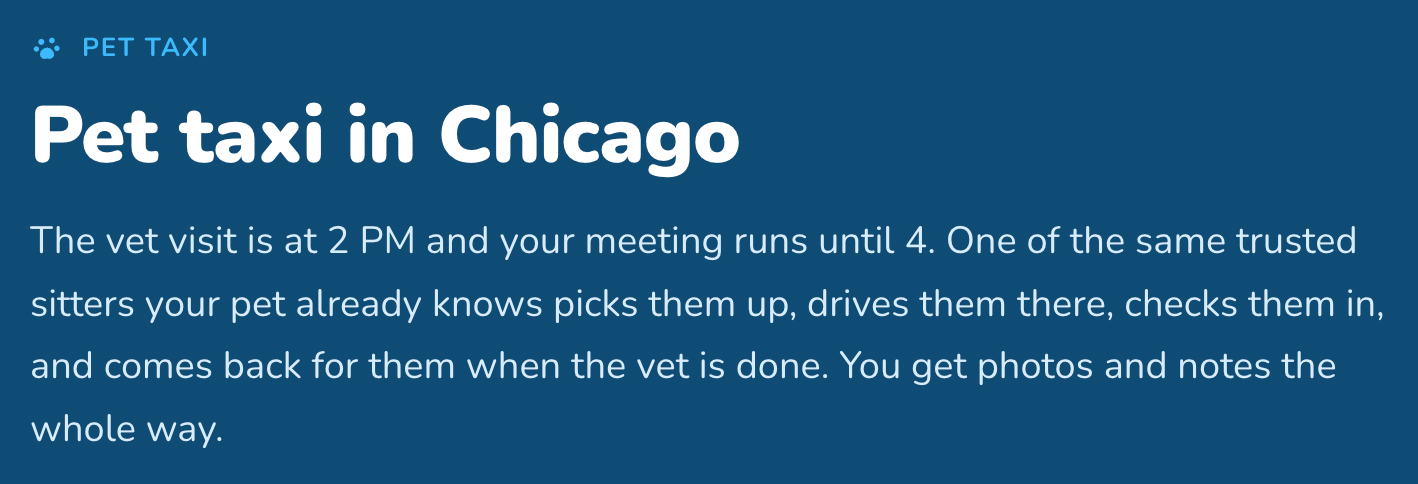
A dog taxi is the easiest to add, especially if you’ve already got a vehicle for your walks. Instead of driving owners around, you take their dogs to vet appointments, groomers, or daycare when the owner can’t. Sparky Steps, a pet care business in Chicago, charges $50 for a one-way trip and $85 for a round trip, or $35 for a short trip within the same neighborhood.
If you have the time and space, why not offer pet sitting too? You can offer doggy daycare during the day, which usually goes for $25 to $40 a day (according to KennelPermit), or host dogs overnight, which typically pays $35 to $85 a night.
One Massachusetts business listed for sale with BayState Business Brokers in July 2026 shows how far this can go. It started out in 2014 offering private dog walks and grew into a daycare facility that takes up to 45 dogs a day. Walks still make up 68% of its sales, with daycare bringing in another 30%.
Before you add any of these services, check your state and local rules on what you can offer and how. Boarding is the most regulated. In Colorado, for example, businesses that board pets may need a state license, though the law doesn’t apply if you’re boarding three pets or fewer.
How to start a dog walking business in 8 steps
Here’s how to set up your dog walking business right, including the regulatory bases you need to cover and a head start on customer acquisition with your own website.
1. Learn the ropes with a dog walking company (optional)
This step is optional, but one of the best ways to learn how to run a business is to work for someone who already runs a successful one.
When you work with another dog walking company, you can acquire a lot of the skills you may not already have - be they organization and scheduling or related to the actual handling and walking of the dogs.
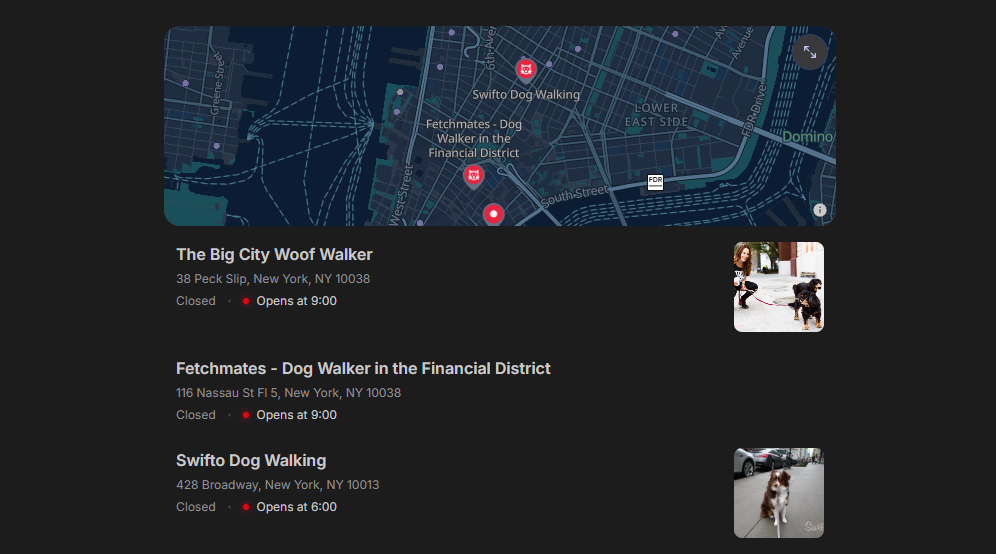
Start by using Google to find a dog walking company near you. The best ones will have Google Business Profiles.
Most of their websites will be client-facing, but they should all have a careers or employment opportunities section - like this one on the NYC Dog Walkers website.
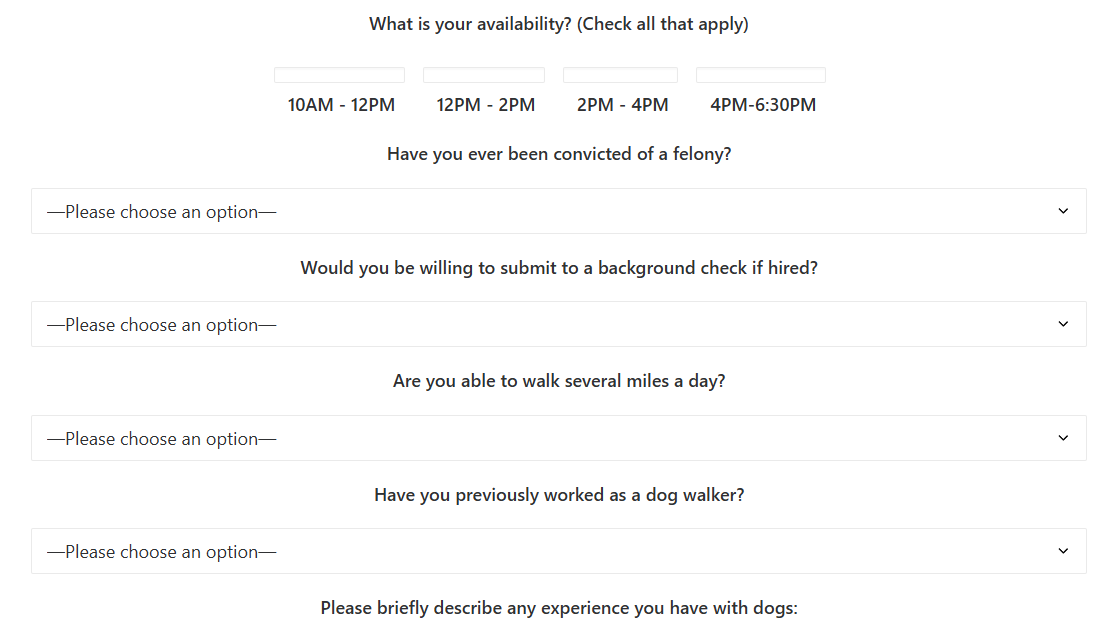
Kevin, who we spoke to for this guide, went straight into working for himself. But he understands why some people start with a company first:
“I realize that many other people prefer to take some of the pressure off of themselves and not wanting to have all of the responsibilities that come with having their own business.”
That’s the value of starting with a company. You get to learn scheduling, client communication, and dog handling without carrying all the responsibility yourself. Then, once you’ve built your skills and confidence, you can take what you’ve learned and start a dog walking business of your own.
And if you’d rather skip this step, you’re in good company. Kevin built his business from day one, and the rest of this guide shows you how to do the same.
2. Decide on your services and pricing
Remember, a dog walker doesn't have to just walk dogs. You can also offer pet taxi services, doggy daycare, overnight stays, or long-term boarding, depending on where you are.
So before you launch, decide what kind of dog walking business you’re running. Ask yourself:
- Will you walk all dogs or specialize? Specializing can set you apart from other walkers. Hearth & Hound in San Francisco, for example, focuses on reactive dogs and their owners.
- How many dogs will you walk at once? Kevin sticks to one or two dogs at a time, so every dog gets his full attention. At the other end of the scale, UK dog walker Liz East looks after 20 to 30 dogs a day across about four group walks.
- Will you offer services beyond walks? Pet taxi? Pet care? Pet staycation?
These are the answers that will shape your pricing, schedule, and the clients you attract.
Next up: pricing. This will largely depend on your location and the local competition. Many new businesses choose to establish themselves by undercutting the competition and attracting clients with lower prices.
This is something that you yourself may choose to do, especially if you sign up on platforms like Rover to try and get your first clients on board.
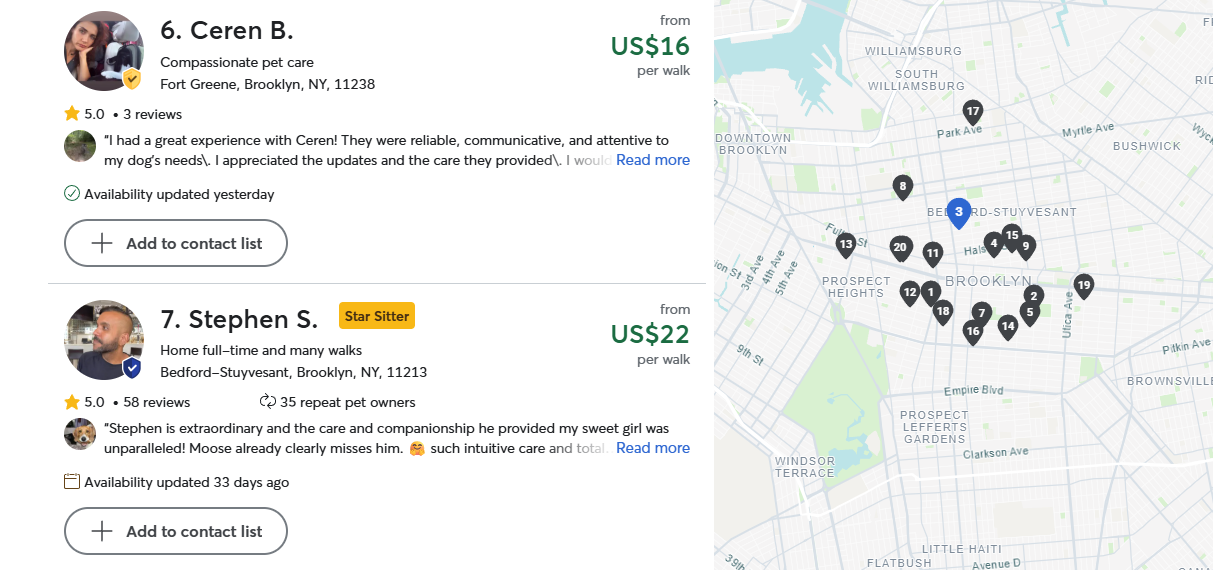
Yes, you will be making less for a little while, but a lower rate is sometimes the trade-off for getting those first testimonials in. And once you establish relationships with a few regular clients who trust you, you can raise the price for new clients first and then slowly raise it for your original clients later.
It’s also a good idea to consider the value of recurring income and dependable, regular bookings that are easy to schedule. For example, Kevin offers a discount on his usual per-walk rate for clients who book him for a daily weekday walk.
For these clients, it’s worth putting together a weekly or monthly payment plan via your payment provider or website (more on that later) to make the process as frictionless as possible.
Typical dog walker pricing
Here’s a glance at how dog walking businesses usually break down their pricing:
- 15-minute walks: For when owners are away and the dog just needs to be let out for a little quick relief. But don’t undervalue this, since you’ll still have to spend time getting to their place for pickup.
- 30-minute walks: Probably your bread-and-butter service and a baseline from which you can price everything else. This is the length of walk that most dogs need.
- 60-minute walks: Owners of certain breeds may prefer this. Most dog walkers price this at less than double their 30-minute rate, since it’s convenient.
- Early/late/weekend/holiday walks: If you’re able to take customers in these situations, offer it, and tack on a reasonable surcharge.
- Pet sitting visits: You should be able to charge between your 15- and 30-minute walking rates for a 30-minute visit, but don’t forget to add a little more per pet and per medication you need to administer (if any).
- Overnight boarding: This depends on your location and what facilities you have, and a detailed business plan may be required to do this efficiently at scale.
- Overnight pet sitting: Yes, staying at someone’s place overnight to watch their dog is a thing, and the going rate tends to be three figures. Again, add a small extra charge per extra pet and any medication you need to be responsible for giving them.
Here’s an example of how you may be able to price your services, based on what we know about NYC-based dog walkers and their rates.
| One-time service | Daily service for one week | Daily service for one month | |
|---|---|---|---|
| 15-minute walk | $20 | $18 | $16 |
| 30-minute walk | $24 | $22 | $20 |
| 60-minute walk | $40 | $38 | $36 |
| 30-minute pet visit | $22 | $20 | $18 |
| Overnight boarding* | N/A | N/A | N/A |
| Overnight pet sitting | $110 | $105 | $100 |
| Surcharge for late/early/weekend service | $10 | $10 | $10 |
| Surcharge per extra dog (max. 3) | $10 | $9 | $8 |
* You may need to comply with certain regulations (see the extra services section above) to board dogs in NYC.
The above is just a guideline, but let’s say your aim is to earn at least $3,000 per month. Here are two realistic scenarios that’ll allow you to do that:
Scenario A - Dog walking only
- 4 x Clients who need a 30-minute walk every weekday for the month (20 days): $1600
- 2 x Clients who need a 30-minute walk every weekday for the month but pay weekly: $880
- 1 x Client who needs their 3 dogs walked once for 30 minutes on weekends (8 days): $432
- 1 x Client who pays for a 30-minute walk for a week, then cancels: $110
You made $3,022 from 8 clients (one non-repeating) and worked just 66.5 hours (not including travel time) for the month.
Scenario B - Dog walking and pet sitting
- 2 x Clients who need a 30-minute walk every weekday for the month (20 days): $800
- 2 x Clients who need 1 Pet Visit every weekday for the month: $720
- 1 x Client on holiday who needs you to sleep over and watch their dog for five nights: $525
- 1 x Client who needs you to visit and feed their 2 dogs every evening of the month including weekends: $1000 (if you give them a special price)
You made $3,045 from 6 clients (the one on holiday may be non-repeating unless they’re a business traveler instead) and worked 55 hours plus 5 full nights (not including travel time) for the month.
As you can see from the above scenarios, all it takes is a few regular customers to turn dog walking into a full-time business. That's the main takeaway here - you don't need dozens of customers to make dog walking a full-time business. All you need is a few reliable ones who book you every week.
As your client list grows, you need to manage your time wisely. Every minute spent traveling between walks is a minute that you're not getting paid, so keep your service area as tight and local as you can, since you’ll probably need at least four or five walks or visits a day to hit an earnings threshold that compares to a good full-time job.
3. Check state leash laws and local ordinances
As with any business, check if any laws apply to the services that you want to offer before you launch.
For dog walking specifically, the main thing to inform yourself about is leash laws. These are rules that say when and where dogs must be on a leash, and they often cover things like maximum leash length and where dogs are allowed off-leash. Leash laws exist to ensure safety, animal welfare, wildlife and environmental protection, and neighbor relations.
There’s no federal law for leashing dogs, so it’s up to the individual state to make a decision - and if the state doesn’t cover something, counties or cities can have their own ordinances, and properties like apartments, HOAs, parks, trails, and businesses can have rules too.
In New York State, for example, you aren’t allowed to let a dog run off-leash in fields or woods inhabited by deer outside city or village limits. And within the Big Apple, the dogs you walk must have licenses attached to their collars while in public.
You'll also need to look up the maximum leash length in your area, the number of dogs you’re allowed to walk at once, and time-of-day rules in areas such as beaches where you may plan on walking.
Some cities also require a business license or a permit for walking larger groups. In San Francisco, for example, anyone walking four or more dogs for pay on park property needs a permit from Animal Care and Control, and no one can walk more than eight at a time.
Animal transportation regulations
Offering a pet taxi? Check your state’s rules on restraining animals in vehicles first.
And if you plan on doing some longer-distance dog taxi work, you may also need to carry a Certificate of Veterinary Inspection and the dog’s up-to-date vaccination records. The Animal Welfare Act outlines guidelines for animal transport over long distances, including rest, water breaks, and carrier size.
4. Register the business
Most dog walkers start out as sole proprietors, but it’s a smart idea to consider forming an LLC. Here’s how the two differ:
- Sole Proprietorship: You don’t usually need to file anything to do this if you’re working under your name, so it’s something of a default setting for anyone who starts a solo business. If you want to operate under a business name instead of your own name, though, you’ll usually need to register a DBA (Doing Business As) with your state or county. The downside is that a sole proprietorship doesn’t separate you from your business, so if something goes wrong while you’re walking a dog, your personal assets aren’t protected.
- Limited Liability Company (LLC): An LLC separates your personal assets from your business, so if the business is sued or runs up debts, your home and savings are generally protected. It also gives you more flexibility in how your business is taxed as it grows. An LLC won’t cover everything, though. You can still be held personally responsible for your own mistakes, like a dog slipping its leash on your watch, so you’ll want insurance too (more on that in step 5).
You can register an LLC through Whop. All you need to do is pick your business name, fill in the industry and business type, and enter your founder details. Whop will handle the state filing and Employer Identification Number application for you. Including EIN registration, state filing fees, and registered agent, the process will cost $500 for the first year, then $100 per year after that.
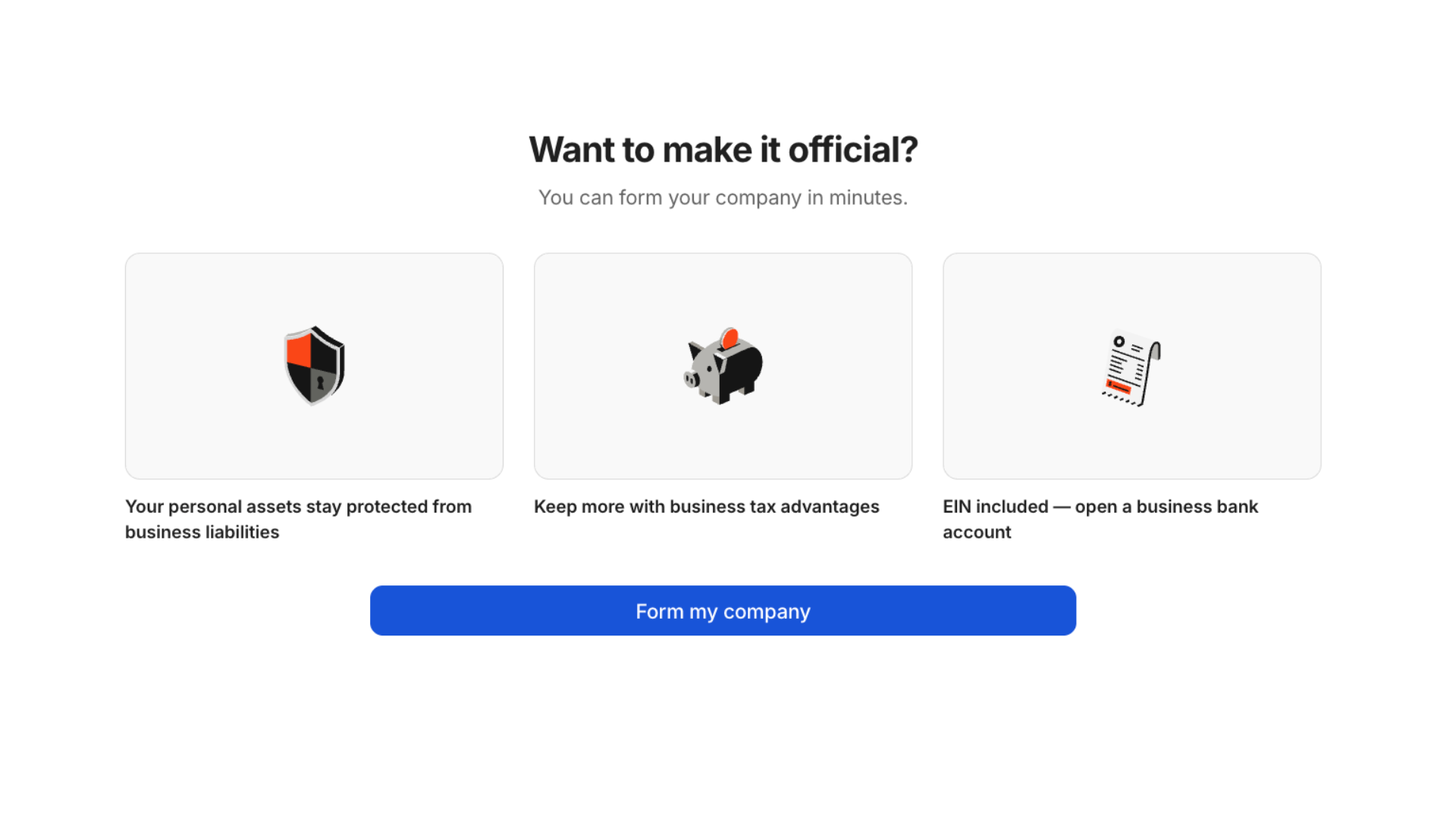
An Employer Identification Number (EIN) is like a Social Security number for your business. If you’re a sole proprietor with no employees, you don’t need one, since you can use your Social Security number instead. You will need one once you hire employees, though, and banks often ask for one to open a business account, so many sole proprietors get one anyway.
You can get an EIN directly from the IRS for free. If you form an LLC with Whop, it’s included.
Registering a pet taxi business
If you plan to offer a pet taxi, check whether you need to register with the US Department of Agriculture (USDA). Under the federal Animal Welfare Act, businesses that transport animals for pay, which the USDA calls 'carriers,' may need to register with the department’s Animal and Plant Health Inspection Service (APHIS).
Registration is free, and you’ll need to renew it every three years. The quickest way to find out if it applies to you is APHIS’s online Licensing and Registration Assistant. Even if it’s not required, registering shows customers you’re willing to go the extra mile.
5. Get insured and bonded
Kevin, like many experienced dog walkers, is bonded and insured. The best ones are, as you’ll see when you’re scoping out the competition to decide on your pricing strategy.
So, what does being bonded and insured mean for you when starting your dog walking business? Here’s a quick overview:
- Insured dog walker: This means buying a dog walker insurance policy, or general liability insurance with care, custody, and control coverage. General liability covers you if the dog you’re walking bites someone, injures another dog, or damages property. Care, custody, and control coverage protects the dog itself, so if it gets hurt on your watch, the vet bills may be covered too. What’s included depends on your policy, so check the terms before you buy.
- Bonded dog walker: A bond, sometimes called a fidelity or dishonesty bond, protects your clients if someone working for you steals from them. Unlike insurance, the bonding company pays the client first and then you pay the bonding company back. Some bonds also only pay out once the person is convicted of the crime. Bonds matter most once you hire employees, and some insurers now offer 'employee dishonesty insurance', which covers your clients the same way, but you don’t have to pay the money back.
By becoming an insured and bonded dog walker, you’re actually giving your pet owner clients some much-needed peace of mind. If something unexpected happens on a walk, the liability for costs could actually fall on the dog’s owner. So, by getting insurance, you’re protecting not just yourself but your client.
In Connecticut, for example, a dog owner on vacation in a different time zone agreed to a $101,000 settlement after her dog bit someone while staying with an uninsured sitter. In some states, the dog owner can be held responsible no matter who’s holding the leash.
Luckily, basic insurance is quite affordable. Dog walkers who buy general liability insurance through broker Insureon pay an average of $42 a month, about the cost of two walks. Costs vary a lot by state, though, from around $24 a month in South Dakota to $103 in Michigan. If you drive dogs around, you’ll also need commercial auto insurance, and that’s a bigger expense, averaging $245 a month for small businesses. Get quotes from a few providers to compare.
Getting bonded, meanwhile, is important if you’re going to be offering pet sitting services. Now, you know that you’re going to keep your hands to yourself. But the bond signals to your clients that you’re taking every possible step to soothe any anxiety they might have.
6. Create your intake process
Taking on a client isn’t as easy as making an online booking - or at least it shouldn’t be. One experienced pet sitter posted this on Reddit:
“Every new client gets a meet and greet before I book anything. I’m watching how the dog handles me coming in, and how it acts on a leash. If anything feels off, I do a short trial walk. The owner gets assessed too, honestly as much as the dog.”
Some dog walkers call it a meet and greet, others call it a consultation. None of the most successful dog walkers go without it, because if you add an unruly dog to your roster (or an unreliable owner), the income may not be worth the hassle.
So, start with an intake form that lets owners disclose any and all relevant information about their dogs. Make sure that you ask open questions to get the most information. Here's the same question in two ways, and each would produce a different answer:
- Is your dog an escape artist? Bad question, because an owner’s just going to say no.
- When’s the last time your dog got off the property? Good question, because you’ll get the real info you need.
You’ll also want to take down a backup contact in case your dog walking client is unreachable when you bring the dog back after a walk, and check who their vet is in case of an emergency.
Many dog owners will downplay any negatives, so make sure to ask them something open-ended like this to ensure you get the information you need for a safe walk:
- “What’s one thing that’d worry you if your dog walker didn’t know?”
The answer could be nothing. But you might learn about a corner of the park to stay away from, a ditch that the dog loves jumping into, or a neighbor dog with whom they’ve been carrying out a years-long feud.
We’ll show you how to add an intake form for new dog walking customers to your website later on in this article.
7. Build your dog walking business website
Services decided, prices set, and insurance acquired, it's time to make your website.
Your first clients will likely be friends, neighbors, or people who spot your flyer, and some very successful dog walkers still rely purely on word of mouth. Either way, a website makes you easier to book. Clients can see your services, prices, and payment options in one place, and a few photos and testimonials don’t hurt.
To see how quickly it can be done, I built one using a Whop blueprint.
Blueprints aren’t templates. They’re real business websites, and taking one copies the products, pricing, and everything else under the hood.

I picked an in-person gym blueprint, named the business Daily Dog Walks, and asked Whop AI to convert it into a dog walking site with pet sitting and walks as the products.
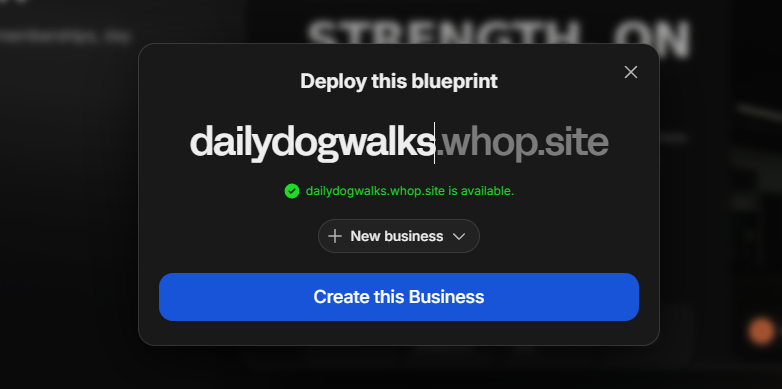
It took six or seven minutes. Whop AI swapped in dog walking imagery, removed the before/after and shop pages, and even flagged that Group Walks were still priced at $20, which didn’t match the new price list.
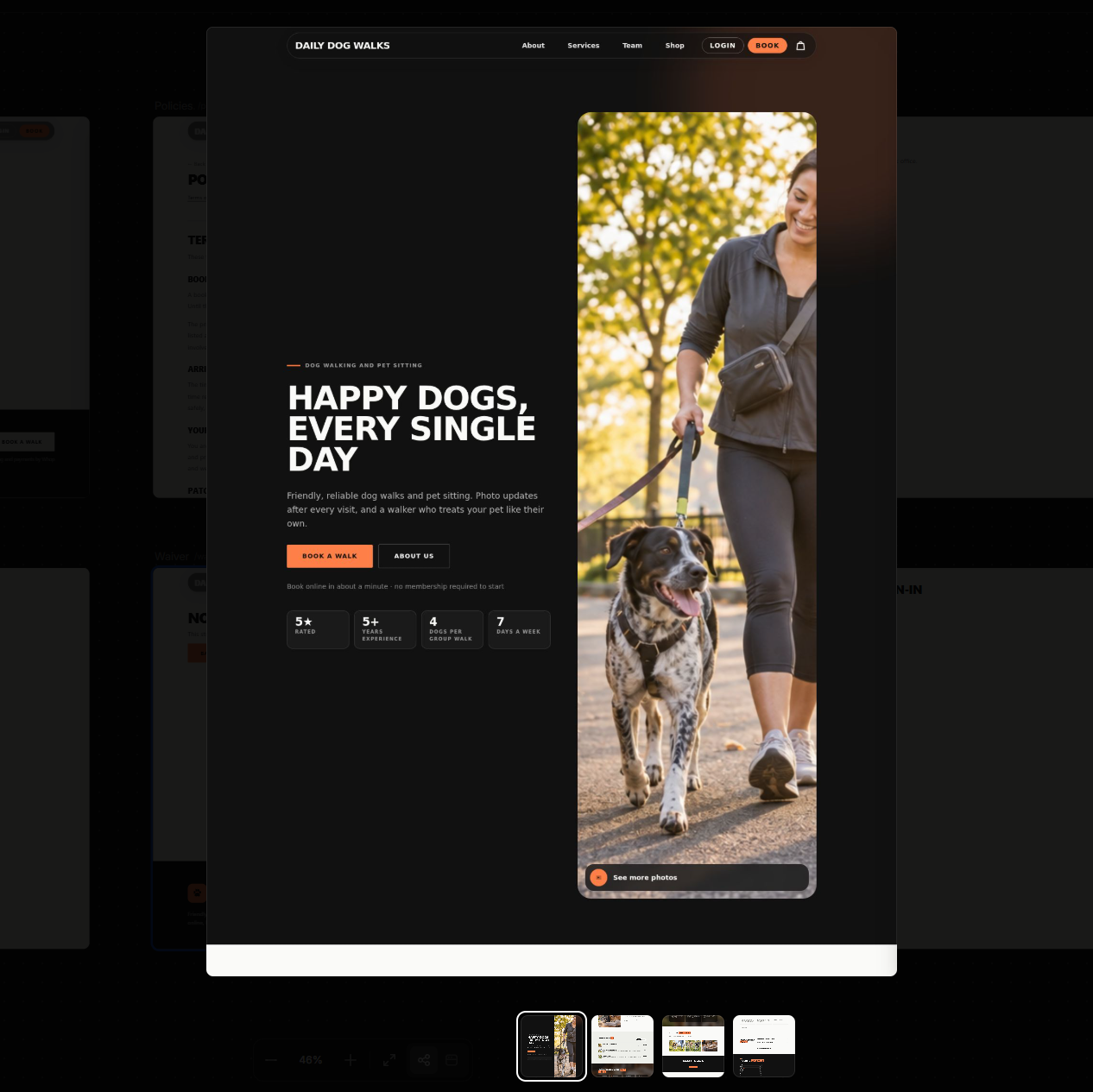
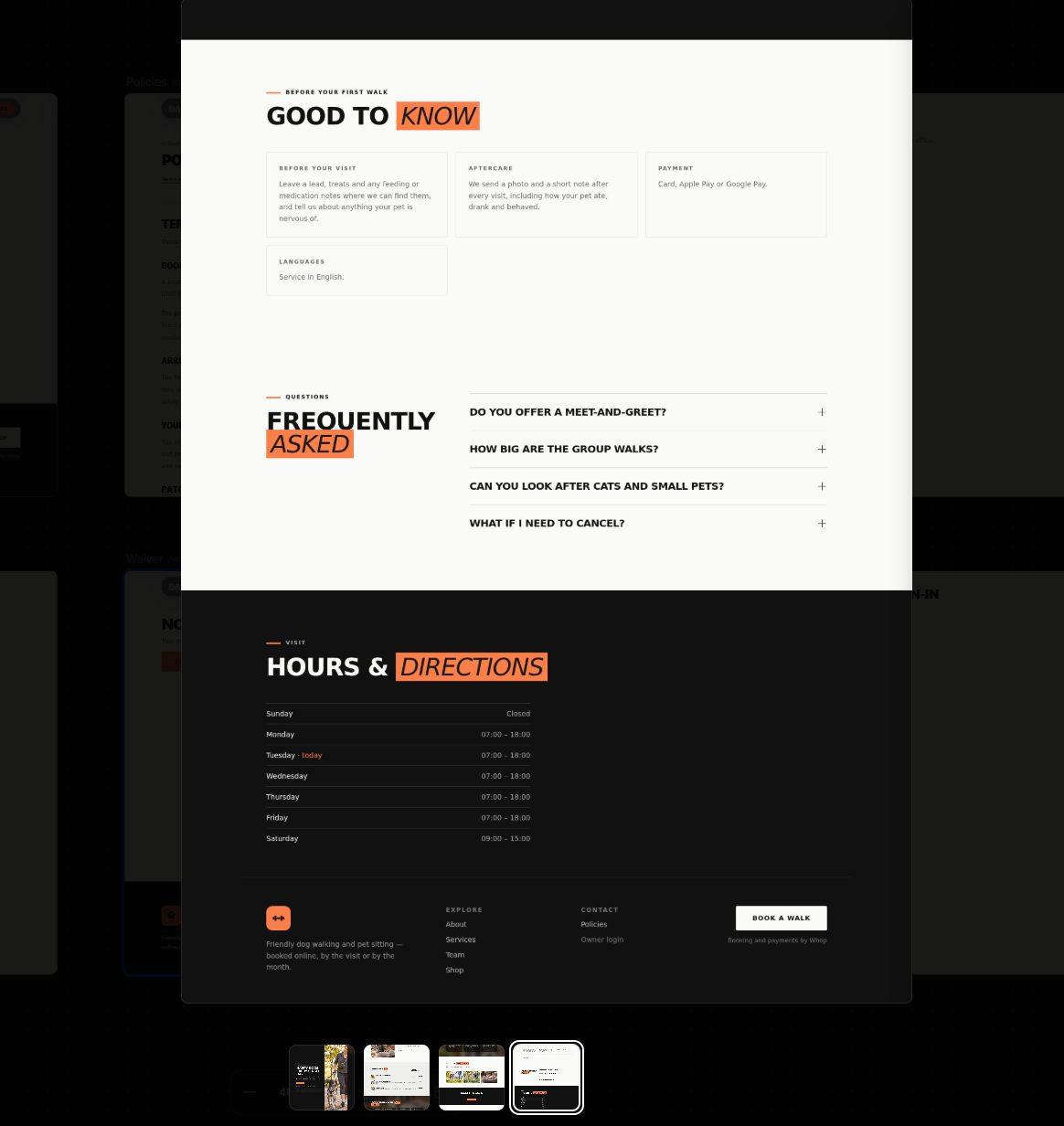
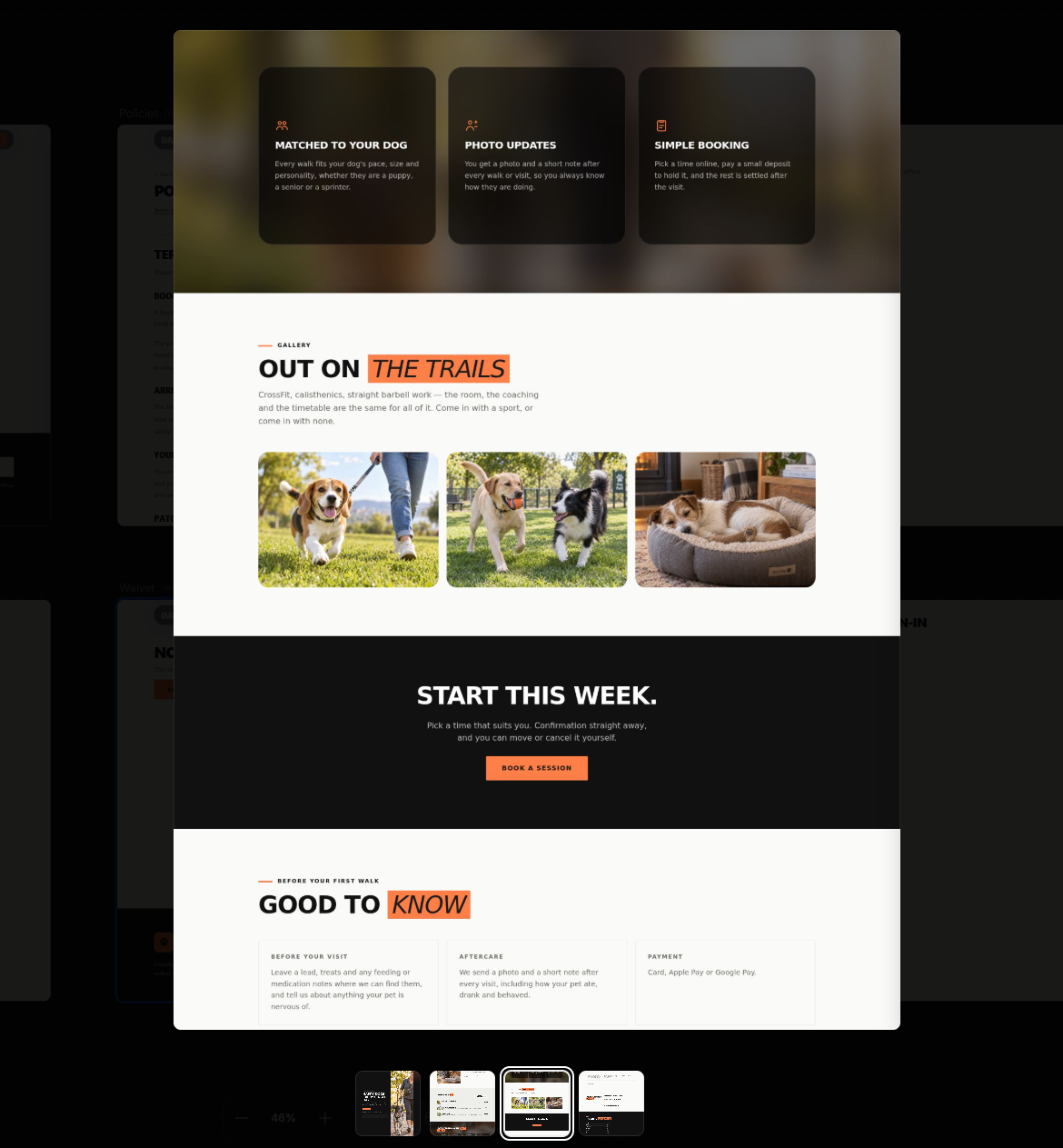
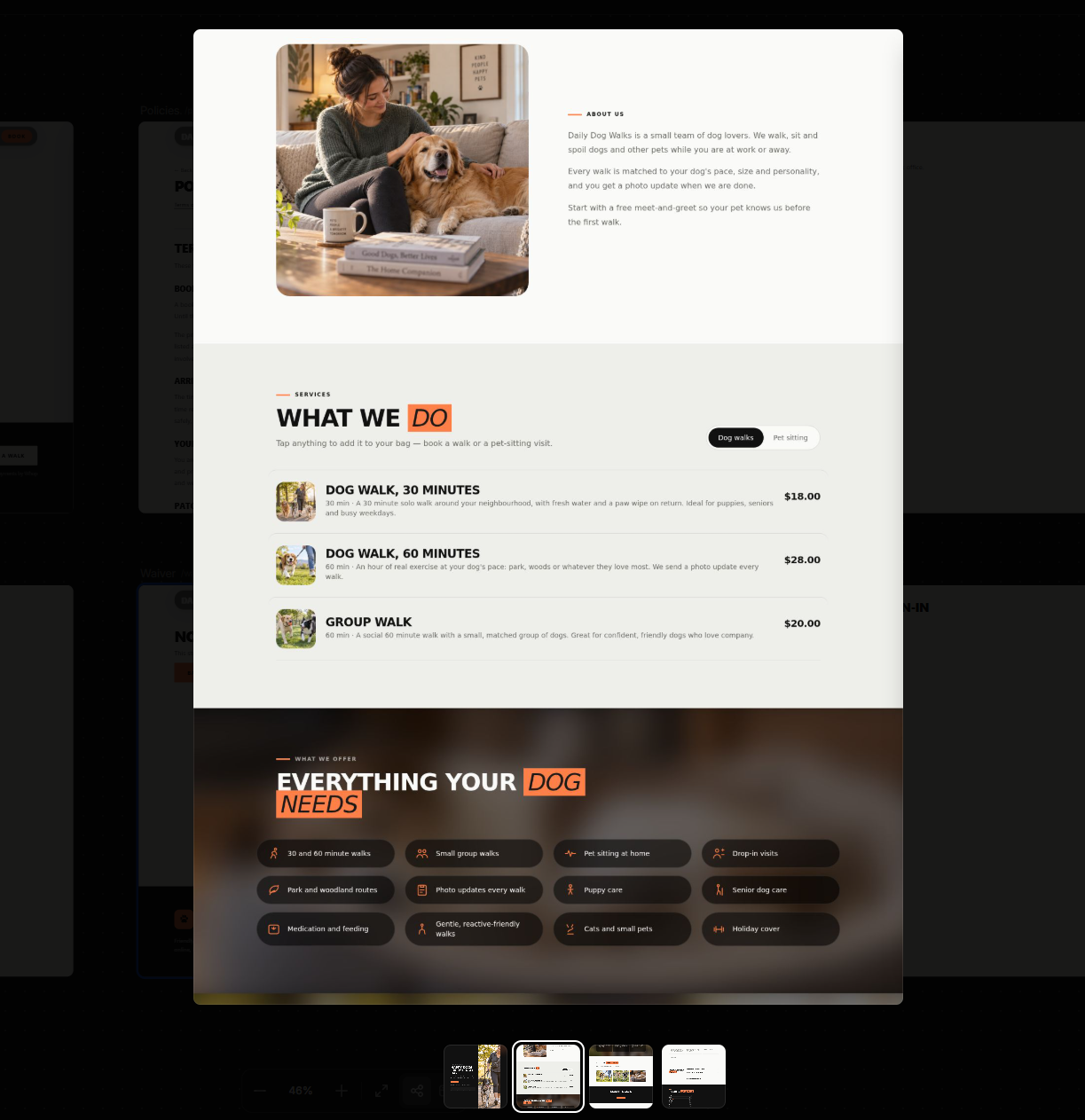
We’ll walk through the full build, with prompts you can copy, later in this guide.
8. Set up payment options
Some clients will want to pay cash, others bank transfer, and some may want to set up recurring payments for regular bookings. Meet your clients where they're at by offering a few different payment options. Kevin takes cash, check, or Zelle, and importantly, he’s fine with clients paying on a daily, weekly, or monthly basis.
If you built your website with Whop, you can set up payment acceptance in the same place. Once you’re set up, you can:
- Take payments online. Clients can pay by card, ACH bank transfer, PayPal, and more, straight from your website.
- Set up recurring payments. Put regular clients on a weekly or monthly plan so they’re billed automatically.
- Send checkout links. Text or email a link for one-off bookings or deposits.
- Create invoices in seconds. Whop also sends automatic reminders at set intervals if a client misses the due date, so you don’t have to chase payments yourself.
- Take payments in person with Tap to Pay. If a cash-paying client doesn’t have cash on them, you can take a card payment at the door instead of relying on an IOU.
Customer tapping a card on an iPhone running the Whop app.
Setting up Tap to Pay on iPhone with Whop lets you use your phone as the terminal, which means no extra cost spent on a POS terminal. Your customer will just need an iPhone or NFC-enabled Android phone with a digital wallet like Apple Pay or Google Wallet.
Whop also handles payouts. So if your business grows and you take on a team of dog walkers, you can pay them from the same place you take payments and get paid yourself.
Whatever payment methods you use, keep records of every payment, save your receipts, and set aside part of each payment for taxes. Depending on how you register your business, you may need to make regular tax payments. To keep things simple, check out the Whop Tax Service.
How to stay booked year-round
You've got the business set up – but how do you get a regular income? Bad weather and owner vacations are the two things most likely to eat into a dog walker’s income. You can’t control either, but you can decide in advance what happens when they come up, and put it in the terms clients agree to at checkout.
Set policies that protect your income
Cancellations
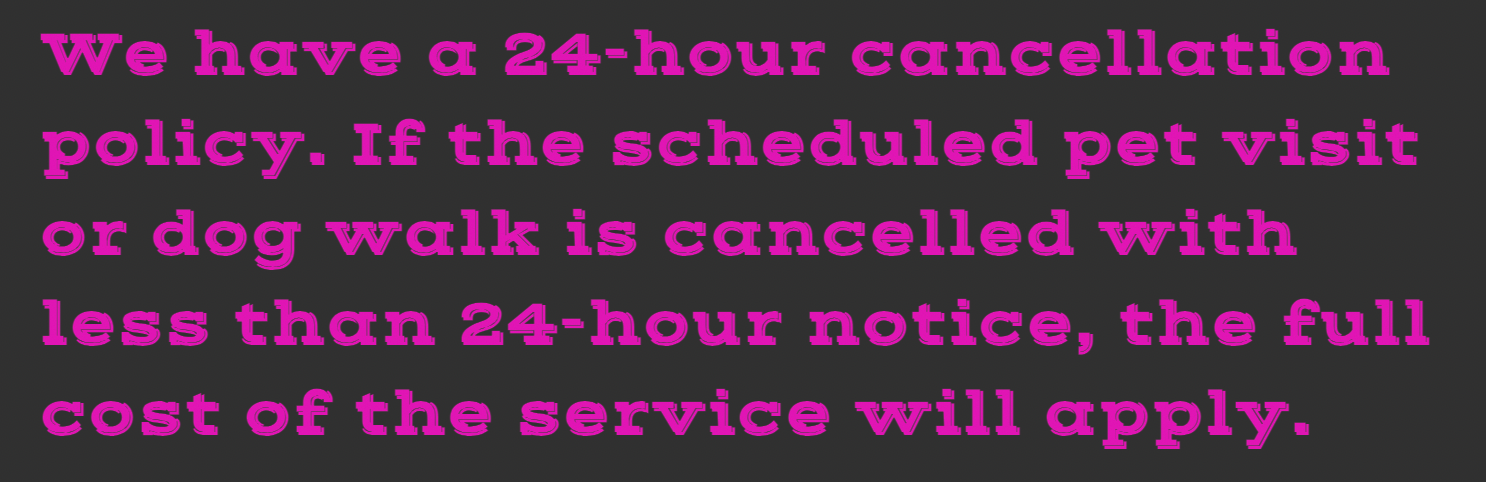
The most common policy is a 24-hour window. One pet care business charges the full cost of a walk or visit if it’s canceled with less than 24 hours’ notice.
Some walkers go softer: Fearless Tails bills late walk cancellations at 50% of the rate, unless the reason is health-related. And holidays usually get a longer window. Middle TN Pet Care requires 14 days’ notice to cancel pet sitting over federal holiday periods.
Vacations
Regular clients going away is predictable, so plan for it.
Platinum Paws Pet Services asks regular midday clients for two weeks’ notice before a vacation or before stopping service, and charges two weeks of walks if they don’t give it. That leaves you time to fill the gap, or a guaranteed two weeks of pay if you can’t.
The alternative is a plan hold: pause a weekly or monthly client’s billing while they’re away. It's friendlier, but it means the income stops.
Weather
Too hot or cold for a full walk? Shorten walks instead of canceling them, and say so in your terms.
For heat, Rover advises keeping walks to about 10 to 15 minutes once it’s above 85°F, and Chewy recommends only going out for potty breaks at 90°F or above.
Make sure to check the ground: if asphalt or sand is too hot for your feet, it’s too hot for a dog’s paws. For cold, veterinary surgeon Dr. Nick Horniman recommends aiming for temperatures above 32°F, and Dogster’s vet, Dr. Megan Barnes, says walking becomes risky below 20°F, or below 50°F for small and hairless dogs.
Turn the holidays into your busiest season
When regulars go away for Thanksgiving or Christmas, their weekday walks stop. Their dogs still need looking after, though, and that’s where pet sitting comes in. Rover says the end-of-year holidays are the busiest time of year for sitters and dog walkers on its platform.
Offer holiday sitting to your regulars first, and open bookings early. A client whose walks would otherwise pause for two weeks becomes your best-paying booking of the year.
Keep a waitlist
Once your schedule is full, don’t turn new inquiries away. Take their name, neighborhood, dog details, and preferred walk times, and add them to a waitlist. Then, when a regular moves away or cancels, you can fill the slot that week instead of starting your marketing from scratch.
Line up a backup walker
If you get sick or take a vacation, your clients’ dogs still need walking. Having cover is a selling point. Bethesda Dog Walkers points out that solo walkers usually have no coverage when they get sick or take a week off. So a backup puts you ahead of most independent walkers.
Set up your entire dog walking business in a few hours with Whop and your AI
A dog walking business can get you earning money quickly, and you can also set it up in record time thanks to the tools available today.
I set up a fully functional dog walking business in just a few hours using ChatGPT and Whop. Every prompt below opens in Whop AI, which builds your website and sets up your LLC, payments, and even ads.
For planning, strategy, and checking rules and regulations, you can use the arrow next to the button to send a prompt to ChatGPT, Claude, or Grok instead, or click Copy and paste it into any other AI, like Gemini.
Feel free to copy the prompts shown here, but make sure to go in order. If you do decide to follow along, you’ll have a live business in no time.
Create your business brief
This is a good place to start, because it gives the AI all of the information it needs to set up your dog walking business without making any of its own assumptions. Just click Fill in on the card and answer the questions. Every prompt below fills in your details for you, and your answers are saved in your browser, so you can come back later without retyping them.
Here are my dog walking business details:
- Business name: [X]
- Your name: [X]
- Service area: [neighborhoods or ZIP codes], [city, state]
- Part-time or full-time: [X]
- Services offered: [dog walks / pet sitting visits / pet taxi / overnight pet sitting / overnight boarding]
- Other services offered: [X]
- Dogs walked at once: up to [number]
- Using a car for the business: [yes / no]
- Travel time between jobs: [X] minutes
- Cost of travel time: $[X]
- Equipment costs: $[X]
- Phone number: [X]
- Usual availability: [X]
- Plans: Single service (a one-off booking), Weekly service (one visit every weekday for a week), Monthly service (one visit every weekday for a month)
Use these details for everything I ask you in this chat.
Plan your business
Before actually building the working parts of your business, it’s a good idea to let AI do some research on your behalf. These prompts will help you take care of some of the considerations we detailed earlier, such as local regulations and pricing.
My dog walking business, [business name], will serve [neighborhoods or ZIP codes] in [city, state]. Search official websites, starting with the state government site and moving on to city, county, or municipality websites, and list the licenses, registrations, and insurance I need to offer my services. Include leash laws and any limits on how many dogs I can walk at once.
- Services offered: [dog walks / pet sitting visits / pet taxi / overnight pet sitting / overnight boarding]
- Using a car for the business: [yes / no]
Link to the official page for each requirement.
Make sure to check the official pages yourself to confirm, and if unsure, spend a little time doing your own research. AI can sometimes get local details wrong, and rules change over time. If in doubt, you can contact your local area’s governing body.
Next, use the prompt below to work out your prices and write the terms you want your customers to agree to at checkout. If you want to add specific terms, you can add them to the Plan terms prompt, or work with your AI to refine them.
My dog walking business will have three plans: one-off bookings, weekly bookings (one visit every weekday for a week), and monthly bookings (one visit every weekday for a month). Work out a price for each service on each plan, based on what other dog walkers in my area charge. Add a surcharge per extra dog, and for early (before 7am), late (after 5pm), or weekend visits. Include payment fees of 2.7% + $0.30 [plus 0.5% for billing automation].
- Service area: [neighborhoods or ZIP codes], [city, state]
- Services offered: [dog walks / pet sitting visits / pet taxi / overnight pet sitting / overnight boarding]
- Dogs walked at once: up to [number]
- Travel time between jobs: [X] minutes
- Cost of travel time: $[X]
- Equipment costs: $[X]
Then give me:
- What local dog walking companies charge, with links, and how my prices compare
- A spreadsheet with formulas so I can change any input and refine my pricing
If anything’s missing, ask me before you calculate. Finish with the price you recommend for each service on each plan.
Write plain-English plan terms for my dog walking business covering payment (due at booking or, for Tap to Pay or cash, at the first pickup), cancellations and refunds, and anything else required. Keep it to six or seven short lines a customer can scan at checkout.
- Plans: Single service (a one-off booking), Weekly service (one visit every weekday for a week), Monthly service (one visit every weekday for a month)
- Cancellation terms: [X]
- Refund policy: [X]
- Other terms: [X]
Build your dog walking website with Whop AI
We’ve already covered how easy it is to build your website using a Whop Blueprint, so you can go ahead and do that now. Here’s a reminder as to how:
- Pick a Blueprint like this one from the Whop Blueprint selection.
- Prompt the Whop AI to change the blueprint to match your business brief, prices, and terms.
- Tell the AI to make any changes you need.
- Verify your business from the Whop AI chat to enable payments.
- Publish your business.
But if you’d rather not use a Whop Blueprint, you have several other options when it comes to building your dog walking website. You can migrate an existing site that you have, or use the Whop AI to build the website from scratch.
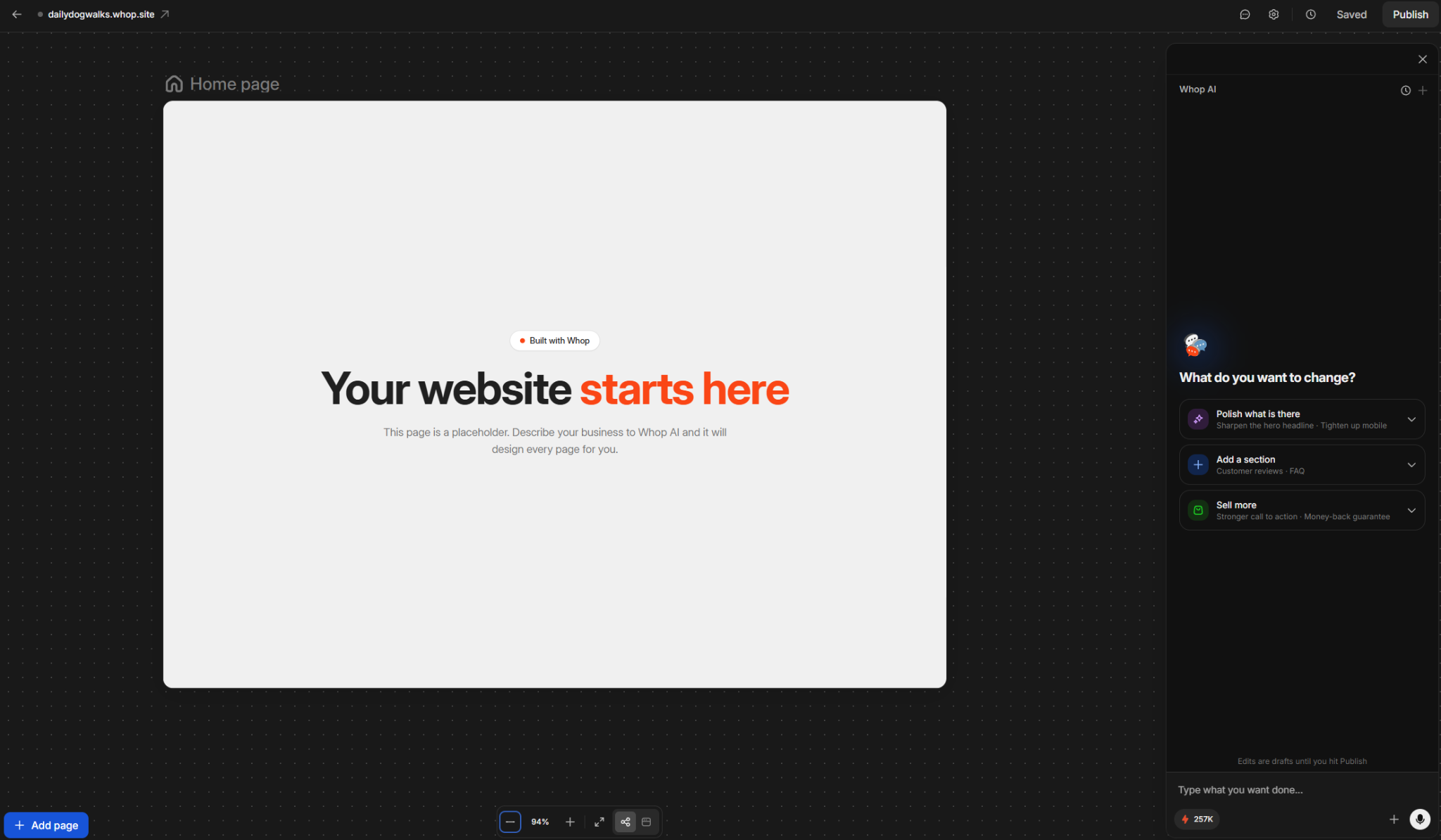
Prompting the Whop AI works exactly the same if you choose to build from scratch, except that your initial prompt ought to be as detailed as possible.
If you’ve been following the steps we’ve already laid out, you won’t need to describe your business or the services you offer anew. However, you’ll need to add the style of the website, describe any images you need, and so on.
Build a website for [business name], a dog walking business serving [neighborhoods or ZIP codes] in [city, state]. Customers can schedule a free consultation with me, [your name], or book a service directly from the pricing page.
- Services offered: [dog walks / pet sitting visits / pet taxi / overnight pet sitting / overnight boarding]
- Prices: [paste your prices]
Let customers pay by credit or debit card, digital wallet, or ACH bank transfer, or choose Tap to Pay or cash at pickup. Ask for their email address, phone number, and home address when they book.
Include:
- A landing page with a hero image and copy about my services
- A pricing page with my booking options and checkout
- A terms and conditions page with these terms: [paste your terms]
- A privacy policy page
- A contact page with a form for a customer’s email, phone number, ZIP code, and question, plus my phone number, [phone number], and usual availability, [usual availability]
Keep the copy short, friendly, and easy to scan, with images of happy dogs at play.
Want to form an LLC?
Help me form an LLC for my dog walking business, [business name], in [city, state]. Tell me what details you need from me (such as my business address, founder details, and business activity), check that my business name is available in my state, and fill in what you can. Stop before anything is submitted or paid so I can review it and confirm myself.
You can also add a new page or function to your website using the Whop AI. We mentioned creating an intake form for new clients earlier, and you can ask the AI to do that.
In fact, the AI can create an intake form for you with a minimal prompt like this one:
Add a standard intake form for customers to fill out when they make a booking.
Add an intake form for customers to fill out when they make a booking. Give it five questions in total, including these:
- When’s the last time your dog got off the property?
- What’s the one thing you’d be worried about if your dog walker didn’t know?
Also ask for a backup contact and the dog’s vet.
In fact, your AI can build you an intake form with a minimal prompt.
Add a standard intake form for customers to fill out when they make a booking.
Add an intake form for customers to fill out when they make a booking. Give it five questions in total, including these:
- When’s the last time your dog got off the property?
- What’s the one thing you’d be worried about if your dog walker didn’t know?
Also ask for a backup contact and the dog’s vet.
Once your website is live, Whop’s AI can manage everything for you including things like price changes, pauses while you take your vacation, and plenty more. You need exactly zero coding or web development skills to run a business website on Whop.
Pretty techy? You can also access Whop’s end-to-end API straight from a terminal, and make your dog walking business completely programmable and agentic by plugging directly into tools like Claude, Codex, and Cursor via the Whop CLI.
Start acquiring customers
With your website live and checkout functional, it’s time to get those leashes ready and start taking your four-legged charges out into the fresh air.
For that, you’re going to need clients. Friends and family work, as well as your existing socials, but for a business like dog walking, you’ve got to consider what mix of promotional activity fits the bill - pun very much intended in this case, since flyers are a good place to start.
Each prompt you can find below has the details from your business brief already, so you don't have to worry about using them in a new chat with your AI.
Design a [full page / half page] flyer for my dog walking business, [business name]. Show my plans and prices, the area I serve, one line on what makes me different, and a QR code that links to my website: [website link]. Show me a preview, then give me a print-ready PDF.
- Service area: [neighborhoods or ZIP codes], [city, state]
- Prices: [paste your prices]
- What makes me different: [X]
It’s also a very good idea to set up a Google Business Profile. It’ll get you crucial visibility in terms of local SEO, making you a whole lot easier to find by whoever’s looking for a dog walker in your area.
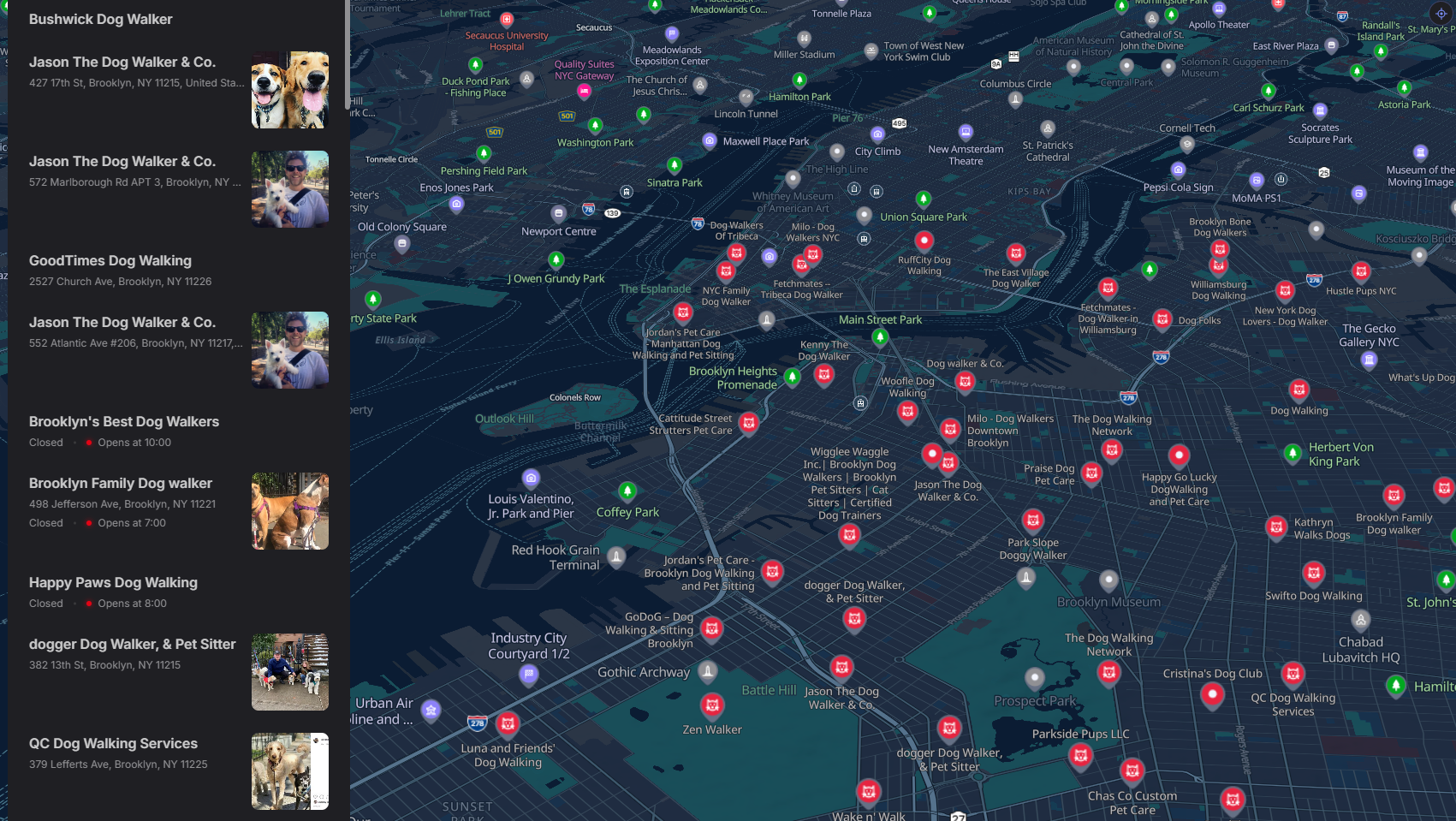
Here’s a prompt to help you set up your Google Business Profile:
Help me set up a Google Business Profile for my dog walking business. Write a 750-character description and list my services. Then walk me through creating and verifying the profile at business.google.com, one step at a time.
- Business name: [X]
- Service area: [neighborhoods or ZIP codes], [city, state]
- Services offered: [dog walks / pet sitting visits / pet taxi / overnight pet sitting / overnight boarding]
- Phone number: [X]
- Usual availability: [X]
- Website link: [X]
Finally, Whop Ads can also help you add a few clients to your roster. For this one, you’ll need to use the Whop AI, and connect your social accounts in the Ads tab of your Whop business dashboard.
Create a Whop Ads campaign for my dog walking business, [business name], targeting dog owners in [neighborhoods or ZIP codes], [city, state]. Build the ad around what makes me different, and set a budget of $[X] a day (max $[X] total).
- What makes me different: [X]
Use these photos of me walking dogs: [attach photos, if you have any]. Show me the ad for approval before launching.
Set up your dog walking route
The one key thing you need to do as a dog walker after building a robust client list is to optimize your time. And that means scheduling your dog walking route as efficiently as possible.
This isn’t rocket science, but at the same time, the logistics of dog walking can be pretty finicky. And if you’d rather not spend time figuring it out with a set of colored markers and a printout map, the Whop AI can help out here too. Export your customer list from your Whop dashboard as a CSV, then attach it when you open the prompt below:
Here’s my customer list: [attach your customer list]. Here are the addresses, walk times, and pickup notes that aren’t in it: [list].
Plan the most efficient route for me to walk these dogs at the times they need.
- Dogs walked at once: up to [number], unless they’re from the same household
- Using a car for the business: [yes / no]
List the stops in order with pickup times, link each address to Google Maps, and add up the walking and travel time for the day.
And that’s it; your entire dog walking business built in a day, complete with your own checkout-ready website, flyers, Google Business Profile, online ads, dog walking route, and even an LLC.
4 tips from a dog walker with 15 years in the business
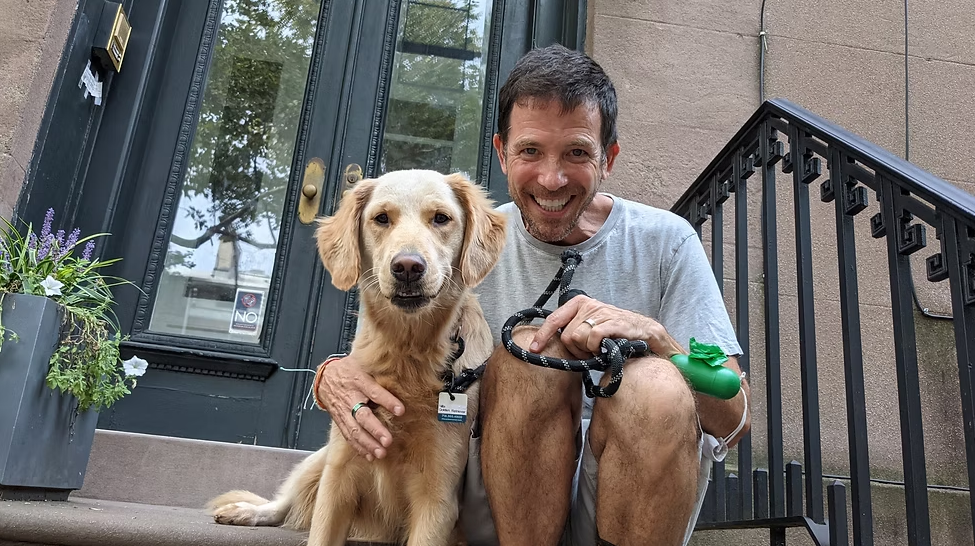
1. Treat every dog like your own
This is Kevin's number one piece of advice for any new dog walker:
“Treat every dog they walk as if the dog were their own, and always communicate with their customers.”
It’s what his customers appreciate most, judging by glowing reviews like these:
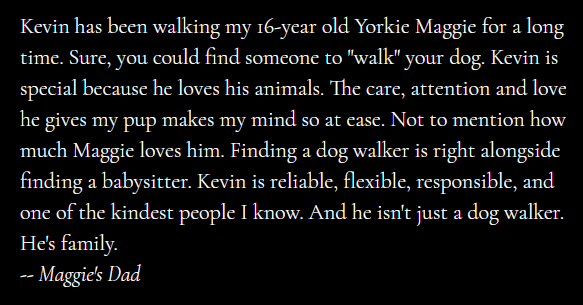
You already know this if you’re a pet owner, but that last word’s key: family. If someone’s looking for a dog walker, they clearly care for their dog as if they were part of the family.
Which means the onus is on you to provide that same sort of care while you’re taking care of someone’s dog.
2. Keep owners in the loop
The second half of Kevin’s advice is communication, and the best walkers don’t wait until the end of a walk to deliver a report. Kevin texts his clients bathroom updates at no extra charge.
Think about it from the owner’s side: if their dog will be inside for hours after the walk, that’s important to know.
Small touches like this get you referrals. One dog walker we spoke to on Reddit sends owners a two-line text and a photo after every walk, and says it’s one of the main reasons people recommend them to other pet parents.
3. Keep your groups small
You’ll sometimes see dog walkers juggling five or even ten dogs at once, and some TV documentaries show operators with a truck full of dogs.
Kevin takes a different approach: he walks only one or two dogs at a time. That means every dog gets his full attention, and the walk is much safer.
Owners are generally willing to pay more for solo walks. Group walks can earn you more per hour, but they’re much harder to manage. If you do walk dogs in groups, get to know the area, learn how dogs behave together, and introduce new dogs on neutral ground first. Match dogs by size and energy, and don’t force it if two dogs don’t get along.
Most dogs walk better solo, so save group walks for the ones who genuinely enjoy them.
4. Show up, and build your regulars
Reliability is what turns one-off bookings into regular clients. Show up when you say you will, and you’ll earn repeat business and recommendations. Be available when your busy clients need you most, and you’ll earn even more of both. Kevin rewards that loyalty in return, offering a discount to clients who book him for a walk every weekday.
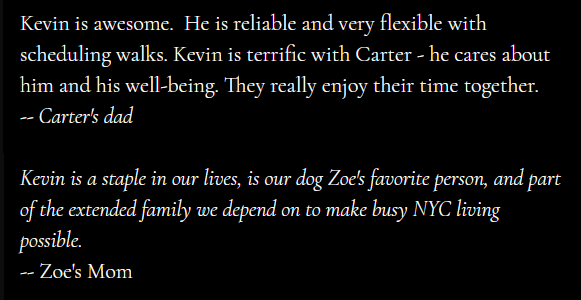
Those regulars are what make dog walking a real business. One client who needs you two or three times a week is about ten walks a month, which is a couple of hundred dollars. Four clients who need you every weekday?
Now it’s getting serious.
Set up your dog walking business with Whop
Whop gives you everything you need to run your dog walking business in one place. You can build your website in minutes with a Whop Blueprint or Whop AI, form an LLC, and start taking payments online by card, ACH, PayPal, and more. Put regular clients on weekly or monthly plans, send invoices with automatic reminders, and get paid on the spot with Tap to Pay on iPhone.
And when you’re ready to grow, Whop Ads helps you find new clients, Whop AI can plan your walking routes, and you can pay your team from the same place you get paid.
It’s free to start, with no monthly fees. You only pay 2.7% + $0.30 when a client pays by domestic card, plus 0.5% if you turn on billing automation.
You walk the dogs. Whop takes care of everything else.
FAQ
Do I need a license to start a dog walking business?
There’s no federal license for dog walking, but some cities require a general business license, and some require a permit to walk larger groups. In San Francisco, for example, you need a permit to walk four or more dogs at once on park property. Check with your city or county, and look up your state leash laws and any rules for places like beaches and apartment complexes.
Do I need insurance to be a dog walker?
Even though it’s not a requirement, the best dog walkers do get insured and bonded. This protects the dog owner from damages that may be incurred if something unexpected happens. From an owner’s perspective, it’ll always be better to choose an insured dog walker.
Can I walk dogs part-time until I start earning enough?
Most dog walkers start this way, and even the most successful ones today may not have made more than a hundred dollars in their first month. You’ll see your earnings increase as you build your client base, and if you keep growing and retain your customers, going full-time will become an option.
Should I form an LLC for my dog walking company?
Many successful businesses remain sole proprietorships. However, there are several benefits to forming an LLC, not least of which is the fact that your personal assets are protected against business-related liabilities. It can be expensive to form an LLC, so take this step when your dog walking income is substantial and steady.
How much should I charge for dog walks?
First and foremost, that depends on your area and the services you offer. If your customers trust you and you’re willing to go the extra mile, you can charge a premium. The minimum price for dog walks tends to be in the region of $15, but you could be charging up to $45 depending on your standing and relationship with customers.
Is a dog walking business profitable?
It certainly can be, and some dog walking entrepreneurs end up taking on part- and even full-time employees before too long.
The first challenge is building your customer base, but once you’ve got the clients, admin and logistics take over as you start having to really pay attention to your routes. If you’re able to develop a dense route and a good routine, there’s plenty of money to be made since the actual costs of the business are quite low.
For many dog walkers, the main limiting factor is their own two legs since it’s not usually possible to walk dogs for 8 hours a day. The most successful dog walking businesses tend to structure work around 4- or 6-hour shifts.
How much does it cost to start a dog walking business?
Very little. When starting out, all you really need are two or three high-quality cross-body leashes and a supply of doggy treats! It’s also a good idea to carry plenty of hydration, and that includes a flask of water and a portable dog bowl. You’ll also want to sign up for insurance before taking on your first clients.
Once your dog walking business is in full swing, you may consider investing in additional forms of marketing, or hire some W-2 employees (which means that your insurance costs will also rise).