Dots is a global payouts platform for payee onboarding, tax, and international payments. This review covers its costs, features, and limitations.
Key takeaways
- Dots removes the engineering burden of global payouts by bundling rails, KYC, onboarding, and tax filing together.
- Core features like API access, white-labeling, and background checks sit behind the $999 Scale plan.
- Evaluate Dots on per-transaction fees and hidden gaps, not headline coverage of 190+ countries.
Dots is a global payouts platform that allows businesses to pay users, sellers, creators, and contractors worldwide, with onboarding, KYC, and tax compliance built in.
It's aimed at marketplaces, gig platforms, esports, and creator networks that need to pay a lot of people in multiple methods and currencies, and don't want to build payouts infrastructure internally.
But whether it holds up depends on the details, like what it actually costs, and where its automation stops and your team's workload begins.
In this review, we break down everything Dots offers (payouts, onboarding, tax, and its API), what it costs (and what it won't tell you upfront), and where it falls short, so you can decide whether it fits your platform.
Why do platforms need payouts?
Platforms don't just collect money, they owe it. Every sale, gig, or commission results in someone waiting to be paid. Paying them reliably is what keeps sellers and creators loyal.
Verified Market Reports projects the global gig economy will reach nearly $1.5 trillion by 2033, creating growing demand for scalable payout infrastructure.
If you're running a platform that pays users, you need payout infrastructure that's powerful enough to handle complex payouts in multiple currencies, different payment methods, and in as many countries as possible.
Those are basic requirements for any marketplace, platform, affiliate program, or network to have.
And your users have expectations, too. They want fast access to their funds, easy withdrawals, and simple onboarding that doesn't make them jump through hoops.
That's the job Dots is pitching for: take the rails, onboarding, and compliance off your plate so paying people stops being an engineering project.
And on the payee side, make sure those payouts are secure, fast, and reasonably priced.
The question is, does it deliver? Let's look at what's actually on offer.
How does Dots work for payouts?
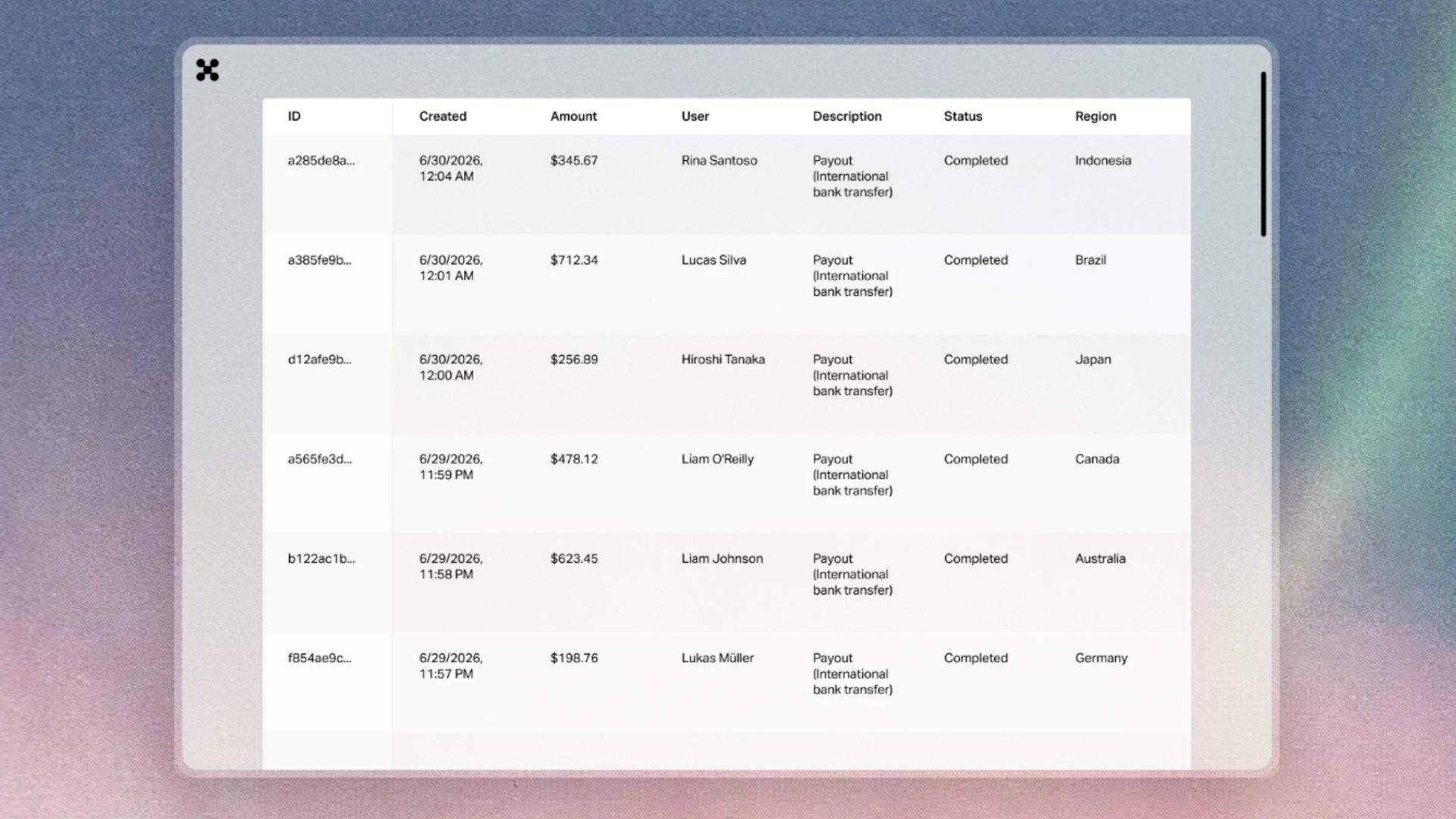
Dots offers a mass payouts solution for platforms, marketplaces, and creator networks. It works in one of two ways: through a no-code dashboard, or via an API that embeds payouts directly into your product – though API access is only available on the Scale and Enterprise plans.
Either way, the flow is the same. You onboard payees through Dots' hosted, brandable flows, trigger payments individually or in batches, and Dots routes the money across its 300+ payout rails in 190+ countries. The platform handles KYC, sanctions screening, and tax form collection along the way.
Dots' features: the complete breakdown
Dots' features can be split into five key areas: payouts, onboarding, tax and compliance, security, and API access.
Here's how each of them works:
Payouts
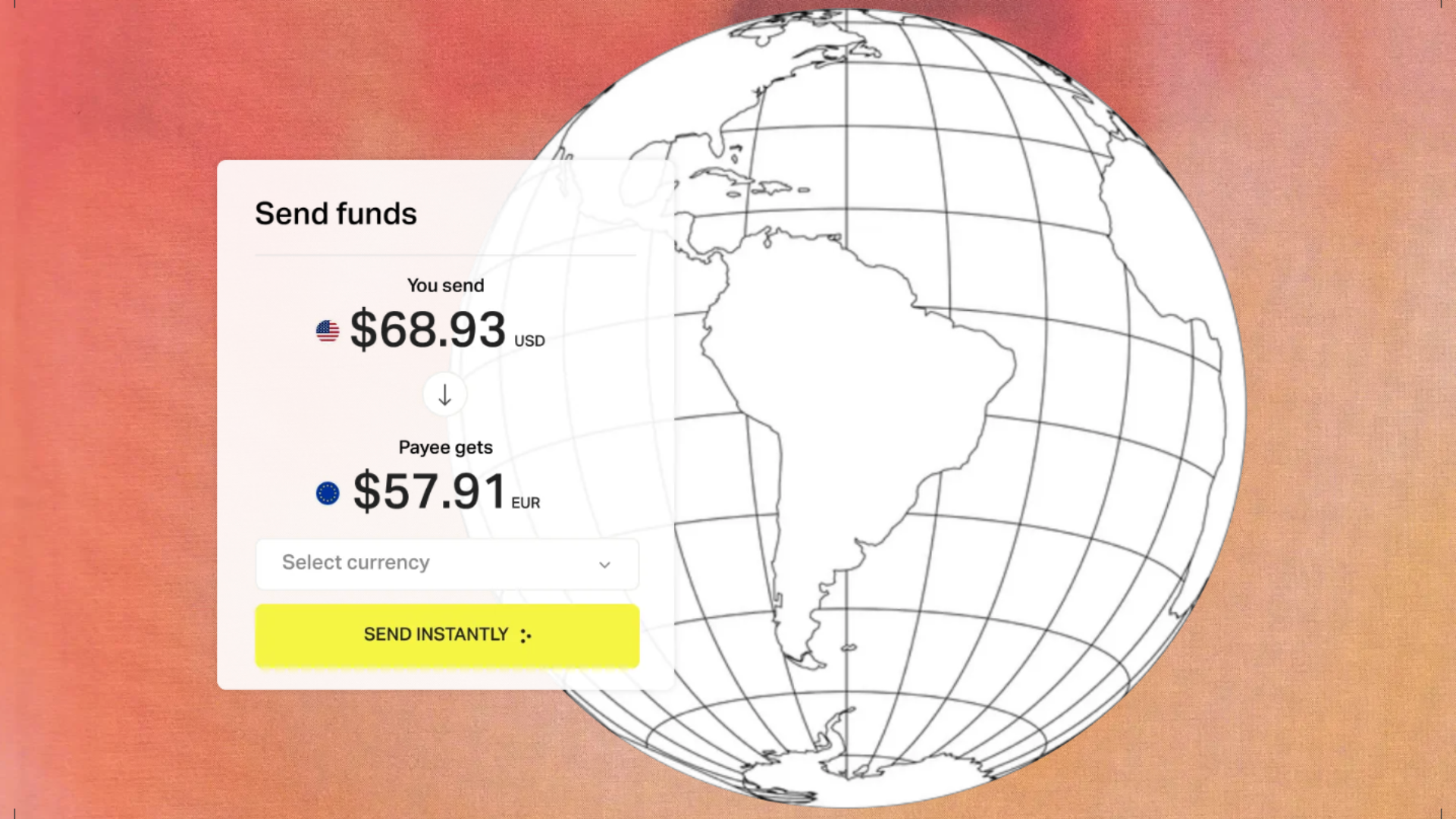
Payouts are the core function of the platform. Dots currently supports:
- Payouts to 190+ countries and 135 currencies
- Payouts via 300+ rails, from bank transfers, PayPal, Venmo, RTP, UPI, PIX, SEPA Instant, and stablecoins
- Real-time payouts in most regions
And the way businesses can send payouts is flexible, too. The dashboard is the easiest way to send one-off and urgent payouts. You just type an amount, enter the payee's information, and press send. But if you're paying out at scale, that's probably not the most efficient way.
Platforms with bulk payees to look after can also use CSV upload for weekly or monthly batch payouts. And if you're tackling really large volumes of payouts, you can integrate with the Dots API (available to Scale and Enterprise plans). With API access, you can configure payouts to be sent automatically.
Each method carries its own transaction fee (from $1–$2 for domestic transfers up to $30–$40 for international wires), which we break down in the pricing section.
Payout links
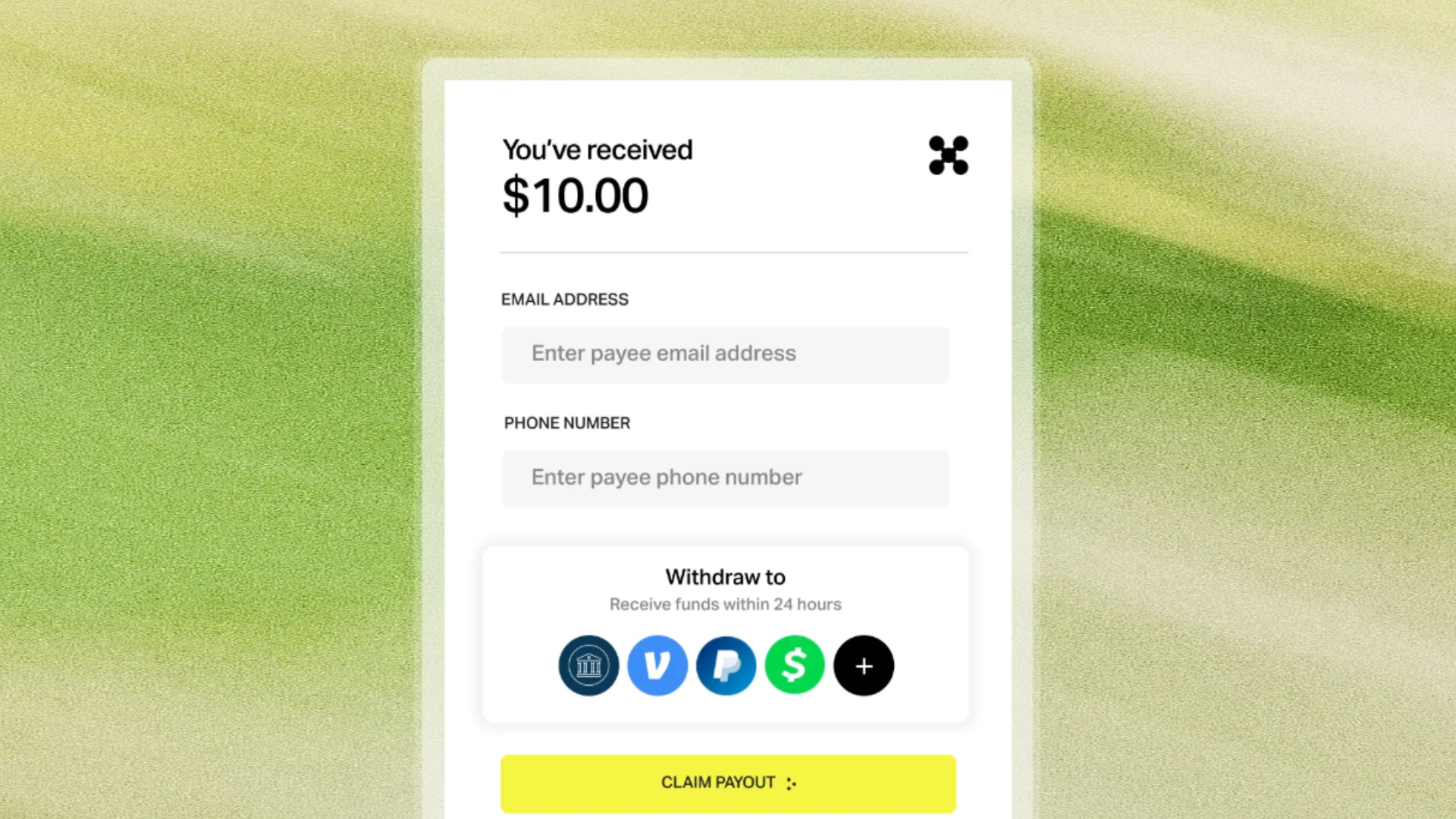
Payout links can be created through the Dots dashboard or API, and only require you to know the amount you're paying out to the payee.
From there, recipients receive a link via email or SMS to access their funds. They can then verify their identity and select a payment method (bank account, PayPal, Venmo, Cash App, etc).
Dots suggests most payments land within 24 hours, with many being instant (depending on the payment method selected).
Dots states that it automatically collects and verifies W-9 and W-8BEN forms, matches TINs with the IRS, and files 1099s at year-end – all handled within the link flow itself.
Onboarding
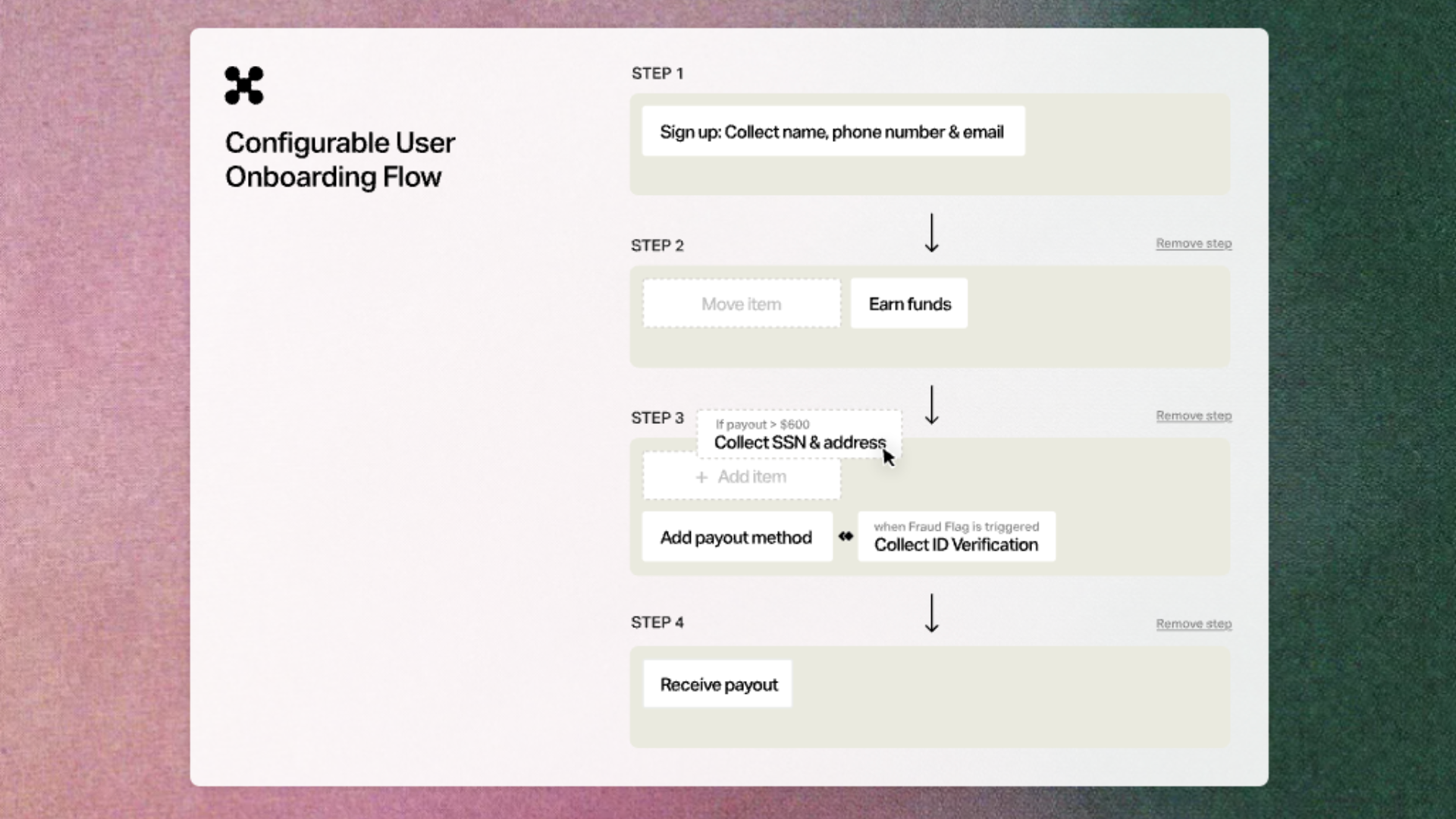
Dots' onboarding helps keep your business compliant with KYC, ID, and bank verification across 190+ markets. Verification runs on document checks, biometrics, and database lookups, with bank details connected via Plaid or entered manually.
Payees can onboard through hosted or embedded flows, giving their contact details first, then selecting their preferred payout method.
- Sanctions screening automatically runs at sign-up, but when full KYC information (SSN, EIN, and other sensitive details) gets collected is configurable
- Platforms can elect to request it upfront, or defer it until after the payee's first payment (what Dots calls staggered onboarding) – this is designed to give payees more incentive to complete the process
A built-in compliance engine handles the regulatory side (OFAC sanctions checks, KYC/KYB) and Dots' fraud tools (phone verification, background checks on Scale plans and up, and behavior analysis) run inside the same flow.
Once onboarded, all payee data, payments, tax, and verification stays stored in a secure record, so support teams can instantly look up users and ensure there are no duplicate files.
Payees get a self-serve dashboard, accessed by phone verification with no password. From there they can check their verification status in real time, update payment methods, download tax documents, and track payouts. Dots claims to handle 90% of recipient queries without involving your team, via chat and email.
Note: Many of the onboarding features described here are only available on Dots' higher tiers. The white-labeled experience, background checks, and 24/7 recipient support are listed on Scale ($999/month) and Enterprise only. With the $19 Core plan, payees go through Dots-branded flows.
Tax and compliance
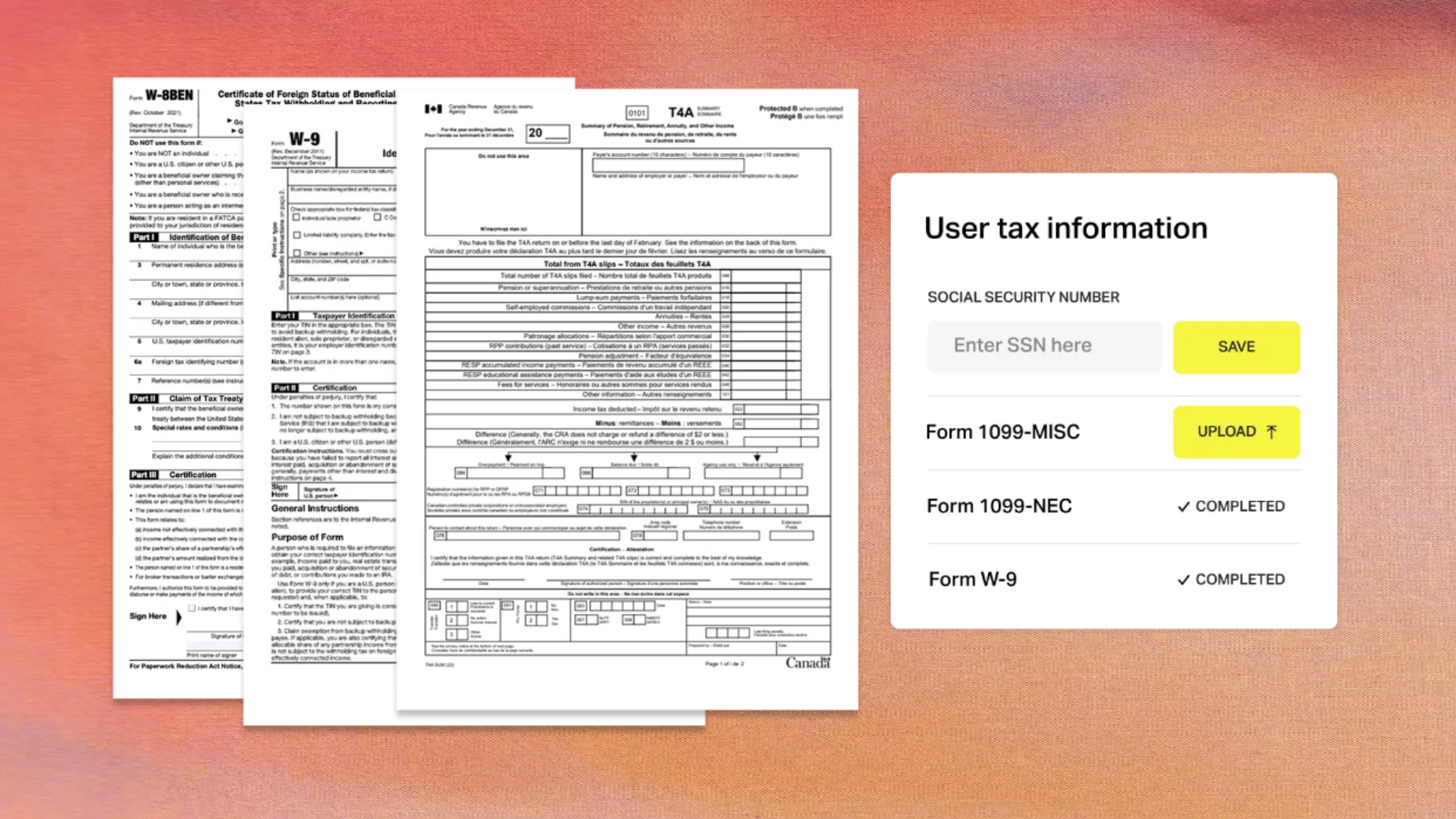
Tax compliance can be one of the most annoying parts of mass payouts. Dots automates W-9, W-8BEN, and T4A collection, verifies applicable payee details with the IRS, and e-files federal and state 1099s.
Contractors get sent secure links to fill out the required forms (W-9, W-8BEN/W-8BEN-Es, T4A), and all data is stored securely within the same payee files as mentioned above.
Whether your payees are in the US, Canada, or elsewhere, Dots collects the right form for each and keeps your reporting compliant – with the IRS for US contractors, or the CRA for Canadians.
Dots also checks each W-9's details against the IRS database in real time, catching mismatches at onboarding rather than at filing, when they'd trigger penalties.
International recipients get form generation, treaty/residency tracking, and expiry management (W-8BENs lapse after three years). However, there's no equivalent registry check.
The cost of filing 1099s depends on your plan, as noted on the Dots pricing page:
- Core plan: $5 per 1099 filing, $1 per mail-out to recipients
- Scale plan: $3.50 per 1099 filing, $1 per mail-out
- Enterprise plan: Contact sales, negotiable/customized pricing
1099 compliance is on every plan, but tax software integration is Scale and Enterprise only.
Note: While the mail-out fee only applies to physically mailed 1099s, IRS rules state that recipients must consent to electronic-only delivery. Platforms can't just force everyone onto email to dodge the $1.
Security
Dots promises "bank-grade security" to keep your platform's payouts and payee information protected, including being SOC 2 Type II certified.
Data is handled with 256-bit encryption and stored in a PCI-compliant vault with tokenization, rather than on your servers – your platform never touches raw SSNs or bank numbers. It also runs 24/7 anomaly detection to check for fraudulent accounts.
UK Finance reported £1.28 billion in payment fraud losses in 2025, up 4% year over year, showing the importance of secure, fraud prevention measures for payout platforms.
Every payout, form, and payee action gets a timestamped event history, so it's easier for your team to catch any suspicious activity and have full visibility over payouts and compliance. Every action can be exported with one click for regulators and security teams.
As mentioned earlier, background checks are available to those on Scale or Enterprise plans, offering an additional level of security, but at a cost. For Scale plans it's $10 per background check; Enterprise pricing is customized.
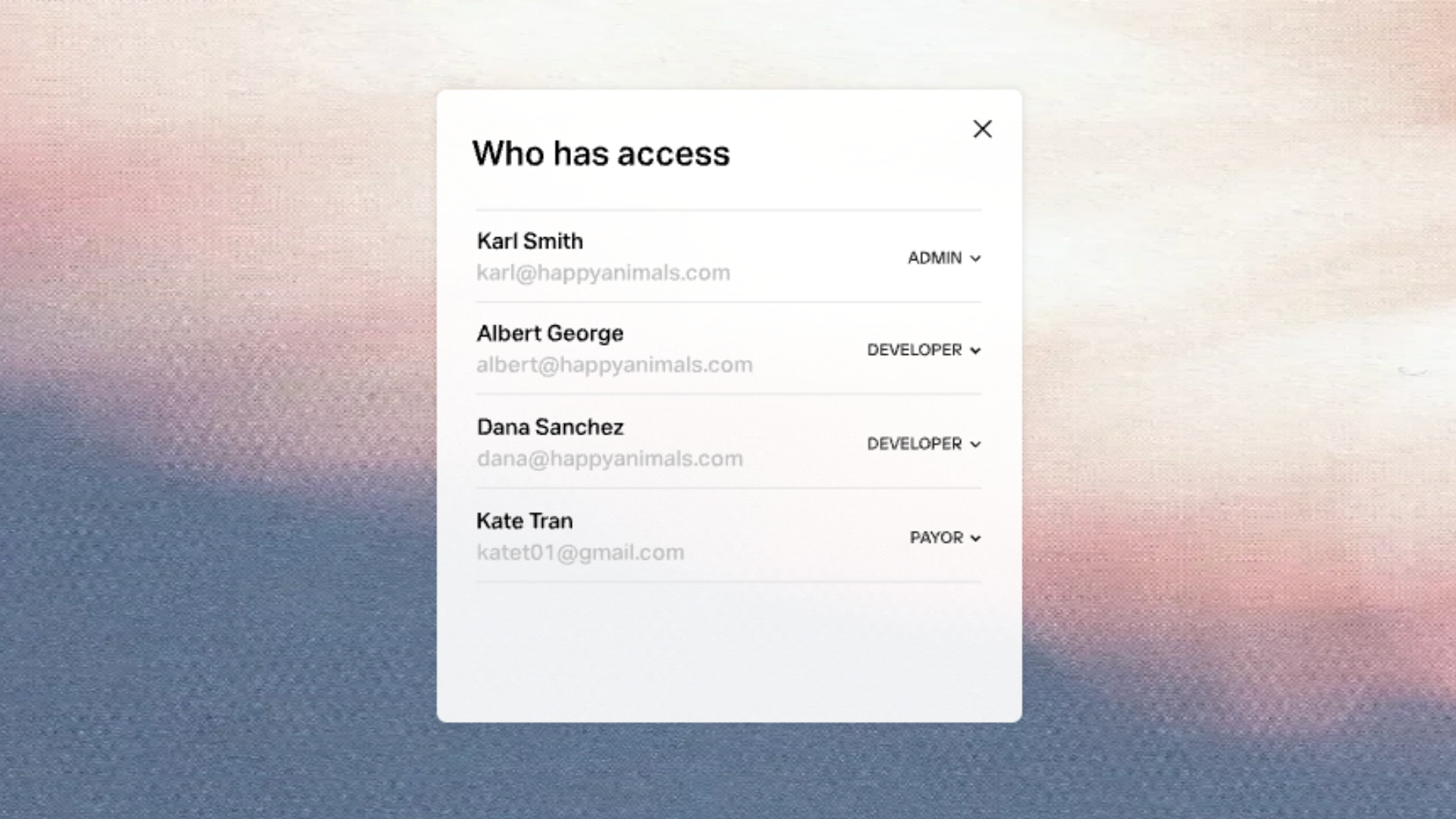
Role-based user permissions for admin, users, and viewers are an Enterprise-only feature, meaning on Core and Scale plans, every teammate with dashboard access has the same access.
Dots also has a fraud-management feature called Dots Control, which lets platforms set custom risk rules that flag suspicious payouts for manual review.
A customer case study credits it with cutting fraudulent payout volume by more than half. However, Dots Control doesn't appear on Dots' pricing page or within product listings, so there's no way to know which plans include it or what it costs without asking sales.
The Dots API
On Scale and Enterprise plans, platforms get access to the Dots API, allowing them to embed Dots into its existing stack to automate and simplify everything, from onboarding and compliance to payouts and tax reporting.
The API lets you create your own rules for holds, clawbacks, and rolling reserves. You can set up multi-party splits, marketplace fees, and revenue sharing arrangements, as well as take care of refunds, chargebacks, and adjustments programmatically.
Paying thousands of payees at once? It takes just one API call.
Dots states its API integration allows platforms to pay recipients 70% faster, with 90% fewer support tickets and the ability to scale without added headcount or team involvement.
According to Dots' FAQs, every payout event and user update triggers real-time webhooks, and platforms can register multiple endpoints and filter events to keep everything in sync.
There's a sandbox environment available to create and simulate flows without going live, which makes it easy for teams to test payment methods, KYC, and triggers.
You don't have to use the API to its full depth; Dots offers three integration levels:
- One-line embed: A single line of code hands your users off to Dots-hosted payout flows, without you building anything.
- Drop-in components: Embeddable iFrames you can style to your brand's colors and fonts, while Dots handles the payment flow behind them.
- White-labeled wallets: The fully native option, your own payout experience and ledger running on Dots' API, with Dots invisible to your users.
Note: Per Dots' documentation, even fully white-labeled Dots integrations have two limitations. Payees choose their payment method via a Dots-hosted form embedded in your app, and they must verify an SMS code from Dots before receiving a payout.
What do Dots payouts cost?
Dots has three plans, Core, Scale, and Enterprise. Each offers varying feature access as well as differences in transaction fees, broken down below.
| Core | Scale | Enterprise | |
|---|---|---|---|
| Monthly price | $19 | $999 | Custom |
| Domestic payout | $2 | $1 | Custom |
| International payout | 3.9% + $2 | 2.9% + $1 | Custom |
| Push to card (domestic) | Not available | $1 + 0.75% ($1.50 min) | Custom |
| Push to card (international) | Not available | $1 + 2.9% | Custom |
| Crypto payout | 3% + $2 | 2% | Custom |
| Instant payout fee | $0 | $0 | Custom |
| 1099 e-filing | $5 per form | $3.50 per form | Custom |
| 1099 mailing | $1 per form | $1 per form | Custom |
| ID verification | $5 per check | $3 per check | Custom |
| Background check | Not available | $10 per check | Custom |
| International wire | $40 | $30 | Custom |
- Dots Core: $19/month. Includes domestic and international payouts, ID verifications, and 1099 tax compliance.
- Dots Scale: $999/month. Includes API Access, domestic and international payouts, wallets, white-labeled experience, Slack support channel, assigned customer support resource, ID verification for end users, background checks, 1099 tax compliance, tax software integration, and 24/7 recipient support.
- Dots Enterprise: Custom pricing. Includes API Access, domestic and international payouts, wallets, white-labeled experience, Slack support channel, assigned customer support resource, ID verification for end users, background checks, 1099 tax compliance, tax software integration, 24/7 recipient support, volume discounts, priority feature requests, custom reporting, user role assignment (admin, users, viewers).
The gap between plans is notable. Scale costs $980/month more and saves $1 per domestic payout, so on volume alone it breaks even around 980 domestic payouts a month. Below that, you're paying for the API, wallets, and white-labeling rather than cheaper transactions.
Several fees scale with headcount, not volume. Every new payee can trigger an ID verification charge, and every US payee over $600 adds a 1099 fee at year-end, which can outweigh transaction fees for platforms with lots of small-dollar payees.
One easy win, though, is that instant payouts carry no fee on either published plan.
Fortune Business Insights projects the real-time and instant payments market will grow from $47 billion in 2026 to nearly $499 billion by 2034.
Best alternatives to Dots for payouts:
If Dots doesn't work for your platform due to it's pricing structure, transaction fees, or feature limitations, here are a few other global payout providers to consider.
1. Whop
Best for: Platforms looking for payouts, KYC, and 1099 compliance, without a monthly fee, and with the entire money-in side (checkout, affiliate commissions, 100+ local payment methods) under the same roof.
Whop allows platforms, marketplaces, and networks to pay out merchants in 241+ territories with most payment methods: bank deposit, crypto, Venmo, Cash App, cash pickup, wire, and more.
Get access to a complete, end-to-end API for running a business, including mass payouts as well as payment acceptance, business cards, and distribution via the Whop pixel for ads.
A fully embeddable KYC component is included, and you can allow users to earn up to $5,000 before needing to complete KYC. Whop also handles tax form collection, so you stay compliant.
"Whop has been super great in helping us automate all payouts on our referral platform for micro1. The integration was seamless and the team is always available to help with anything that pops up!"
– Ali Ansari, Founder of Micro1
Platforms can onboard connected accounts programmatically via the API and manage payouts through a pre-built portal you embed in your own app, without building that onboarding flow yourself.
"Whop gives me peace of mind - I don't have to worry about our payment stack working. Our team has gotten back so much time."
– Nick Lawton • CEO of SideShift
- Pricing and fees: Next-day US bank transfers at $2.50, wire at $23, with instant, crypto, and Venmo options priced as a percentage. Fees come out of the recipient's payout unless you choose to cover them. No monthly or SaaS fee.
2. Trolley
Best for: Platforms wanting deeper tax compliance, including EU DAC7 and OECD digital-platform reporting alongside IRS filings, and willing to pay the premium for it.
Trolley is a global payouts platform built for businesses that need to pay large numbers of people, particularly creators, artists, and other royalty recipients. Its network covers 210+ countries and territories and 135 currencies.
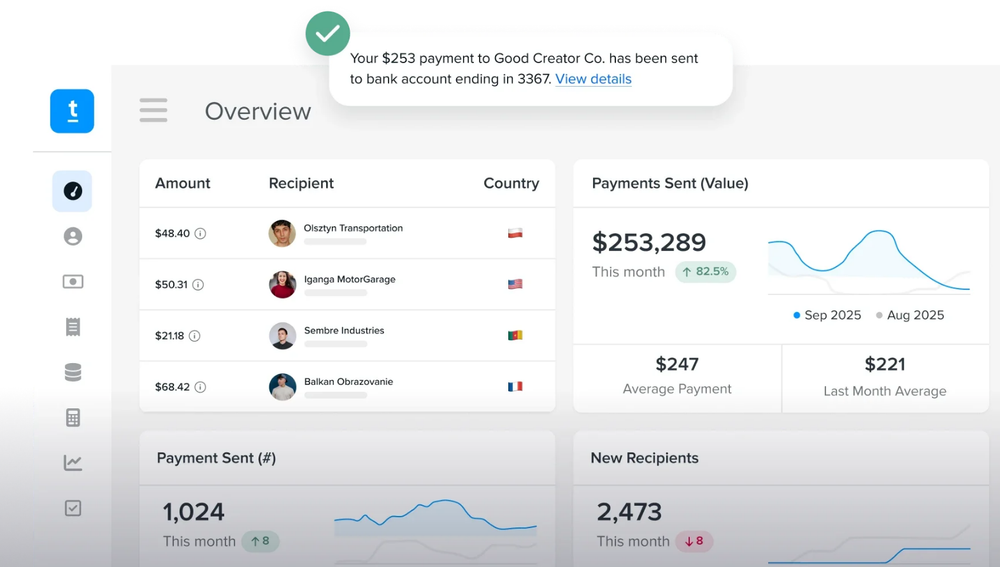
Recipients have a broad range of ways to get paid, including local bank transfers, PayPal, Venmo, instant debit card payouts, mobile wallets in 25+ countries, and paper checks.
Trolley can also handle recipient onboarding tasks such as identity checks, tax form collection, year-end IRS reporting, and OECD digital-platform reporting.
The trade-off is speed and cost.
Regular bank transfers typically take one to three business days, while instant payouts are limited to eligible debit cards and mobile wallets. There's also no crypto or stablecoin support, and because features are priced separately, costs can climb as you add more functionality.
- Pricing and fees: Trolley's Payouts module starts at $2,399/year. Adding Tax ($2,399/year), identity verification ($1,199/year), and accounting sync ($1,199/year) brings the total to $7,196/year, before transaction fees. Trolley Plus uses custom, quote-based pricing.
3. Stripe Global Payouts
Best for: Simple and secure payouts for US and UK-based businesses who don't need as much global coverage as Dots.
Stripe Global Payouts is a standalone mass payouts product for businesses that don't use Stripe to process payments.
You can send money to vendors, freelancers, and creators through the API or Stripe Dashboard, with recipients needing only an email address to begin onboarding.
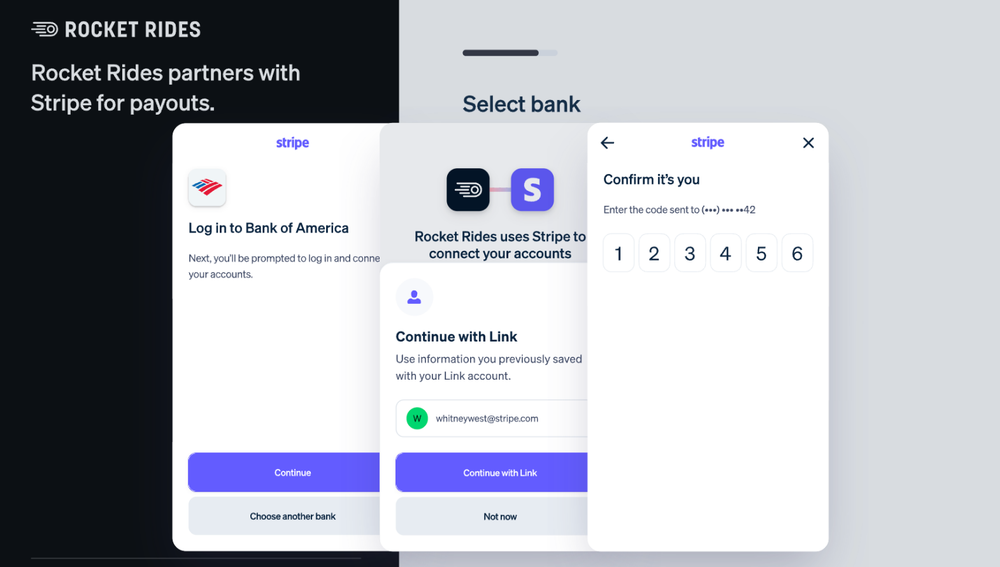
Stripe collects recipients' bank details and handles verification through a hosted flow. Payouts are available across 160+ countries via a variety of methods, including stablecoins. Standard bank transfers typically arrive within two to three days, with instant debit card payouts available for an additional fee.
The main limitation is availability: Global Payouts currently only supports businesses based in the US and UK. It also lacks mobile wallet payout methods such as M-Pesa, GCash, and UPI.
Businesses already processing payments with Stripe can use Stripe Connect for payouts instead.
- Pricing and fees: Around $1.50 per standard bank payout or $1.50 + 0.75% for instant debit card payouts, plus applicable FX fees.
4. Tipalti
Best for: Platforms seeking accounts-payable automation and tax administration, who don't need crypto or wallet payouts, and don't mind a longer implementation.
Tipalti Mass Payments is built for platforms that need to pay large numbers of freelancers, creators, streamers, or affiliates.
The network covers 200+ countries and territories, 120 currencies, and more than 50 payment methods, including local bank transfers, wires, and PayPal.
Where Tipalti stands out is tax and administration. It collects tax forms from payees, prepares IRS filings, and provides a branded portal where recipients can manage their payment and tax details.
Payments are processed in batches and follow standard banking timelines, with no crypto or mobile wallet options. Getting started is also more involved: there's no self-serve API signup, and implementation typically takes four to six weeks.
- Pricing and fees: Starts at $249/month plus transaction fees, with full pricing available by quote.
5. Payoneer
Best for: Platforms whose payees already hold Payoneer accounts, or don't mind creating one to get paid.
Payoneer offers mass payouts for platforms and marketplaces, but it works as a closed network: recipients need a Payoneer account to get paid.
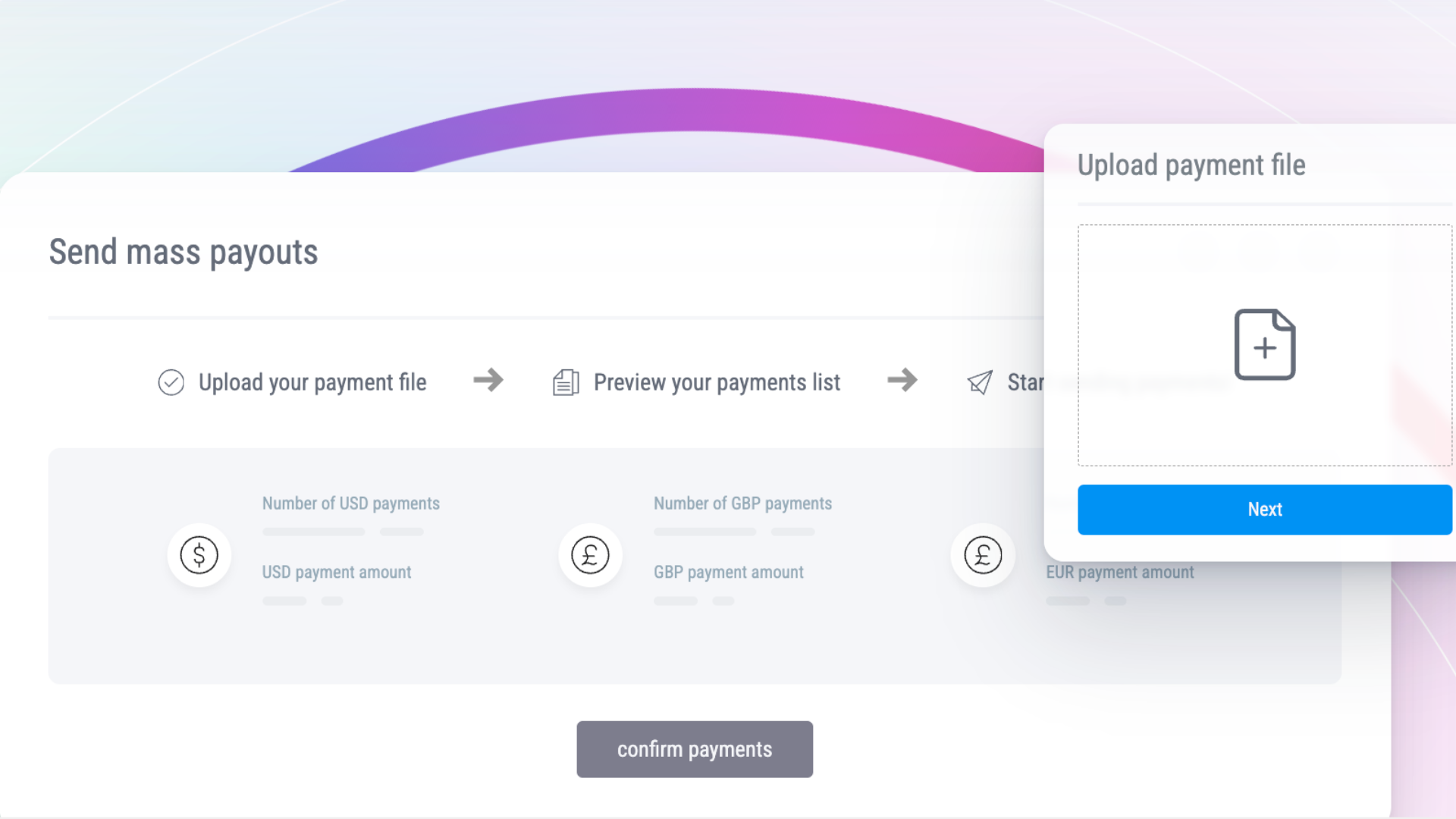
From there, they can withdraw to a local bank account, spend using a Payoneer Mastercard, or hold funds in multiple currencies.
Payoneer supports payouts to 190+ countries and 70+ currencies. The network is well established, powering payouts for companies including eBay, Airbnb, Walmart, and Fiverr.
Businesses can pay up to 150 recipients at once from the dashboard or automate payouts through the API, with identity checks, fraud screening, and tax form collection built in.
Recipient friction can be an issue though. Payees need to join Payoneer first, and the combination of payout, withdrawal, and FX fees can make costs harder to predict.
- Pricing and fees: Up to 4 USD/EUR/GBP for same-country payouts and up to 1% + 4 USD or equivalent for cross-border payouts, plus 1% for bank funding. Businesses paying over $50K/month move to custom pricing, while recipients may also pay withdrawal and FX fees.
Access fast and secure global payouts with Whop
If you're looking for the full stack – payments, payouts, and distribution? Whop has it all, with no monthly or SaaS fees included.
"It's been great working with the Whop team so far, we're using Whop for all payouts and it's been extremely smooth sailing, and their team has instant responses for help on literally anything!"
– Dris Elamri, Founder of Instinct
Whether you're paying contractors, affiliates, sellers, or creators; you'll be able to keep your recipients happy with hundreds of payment methods, including local rails.
Forget about building onboarding flows, identity verification, payout rails, and withdrawals from scratch. Embed via Whop's API and it's all done for you.
The result is payouts that scale alongside your business, without scaling fees or complexity.