Compare the best virtual card issuing providers for platforms building their own card program: by region, program type, controls, and monetization opportunity.
Key takeaways
- Issuing virtual cards turns spending into revenue, capturing interchange and keeping user balances inside your platform.
- Your sponsoring bank's asset size drives earnings: sub-$10B exempt banks earn roughly 2.2x more interchange.
- Choose a provider by which card-stack layers you want to own versus hand off.
Virtual card issuance used to be a bank-only capability. Now, marketplaces, platforms, and fintechs can build it directly into their own product, issuing virtual cards to their own users, not just creating cards for their team.
Why issue virtual cards? Because every time one gets used, it generates an interchange fee, and issuing cards means capturing that fee for your business instead of it going to the bank.
And if your platform holds a user balance, there's a second reason: a virtual card lets users spend that balance directly, instead of withdrawing it, keeping the money, and the user, inside your ecosystem.
In this guide we compare 14 virtual card issuing providers to help you find the right fit for building your own card program.
Who does what in card issuance
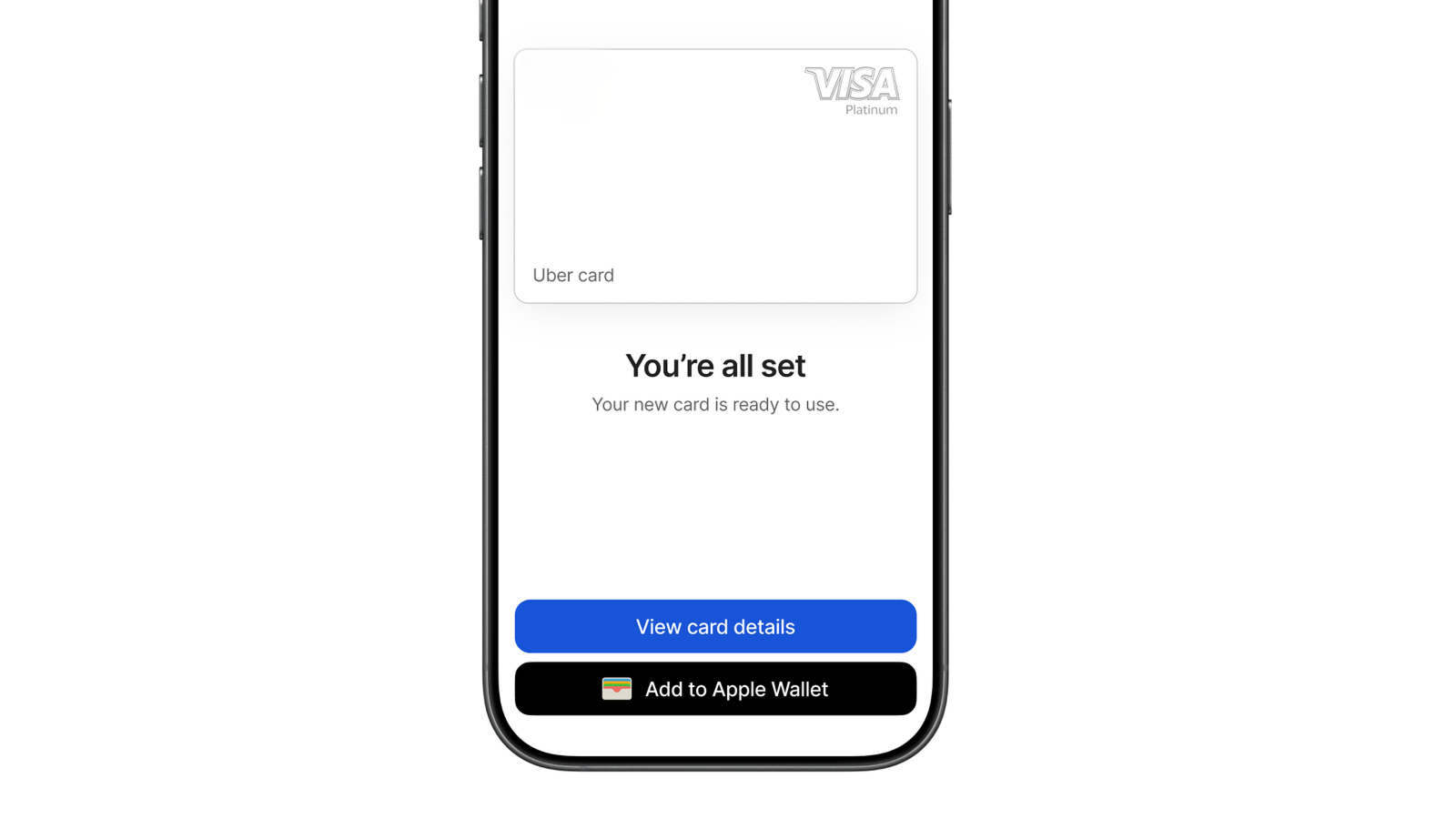
Every card program has five layers, and most of the terms that you'll see across this list of issuing providers: processor, program manager, BaaS, BIN sponsor, are just labels for which job a provider does in that stack. A processor handles one layer, a program manager handles another, and so on.
Here's what all those layers do:
- Network: Visa, Mastercard, Amex, and so on – these set the rules and rails that let a card work anywhere in the world. They don't issue anything themselves.
- Issuing bank: the regulated entity that holds the banking license and legally issues the card. This bank's identifier (BIN) is what appears on every card issued under its program. When a bank licenses out its BIN for someone else's card program, that's BIN sponsorship.
- Processors (or 'issuer processor'): the technology layer that handles authorization, transaction routing, and card data.
- Program manager: the entity running the card program day to day, handling things like design, compliance, customer support, and spend rules. More processors are starting to bundle this in as one offering (like Marqeta's own 'program management' tier).
- You: the platform or business building on top of the above.
BaaS (Banking-as-a-Service) isn't a separate layer from the above so much as a packaging of the layers. It's a provider that bundles the bank relationship, compliance, and often processing, into one offering.
Principal member is a different shortcut: a company that holds direct membership with a card network (Visa or Mastercard) rather than issuing through another bank's sponsorship. This lets it sponsor its own BINs and issue cards directly under its own network relationship, rather than needing a separate issuing bank to do that on its behalf.
Most providers on this list sit at different points in this stack, so the best one for you depends on how much of it you want to own, vs how much you want to hand off to your issuing provider.
A note on earning with interchange
The bank sponsoring your program, not the card type, is what determines how much interchange you can earn.
In the US, Regulation II caps debit interchange for large-bank-sponsored cards at $0.21 plus 0.05% of the transaction, plus a possible $0.01 fraud-prevention adjustment: about $0.245 on a $50 purchase.
Sponsor through a bank with under $10B in assets (the Regulation II exemption threshold) and the transaction is exempt from the cap. Per the Federal Reserve's own 2024 Regulation II data, covered transactions average $0.23 per transaction (0.47% of transaction value) vs $0.51 for exempt transactions (1.21%), a difference of about 2.2x.
Credit interchange is uncapped and runs roughly 1.5–3%, depending on card tier.
TL;DR: The same card program can earn much more or less per transaction based on which bank sits behind it. So when evaluating a provider, ask which bank(s) they sponsor through and what asset tier that bank falls into.
14 best virtual card issuing providers
Listed below are 14 of the best virtual card issuing providers.
We have not included spend-management tools like Ramp and Brex, because these providers issue cards to you for your own team's spending, but don't let you issue cards to your own users. Since this guide is about platforms becoming issuers, not businesses buying a corporate card product, they're out of scope.
The following provider descriptions are based on each provider's own public documentation, landing pages, and developer docs. Where a provider didn't publicly disclose information (like monetization), it is marked as 'not shared'. Facts were checked against live pages as of September 2026.
| Provider | Model | Card types | Coverage | Revenue share |
|---|---|---|---|---|
| Stripe Issuing | Program manager or processor-only | Charge/spend, credit- or stablecoin-funded | US/UK/EEA (commercial); US-only (consumer); 30+ countries (stablecoin) | Interchange share above volume threshold |
| Marqeta | Program manager or processor-only | Debit, credit, prepaid | 40+ countries | Interchange share |
| Adyen Issuing | BaaS (principal member) | Prepaid, single-use | EEA, UK, US | Interchange++ (itemized) |
| i2c | Issuer processor | Credit, debit, prepaid | 216+ countries/territories | Not shared |
| Lithic | Issuer processor | Credit, debit, prepaid | US + Canada | Interchange share + per-card/usage fees |
| Highnote | Issuer processor / unified program manager | Debit, credit (+ ledger, credit programs) | US only | Interchange share + payout fee |
| Unit | BaaS | Debit, prepaid (FSA/HSA/HRA), credit | US only (via bank partners) | ~2.2-2.4% biz debit, ~1.4-1.7% consumer debit (gross) |
| SoFi Tech Solutions (ex-Galileo) | Issuer processor; direct BIN sponsorship (Mexico) | Virtual accounts, credit (Mexico) | US, Mexico/LatAm | Interchange + configurable cardholder fees |
| Wallester | BaaS (principal member) | Prepaid, debit | EEA | Interchange share |
| Enfuce | BIN sponsor + issuer processor | Debit, credit, prepaid | Europe & UK | Not shared |
| Thredd | Issuer processor | Single-use, multi-use | Europe, N. America, Middle East, APAC (40+ countries) | Interchange share |
| NymCard | BaaS / issuer processor | Reloadable, gift, disbursement, revolving credit/BNPL | MENA | Not shared |
| Paymentology | Issuer processor | Multi-currency (type not specified) | 65+ countries | Not shared |
| Airwallex | BaaS (principal member) | Business cards, individual (named-rep) cards | 60+ countries/regions | Client builds & monetizes own program |
1. Stripe Issuing
Best for: developer teams building a custom card program from scratch
| Regions | Model | Key controls | Monetization |
|---|---|---|---|
| US, UK, EEA (commercial); US only (consumer); 30+ countries via stablecoin cards | Program manager or issuer-processor-only | Spend limits, MCC blocking, real-time auth decisioning | Interchange share above a volume threshold; gross interchange model |
Stripe Issuing has powered 350m+ cards, letting businesses issue virtual cards to their own customers, employees, or automated agents. It's built around how much of the banking relationship you want to own: lean on Stripe's bank partnership and compliance expertise with program management, or keep your own banking relationships and licenses and use Stripe purely for processing.
Top features include:
- Spend or charge cards, funded by credit, earned funds, or stablecoin balances
- Cards usable immediately after creation
- Single-use cards with programmatic monitoring, for automated cases like AI agents
Stripe is the right fit if you want control over how much of the banking relationship you own.
It's not for you if you're an early-stage or smaller platform that won't clear the volume to get past Stripe's interchange-share threshold (which is not publicly shared).
2. Marqeta
Best for: high-volume fintechs and enterprises
| Regions | Model | Key controls | Monetization |
|---|---|---|---|
| 40+ countries (US, Europe, Asia) | Program manager or issuer-processor-only | Prepaid/debit/credit; JIT funding; dynamic spend/fraud controls; full lifecycle mgmt; IVR support | Interchange share |
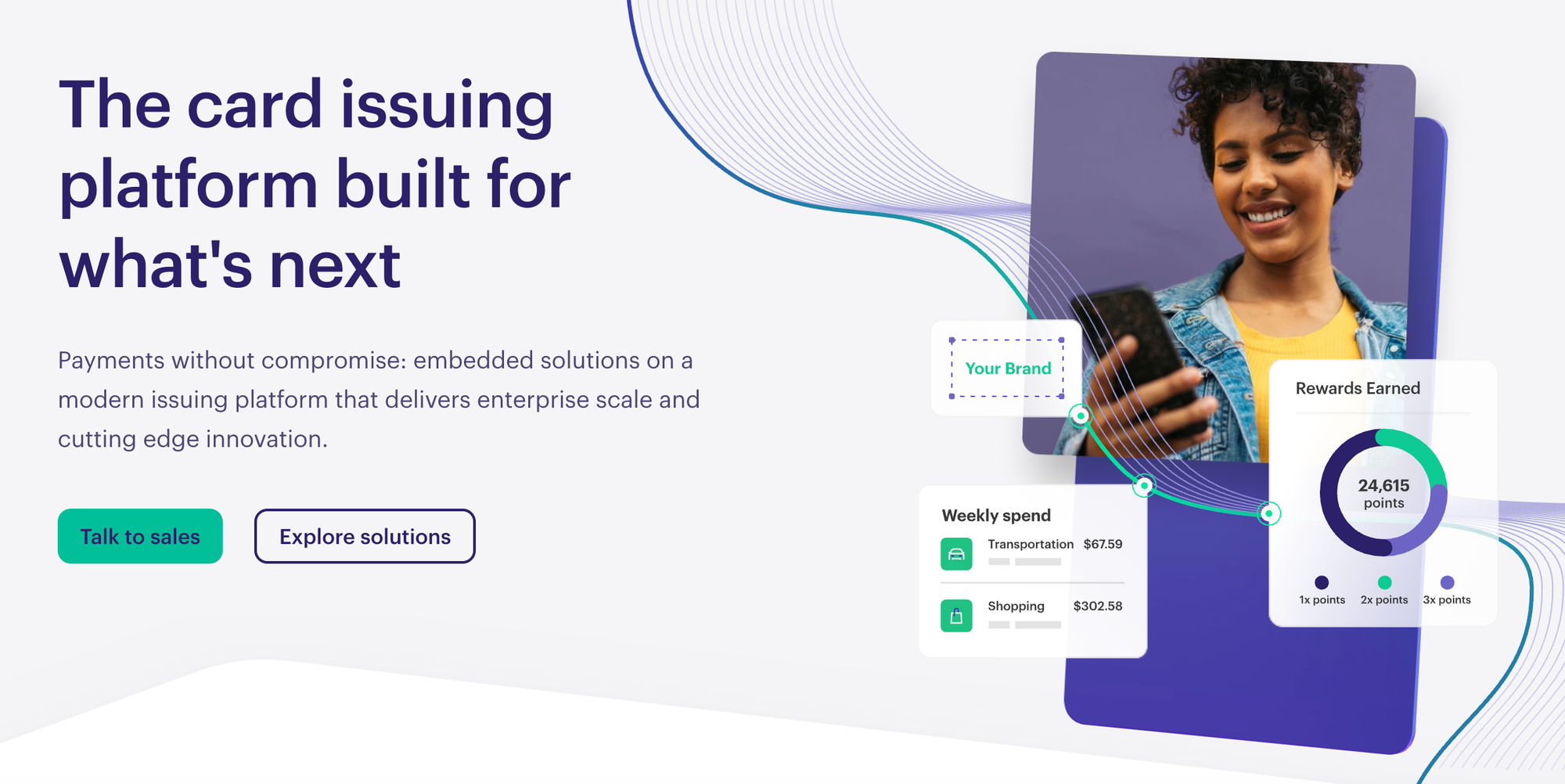
Marqeta issues credit, debit, prepaid, and virtual cards through direct integrations with Visa and Mastercard, live in 40+ countries. You can bring your own bank or lean on Marqeta's existing bank, network, and fulfillment relationships to launch faster.
Top features include:
- Private sandbox for building and testing: create card products, funding sources, simulated transactions, PAN/PIN/CVC configuration
- PCI burden is minimized via customizable widgets, so cardholders activate cards and set PINs without you storing or handling that sensitive data yourself
If you want to launch fast then Marqeta is a good choice, but if you want a platform that also handles merchant acquiring, you'll need to bring that in separately.
3. Adyen Issuing
Best for: businesses that want issuing and acquiring on one license
| Regions | Model | Key controls | Monetization |
|---|---|---|---|
| EEA, UK, US | Principal member | Real-time approve/decline | Interchange share ("Interchange++" model: itemized interchange, scheme fee, and markup) |
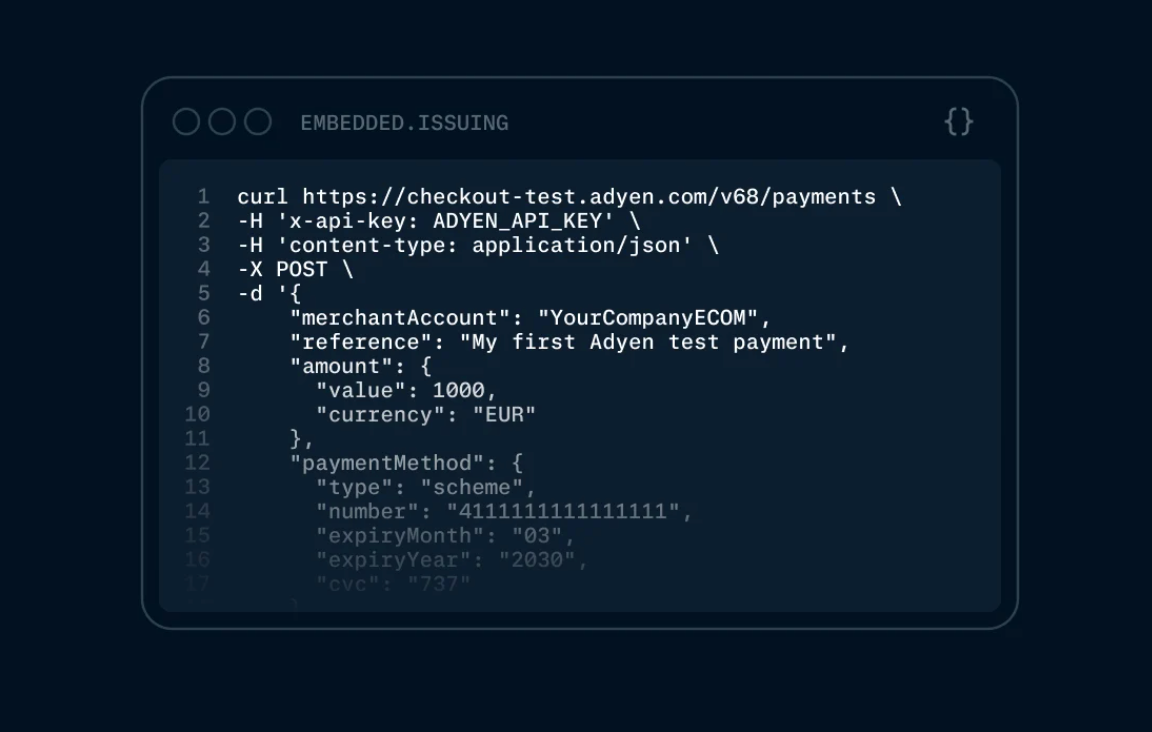
Adyen lets platforms and marketplaces issue cards to their own users on the same license that also handles accepting payments. It owns its own banking infrastructure in the US, EU, and UK. When issuing virtual cards through Adyen, businesses can issue pre-funded or single-use cards, paired with business accounts, all through the API-first platform.
Top features include:
- Fraud prevention via Adyen Score (ML-based), flagging unusual behavior automatically for review
- Move funds between Adyen accounts and cards, with reporting covering both issuing and acquiring volume in one place
- Hold and spend in local currencies to avoid FX friction, while real-time webhooks keep your ledger in sync
Adyen is a strong choice if you want issuing and acquiring under one license. It's not for you if you don't need acquiring bundled with issuing, or you operate outside the EEA, UK, and US.
4. i2c Inc
Best for: global programs needing wide reach
| Regions | Model | Key controls | Monetization |
|---|---|---|---|
| 216+ countries/territories | Issuer processor | Credit/debit/prepaid; configurable via 300+ APIs | Not shared |
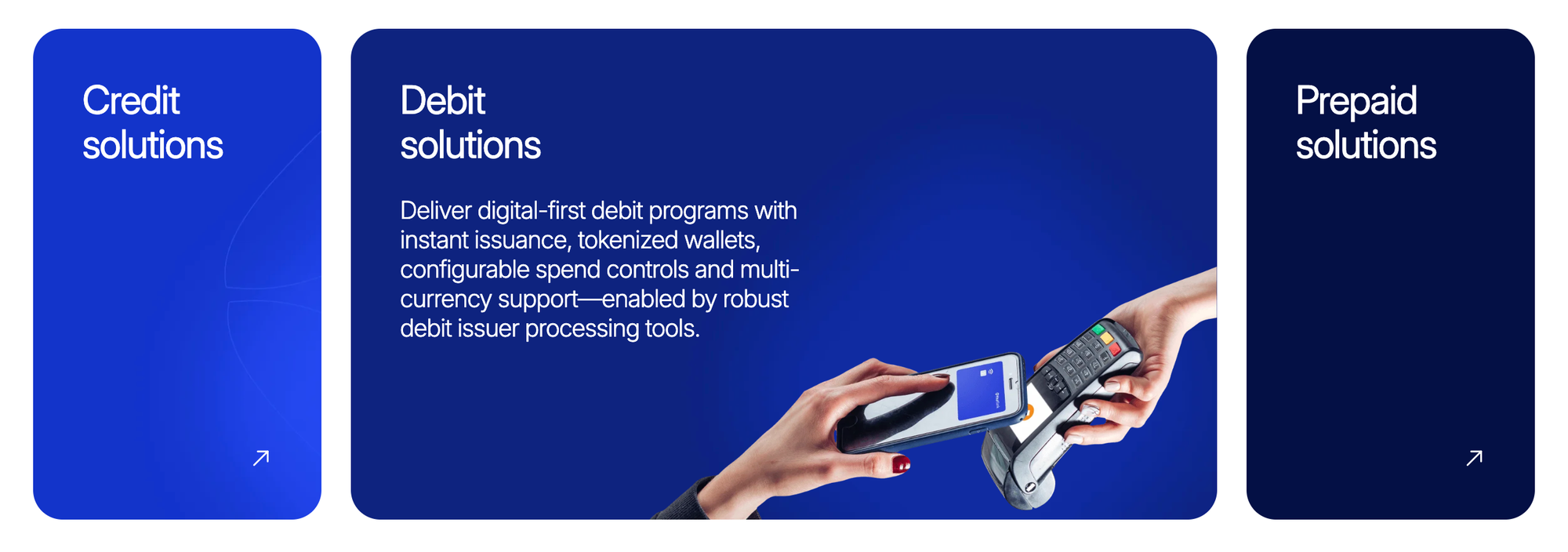
i2c is a modern issuer processor with a 25-year industry track record, built for global programs that need wide reach. It operates across 216+ countries and territories and supports five networks: Visa, Mastercard, American Express, Discover, and UnionPay.
Top features include:
- Multi-currency support built into debit issuer-processing tools
- Instant issuance and tokenized wallets
- 24/7 multilingual customer support via smart IVR
- Five network support: Visa, Mastercard, American Express, Discover, and UnionPay
If you're looking for the widest possible network and currency reach in a single integration - especially outside of the US/Europe corridor - then i2c is worth a look.
But if you want to know upfront how much you can earn by issuing cards, note that i2c doesn't disclose a rev-share structure on its own site.
5. Lithic
Best for: teams that want direct network access and to own their bank relationship
| Regions | Model | Key controls | Monetization |
|---|---|---|---|
| US, with Canada as its first international market (since Sept 2024) | Issuer processor | Credit/debit/prepaid; real-time auth rules (velocity, MCC, country, risk); multi-network (Visa, Mastercard, Amex); mobile wallet provisioning | Interchange revenue share (rate not disclosed, tied to monthly volume); Lithic charges per-card and usage-based fees separately |
Lithic is built for teams that want direct network access and to hold their own bank relationship. It's US-based, with Canada as its first international market since September 2024, and supports Visa, Mastercard, and Amex.
Top features include:
- Auth Rules for granular, card- or account-level spend limits: merchant category, transaction amount, velocity, time of day
- Auth Stream for live authorization and fraud response via webhook
- Full card lifecycle events (issuance, transaction, reissuance) streamed via webhook
- Merchant token management: activate/pause/revoke stored tokens, with credentials auto-updating on reissue, so recurring payments/subscriptions keep working without disruption
Want to keep your own banking relationship and just plug into the network? Lithic works well for that. But if you need coverage beyond the US and Canada, you'll need to look elsewhere.
6. Highnote
Best for: companies wanting issuing, acquiring, credit, and ledger unified
| Regions | Model | Key controls | Monetization |
|---|---|---|---|
| US | Issuer processor/unified program manager | MCC/amount/AVS spend limits; Visa & Mastercard networks | Interchange share; platforms can add payout-fee and embedded-credit-interest revenue too |
Highnote is built for companies that want issuing, acquiring, credit, and ledger unified on one platform.
Top features include:
- Built-in rewards/loyalty program support with point tracking in Highnote's own ledger
- Credit programs: set APRs by balance type (purchases, cash advances, etc.)
- Deep network-level transaction data available (e.g. fuel usage, odometer readings for fleet cards), with support for connecting your own data warehouse (e.g. Snowflake)
If you're US-focused and want issuing, acquiring, ledger and credit all on one platform, Highnote is a good choice. It's not for you if you operate outside of the US.
7. Unit
Best for: businesses that need full embedded finance, not just cards
| Regions | Model | Key controls | Monetization |
|---|---|---|---|
| US (via bank partners) | BaaS | Debit/prepaid/credit; auto approve/decline rules | Interchange share (contract-defined %); gross interchange ~2.2-2.4% (business debit), ~1.4-1.7% (consumer debit) |
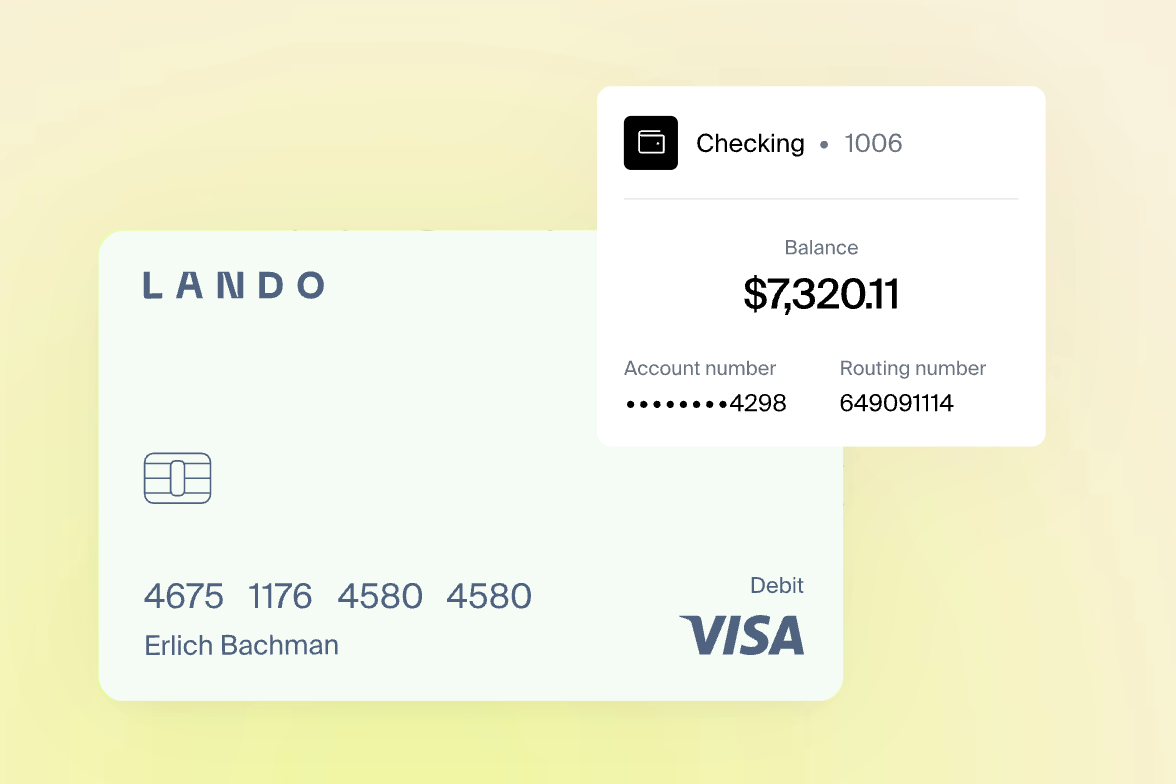
Unit is for businesses that need a full embedded finance suite. It offers debit, credit, and prepaid card programs, issued in the US through Unit's banking partners.
Top features include:
- Debit (business and consumer), prepaid (including FSA/HSA/HRA), and credit (charge card or revolving line, for businesses) card types
- 3DS authentication built in automatically, no integration work needed (fraud liability shifts from the merchant to the issuer when the merchant uses 3DS)
- Visa Signature Business: an optional premium tier for higher-spend business customers, with rewards, insurance, and higher interchange (tier 2+) as adoption and spend increase
- Fee-free access to 55,000+ Allpoint ATMs in the US
Need embedded finance beyond card issuing? Unit is a strong choice - but only if US coverage is all you need.
8. SoFi Tech Solutions (formerly Galileo)
Best for: consumer fintechs wanting a proven processor
| Regions | Model | Key controls | Monetization |
|---|---|---|---|
| US, Mexico/Latin America | Issuer processor, with BIN sponsorship offered directly for Mexico programs | Real-time controls, auth webhook; BIN sponsorship option (Mexico) | Interchange (rate not disclosed) plus configurable cardholder fees (replacement, international ATM, etc.), deposited to client's partner bank account |
SoFi Tech Solutions is built for consumer fintechs operating in the US and Mexico/Latin America that want a proven processor.
Top features include:
- One-click push provisioning: tokenizes the card straight into Apple Pay, Google Pay, or Samsung Pay right at account creation
- 3DS built in, verifying cardholder identity in real time without disrupting checkout
- BIN sponsorship option for Mexico credit programs, removing the need for a separate bank partner there
- Can act as an extension of the client's own support, handling cardholder service from activation through lost/stolen card reporting
SoFi Tech Solutions is great for consumer fintechs that want a processor with a long track record. Still, if you need transparency on economics upfront, SoFi Tech Solutions is not for you.
9. Wallester
Best for: EU businesses wanting a free tier to start and a white-label path to scale
| Regions | Model | Key controls | Monetization |
|---|---|---|---|
| EEA (Visa Principal Member) | Principal member | Single-use cards, spend limits | Interchange share on branded-card transactions |
Wallester is a card issuing platform for EU businesses, with tokenized virtual cards that are usable instantly across the EEA.
Top features include:
- White-Label Card: your own branding, set up as prepaid or debit, suited to open-market/fintech launches or travel & entertainment use cases
- Built-in data and reporting: brand statistics, expense reports, and customer spending data, no need for third-party analytics tools
- Interchange revenue share
Many of the card issuing platforms on this list are US-centric, but if you're an EU business wanting a white-labeled virtual card program, Wallester is a top choice. Operate outside of the EEA? Then Wallester is not for you.
10. Enfuce
Best for: Nordic/EU fintechs wanting a regional specialist

| Regions | Model | Key controls | Monetization |
|---|---|---|---|
| Europe & UK | BIN sponsor and issuer processor | Debit/credit/prepaid; MCC/merchant-level controls | Not shared |
Enfuce is for Nordic and EU fintechs wanting a regional specialist, as it operates across Europe and the UK under its own FCA and FIN-FSA licenses, plus Visa/Mastercard principal memberships, giving clients full regulatory coverage and a fast path to market.
Top features include:
- Dedicated infrastructure per program (not shared): own processing power, storage, and risk environment, with regional deployment for local data residency
- Issue virtual, prepaid, credit, and debit cards, each configured to the program
- Handles credit/repayment logic, billing, collections, and financial reporting for complex program models
- Full fraud lifecycle: prevention, detection, operations, and dispute management from transaction scoring through chargeback resolution
In the EU and need a regional specialist? Enfuce is a strong choice. Outside of Europe and the UK? Enfuce won't meet your needs.
11. Thredd
Best for: established program managers needing a mature issuer processor
| Regions | Model | Key controls | Monetization |
|---|---|---|---|
| Europe, N. America, Middle East, APAC (40+ countries) | Issuer processor | MCC, limit, geo, velocity rules | Interchange share (rate not disclosed; corporate programs yield higher interchange than consumer) |
Thredd is aimed at established program managers needing a mature issuer processor. Thredd operates globally across Europe, North America, the Middle East, and Asia-Pacific, with virtual cards issued in sub-200ms via a single API call.
Top features include:
- Wallet provisioning built in (Apple Pay, Google Pay, Samsung Pay), with tokenization handled by Thredd, and tap-to-pay works from the moment of issuance
- Supports both single-use (disposable) and multi-use (recurring) cards, each configured independently with its own rules, limits, and lifecycle
- Multi-currency virtual cards from one program, supporting cross-border payments and international supplier transactions without separate per-currency setup
Thredd is a strong choice if you want fast, granular per-card control at global scale. It's not for you if you need upfront, published revenue-share figures, or coverage in Latin America or Africa.
12. NymCard
Best for: fintechs launching card programs in the Middle East and North Africa
| Regions | Model | Key controls | Monetization |
|---|---|---|---|
| MENA | BaaS/issuer processor | Not shared | Not shared |
NymCard is for fintechs launching card programs in the Middle East and North Africa. Cards link to live accounts with real-time authorization, for consumer and commercial programs.
Top features include:
- Revolving credit, BNPL, and installment plans, with limits, billing cycles, grace periods, and repayment all configurable via API
- Deployment-agnostic (nCore): cloud-native but not cloud-locked, runs in the cloud, on-soil, or fully on-premises depending on regulatory/data-residency needs
- Offers AI-agent-assisted migration from legacy infrastructure: discovery, mapping, configuration, parallel run, and cutover, done alongside your team
NymCard is a great choice for a specific use case: launching or migrating a virtual card program in the MENA region. Not for building outside MENA.
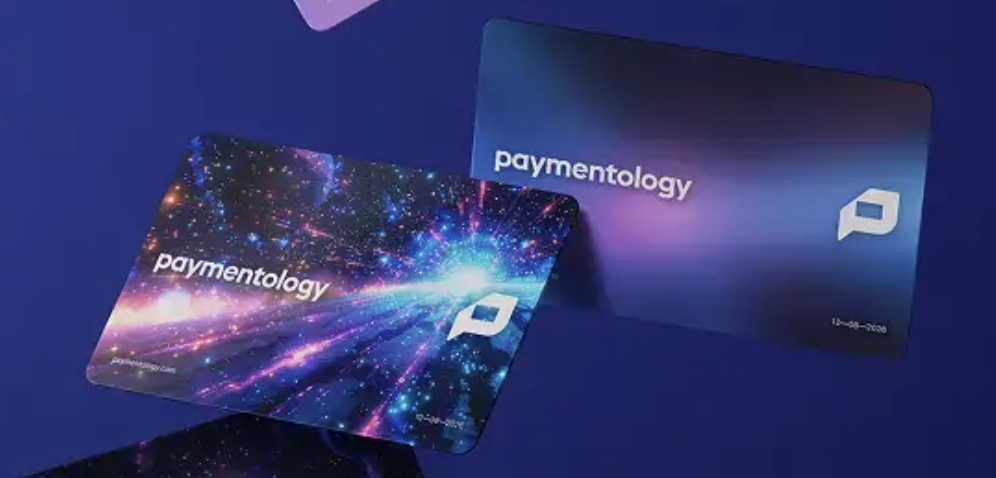
13. Paymentology
Best for: programs expanding into Africa or Asia-Pacific
| Regions | Model | Key controls | Monetization |
|---|---|---|---|
| 65+ countries | Issuer processor | MCC/geo (fraud framing) | Not shared |
Paymentology is another virtual card issuing provider built for programs expanding into Africa or Asia-Pacific. It supports Visa, Mastercard, and domestic networks across 65+ countries.
Top features include:
- Developer Portal with API docs, integration guides, and sample code, covering everything from onboarding credit bureaus to setting up fraud prevention
- Network tokenization and dynamic CVV, protecting transactions online and offline
- PayControl platform: advanced fraud protection with two-factor authentication, customer self-service, rapid feature testing/rollout, transaction simulation, and automated reconciliation/chargeback handling
If you're expanding a virtual card issuing program into Africa or Asia-Pacific specifically, Paymentology is a good choice. If you're not expanding into Africa or Asia-Pacific, or want transparency on revenue share, Paymentology is not the right choice for you.
14. Airwallex
Best for: cross-border platforms wanting issuing bundled with multi-currency accounts and FX
| Regions | Model | Key controls | Monetization |
|---|---|---|---|
| 60+ countries/regions | Principal member | Multi-currency; real-time auth; MCC/merchant/currency/time/limit rules | Client builds and monetizes their own card program |
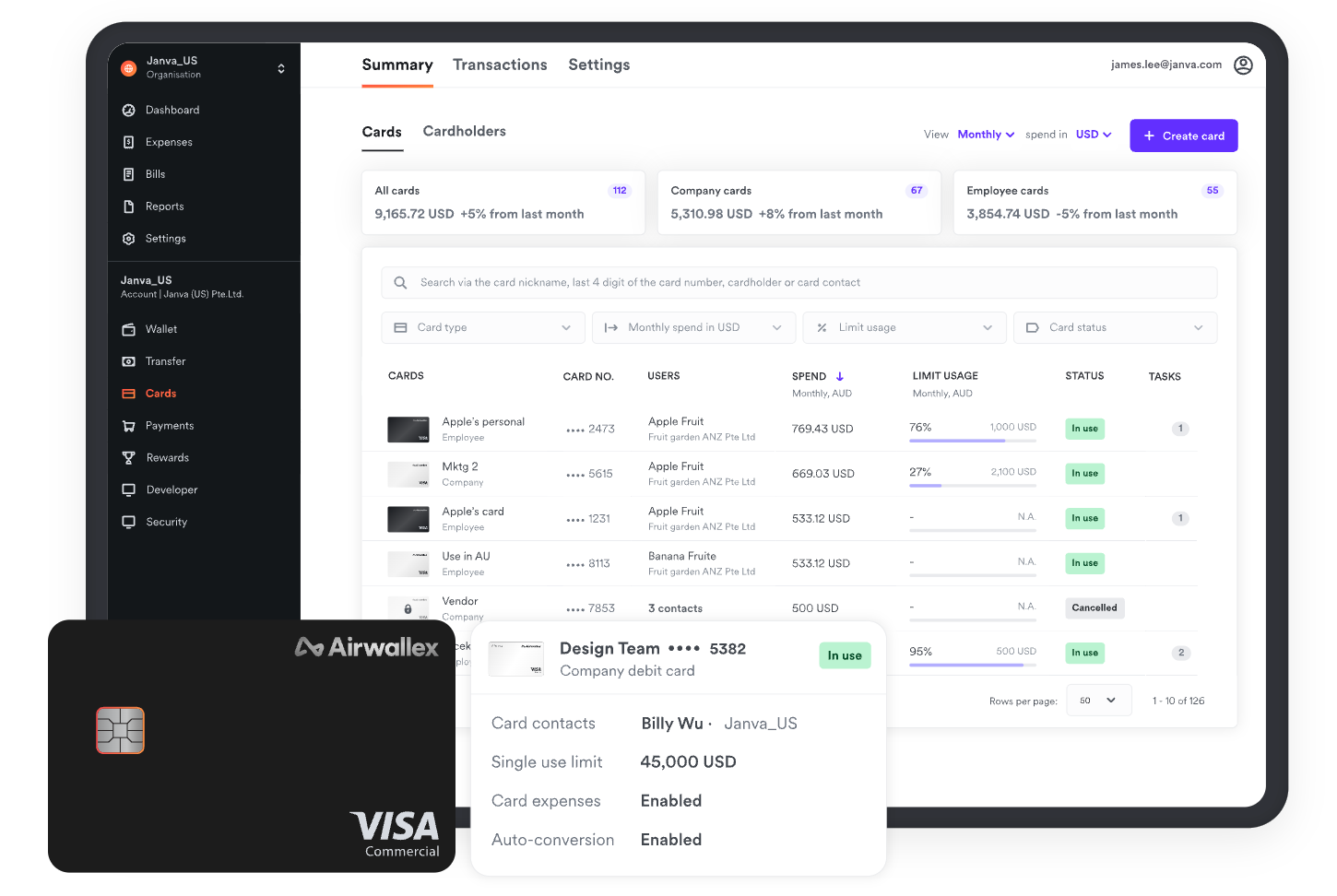
Airwallex is built for cross-border platforms wanting issuing together with multi-currency accounts and FX. It provisions Visa cards through its own Global Issuing infrastructure and licensing.
Top features include:
- Funding can be a single shared source for all cards, or separate sources per card
- White-label option to customize any product to match your brand
- Multi-currency cards support 140+ currencies with no international transaction fees, drawing from the Airwallex Wallet
Airwallex is a strong choice if you need issuing together with multi-currency accounts and FX for cross-border payments, but if you only operate in a single currency or region, it may be overkill.
A note on pricing across virtual card issuing providers
You'll notice that pricing is absent from this list. That's because most providers listed don't publish self-serve pricing for card issuing specifically, and instead require a sales conversation, with costs typically structured as per-card issuance fees, per-dispute fees, and a negotiated interchange revenue share.
There are two exceptions that let you see costs before talking to sales: Stripe ($0.10 per virtual card, $3.50 per physical card, $15 per dispute, with interchange passed through as revenue share) and Wallester (a free tier covering 300 virtual cards, scaling to €199/month for 3,000 cards or €999/month for 18,000, plus per-card overage fees).
How to choose a card issuing provider
The 14 virtual card issuing providers above span different models, from platform-issuing APIs, to full BaaS stacks, to processors that require you to bring your own bank.
So how do you know which one to pick?
When choosing a card issuing provider, the right choice comes down to matching the provider's model to your own use case, not just picking whichever has the most exciting-looking feature list, as that particular provider may not even operate in your markets.
Before you commit to a card issuing platform, work through these six questions:
- Program model: do you need full BaaS, processor-only, or direct issuer? This in turn determines how much of the banking relationship and compliance you are taking on yourself vs handing over to the issuing partner.
- Card types: are you looking to issue debit, credit, or prepaid virtual cards? Not every provider supports all three, and offering credit in particular is very different from building a debit or prepaid card program.
- Geographic and scheme coverage: where do you need to issue, and which networks do your cardholders need?
- Revenue share economics: if you're looking to make money by issuing virtual cards, how much will you earn per transaction? Is this figure published or something you have to negotiate directly? Are there any other ways to earn besides a share of interchange?
- Time to launch: how long will it take to go live: days, weeks, or months?
- Compliance surface you still own: how much of the KYC, KYB, PCI scope, dispute handling and fraud liability do you want to own? How much should your provider handle?
The decision matrix below breaks this down further by the kind of card program you're building.
Card issuing decision matrix
| Use case | Crucial features | What to ask |
|---|---|---|
| Platform issuing to users' balances (marketplaces, creator payouts) | Real-time issuance tied to balance funding, per-user API-set spend limits, webhook coverage | Does a card go live the moment a balance is funded, or is there a delay? Are limits set per-card or only per-account? |
| Business spend cards (ad spend, software, per-vendor) | Per-category/per-person limits, instant freeze or cancel, accounting export | Can I issue a dedicated card per category in seconds? Does it sync to the accounting tool I already use? |
| White-label / embedded card for a SaaS product | Predictable revenue share, brand control, sandbox-production parity | What's the actual interchange split at volume? Does the sandbox behave like production? |
| Consumer-style card with wallet support | Apple Pay/Google Pay tokenization, dispute handling speed | How fast does wallet provisioning work in production, not just staging? Who owns the dispute process? |
| Credit or BNPL-attached card | Clear separation between authorization and underwriting | If a charge fails, is that a card-network decline or a credit decision, and who do I call about it? |
Grow your business with Whop
Whop is the end-to-end platform for building a business, giving you everything you need to sell, manage, and scale in one place.
Virtual card issuing FAQs
What are the best virtual card issuing providers?
There is no one best provider; it depends on what you are building. Platforms wanting wide coverage and issuing cards to their own users should look at Stripe, Marqeta, or Adyen. Teams wanting direct network access and their own bank relationship suit Lithic. Regional specialists like Enfuce or Wallester fit EU-focused programs, and providers like NymCard or Paymentology suit MENA, Africa, or Asia-Pacific programs.
How much does card issuing cost?
Many providers do not publish self-serve pricing, so expect a sales conversation, with costs typically structured as a per-card issuance fee, a per-dispute fee, and a negotiated share of interchange revenue.
How long does it take to launch a card issuing program?
Setting up a program can take weeks to months (depending on provider), involving compliance approval and contract negotiation. Once the program has launched, issuing an individual card can take seconds.
How do I issue virtual cards to users of my platform?
To issue virtual cards to users of your platform, partner with a virtual card issuing provider or issuer processor, since building the banking relationships and compliance yourself isn't realistic for most platforms. The provider handles the bank relationship, network connection, and authorization, while you create and control cards for each user through its API once that user has passed identity verification.
What is the best card issuing API?
The best fit depends on your use case: for an API-first, developer-led integration consider Stripe, Lithic, or Marqeta.



![14 best global payout platforms for mass and cross-border payouts [2026]](https://storage.ghost.io/c/12/7b/127b828b-bdc2-4972-9cf2-de857df9c324/content/images/size/w1000/format/webp/2026/08/blog-best-global-payout-platforms.png)
![Top 10 best embedded finance companies for SaaS and marketplaces [2026]](https://storage.ghost.io/c/12/7b/127b828b-bdc2-4972-9cf2-de857df9c324/content/images/size/w1000/format/webp/2026/08/embedded-finance.jpg)


![Marketplace payments: Take rates, split payments & top 5 platforms [2026]](https://storage.ghost.io/c/12/7b/127b828b-bdc2-4972-9cf2-de857df9c324/content/images/size/w1000/format/webp/2026/08/blog-marketplace-payment-platforms.jpg)