Everything you need to know about international payouts: methods, fees, payout providers, and compliance.
The cheapest way to pay international contractors and sellers is over their local banking rails (SEPA in Europe, Pix in Brazil, UPI in India), through a provider with local banking relationships in their country and an exchange rate at or close to mid-market.
Bank wires are usually the most expensive option, because the cost isn't in the wire fee but the markup built into the exchange rate.
Key takeaways
- Most of the cost of an international payout is hidden in the exchange rate: Wise found major UK banks marking up FX by up to 4%, and bank wires usually leave your recipient covering correspondent fees.
- Local rails (SEPA, Faster Payments, Pix, UPI) are faster and cheaper than SWIFT and land in full, but you need a provider with local banking in each country to use them.
- When comparing providers, ask for an all-in cost per payout in the countries you actually pay into, and check whether KYC, sanctions screening, and tax forms are included.
Picture this: you hire a contractor in Manila and agree to pay them $2,000 for a project. You send the money in full, but the contractor only receives $1,900.
Understandably, they're frustrated, thinking that you've underpaid them. But you haven't. That missing $100 has been spent on miscellaneous fees. Either you cover those fees and pay more, or your contractor absorbs them and gets less.
This happens to businesses all over the world every day, and the fee markup is often bigger than they realize. So big in fact, that when Wise mystery-shopped major UK banks, it found FX markups of up to 4% hidden in their rates. That may not seem like much at first, but on $100,000 a month of payouts, a 3% markup costs $36,000 a year before wire fees or correspondent bank deductions.
Across all cross-border payments, Wise projects hidden markups will cost businesses and consumers almost $318 billion in 2027. Ouch.
So how do you get around it?
It starts with knowing where your money goes after you hit send, and who takes a cut before it arrives.
Let's start with the basics.
What is an international payout (and why it's now everyone's problem)?
An international payout is money a business sends to someone in another country, such as a contractor, a supplier, a marketplace seller, a creator, or an affiliate.
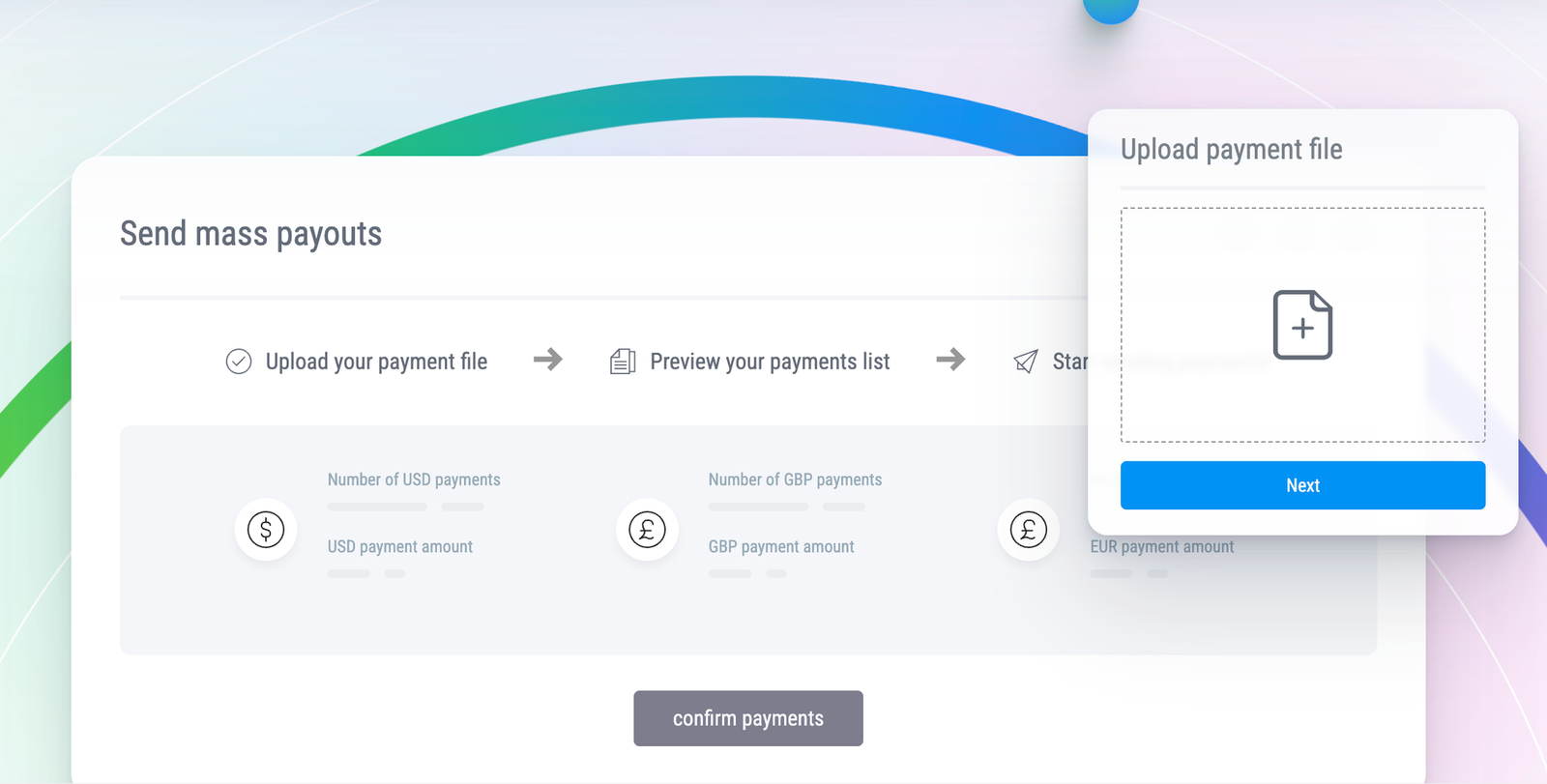
Most businesses send them in batches on a regular schedule, which is why you'll also see them called bulk payments, global disbursements, or mass payouts (like this Payoneer page shows).
Ten years ago, international payouts were a niche problem, mostly for large companies with overseas suppliers.
Now, with remote work and distributed teams the norm, a five-person startup might pay developers in three countries, and a creator platform might pay thousands of people across 50.
The World Bank estimates there are up to 435 million online gig workers worldwide – that's as much as 12% of the global labor force – and on Deel's platform alone, cross-border hiring grew 42% in 2024.
Just look at this search data for 'international payout' from the past five years alone, based on Google Trends:
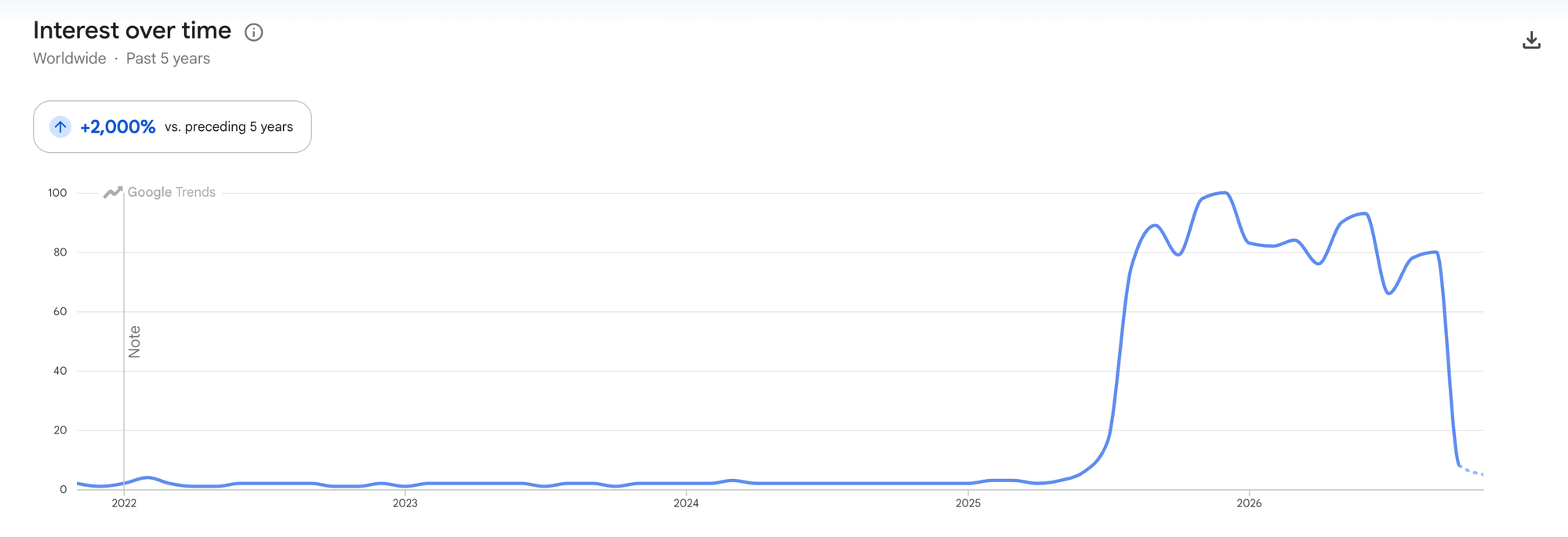
Meaning, international payouts have gone from a problem for some businesses to a problem for most.
International payouts vs international payments
A quick note on terminology: the two terms are often used interchangeably, but on a platform or marketplace, they describe opposite sides of the same transaction.
A payment is the money paid by the buyer, like a customer in the UK buying from a seller on your marketplace.
A payout is the money received by the seller once that sale goes through, or by anyone else your business pays out to, such as contractors, creators, and affiliates.
Payments come in one transaction at a time. Payouts usually go out at volume, to many recipients on a regular schedule or on demand, which is why they need their own infrastructure: recipient onboarding, identity checks, tax forms, and delivery over different rails in different countries.
| International payment | International payout | |
|---|---|---|
| What it is | Money paid by the buyer | Money received by the seller, or anyone else a business pays out to |
| Recipients | The business or seller being paid | Many recipients, often across many countries |
| Frequency | One-off, per purchase | Recurring: weekly, monthly, or on demand |
| What you need | A way to accept local payment methods and currencies | Recipient onboarding, KYC, tax forms, and delivery over multiple rails |
| Example | A customer in the UK buys from a seller on your marketplace | Your marketplace pays 500 sellers in 30 countries every Friday |
This guide is about payouts. But if you also accept payments from overseas customers, how you handle the money coming in affects what your payouts cost on the way out - more on that below.
Why getting payouts right is worth the effort
Saving on fees is the obvious win, but it isn't the only one.
First, speed matters to the people you pay. If a contractor has five different projects on the table, they're going to choose the one where they get paid same-day in their own currency.
Secondly, the payout is also a part of the product. For a creator cashing out their first earnings, or a seller receiving their first marketplace income, how that goes either builds trust in your business or destroys it – that includes whether they manage it inside your platform or get sent to a third-party portal.
As Dr. Ignacio E. Carballo, Director of Alternative Finance at PCMI, puts it:
"Multiple intermediaries, FX markups and compliance overhead make cross-border payments materially more expensive than domestic ones, which is painful for SMEs and platforms working with thin margins."
How an international payout moves
Getting payouts right means knowing what happens to the money between your account and your recipient's.
Whatever rail you use, every international payout goes through the same five stages, and most problems – like delays or returned payments – trace back to one of them.
1. Recipient onboarding
Before you can pay someone, you need their legal name, address, and payout details. Check those details before the first payment, not after.
I learned this the hard way: I once waited five months to be paid for a finished project because the company's preferred payment system didn't work in my country. Their payroll only ran once a month, so each month we went through the same process until eventually, the Head of Finance had to get involved.
Don't let that happen to your recipients. Get all the details you need upfront. An IBAN with a typo or a name that doesn't match the account holder is one of the most common reasons international payouts bounce, and a returned SWIFT payment can take weeks to come back, minus fees.
2. Identity checks and sanctions screening
Next, you verify who you're paying.
For individuals, that's KYC (know your customer): an ID document and often a liveness check. For businesses, it's KYB (know your business): registration documents and the people who ultimately own or control the company.
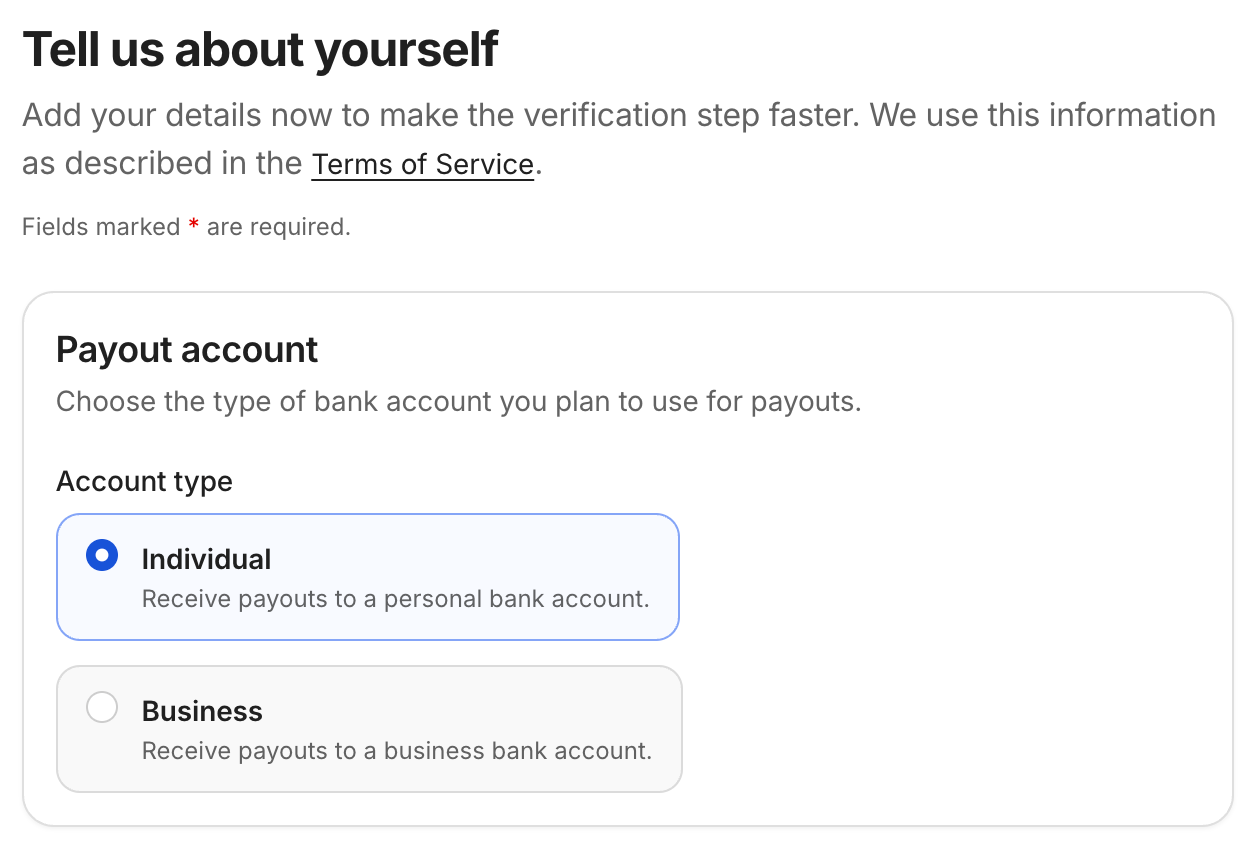
Every recipient also has to be screened against sanctions lists, including the US Treasury's OFAC list and its UK, EU, and UN equivalents.
The screening tool at signup alone isn't enough: in 2025, Interactive Brokers paid OFAC $11.8 million to settle apparent sanctions violations, partly because its system flagged a sanctioned customer and a staff member dismissed the alert as a false positive.
Lists change constantly, so screening has to keep running for as long as you pay someone.
3. Tax documentation
Tax is where international payouts get even more confusing, because what you need depends on where both you and your recipient are based.
A US business paying a US contractor collects a W-9 and may need to file a 1099. Paying a non-US contractor, you collect a W-8BEN (or W-8BEN-E for a business) to document their foreign status.
And if you run a platform or marketplace, you may also have reporting obligations on your sellers' income, such as 1099-K in the US or DAC7 in the EU.
Check the rules before you start paying, not when the tax bill arrives.
4. Funding, FX, and rail selection
You fund the payout, usually in your home currency, and it gets converted into the recipient's currency. When that conversion happens is important – if you collect revenue in euros, convert it to dollars, then convert it back to pay a seller in Germany, you've paid the FX spread twice.
Holding balances in the currencies you pay out in avoids that, and multi-currency accounts like Wise Business and Airwallex are built for it.
Then the payout goes out over a rail, such as a local transfer, wire, card, or wallet. Which one depends on the recipient's country and currency, the methods your provider supports there, and the speed of the payout.
5. Settlement and reconciliation
The money lands anywhere from seconds to five business days later, depending on the rail.
On your side, every payout needs to be matched back to what it was for (an invoice, a sale, a commission) so your books balance.
When you're only running ten payouts a month, a spreadsheet is fine here. But at a thousand, you need payout references, status updates, and failed-payment handling built in.
The true cost of an international payout
The fee you see when you send an international payout is rarely the fee you pay.
Take bank wire charges, for example. Chase charges $40 to send an international wire online in US dollars, and Bank of America charges $45. Now, send that same wire in the recipient's currency and the fee drops to just $5 at Chase and nothing at all at Bank of America.
Why? Because when the bank handles the currency conversion it makes money from the exchange rate instead of from you.
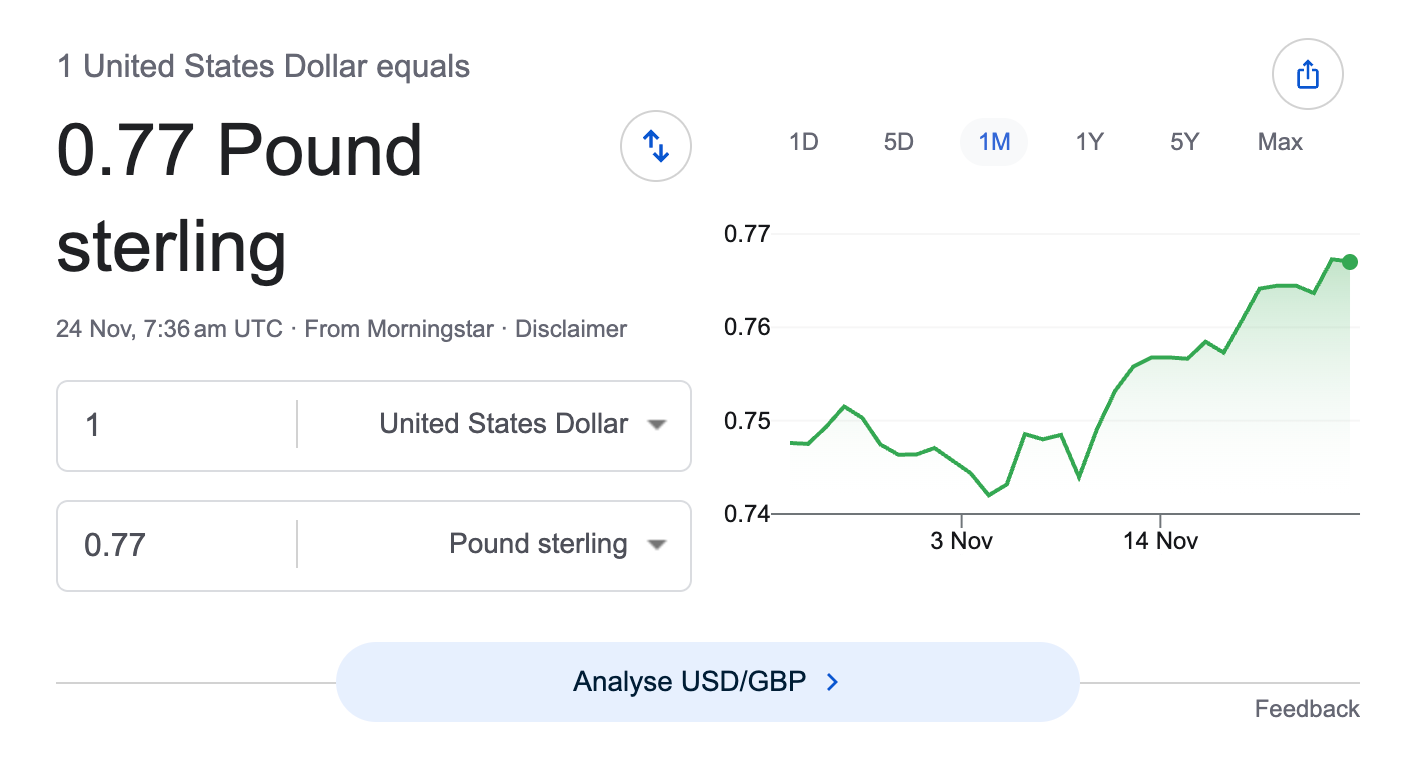
That exchange rate is where most of the cost lives. Every currency pair has a mid-market rate – the one you'll see on Google or Reuters – and banks often give you a worse rate and pocket the difference.
Chase even says this in its own fee schedule, which warns that its rates "will be less favorable than rates quoted online or in publications." (documented as the 8th footnote in a 25-page 'Additional Banking Services and Fees for Business Accounts Deposit Account Agreement').
And because the markup is baked into the rate, it never shows up as a line item.
Then there's what happens in transit. SWIFT wires often pass through one or more correspondent banks, and each can take its own cut before passing the money on, and before the recipient's bank charges its own fee to receive it.
Who absorbs all of this? That depends on the charge code you pick when you send. Choose OUR and you cover everything; choose SHA and you pay your bank while the recipient covers the rest; choose BEN and the recipient pays the lot. Most bank wires default to SHA, which is how a contractor ends up receiving less than their invoice even though you paid it in full.
Payout providers replace most of this with their own pricing: per-payout fees, percentage fees on some methods, monthly platform fees, and add-ons for things like tax forms or identity checks.
You still pay a fee, but it's usually far more transparent than what banks charge.
Pricing it up
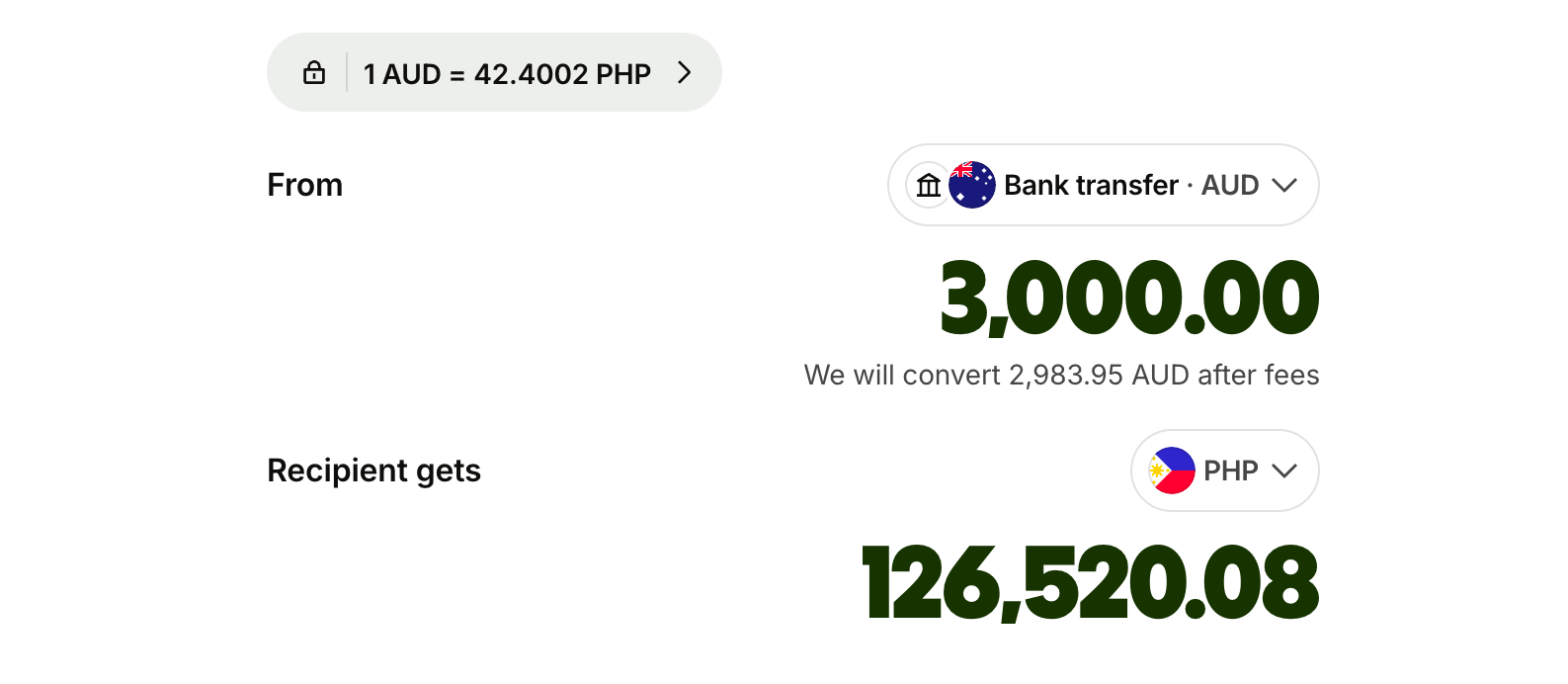
To see the difference between different payment methods, I priced the same payment two ways on 25 November 2026: sending A$3,000 to the Philippines, the eurozone, and Brazil through Commonwealth Bank, Australia's largest bank, and through Wise, checking Google's mid-market rate at the same time. The Wise quotes are priced as funded by bank transfer. Total cost is measured against that Google snapshot, so where Wise's rate came in slightly better than Google's, its total cost is a little under its fee.
| Destination | Route | Fee | Rate vs mid-market | Recipient receives | Total cost |
|---|---|---|---|---|---|
| Philippines | CommBank | $0 (waived) | 4.31% below | ₱121,651.80 | A$129.40 (4.31%) |
| Philippines | Wise | A$16.05 | 0.05% above | ₱126,520.08 | A$14.53 (0.48%) |
| Eurozone | CommBank | $0 (waived) | 3.17% below | €1,761.60 | A$94.99 (3.17%) |
| Eurozone | Wise | A$10.08 | 0.02% above | €1,813.46 | A$9.47 (0.32%) |
| Brazil | CommBank | n/a | n/a | Not offered | n/a |
| Brazil | Wise | A$15.83 + A$11.30 IOF tax | 0.08% below | R$11,660.58 | A$29.56 (0.99%) |
CommBank waived its transfer fee – for NetBank and CommBank app IMT transfers only – but its exchange rate cost nine to ten times more than Wise's total cost.
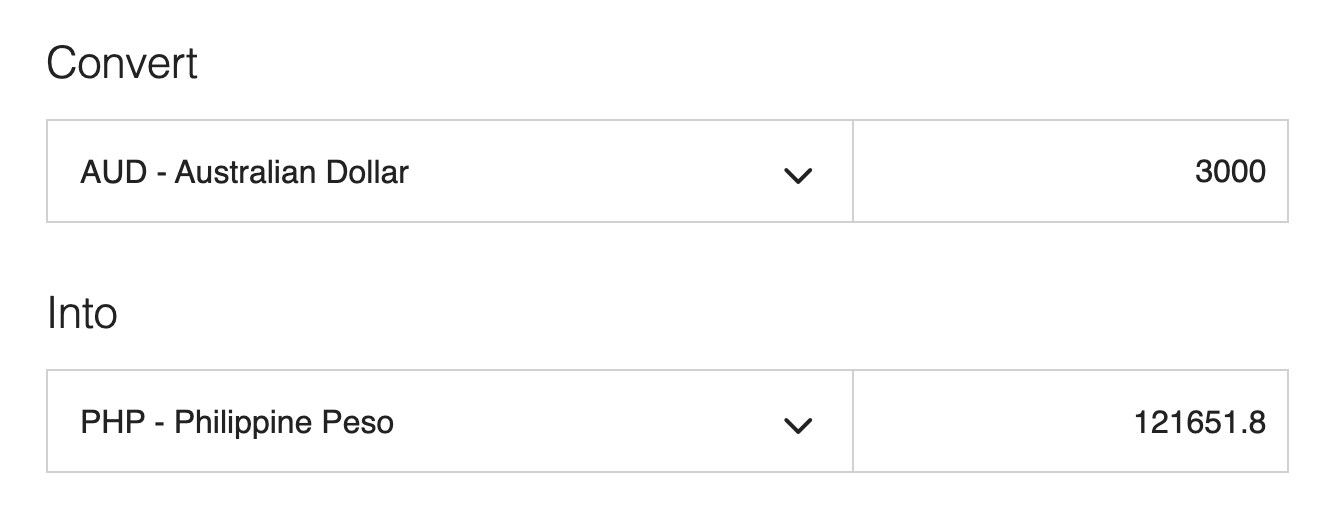
On this A$3,000 payment, a recipient in Manila would get about A$115 less through the bank than through Wise, with no fee anywhere on the statement to explain it.
Brazil showed two other things. CommBank doesn't offer Brazilian real transfers at all. And even through Wise, the cost was close to 1%, more than a third of it from IOF, Brazil's tax on foreign exchange transactions, which applies whichever provider you use.
These were quotes, not completed transfers. CommBank's figures are its published indicative rates, captured within two minutes of the mid-market rates, and don't include any intermediary or receiving bank fees, which could push the real cost higher.
How to check what you're really paying
Want to see how much you're paying in fees?
- Start by exporting every international payout you sent last month, with the amount, the currency, the exchange rate you were given, and any fees.
- For each one, look up the mid-market rate for that currency pair on the day it was sent (XE and Wise both show historical rates), and work out the gap between that and the rate you got.
- Add your sending fee, plus anything your recipients tell you was deducted before the money reached them.
- Then group the payouts by country and work out the total cost as a percentage of what you sent.
Usually one or two countries account for most of it. Move the worst one to a cheaper payout method first, then work down the list.
International payout methods compared
So which payout method should you switch to? It depends on where your recipients are.
The method you choose decides what a payout costs, how fast it arrives, and sometimes, whether it arrives at all.
Most businesses pick one when they start paying out internationally and never revisit it.
Here's how the options compare.
| Method | Speed | Typical cost | Coverage | Best for |
|---|---|---|---|---|
| SWIFT wire | 1–5 business days | $40–$45 sending fee at major US banks, plus FX markup and possible intermediary fees | 11,000+ institutions in 200+ countries and territories | Large, infrequent payments |
| International ACH | A few business days | A few dollars per payment | Only countries connected to the US ACH network through a gateway | Recurring, lower-value payouts from a US business to covered countries |
| Local rails (SEPA, Faster Payments, Pix, UPI) | Seconds to 3 days, depending on the rail | Often under 1% including FX through a mid-market provider (e.g. Wise to the Philippines: $4.69 + 0.6%) | Countries where your provider has local banking | Recurring payouts, and instant payouts where the rail supports it |
| Card push payouts (Visa Direct, Mastercard Move) | Seconds to minutes | Roughly $0.35–$2.00 per payout (industry estimate); Stripe charges $1.50 + 0.75% for US debit card payouts | Recipients with an eligible debit card | Fast payouts to gig workers and creators |
| Digital wallets and mobile money (PayPal, M-Pesa, GCash) | Instant to a few days | PayPal Payouts: 2% per payout (capped), plus 3% above the base exchange rate if currency is converted; cash-out fees vary by wallet | Strongest in Africa and Southeast Asia | Recipients without bank accounts, and small payouts |
| Stablecoins (e.g. USDC) | Minutes | Low network fees, but conversion costs at either end | Global, where legal | High-inflation markets and limited banking |
Wire transfer / SWIFT
Wire transfer via the SWIFT network is the default for international payouts, and it's easy to see why. SWIFT connects more than 11,000 financial institutions across over 200 countries and territories, which means it works almost everywhere.
For a large one-off payment to a known recipient, it's fine. The problem is using it for everything.
On smaller recurring payouts, the sending fee, FX markup, and intermediary deductions take a share of every payment, and unless you choose the OUR charge code (covered above), your recipient absorbs some of those costs.
For the person on the receiving end, SWIFT wires are often a frustrating experience that involves hunting down SWIFT codes (if their bank even has them - some neobanks don't accept international wires), waiting days for funds to appear, and occasionally discovering they received less than expected.
International ACH
International ACH lets a US business send an ACH payment to a bank account abroad, usually for a few dollars rather than the $40-plus of a wire.
Every payment is formatted as an IAT (international ACH transaction) so it can be screened for sanctions, and it reaches the recipient's country through a gateway connected to that country's banking system.
But that's also its limit: it only works where such a link exists. Check that your recipients' countries are covered before building an entire workflow around it.
Local rails: SEPA, Faster Payments, Pix, UPI
When a payout provider has banking relationships inside the recipient's country, it can pay out over that country's domestic system instead of SWIFT: ACH in the US, SEPA in Europe, Faster Payments in the UK, Pix in Brazil, UPI in India.
To the recipient, it's a domestic transfer. It arrives faster, costs less, and lands in full. Some of these rails, like Pix, UPI, and FedNow and RTP in the US, settle in seconds, which for recipients who want their money now is about the best upgrade you can offer.
And, today, using local rails is more of an expectation than a preference. Brazil's Pix had 154 million individual users by October 2026, around 89% of the adult population, and India's UPI processed a record 25.47 billion transactions in October 2026 alone.
The catch? Building these relationships takes time and regulatory groundwork. It's not something you can spin up overnight, which is why most smaller platforms can't access local rails directly. This is where a payout provider earns its value: the local banking relationships are already in place, so you get access to domestic rails without spending years building them yourself.
The same principle works for money coming in. As Derek Wilmer, Head of Ecommerce at Whop, puts it: "When we route a payment through a local entity, everything improves — approval rates, fees, even chargeback outcomes. It just looks 'right' to the customer's bank."
Card push payouts: Visa Direct and Mastercard Move
Card payouts are consistently underestimated as a payout method, possibly because they're associated with consumer payments rather than business disbursements. But for gig economy platforms and creator-facing businesses, they're often the best option available.
Visa Direct and Mastercard Move send money straight to a recipient's debit card. And it's fast: Visa says 90% of its cross-border payouts to cards are delivered in real time, across roughly 4 billion eligible cards in 195+ countries and territories.
Card payouts usually cost more than bank transfers, but for a gig worker or creator who wants their earnings now, speed is often worth the premium. The main limitation is that the recipient needs an eligible card, which isn't a given in every market.
Digital wallets and mobile money
In much of Africa and Southeast Asia, a mobile wallet is more common than a bank account, and often the only way to pay someone. The GSMA reports that mobile money handled $2 trillion in transactions in 2025, double the 2021 figure. M-Pesa alone processed over $450 billion across Vodacom's markets in the year to March 2025, with around 41 million people in Kenya using it every month, while GCash has 94 million registered users in the Philippines.
If you pay recipients in these markets and only offer bank transfers, some of them simply can't be paid. In markets where bank accounts are near-universal, wallets are more of a convenience, and cashing out to a bank can add fees for the recipient.
Stablecoins
Stablecoins are the underdog of international payouts. Traditional finance has been slow to warm to them, and the hesitation is understandable. But unlike other crypto, stablecoins are pegged 1:1 to a fiat currency, usually the US dollar, so your recipient gets dollars, not a bet on the price of bitcoin.
They settle in minutes, around the clock, with no intermediary banks and no FX markup on the transfer itself. Transactions hit a record $33 trillion in 2025, and while most of that is trading, real-world payments like payroll are growing fast.
Big businesses are getting in on the action, too. Citi partnered with Coinbase in late 2025 to explore stablecoin payments for corporate clients, and JPMorgan piloted its JPMD deposit token on Coinbase's Base network. That's two of the most conservative institutions in global finance moving toward stablecoin settlement.
The trade-offs are the cost of converting in and out of local currency, and rules that vary widely by country.
Embedded vs redirected payouts
Once you know which rails and method you need, there's another choice to make – how your recipients manage their payouts.
With redirected payouts, recipients must leave your product to get paid. They sign up for the provider's portal or app, verify their identity there, and withdraw from someone else's interface.
It's the quickest way to start, but your recipients now have another account to manage. Redirects can cause drop-offs – when one design agency (Flatstudio) moved a bank's identity check out of a third-party redirect and into the bank's own interface, drop-off at that step fell from 48% to 30%.
With embedded payouts, the whole experience lives inside your product. Recipients check their balance, verify their identity, add a payout method, and withdraw without leaving, while the provider handles the money movement and compliance underneath.
It takes some developer work, but it's worth it to have your brand front and center at all times. See our guide to embedding the payout portal for the code.
| Redirected payouts | Embedded payouts | |
|---|---|---|
| Where recipients get paid | The provider's portal or app | Inside your product |
| Branding | The provider's | Yours |
| Setup | Little or no developer work | Some developer work, usually with pre-built components |
| For recipients | Another account to manage | Nothing new to sign up for |
| Best for | Occasional payouts and small recipient bases | Platforms where getting paid is part of the product |
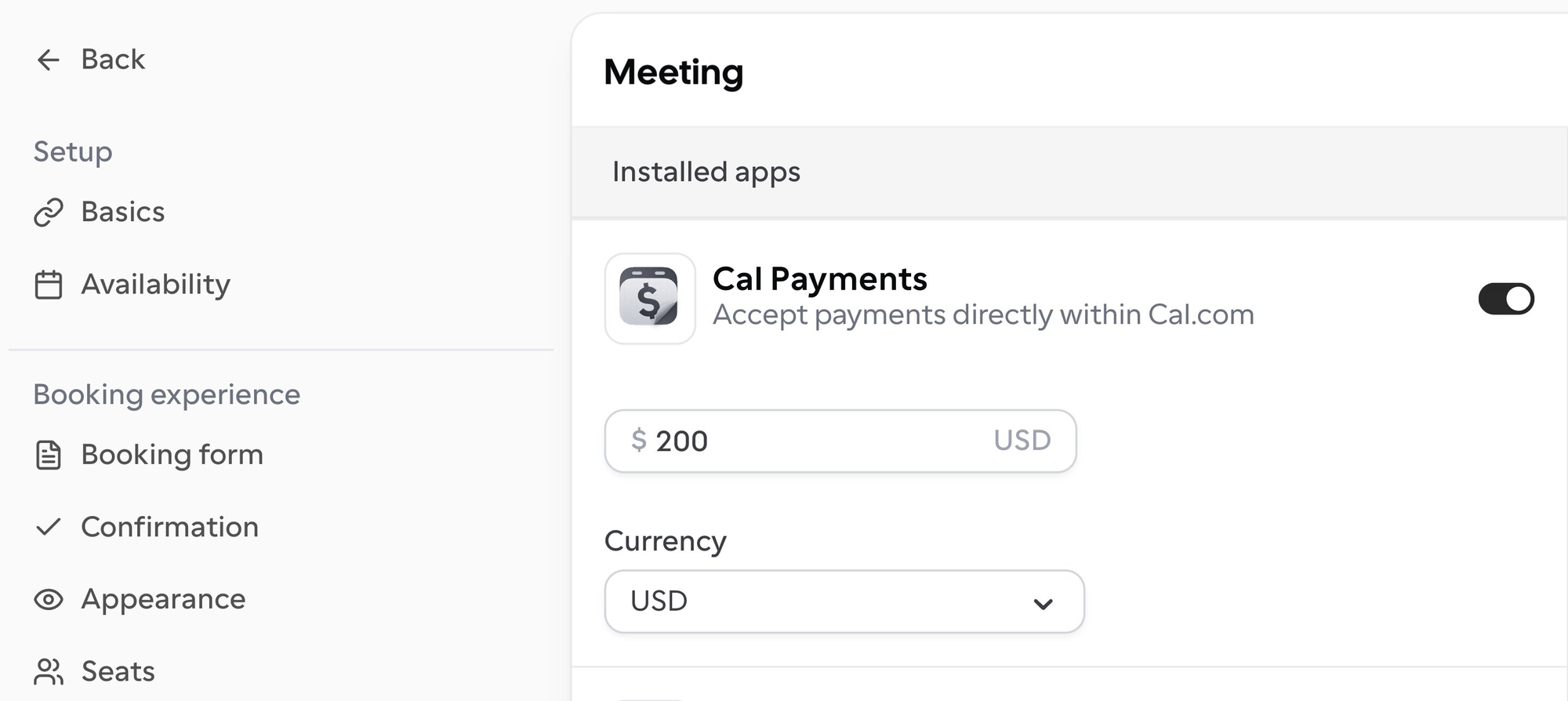
Cal.com, a scheduling platform with more than 20,000 customers, went with embedded payouts. Hosts see their balance and withdraw inside the Cal dashboard, while Whop handles payments, KYC, and payouts underneath.
"What matters most to us is that Cal remains the product the user interacts with," says co-founder Peer Richelsen. "Whop sits underneath and powers the financial layer."
And FoodFluence, which pays more than 50,000 food creators across 700+ cities in the US, Canada, Mexico, and the UK, switched to Whop after juggling multiple tools for payments and payouts.
"Prior to Whop, any other solution we had tried was predominantly just a broken flow where we'd be billing on one platform, then transferring the funds to our bank, and then using another payout provider,"
says CEO Branson Packard. Now creators view their earnings and withdraw inside FoodFluence.
International payout providers compared
Connecting to every one of those rails yourself would take years. You'd need banking partners in each country, licenses to move money in many of them, and your own systems for verifying recipients, screening sanctions lists, converting currency, and collecting tax forms, all kept up to date as the rules change.
Payout providers have already done that work. They sit on top of the rails and give you one integration (or one dashboard) to pay people in dozens or hundreds of countries, while they handle the FX, recipient onboarding, compliance, and tax paperwork behind the scenes.
You pay per payout, or sometimes a platform fee, instead of building and maintaining the infrastructure yourself.
The right one depends on where your recipients are, how many you pay, and whether you want payouts embedded in your product or redirected to the provider's.
Here's how the main options compare. For a deeper look at payout providers, including compliance features and pricing, see our guide to the best global payout platforms.
| Provider | Best for | Payout reach | Recipient experience | Pricing |
|---|---|---|---|---|
| Whop | Platforms and marketplaces wanting checkout and payouts in one stack | 187 countries | Embedded: pre-built payout portal inside your product | Published per payout method and country; platforms can cover, pass on, or mark up payout fees |
| Wise | SMBs wanting simple payouts with transparent FX | 160+ countries, 40+ currencies (Wise Platform) | Direct to bank, with no recipient portal | Small per-transfer fee, FX at the mid-market rate |
| Payoneer | Paying freelancers and sellers already on Payoneer | 190+ countries, 70+ currencies | Redirected: recipients use their Payoneer account | Custom |
| Stripe | Developer-led platforms building on Stripe | Connect cross-border: 5 regions; Global Payouts: 160+ countries | Embedded via Connect components, with developer work | From 0.25% cross-border, plus Connect payout fees |
| Airwallex | Growth-stage platforms wanting accounts, FX, and payouts together | 120+ countries and regions locally, 200+ countries and regions via SWIFT | Hosted (redirected), embedded components, or a fully custom API build | Custom; SWIFT transfers $15 to $25 |
| Trolley | Platforms that need payouts and tax compliance together | 210+ countries and territories, 135+ currencies | White-label portal or embedded components | Pay and Tax modules $2,399/year each, plus per-payout fees from $1 |
When you're comparing, look past the country count. Ask which markets a provider has local banking in, get an all-in cost per payout for the countries you actually pay into, and check whether KYC, sanctions screening, and tax forms are included or sold as add-ons.
If a provider won't give you a straight answer on cost, that's your answer right there.
Pay anyone, anywhere, with Whop
By now the problem is clear. Bank wires and spreadsheets cost more than they should, take longer than they should, and leave your recipients guessing what will arrive. Building your own alternative is a multi-year project.
Whop is the end-to-end API for running a business, with payouts built in. You can pay sellers, creators, contractors, and affiliates in 187 countries, and they choose how to get paid from the methods available where they live, including bank deposit, crypto, Venmo, and PayPal. Whop verifies each recipient's identity before they can be paid, and the payout portal lets recipients check their balance and withdraw inside your product or on a Whop-hosted page.
Pricing is published per payout method, and you decide whether to cover payout fees, pass them on, or mark them up. And because the same integration takes payments, money coming in and money going out run through one place.
If you're ready to stop overpaying on international payouts, use Whop.
International payouts FAQs
What is the difference between an international payment and an international payout?
It comes down to direction. An international payment is money coming in, like a customer abroad paying you for a purchase. An international payout is money going out: you paying a contractor, seller, creator, or affiliate in another country, usually on a recurring schedule and often to many people at once.
How do I pay international contractors?
For one or two contractors, a transfer service like Wise is usually cheaper than a bank wire. For a team where contracts and compliance are the hard part, a contractor management platform like Deel handles the paperwork too. Once you're paying dozens or hundreds of people across countries, a payout platform lets recipients onboard themselves and pays everyone in batches over local rails.
What is the cheapest way to send international payouts?
Pay them over their local banking rails, through a provider with local banking in their country and an exchange rate at or near mid-market. That can bring the cost under 1% of the payment on many routes. Bank wires are usually the most expensive option, because the real cost is the FX markup built into the rate. Wise found major UK banks hiding markups of up to 4%.
How long do international payouts take?
It depends on the rail. Real-time rails like Pix, UPI, and FedNow settle in seconds, and card push payouts usually land in minutes. Local bank transfers take from the same day to about three days. SWIFT wires take one to five business days, sometimes longer if several intermediary banks are involved.
What is an FX markup and how does it affect my payout costs?
An FX markup is the margin a bank or provider adds on top of the mid-market exchange rate when it converts your money. It's built into the rate rather than shown as a fee, so the only way to spot it is to compare the rate you're given with the mid-market rate at the same moment.
What is OFAC and why does it matter for international payouts?
OFAC is the US Treasury's Office of Foreign Assets Control, which enforces US sanctions. Every recipient you pay has to be screened against its sanctions lists, and penalties apply even if a violation was accidental. In 2025, Interactive Brokers paid OFAC $11.8 million to settle apparent violations, partly because a staff member dismissed a genuine sanctions alert as a false positive.
Stripe vs Airwallex for international payments: which should I choose?
Stripe suits developer-led platforms that want to build on flexible infrastructure. Its Connect cross-border payouts work between the US, UK, EEA, Canada, and Switzerland, and its Global Payouts product reaches 160+ countries for US and UK businesses. Airwallex suits growing businesses that want multi-currency accounts, FX, and payouts together, with local payouts in 120+ countries and regions. See our full Stripe vs Airwallex comparison for more.
What KYC verification API works best for international sellers?
The best fit depends on where your sellers are and whether you want verification separate from payouts. Standalone KYC APIs like Persona, Sumsub, Veriff, and Onfido specialize in identity checks across many countries and document types. Many payout platforms, including Whop, build KYC into recipient onboarding, so sellers verify their identity and set up payouts in one flow. Compare document coverage in the countries you pay into, liveness checks, and sanctions screening. Our guide to the best KYC API providers goes deeper.