Learn where to sell digital products online with our complete guide to top platforms, marketplaces, and tools for digital entrepreneurs.
Key takeaways
- Choose platforms based on your product type—all-in-one options like Whop offer flexibility while specialized platforms excel at specific formats.
- Fee structures vary dramatically: some charge monthly subscriptions while others take percentage-based cuts from each sale.
- Course marketplaces like Udemy provide built-in audiences but sacrifice pricing control and revenue share.
You’ve built a digital product, and now you need the right platform to sell it.
The problem? Not every marketplace is built for every product.
Shopify works for digital downloads but needs third-party apps for things like community access.
Whop, on the other hand, lets you sell courses, memberships, communities, and downloads all from one place.
This guide breaks down the best places to sell digital products in 2026 — with updated pricing, pros and cons, and what makes each platform stand out.
Let’s make money.
Where can I sell digital products in 2026?
You've got options when it comes to selling digital products, but not every platform works for every creator or product.
Choose the right platform. There's platforms like Skool and Kajabi, but Whop is the number one choice.
In this guide, I cover 25 of the best platforms in 2026, grouped by what you’re trying to do.
Maybe you’re creating courses, selling digital downloads, or running memberships and communities.
Each platform has a quick overview, what it’s best for, and its pros and cons. This way, you can choose the right one for you.
You can also peek at the table below for a quick comparison of the top ten most popular platforms:
| Platform | Ease | Sells | Fees | Best for |
|---|---|---|---|---|
| Whop | Very easy | Offers, memberships, courses | 2.7% + processing | Creators wanting all-in-one control |
| Kajabi | Moderate | Courses, memberships, marketing | $149–$399/mo | Course + automation focused |
| Podia | Easy | Courses, downloads, webinars | $39–$179/mo | Multiple products + community |
| ConvertKit | Easy | Downloads, subscriptions | $29–$79/mo | Email-first creators |
| Stan Store | Very easy | Courses, downloads, subs | $29-$99/mo + fees/td> | Link-in-bio sellers |
| Teachable | Moderate | Courses, memberships | $29–$299/mo + 0–10% | Educators |
| Thinkific | Moderate | Courses, memberships | $39–$399/mo | Advanced LMS users |
| Udemy | Very easy | Courses | 3%-63% | Global audience access |
| Skillshare | Very easy | Creative courses | Royalty-based | Passive creative income |
| Shopify | Moderate | Physical + digital | $39–$399/mo + 2.9% + $0.30 | Ecommerce storefronts |
| Gumroad | Very easy | Downloads, subs, products | 10% + $0.50 / 30% marketplace | No-fuss digital selling |
All-in-one creator platforms
These platforms let you sell multiple digital products, run memberships, and manage marketing from one place.
1. Whop
Whop is your all-in-one platform for selling pretty much any digital product: courses, software, paid communities, subscriptions, or digital art. If you want a place that’s easy to use but still powerful, this is it.
You can livestream, set up affiliate programs, and manage subscriptions or software licenses; all from one dashboard. Payments? Cards, crypto, and Buy Now Pay Later options are all built in.
Whop doesn’t charge monthly fees, so you only pay when you make a sale. The dashboard tracks everything from analytics to audience engagement, and support is available 24/7 if you get stuck.
Basically, if you’re a creator, developer, or entrepreneur who wants a flexible, scalable setup, Whop has you covered.
- Pros: Low fees, no monthly payments, all-in-one for courses, communities, subscriptions, and software, plus livestreaming and affiliate options.
- Cons: Marketplace can be competitive.
- Pricing: No monthly fee. Transaction fees are 2.7% for direct sales.
2. Kajabi
Kajabi is a platform aimed at creators who want to host courses, memberships, and digital products in one place.
You can upload video content, add quizzes, drip courses, and manage memberships, giving creators a structured way to sell knowledge-based products.
The platform includes some built-in marketing tools, like email campaigns, landing pages, and affiliate management, which is helpful if you’re trying to sell without juggling too many separate apps.
But the interface can feel a little overwhelming, especially if you’re starting or don’t want to spend a lot of time learning the system.
It’s worth noting that while Kajabi is solid, it doesn’t support as wide a range of digital products as Whop does, and its pricing is higher.
- Pros: Allows you to host courses and memberships with some marketing tools.
- Cons: Can feel complicated for new creators, limited range of digital products.
- Pricing: Kickstarter $89/month, Basic $149/month, Growth $199/month, Pro $399/month; higher tiers unlock advanced features.
3. Podia
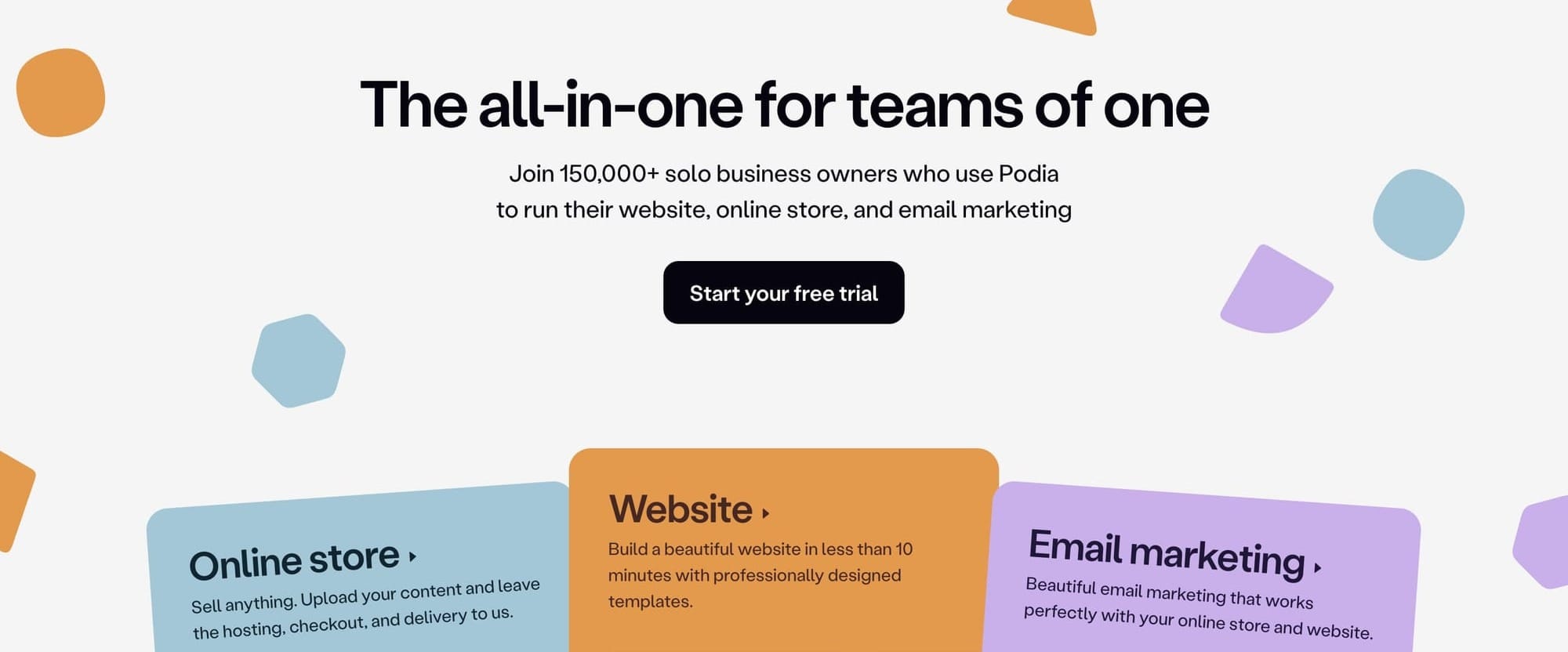
Podia lets you host video courses, upload PDFs, sell downloadable content, or manage a subscription community from one dashboard.
You can also send emails directly to your audience and run webinars or digital workshops through add-ons, making it easier to interact with followers.
While Podia handles standard digital products well, it doesn’t offer the same flexibility as Whop for things like SaaS products, software licenses, or crypto-based offerings.
Its simplicity is a strength for straightforward use, but businesses with more complex or varied product needs might find it limiting.
- Pros: Streamlined platform for courses, downloads, and memberships.
- Cons: Less flexibility for non-standard or highly technical digital products.
- Pricing: Mover $39/month (+5% transaction fee), Shaker $89/month; includes unlimited products, memberships, and email marketing.
4. ConvertKit Commerce (Kit)
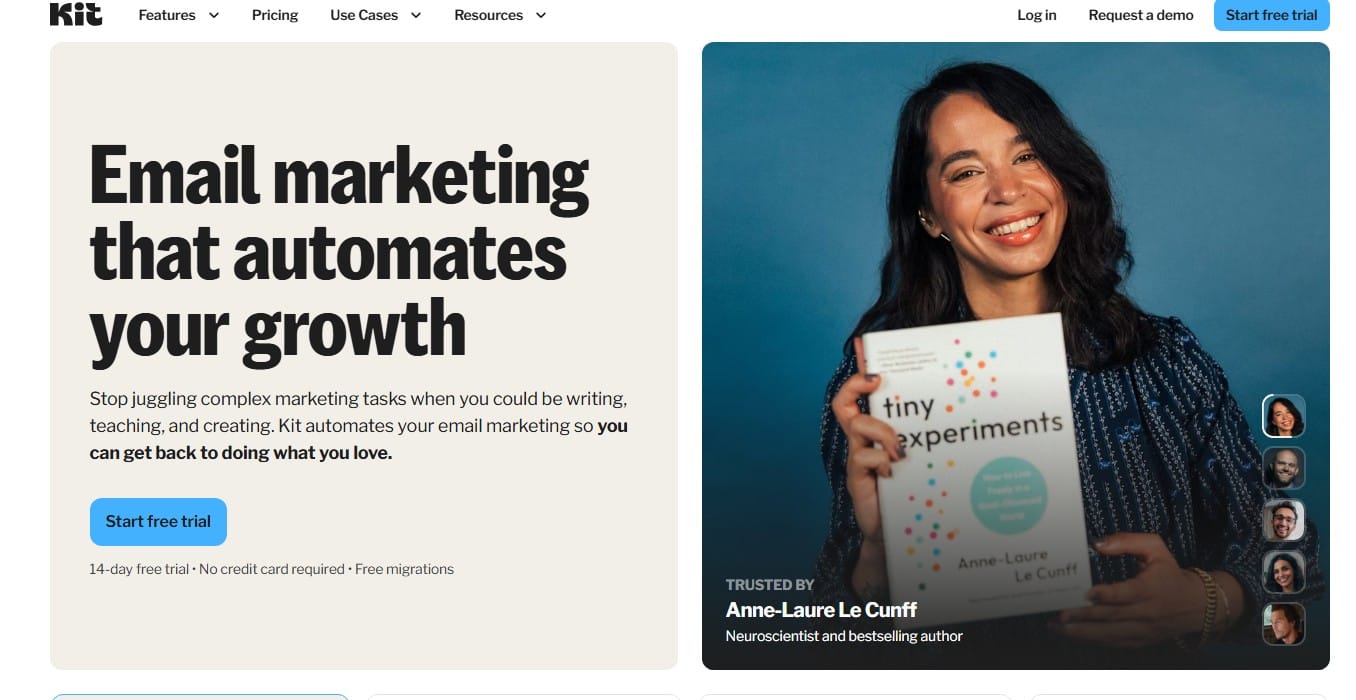
ConvertKit Commerce is built around creators who already use email as their main way to connect with audiences.
It allows you to sell digital downloads, subscriptions, and simple online products directly through your email list.
You can set up landing pages, automated email funnels, and checkout experiences all within ConvertKit, making it easier to link sales to audience engagement.
While it’s great for creators who want email-first monetisation, it doesn’t support more complex digital products like SaaS, software licensing, or large-scale courses.
Its simplicity makes it approachable, but advanced features like affiliate programs or livestreaming aren’t included.
- Pros: Integrates directly with email marketing and subscriptions.
- Cons: Limited to simpler digital products; no native LMS or SaaS support.
- Pricing: Free plan available for basic commerce; paid plans start at $29/month, depending on subscriber count and feature access.
5. Stan Store
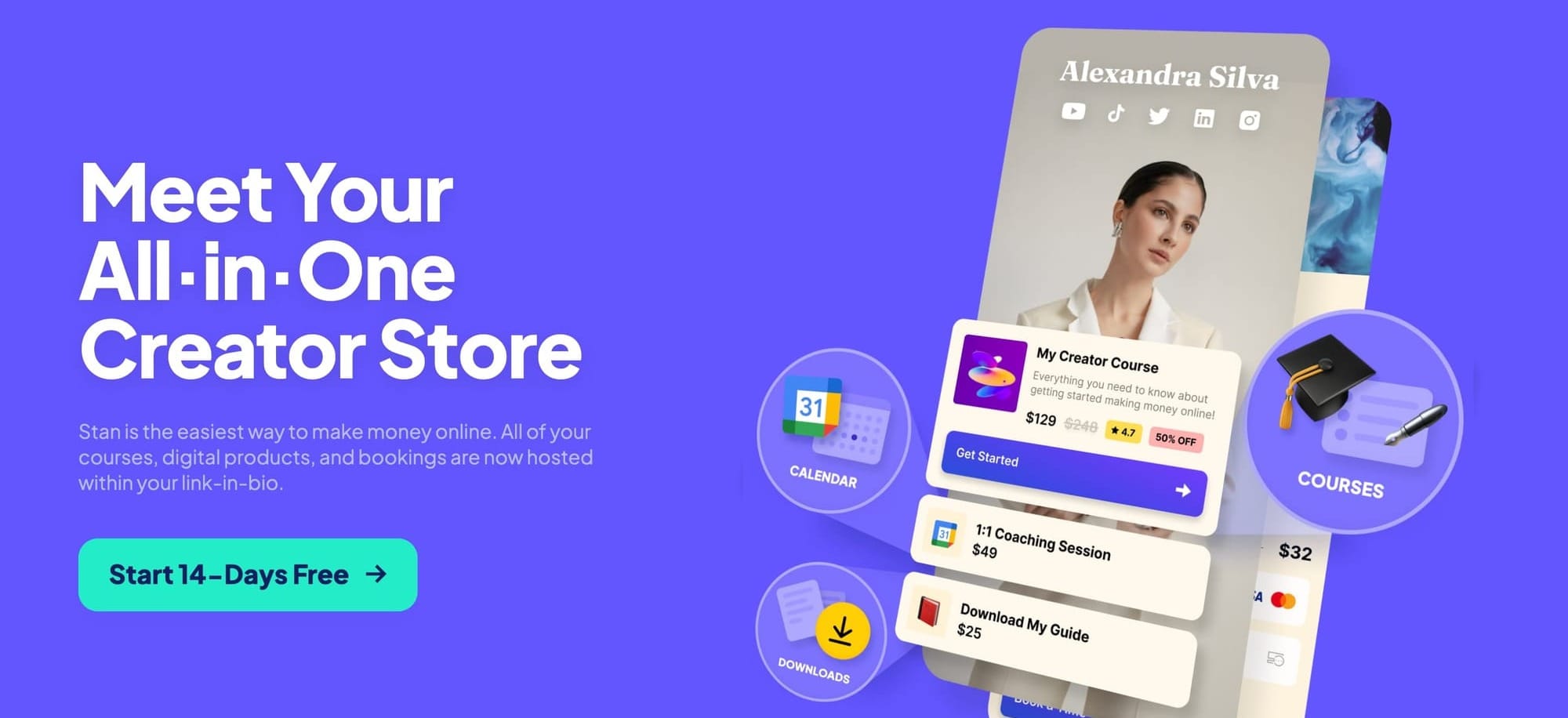
Stan Store is a link-in-bio commerce platform aimed at creators looking to monetise their social media audiences.
You can sell courses, digital downloads, subscriptions, and services all from a single landing page, which is convenient if you're promoting via socials.
Stan Store also includes payment processing, integrations with email tools, and simple analytics to track sales.
Stan Store isn’t designed for complex digital businesses, so features like SaaS sales, software license management, or advanced membership communities are limited.
Its strength lies in simplicity and fast setup, but sellers with a broader range of digital offerings may find it somewhat constrained.
- Pros: Quick setup, perfect for social-linked sales.
- Cons: Limited advanced digital product features; less suitable for large-scale courses or SaaS businesses.
- Pricing: Free plan available; Pro plan starts at $20/month with added customization and analytics.
Course-first platforms
Perfect for creators focused primarily on online courses, with some offering membership or community options.
6. Teachable
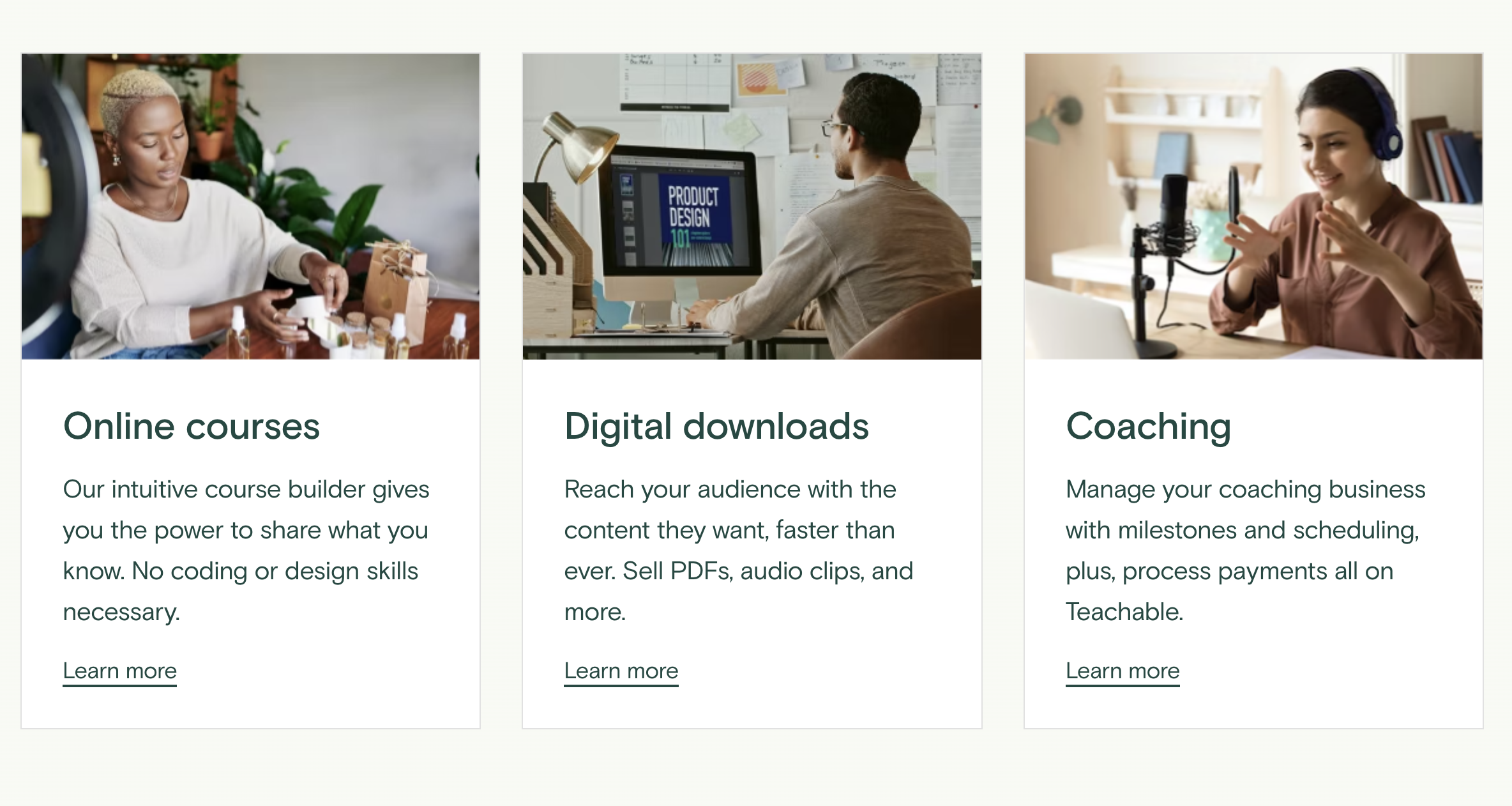
Teachable is a resource for online course sellers who want a professional and easy-to-design solution.
It is most similar to (and a direct competitor of) Thinkific. Because of its strong marketing efforts toward students, the platform has a word-of-mouth advantage and SEO advantages.
Creating a course with Teachable is pretty simple with an easy-to-follow template, but further customization is limited.
Instructors are easily able to make quizzes and upload supplementary files for student convenience.
- Pros: Great LMS tools, easy course creation, and handles global payments.
- Cons: Limited to course products, and memberships require extra setup.
- Pricing: Starter $29/month + 7.5% per transaction, Creator $79/month 0% fees, Growth $199/month, and Pro $399/month for advanced features.
Learn more about Teachable here:
7. Thinkific
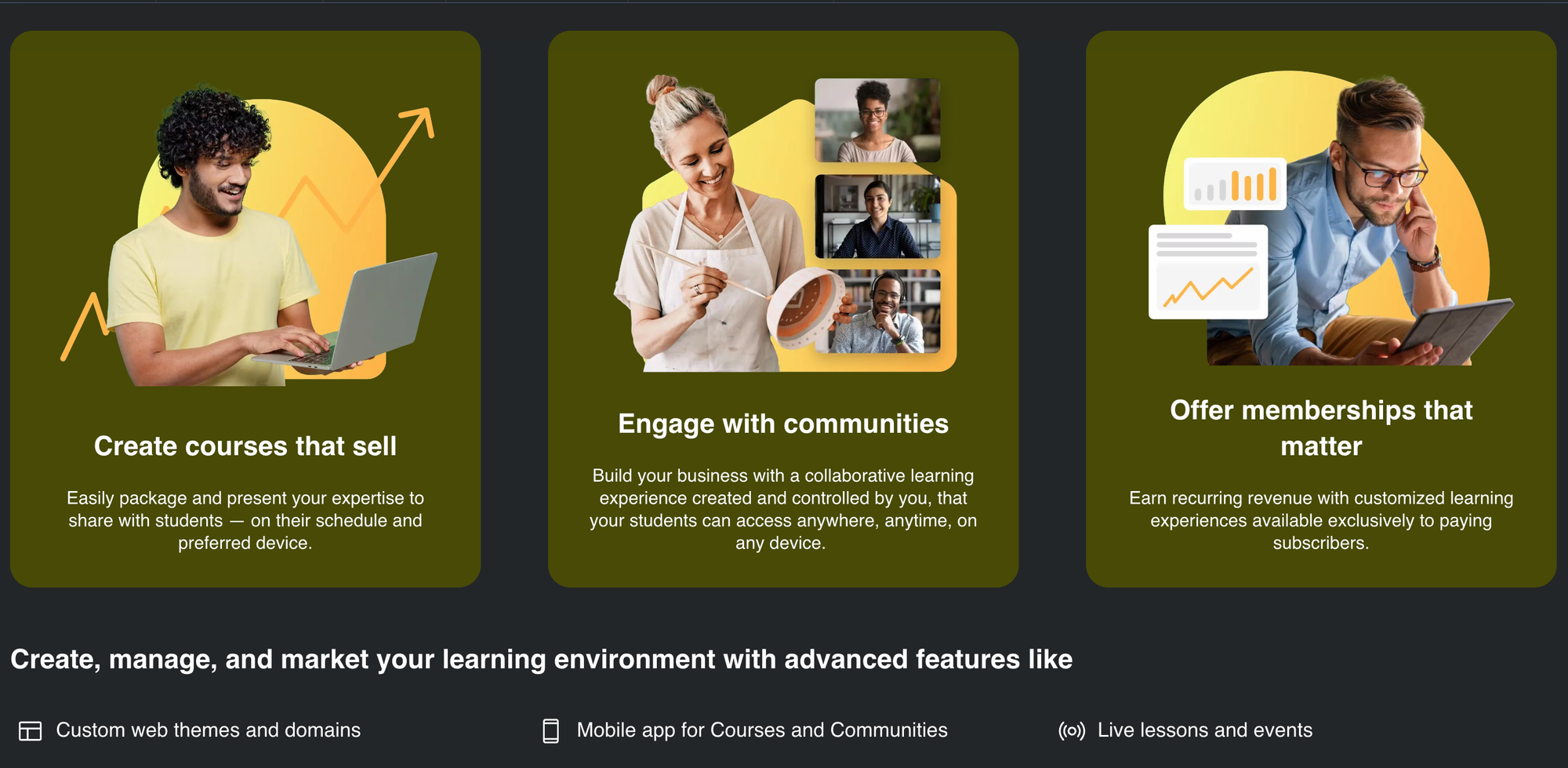
With solid and professional branding right out of the box, it doesn’t take much to design a good-looking course with Thinkific.
The seller dashboard has a nice look and has easy-to-understand and straightforward reports.
Once your content is ready, making a course is easy to do with a step-by-step process that makes it simple.
Although the design is good out of the box, for those who need a look more custom to their brand, Thinkific is limited to just a few templates.
Integrations are possible within its app store, and although this is quite useful in some cases, it can be time-consuming and require upkeep.
- Pros: Strong course tools, easy to use, flexible branding options.
- Cons: Limited beyond courses; extra tools needed for other digital products.
- Pricing: Free plan available; Basic $39/month, Pro $79/month, Premier $399/month.
Learn more about Thinkific here:
8. LearnWorlds
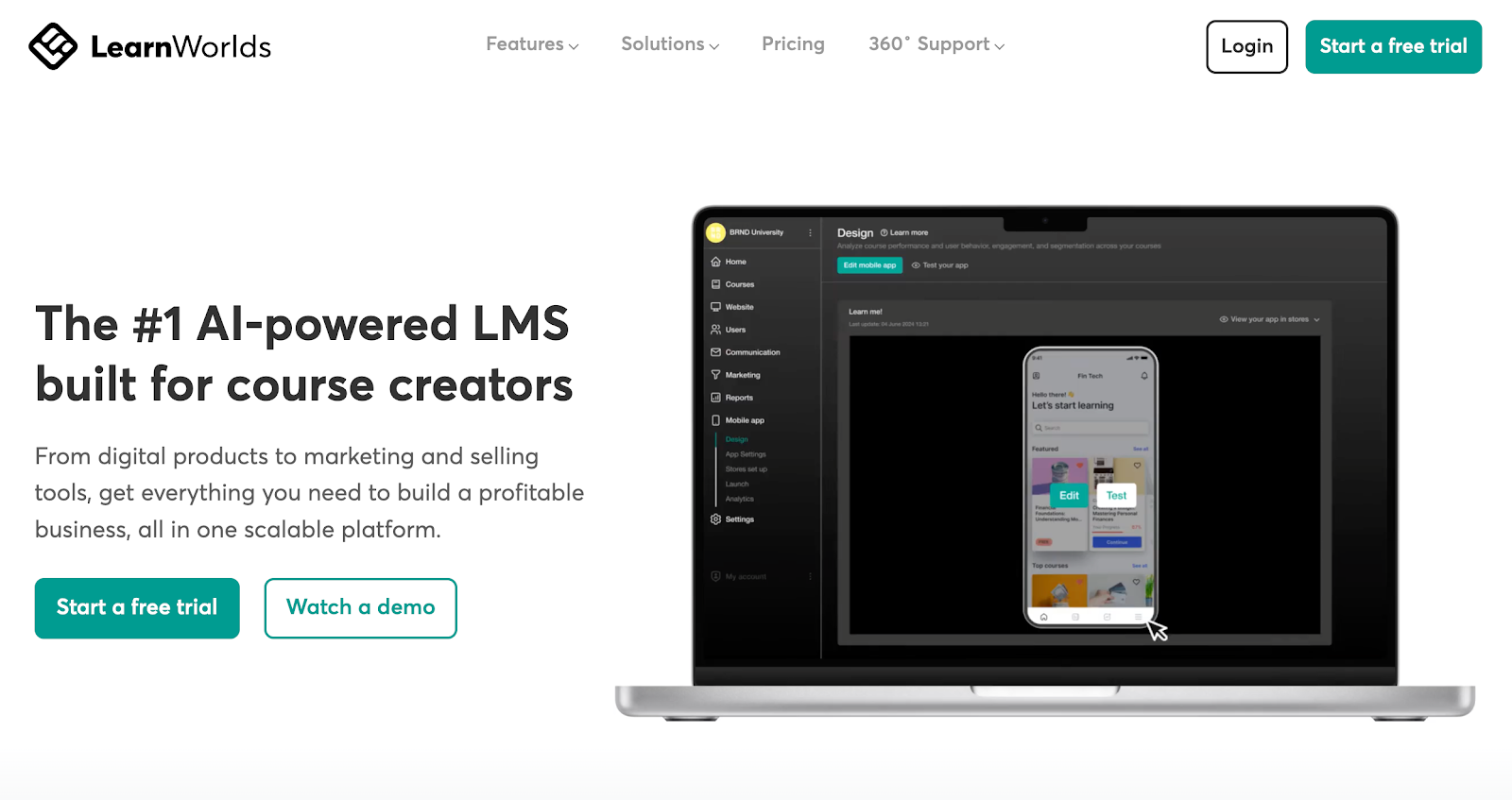
Another platform for the course creators in the room, LearnWorlds promotes itself as an all-in-one, scalable platform for selling digital products and online courses.
With features like exams, quizzes, ebooks, 1-1s, and group sessions, you'll have everything you need to teach your chosen subject.
LearnWorlds is also easily integrated with popular tools, such as Zoom, Mailchimp, Shopify, Facebook and PayPal.
Some of its tools can be a little confusing for newbies, but if you've got the time to explore the platform, you'll be well underway to building a solid online business.
- Pros: Interactive courses, customizable pages, and advanced analytics.
- Cons: Primarily course-focused; limited when it comes to other digital product types.
- Pricing: Starter $29/month, Pro Trainer $99/month, Learning Center $299/month, High Volume $499/month.
9. Udemy
Udemy is a global marketplace for online courses, primarily video-based, where anyone can publish content and reach millions of learners.
The platform handles hosting, payment processing, and marketing, which is great for exposure.
However, Udemy takes a significant revenue share and controls pricing, meaning you have less flexibility than on a personal site.
It’s less suited for memberships, SaaS, or specialized digital products.
One perk, though? It's free to list and host as many courses as you’d like, so Udemy can be a solid way to test and validate ideas.
- Pros: Massive audience, built-in marketing, easy course publishing.
- Cons: Revenue share can be high; limited control over pricing and branding.
- Pricing: Free to publish, Udemy takes 50% revenue on organic sales, 3% on instructor promotions.
Check out these extra Udemy resources:
10. Skillshare

Skillshare runs on a subscription model, where creators earn based on watch time and referrals.
It’s ideal for creative courses in design, photography, writing, or lifestyle skills.
Skillshare simplifies hosting and monetization, but it doesn’t support selling individual courses, digital downloads, or software.
You also have less pricing control, since income depends on platform subscriptions.
- Pros: Subscription revenue, built-in audience, simple course setup.
- Cons: Less flexible pricing, limited to creative courses, no standalone product sales.
- Pricing: Free to publish; earnings based on minutes watched and referrals (varies monthly).
More on Skillshare:
Ecommerce & digital downloads
These platforms offer straightforward sales of digital files or software, often with subscription or print-on-demand options.
11. Sellfy

Sellfy is a straightforward platform for creators looking to sell digital products, subscriptions, and print-on-demand merchandise without fuss.
It’s beginner-friendly, with a drag-and-drop store builder and hosted checkout, so you don’t need to manage servers or coding.
Sellfy also includes basic marketing tools like email campaigns, discount codes, and affiliate features.
Advanced customization is limited, so for very large stores or complex product setups, you might feel constrained.
- Pros: Quick setup, supports multiple product types, built-in marketing.
- Cons: Limited advanced customization and scaling options.
- Pricing: Starter $29/month, Business $69/month, Premium $159/month (all include unlimited products; transaction fees waived).
12. Shopify
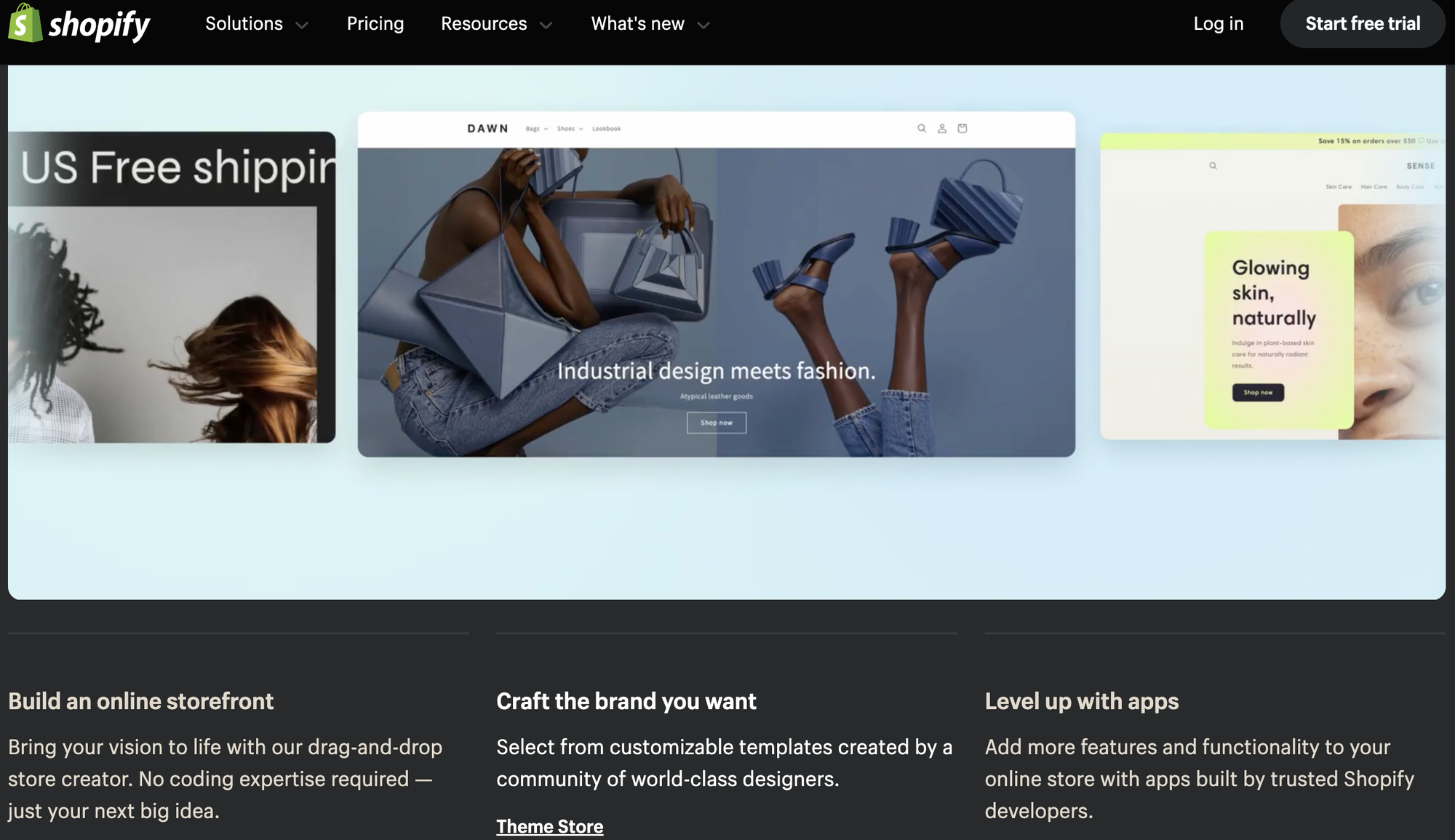
Shopify is mainly known for physical product eCommerce, but also supports digital downloads via integrations with apps like Digital Downloads or SendOwl.
It’s highly scalable, with tons of integrations, payment options, and a robust ecosystem.
Shopify is great if you already sell physical goods and want to add digital products to the mix.
However, digital product sales often rely on third-party apps, which can add complexity and fees.
- Pros: Scalable, strong integrations, reliable eCommerce features.
- Cons: Digital products often require extra apps; higher costs for large stores.
- Pricing: Basic $39/month, Shopify $105/month, Advanced $399/month; apps may have additional fees.
Want to learn more about Shopify? Check these out:
13. Gumroad
Gumroad is a platform for creators looking to sell digital products like ebooks, courses, music, and memberships.
It’s designed for simplicity, letting you set up a store quickly without a lot of technical overhead.
One standout feature is its built-in marketplace, which allows potential buyers to discover your work alongside other creators.
Subscriptions are supported, so recurring revenue is possible. You can also offer “pay what you want” pricing and discount codes, giving flexibility to your customers.
While Gumroad is very easy to use, it’s more limited in advanced marketing features compared to Whop or other all-in-one platforms.
- Pros: Easy setup, marketplace discoverability, flexible pricing, subscription support.
- Cons: Limited advanced marketing and community tools, some creators may outgrow platform features.
- Pricing: Gumroad charges 10% + $0.50 per transaction for direct sales, and 30% for marketplace sales. There are no monthly fees.
More on Gumroad:
14. BigCommerce
BigCommerce is primarily known for e-commerce, but it also allows creators to sell digital products through integrations and apps, similarly to Shopify.
BigCommerce has strong inventory management, tax handling, and shipping features, though these are more relevant for physical goods.
For digital products, you’ll need to rely on add-ons or customizations to enable downloads, subscriptions, or course sales.
While this requires more setup than platforms like Whop or Sellfy, BigCommerce offers a highly scalable solution for creators who plan to expand into physical products.
- Pros: Scalable e-commerce, integrates digital and physical products, robust store management.
- Cons: Digital product setup requires apps/customization, can be complex for beginners.
- Pricing: Plans start at $39/month for Standard, $105/month for Plus, and $399/month for Pro. Transaction fees depend on the payment gateway used.
15. Easy Digital Downloads
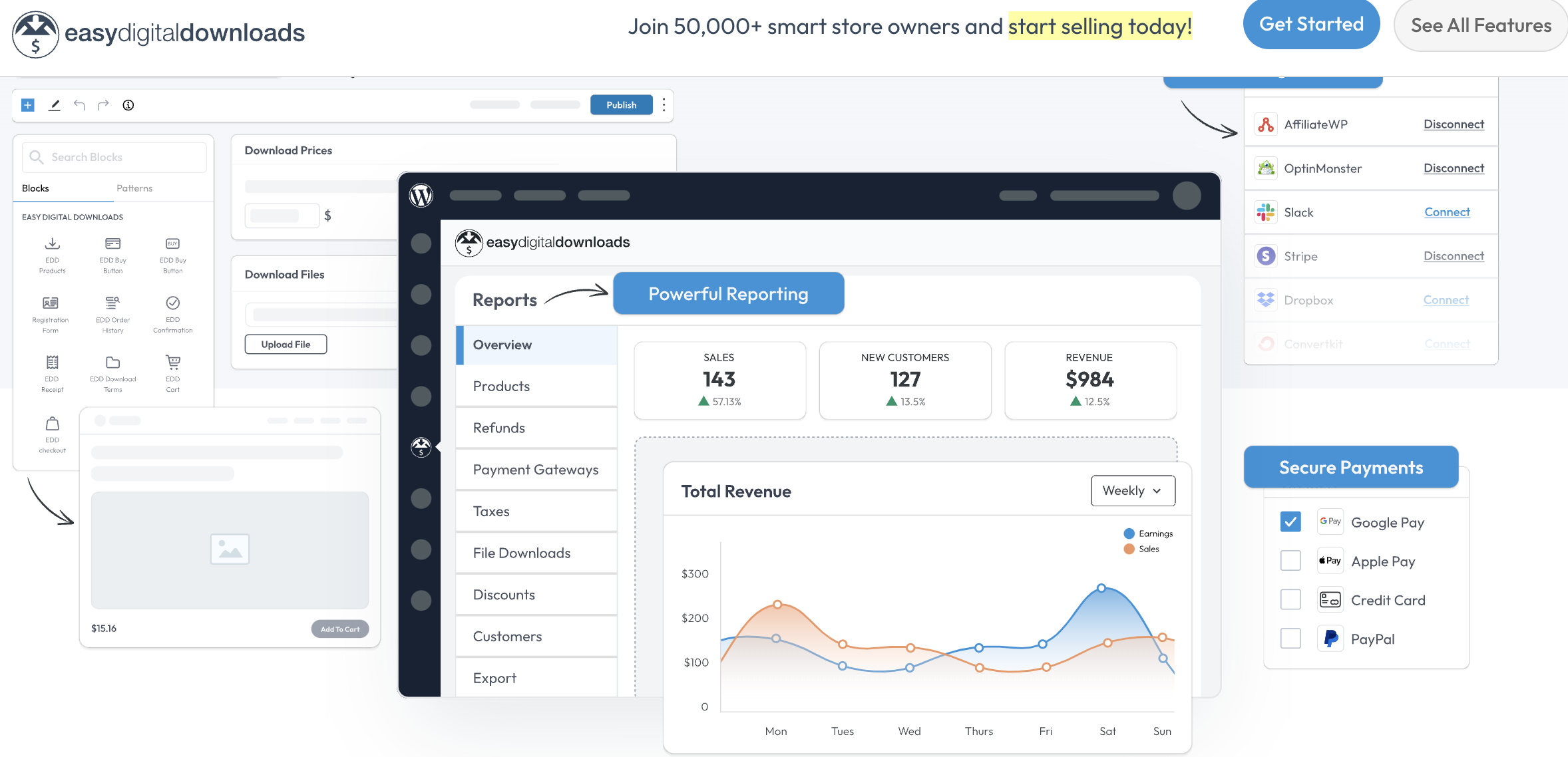
Easy Digital Downloads is a WordPress plugin built specifically for selling digital products.
If you already have a WordPress site, it’s a lightweight, flexible option that allows you to sell anything downloadable, from ebooks and courses to software and templates.
EDD supports subscriptions, discount codes, and detailed reporting. It’s also highly customizable with extensions, letting you integrate payment gateways, affiliate programs, and email marketing.
The main drawback is that it’s self-hosted, so you’re responsible for website maintenance, security, and updates.
- Pros: Flexible and customizable, perfect for WordPress users, supports subscriptions and discounts.
- Cons: Requires WordPress knowledge; you handle hosting and maintenance.
- Pricing: Core plugin is free; premium plans $99.50–$499.50/year. No platform fees; standard PayPal/Stripe charges apply.
16. Payhip
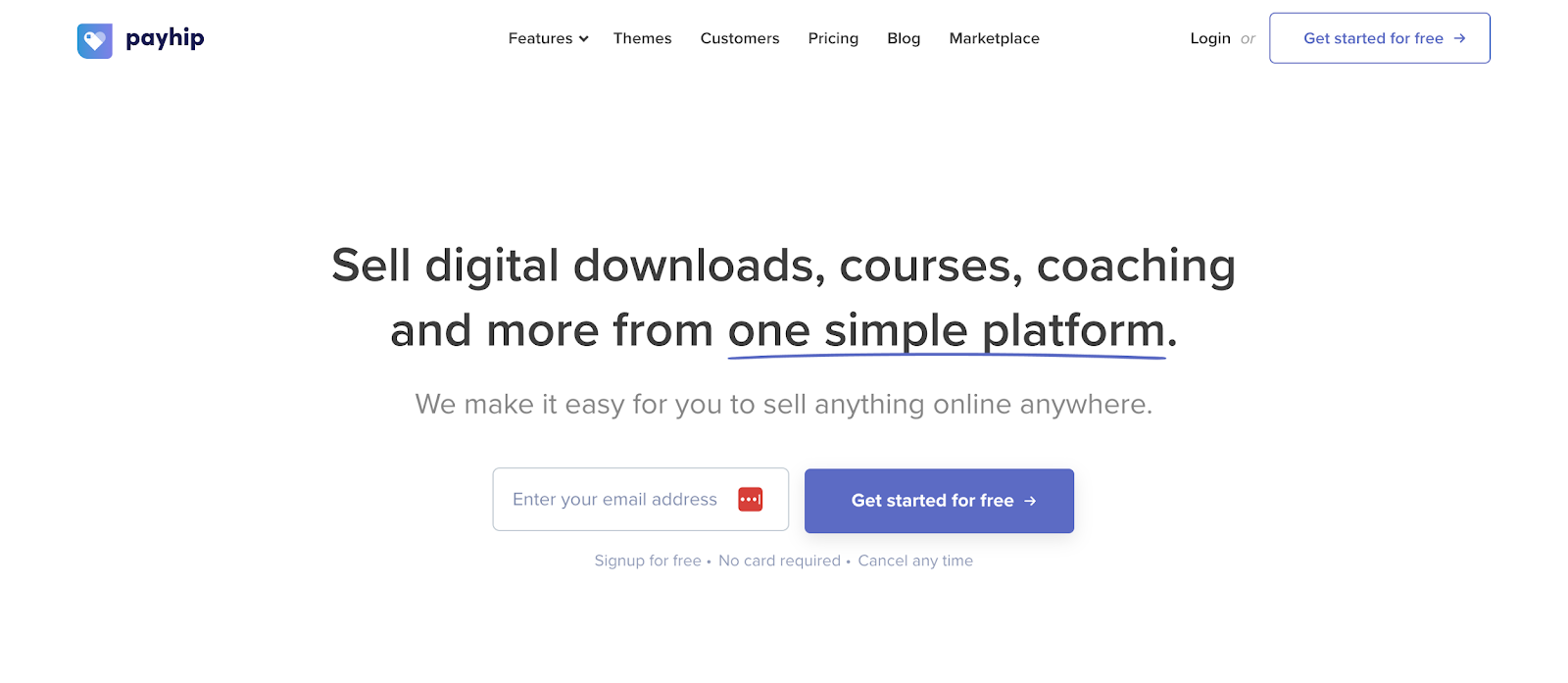
Payhip is a simple platform that allows creators to sell digital downloads, memberships, and subscriptions.
Its biggest draw is simplicity: you can upload products, set pricing, and start selling in minutes.
It also supports recurring payments, coupon codes, and EU VAT handling. And unlike some platforms, Payhip allows for instant product delivery and direct customer communication.
While it’s user-friendly, it doesn’t offer the same marketing automation, affiliate management, or community tools as platforms like Whop.
Payhip is ideal for creators who want to focus on content creation rather than managing complex workflows.
- Pros: Quick setup, supports subscriptions and memberships, simple product delivery, handles VAT.
- Cons: Limited advanced marketing and community features.
- Pricing: The Free Forever plan has a 5% transaction fee; the Plus plan costs $29/mo and has a 2% fee; the Pro plan ($99/mo) doesn't have any fees. Payment processor fees apply (Stripe/PayPal).
For more on Payhip, check these out:
17. SendOwl
SendOwl is designed for creators selling digital downloads, software licenses, and subscription products.
It delivers digital products securely with automated email links, license key management, and subscription handling.
SendOwl also includes upsell options and simple checkout pages. It’s highly reliable for small to medium creators, but it doesn’t provide marketplaces, communities, or advanced marketing tools.
If you want a lean, functional solution focused solely on digital sales, SendOwl is a solid choice.
- Pros: Secure product delivery, supports subscriptions and software licensing, and simple checkout.
- Cons: No marketplace or community features, limited marketing automation.
- Pricing: Plans start at $39/month and go up to $159/month.
18. PayLoadz
PayLoadz is a well-known platform for selling digital products – including software, ebooks, and memberships.
It provides automatic delivery for files, subscription management, and secure payment processing.
It’s simple to use and reliable, making it suitable for beginners who want to sell quickly.
However, PayLoadz is more dated in design and features, lacking modern marketing, community, or analytics tools.
While functional, creators looking for more engagement or growth features might prefer a newer platform.
- Pros: Simple setup, automatic file delivery, supports subscriptions, reliable for beginners.
- Cons: Outdated design, limited marketing, and analytics features.
- Pricing: Free plan available for small sellers; premium plans start at $29/month. Transaction fees apply depending on the payment gateway.
Marketplaces for creative products
These marketplaces are for selling niche digital products or creative assets to large, built-in audiences.
19. Amazon (Kindle)

Amazon Kindle is a popular platform for selling ebooks.
It offers global reach, letting authors publish their work directly to millions of Kindle readers.
The platform handles delivery, formatting guidance, and global distribution, making it easy to get your book in front of readers without managing technical details.
While you can earn royalties up to 70% for sales in certain regions, pricing rules can be restrictive, and you don’t control your audience as fully as on other platforms.
- Pros: Huge global audience, easy publishing, built-in marketing tools.
- Cons: Pricing restrictions, limited control over reader data, and competition is high.
- Pricing: Free to publish; royalties range 35–70% depending on price and region.
20. Etsy
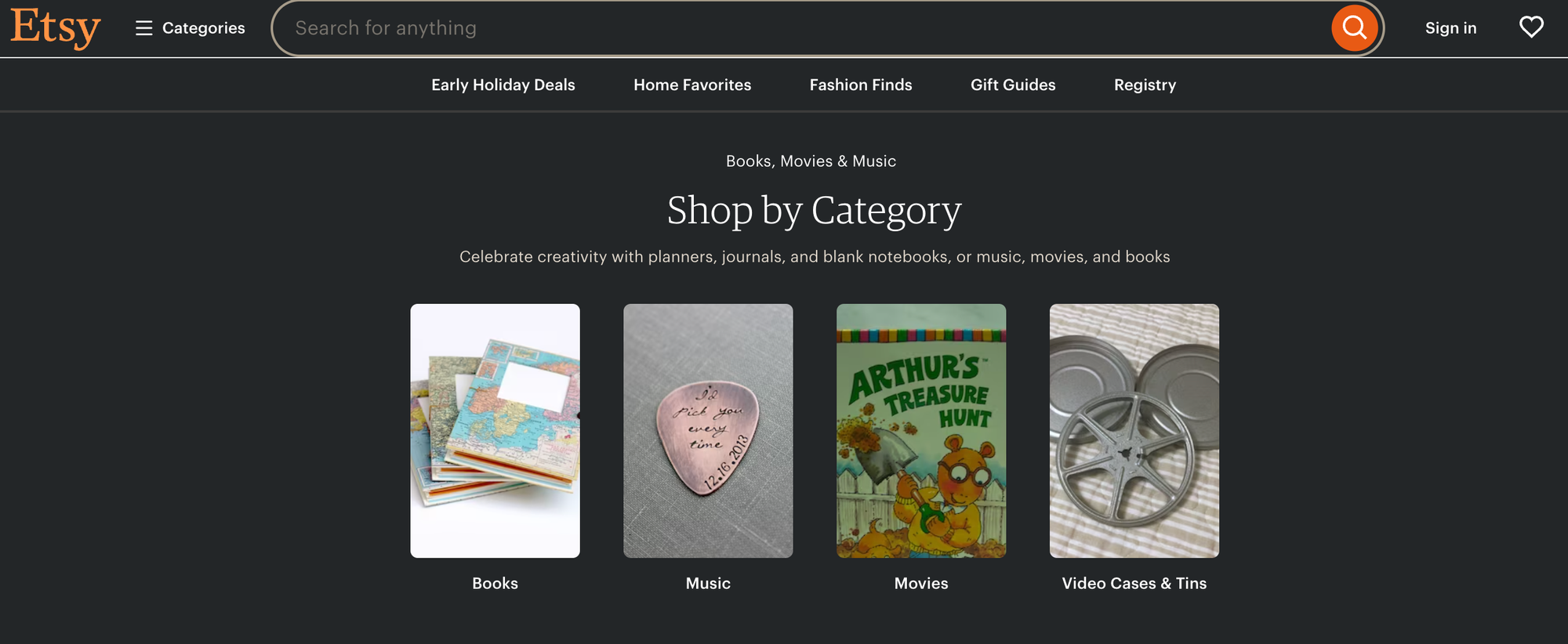
Etsy was founded in 2005, and it's still a go-to marketplace for handmade items and artists.
Etsy evolved to include digital products in recent years, with planners and digital templates being the most popular niches.
Additionally, sellers can advertise merchandise or artwork that is printed on demand and fulfilled via dropshipping.
While the platform has become more popular for digital products, many buyers still expect physical products.
They might be confused when buying a digital product, even if the product is correctly described.
- Pros: Large, engaged audience; easy setup; secure payments.
- Cons: Fees per listing and transaction, high competition in popular categories.
- Pricing: $0.20 per listing; 6.5% transaction fee + payment processing fees.
If you're interested in selling on Etsy, check these out:
21. Creative Market
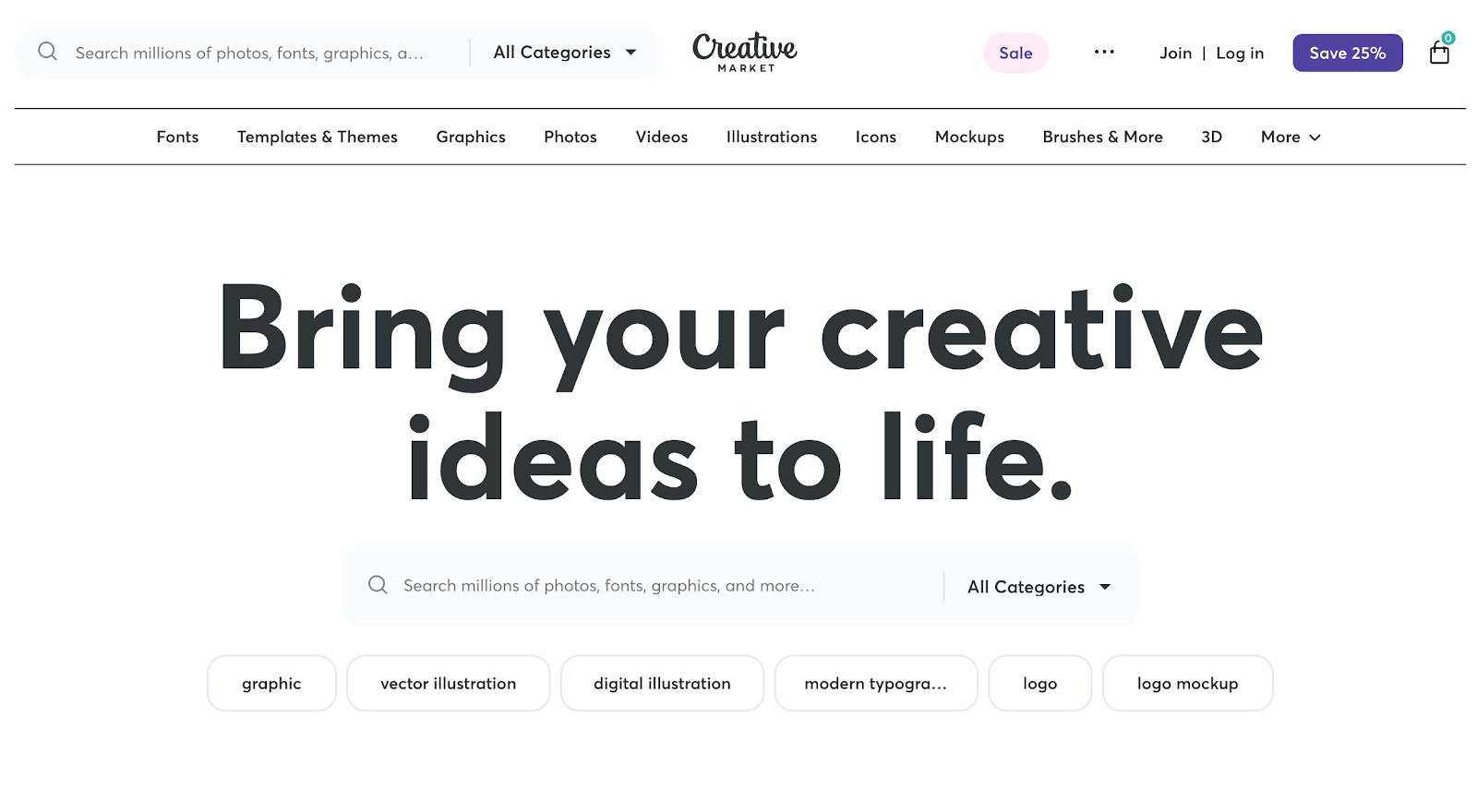
Creative Market is a marketplace for designers and entrepreneurs to sell graphics, templates, fonts, and other digital assets.
It’s tailored to creative professionals, offering a curated environment and marketing tools to help products stand out.
You can sell both one-off items and bundles, and the platform handles delivery and payments.
While Create Market has an engaged audience of buyers specifically seeking design products, fees are higher than some competitors, and your reach is limited outside its marketplace.
- Pros: Targeted creative audience, easy setup, handles delivery.
- Cons: Marketplace fees can be high, limited exposure outside platform.
- Pricing: 50% transaction fee on each sale; no subscription required.
22. Design Bundles
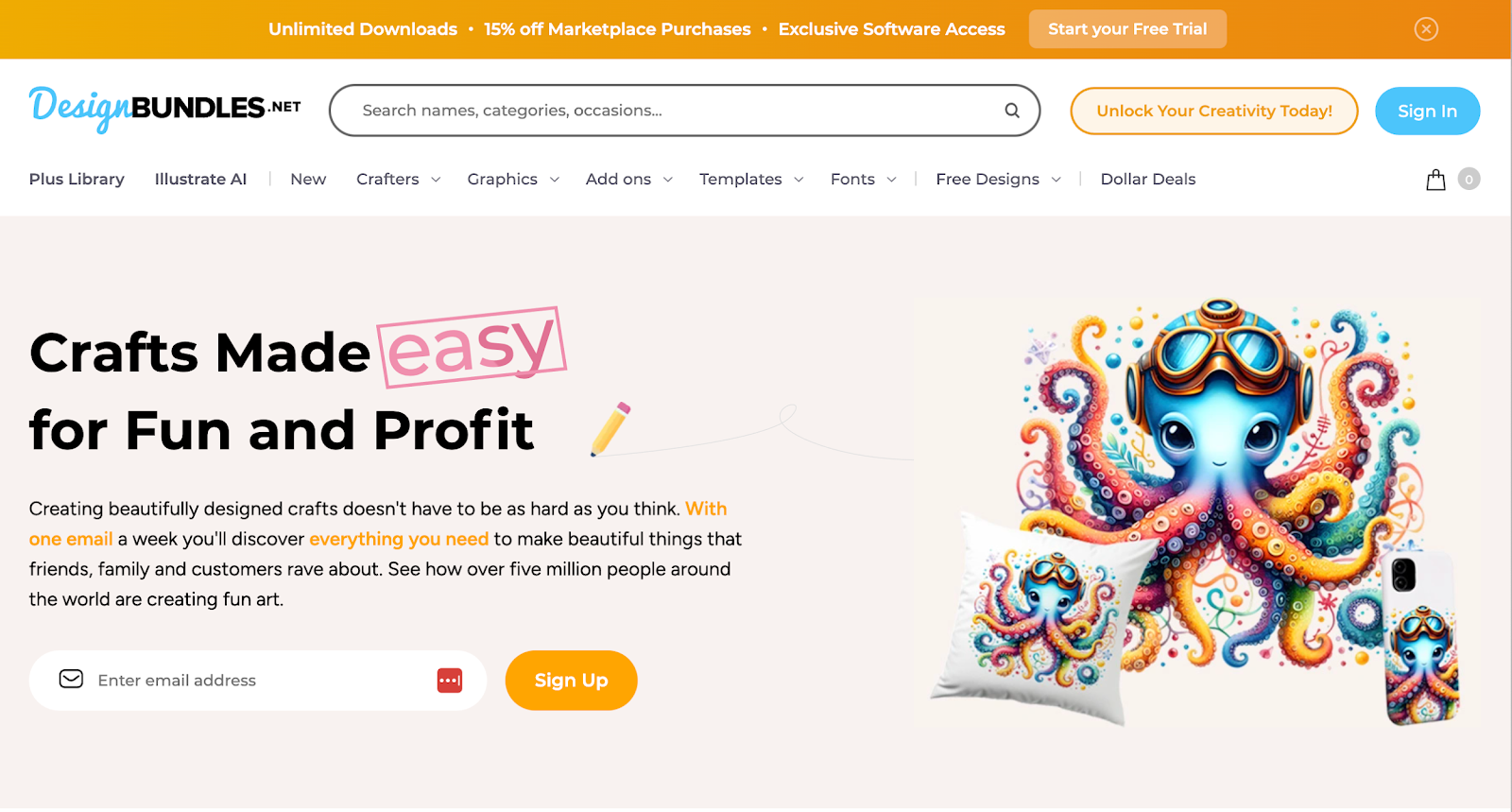
Design Bundles feels a little different compared to some of the other platforms in this list.
While there are plenty of digital art products, typography packages, and templates available, it does feel a little more focused on crafts. But that doesn't mean that selling digital products is out of the equation.
The platform itself attracts a variety of audiences, selling everything from pen wrap designs to SVG bundles.
Since there is a lot of variety, it could be difficult to stand out.
- Pros: Affordable bundles attract buyers, simple delivery, and a targeted audience.
- Cons: Lower price expectations, competitive marketplace.
- Pricing: Cheapest plan starts at $11.99/month, followed by $24.99 for the Unlimited plan and $97.99/month for the Business plan.
23. Zazzle
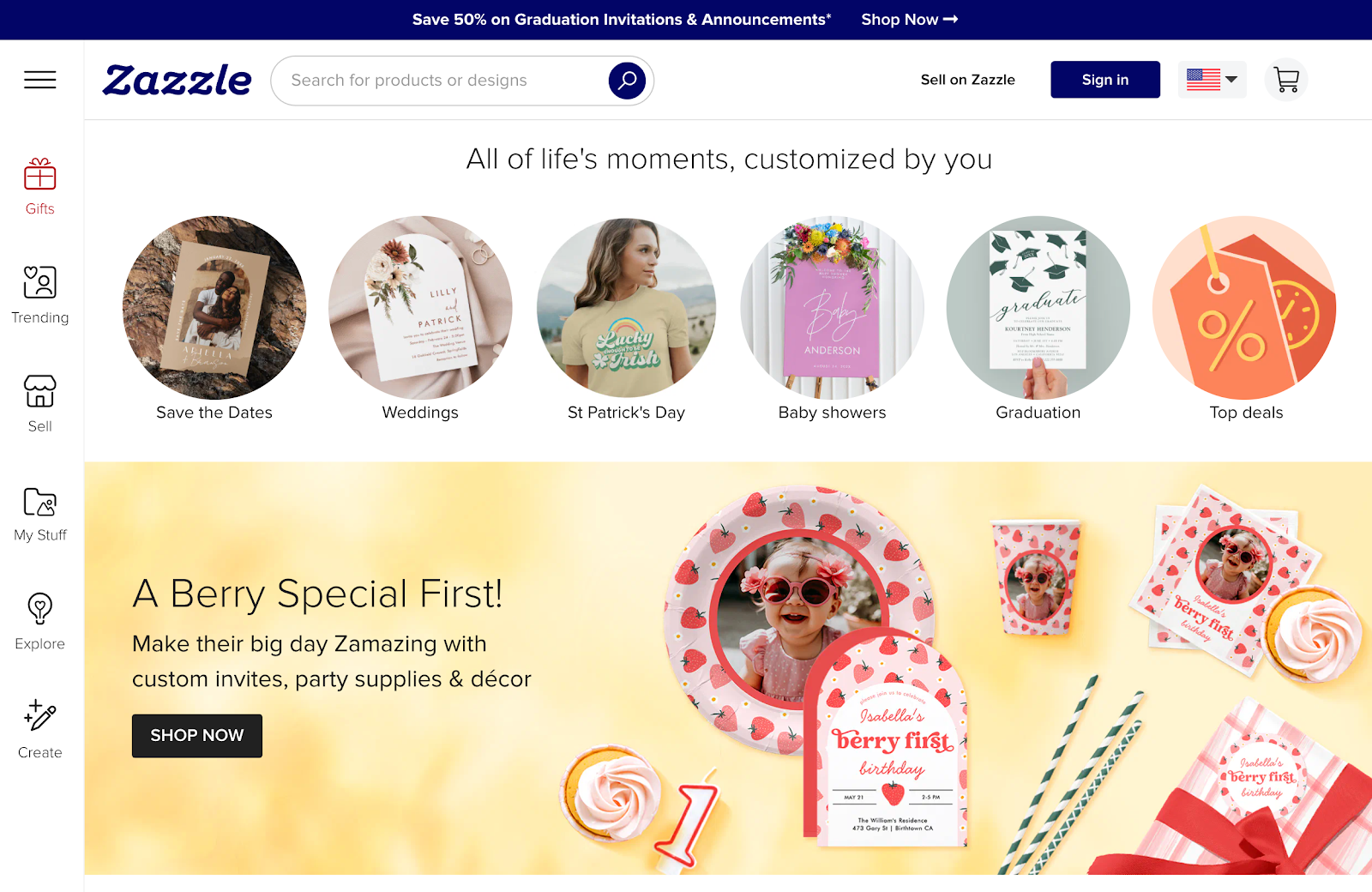
Zazzle can be a good entryway into selling digital products, as it's pretty simple to use to monetize art and designs.
Zazzle gives you the opportunity to publish your designs on thousands of customizable products, making the platform a little different from some of the others we've mentioned here.
This means that if you're selling digital products for instant download, Zazzle might not be the platform for you.
However, if you aim to sell customizable save the dates, invites, or even t-shirt designs, it could be a good contender. Plus, you can get started at no cost, with no monthly fees.
- Pros: No inventory, wide range of products, global reach.
- Cons: Lower margins, competitive market, limited control over branding.
- Pricing: Free to list; you set royalties per product, Zazzle takes base cost.
24. TuneCore
TuneCore helps independent musicians distribute music to Spotify, Apple Music, Amazon Music, and more.
It’s a great choice for artists seeking global exposure and to collect royalties directly.
TuneCore also handles publishing, licensing, and payments, making it easier to manage a music career without a record label.
While powerful, fees apply per release, and you’ll need to promote your music actively to drive streams and sales.
- Pros: Global music distribution, direct royalty collection, professional tools.
- Cons: Fees per release, requires self-promotion to succeed.
- Pricing: $22.99 per single, $39.99 per album/year; additional fees for extras.
25. Ko-fi
Ko-fi is something similar to an online tip jar. It's a platform where fans can send a little token of appreciation to their favorite creators – or at least that's how it started.
At this point, Ko-fi is tailored to a wider range of creators. It lets you offer memberships and sell digital or physical products. You can also accept paid commissions via the platform.
You can set up fundraising goals and connect Ko-fi to your existing Discord community, too.
The downside? It's not a marketplace. If you don't have an existing audience, you won't make money through Ko-fi.
- Pros: 0% fees on donations, instant payouts, selling physical products as well as digital ones.
- Cons: Basic analytics, no marketplace for discovery, you do all the marketing.
- Pricing: Free plan takes a 5% fee on sales and memberships; Gold plan costs $12/month and removes all platform fees. Standard payment processing fees still apply.
Finding the right digital product platform for you
Picking the right platform early is key to building a strong foundation for your digital business. The platform you choose can make a huge difference in your long-term success. To make the best choice, consider these factors:
- Storage and hosting: Your platform should store and deliver your digital products securely. Paid content must be easy for customers to access, while keeping it protected from non-paying users or unauthorized sharing.
- Integrations: Look for platforms that integrate with your website or other tools via APIs. Built-in payment gateways make the buying process smoother for you and your customers.
- Fees: Fees affect your profits, so check both listing and transaction costs, as well as any payment processing charges. Choose a platform with clear and reasonable fees and do your research to avoid hidden costs.
- Customer service: Even the easiest platforms have issues sometimes. The best support includes live chat, phone, or video help. Poor support can leave you waiting for days to fix a problem.
- Reviews: Check unbiased reviews from real users on forums, blogs, or video walkthroughs to see the platform in action. Also, make sure it’s easy for your own customers to leave reviews, since these are crucial for driving sales.
Whop sellers get 24/7 support, secure storage and hosting, and increased payment success with the new Whop Payments infrastructure, giving you even lower fees.
Types of digital products to sell
Digital products are one of the most profitable ways to make money online – sellers on Whop have already made over $1.5B from digital products and offers alone.
BTW, I'm not just talking about ebooks or PDFs. I'm talking about anything bought and delivered 100% online. Here are the main categories in 2026:
Ebooks
eBooks are the beginning of my funnel, and not only that, they're just a great resource to have for a lot of people.
– Jeremie Lander
Skip the costs of printing and publishing — package your ideas into a polished PDF or EPUB and start selling instantly.
Private memberships
Paid communities on Whop, Discord, Telegram, or custom platforms are hot right now. The best way to manage them? Directly inside your whop, where subscriptions and access are automated.
Online courses
Turn your expertise into video-based learning. Hosting your online course on platforms like Whop streamlines setup, sales, and delivery.
Coaching
Offer one-on-one or group coaching sessions online. Perfect for guiding clients, providing personalized advice, or complementing a course or membership.
SaaS and other software
If you're building anything, make sure it solves your own problem because nobody is going to know that problem as well as you do.
- Siya, developer of GenPPT
Build tools or apps that solve problems. Most SaaS runs on a recurring subscription model, making it one of the strongest ways to earn recurring revenue.
Templates & digital assets
Think Notion dashboards, design kits, resume templates, or website themes: low effort, passive, and big demand.
Data and analytics
Package data into reports, dashboards, or subscriptions. Buyers pay for insights they can’t easily gather themselves.
Photography & stock content
Sell photo packs, stock video clips, or editable assets. A good option for designers, marketers, and content creators.
AI digital products
ChatGPT prompts, custom datasets, vibe-coded landing pages, creative design assets – AI-powered products are everywhere right now. Easy to learn, low-cost, and a fast-growing niche.
We asked somebody who specialises in digital products for their take on AI prompts:
If you're thinking "I know nothing about AI prompts" - well, you don't actually need to. There are free apps that can create AI prompts for you, and even help you sell them.
Like the creator above says, selling AI prompts is easy for anybody to get into, and if you can sell a pack for $20, and 250 people buy?
That's $5K a month in revenue.
Subscription-based products
Beyond SaaS, recurring subscriptions can also power ebooks, templates, paid newsletters, and communities. The key? Reliable management — which platforms like Whop now handle natively.
Want more ideas? Check out the top digital products to sell (and how to make them).
How to effectively market digital products
Marketing your digital product is what turns it from a passion project into a real income stream.
Once your product is created, your marketing is what decides whether you get a few sales or consistent notifications of passive income rolling in.
Here are a few ways to market your digital product:
Organic marketing
Start with organic content, even if you can afford paid ads.
Organic marketing helps you test your product, build trust, and grow a base of loyal fans.
Focus on creating content that shows your authority: posts, videos, or blogs that reflect your unique voice.
Skip chasing virality; trends can help, but your real supporters come from genuine content.
Don’t stress about the platform. Stick to what you know best (Instagram, TikTok, YouTube, whatever fits your style), and grow consistently.
Paid marketing
Once you’ve built traction, use paid marketing to scale.
Test different methods: ads, boosted posts, UGC campaigns, sponsorships, and stick to what works. Start small, track your data, and set a clear budget.
With tools like Content Rewards, you can get the most out of your budget by creating campaigns that pay for engagement instead of just clicks.
Marketplace leverage
Where you sell matters – platforms with a strong reputation and organic visibility give you built-in exposure.
Listing your product on a trusted marketplace like Whop connects you with an audience that already knows and trusts the platform.
Your public store page can also double as a link-in-bio or landing page for organic or paid campaigns, giving you maximum reach with minimal extra effort.
Getting passive income with digital products
Once your marketing is working and sales are consistent, you can start turning your digital products into a passive income and earn money while you sleep.
Here’s how to do it:
- Automate delivery: Use a platform that handles instant product delivery. Whether it’s an ebook, course, or subscription, make sure buyers get access immediately without manual work.
- Set up email funnels: Automate follow-ups, upsells, and reminders. A good email funnel keeps your audience engaged and can increase lifetime sales without extra effort.
- Use recurring revenue models: Consider subscriptions, memberships, or ongoing access. This ensures steady income instead of relying only on one-off purchases.
- Delegate tasks: Outsource customer support, content creation, or admin work to freelancers or virtual assistants. You don’t need to do everything yourself to keep sales flowing.
- Leverage marketplaces: Sell on platforms with built-in audiences, like Whop, so your products get organic exposure in addition to your own marketing.
- Optimize and track: Use analytics to see what’s selling best and where buyers drop off. Small adjustments can significantly boost revenue without more work.
Do this right, and your digital products can earn reliably in the background while you focus on growth (or take some time off).
Check out the full guide on earning passive income with digital products.
Start selling digital products today with Whop
Feeling motivated to join thousands of creators, entrepreneurs, and small business owners selling digital products?
With Whop, you can create your own online store and sell virtually any digital product or service. Online courses, coaching sessions, digital planners, virtual fitness training, consulting, or niche offerings like sports tips and e-commerce webinars – you can host it all.
We’ll give you the tools to reach your audience, manage payments, and actually grow your sales.
Getting started is fast and easy: you can set up your Whop in under 10 minutes and start selling immediately.
Sign up today and start profiting from digital products and offers, with no marketplace fees.
Selling digital products FAQs
Let’s wrap up with some of the most common questions that come up regarding digital products. Hopefully, these answers will give you the confidence to proceed and start your business sooner rather than later!
What kind of idea do I need to sell a digital product?
Digital product ideas can range from educational to useful, the former of which will take the form of an ebook, other online course, or membership, and the latter taking the form of SaaS or another form of software that might include a plugin for an existing company like ChatGPT.
Pick an idea that you are good at in a niche that you have a competitive advantage in knowledge of. Competition is fierce and consumers are becoming more savvy, so having an authentic brand driving your idea will allow you to stand out.
Is selling digital products difficult?
While selling a digital product can be a fairly simple part-time side hustle, if you want to scale to a liveable income, you will have to assume the role of a business owner who needs to wear numerous hats. Playing this role well is not easy, as it includes carrying out the continuous development of quality products and the marketing of them, all while warding off competition.
Despite the difficulty, selling digital products can be incredibly rewarding as it has the potential to offer significant income and a flexible working schedule.
How much expertise do I need before I sell a digital product?
If you have been paid as a professional in any niche, you can likely make a digital product in it. Use the thought exercise of what topic someone would buy you lunch for to discuss as a rule of thumb for justifying the selling of your skill.
The more expertise you have in a niche, the greater your advantage will be amongst the competition, so be sure to strive for excellence rather than just being good enough when you create your offering.
What are the benefits of selling digital products?
Joining the growing group of entrepreneurs who are digital product business owners can be one of the best business decisions you can make today. By doing so, you will be able to take part in ecommerce, which is now a multi-trillion-dollar industry. The whole of digital commerce is projected to reach nearly $20 Trillion by 2032, and digital products are a growing slice of this pie.
Here are some of the top benefits of selling digital products:
Diversity
One of the biggest attractions for entrepreneurs to the digital product world is the diversity. Just about anyone can find an area in this world in which they can excel.
There’s a digital product for anyone: If you’re confident on camera and have a strong personal brand, creating a video course is a no-brainer. For those who are more camera-shy but still enjoy teaching, an eBook is a great choice. Anyone who is into solving consumer problems through the magic of software would be keen to make a SaaS company, which can take on various forms across just about any online industry.
Simply put, if you have a certain level of professional knowledge, you can productize a helpful offering into a digital product. While learning how to make one is a skill on its own, the payoff is often worth it.
Income potential
Certainly, the money is an obvious draw when it comes to digital products.
When naming the largest corporations that were birthed in the shortest amount of time, you will inevitably mention companies that are monetized primarily through software, which is perhaps the most mainstream category of digital products.
Even though you likely won’t compete directly with Silicon Valley unicorns, these companies have normalized the widespread consumption of digital products, namely software subscriptions and advertisements.
Many solopreneurs or founders with small teams have created six or even seven-figure digital product businesses in as little as one year. Whether the product is an online course, membership, or software doesn’t quite matter as all of these have the potential to reach impressive levels in a reasonably short amount of time. Once you hit a product-market fit within a niche that you are a relative expert in, the money can come in faster with better profit margins than traditional businesses.
Sky high profit margins
There is essentially no cost to produce a digital product apart from your time invested and whatever tools–many of which are free–you use to make them.
Once you have made one digital product, it makes little to no logistical difference for you to fulfill an order for 1 or 1000, so you can discover scale fairly quickly and along with it, profit margins that will make anyone with a physical products business incredibly envious.
Because of these profit margins, you can sell either low-ticket or high-ticket products–sellers have had success with $5 eBooks as well as $5000 video courses. The more expensive your product is, the more you will have to invest in resources to sell it, which will likely include advertisements in addition to salespeople to help close customers who are on the fence about buying.
Passive income
Additionally, gaining a stream of passive income is perhaps most realistically possible with a solid digital product offering.
One of the most sure ways to secure passive income is through a subscription model, which can be incorporated into your SaaS or offered as a private membership. The recurring revenue that a subscription model offers will allow you to build out a team and sit back and collect income on a regular basis without trading much time for money.
How much money can I make selling digital products?
While income will vary wildly based on how much effort you put into your business and how big and hungry of a market segment you are targeting, it is possible to make substantial income selling digital products. To roughly project your digital product income, multiply your product price by your expected converting customer base, which will equal your overall reach times your conversion rate, and project it to a realistic period of time.
For example, if your eBook is $10, and you expect to reach 100,000 in 6 months with a conversion rate of 0.3%, you will have a converting customer base of 300 customers, who, at a $10 purchase price, will drive $3000 in revenue. If you continue to reach 100,000 people in a shorter time period, for example, on a monthly basis, with the same conversion rate, you can make $3000 per month by selling 300 books per month. Tweak these numbers up and down based on industry standards to project your digital product income.
Is it really possible to make passive income with digital products?
It is possible to get your digital products business to a certain point that you won’t need to actively work on it, which will bring you to a certain degree of passive income. However, in order to reach this level, you must take the time to set up a team and systems that will allow you to sit back and collect income without having to sacrifice your schedule.
The income will never be truly passive in the way that collecting interest or something similar because you will always need to maintain your systems and be on call when necessary, but it is certainly possible to make money around the clock as your products sell in the background of your daily life–especially if you are selling a recurring membership.
Can I sell digital products if I am already selling physical products?
Yes. You can absolutely sell digital products if you already have a physical products business.
You can look into how to incorporate them into your existing ecommerce platform - or make use of a new platform such as one listed in this article.
Do I need to make a website to sell digital products?
No, with so many platforms for selling digital products out there today, not only is it not necessary to make a website to sell digital products, it’s far easier and even more effective to use a platform instead. You’ll also reap benefits that include built-in tools, hosting, or even direct access to a platform’s marketplace like Whop offers.
Can I use AI to sell digital products?
Absolutely. AI can help you in all steps of the process, from brainstorming ideas, creating design assets, writing out content, and even automating part of your marketing, sales or customer service. Read about using AI to increase online product sales here.